
REVIEW · NAIROBI
Coffee farm tour, coffee roasting and tasting experience
The best part of this Nairobi experience is the hands-on roasting session. You walk through a working coffee farm, learn how the beans move from tree to cup, then roast some yourself and take it home. I like the small group, limited to 10 people, and the time with guides such as Stanley and Duncan, who explain coffee in a friendly, clear way.
I also like the setting: an old family-run farm where some trees have been producing for more than 100 years. At $35 per person, the tasting, snacks, bottled water, farm visit, and take-home coffee make good value. The main drawback is practical: the final stretch of road to the farm can be rough, and transport is included only if you select that option.
Key points to know before booking

- Roast your own coffee: You take part in the roasting and bring some of your coffee home.
- Small group size: No more than 10 people means plenty of time to ask questions.
- A working family farm: You see coffee trees and learn how the crop is processed.
- Strong local guidance: Stanley and Duncan explain both coffee production and Kenya’s coffee industry.
- Fresh tasting at the end: Your farm visit finishes with freshly brewed coffee, snacks, and refreshments.
- Allow for road conditions: The last section of the journey may be difficult, so choose the transfer option carefully.
A farm visit that explains coffee from tree to cup
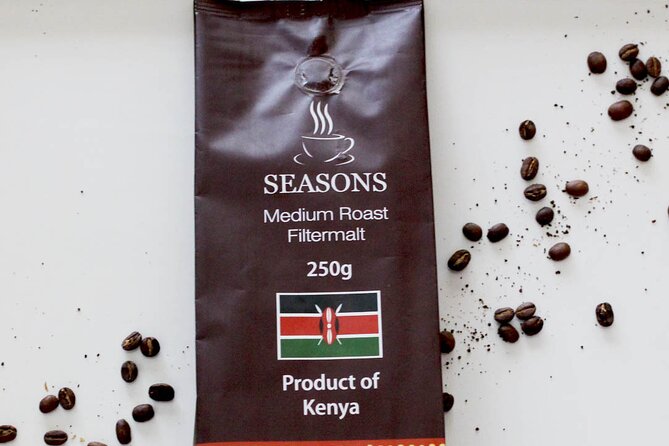
Many coffee tastings stop at the cup. This one starts with the plant.
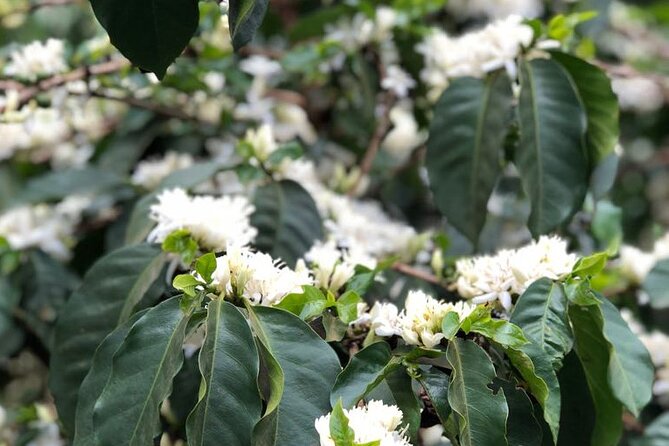
At All Seasons Coffee, you walk among coffee trees and learn how the crop grows. The tour then moves into the processing side, showing how coffee changes from fruit on the tree into beans ready for roasting. That simple order matters. You understand the drink better when you first see the plant and then follow each stage.
I like this approach because it gives you more than a pleasant cup of coffee. You leave with a clearer sense of the work behind every bean. One visitor who works as a barista described the experience as giving them new respect for each bean. That is exactly the point of a farm visit: coffee stops being an anonymous product.
The farm also has a useful connection to Kenya’s past. It is described as an old family-run coffee farm, with trees that have produced for more than a century. You are not visiting a staged coffee set. You are seeing a place with a long working life and a direct link to Kenyan coffee growing.
More Specialty Coffee Tours in the world:
- Cartagena: Colombian Specialty Coffee Tasting
★ 4.4 · 130 reviews - Coffee Farm Tour with Roasting & Tasting Workshop – Da Lat
★ 5.0 · 126 reviews - Private Coffee Roasting Class
★ 5.0 · 101 reviews
Walking among the coffee trees
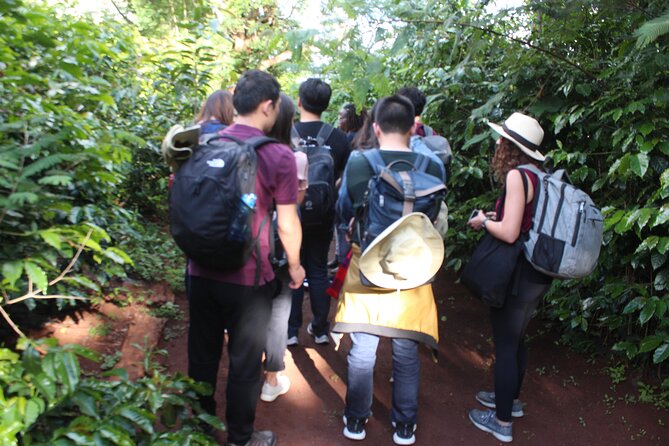
The first part of the visit is a walk around the farm. You see coffee trees and hear about how they are planted, tended, and harvested. The supplied details do not promise a long hike, so you should think of this as a guided farm walk rather than a strenuous outdoor outing.
This is the part that will appeal most to anyone who wants context. You learn why growing conditions matter and how the farm fits into Kenya’s coffee industry. The guides also discuss different kinds of coffee and the production process, so even a regular coffee drinker can pick up useful details.
The setting offers a welcome change from Nairobi’s city traffic and noise. The farm is described as quiet, with attractive surroundings. That makes the visit feel like a short countryside escape, not simply a lecture indoors.
Wear practical shoes. The experience takes place on a working farm, and the rough final road is a reminder that this is not a polished urban attraction. The available information does not give a full accessibility assessment, so anyone with mobility concerns should ask the operator before booking.
Processing explained in plain language
After the farm walk, the guide talks through coffee processing. This connects what you have just seen in the fields with what eventually reaches the roaster.
The tour covers the process from growing and harvesting through roasting and drinking. That broad view is one of its strengths. You do not get only a short explanation before a tasting. You follow the basic chain of production and can ask questions along the way.
Guides named in the experience include Stanley and Duncan. Their roles may vary by date, but both are praised for explaining coffee and Kenya in an engaging way. Susan, the operator and owner, is also described as communicative and helpful before the visit. That matters if your plans change or you need help with arrangements.
The tone appears to be informal rather than technical. You do not need to be a coffee expert. A keen enthusiast or barista will find useful detail, while a casual drinker can still follow the process without feeling lost.
The roasting session is the hands-on highlight
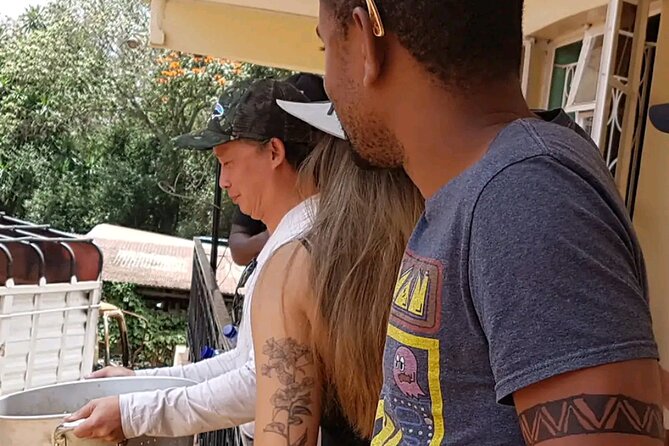
The most memorable part for many people is roasting coffee yourself.
You get the chance to roast beans during the visit, then take some of your roasted coffee home. This gives the tour a practical edge that a standard plantation walk lacks. You are not only watching someone else work. You take part in one of the key stages that shapes coffee flavor.
The details do not specify the roasting equipment or exactly how much coffee you receive, so do not book this expecting a full professional barista workshop. It is better understood as a guided introduction to roasting, built into a farm tour.
Still, this short activity adds real value. You can see how raw beans change and gain a better idea of why roast level affects the final drink. It also gives you a small souvenir with a personal connection to the farm.
If you love coffee, this is the moment to slow down and ask questions. Ask how the beans should be stored, how roasting changes taste, and what the guides look for during the process. The small group size should make that easier than on a large commercial tour.
More Coffee Farm Tours in the world:
- Award Winning Farm Tour: Coffee, Chocolate and Unique Gifts
★ 5.0 · 484 reviews - La Herradura Coffee Farm: tour in Europe’s only plantation
★ 4.8 · 430 reviews - Big Island: Volcanoes, Waterfalls, & Coffee Farm Day-Trip
★ 4.9 · 414 reviews - Small-Group Big Island Tour: Hawaii Volcanoes National Park and Kona Coffee Farm
★ 5.0 · 343 reviews
Freshly brewed Arabica coffee and light refreshments
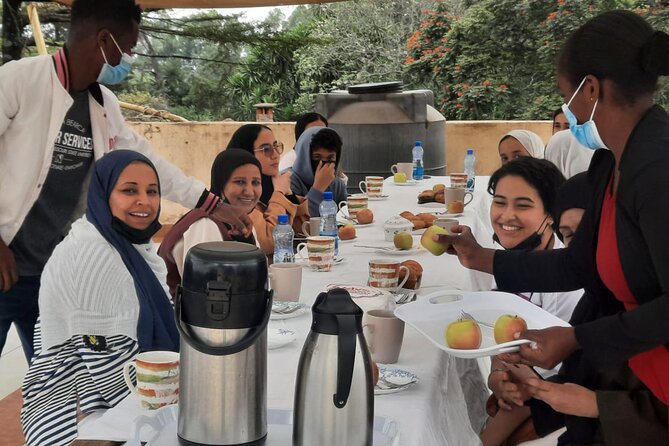
The final part of the visit is the tasting. You sit down with a freshly brewed cup of coffee and refreshments after the farm walk and roasting activity.
The coffee served is described as Arabica, and the tasting gives you a chance to connect the earlier explanations with flavor in the cup. You have seen the trees, heard about processing, and handled the roast. Now you get to taste the result.
Coffee and tea, bottled water, snacks, and light refreshments are included. This is not presented as a full meal, so plan another meal if you need something substantial. The food is best seen as a useful pause during a two-hour activity.
I like that the tasting comes at the end. You are not rushed through a sample at the start. By the time you drink the coffee, you have enough background to notice the process behind it.
The coffee is also available at a good price according to the supplied information, though the exact retail price is not given. If you enjoy what you taste, ask about buying more directly from the farm.
Why the small group matters
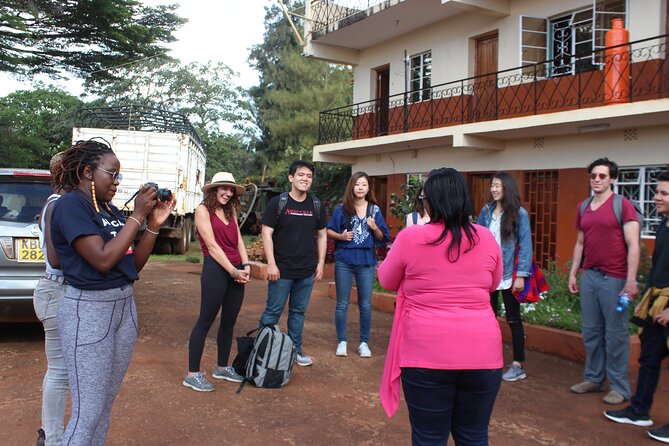
The maximum group size is 10 people. That is small enough to keep the experience personal without making it a private tour.
For a coffee farm visit, group size affects the whole day. A large crowd can make it hard to hear the explanation among the trees or get close during the roasting session. With 10 or fewer people, you should have a better chance to see what is happening and ask questions.
This format also suits mixed groups. Coffee lovers can ask about roasting and quality. First-time visitors can focus on the basics. Families can learn together, though children must be accompanied by an adult.
The two-hour length is another advantage. It is long enough to cover the farm, processing, roasting, and tasting, but short enough to fit into a Nairobi sightseeing day. Do not expect an all-day agricultural visit. The experience is a compact introduction to Kenyan coffee.
Getting there from Nairobi

The farm is outside Nairobi, and the tour offers round-trip transfers from the city when that option is selected. Transportation is not automatically included in every booking, so check the option you choose before paying.
This is an important detail. The experience may look simple on paper, but the trip to a working farm can be less straightforward than visiting a city café. One practical warning concerns the final part of the road, which can be difficult because of its condition.
If you are driving yourself or arranging transport, allow extra patience for that last stretch. If you prefer a simpler day, the transfer option is likely worth considering. The available information does not give pickup times, vehicle details, or the exact pickup area, so confirm those points when booking.
A mobile ticket is provided, which makes it easy to keep the booking on your phone. Confirmation is received at the time of booking.
Is $35 good value?
At $35 per person, this is a fair price for a two-hour small-group activity that includes several parts.
You are paying for a farm visit, guided explanations, a roasting activity, coffee tasting, snacks, bottled water, and coffee or tea. If you select the transfer option, you also get the convenience of round-trip transport from Nairobi, though you should confirm whether that option changes the final price.
The take-home roasted coffee adds a little more value. It gives you something physical to keep, rather than ending with a drink that disappears before you leave.
The price makes the most sense if you want more than a photo stop. You get an introduction to coffee growing, processing, roasting, and tasting in one compact visit. For a serious coffee enthusiast, the experience may feel brief, but the personal roasting session helps justify the cost.
If your main goal is simply to drink Kenyan coffee, a Nairobi café will be cheaper and easier. If you want to understand how the coffee is produced and meet people connected with the farm, this tour offers more.
Who will enjoy this experience most?
I would recommend it first to coffee drinkers who want to see production at its source. You do not need professional training, but curiosity helps. The tour works particularly well for people who want to understand what makes Kenyan coffee distinctive rather than simply buy a bag of beans.
It also suits visitors looking for a quieter break from Nairobi. The farm setting, small group, and two-hour schedule give you a change of pace without taking a whole day.
Families can take part, provided children are accompanied by an adult. The tour may also suit anyone interested in Kenyan agriculture and local business, since the explanations cover the coffee industry as well as the farm itself.
Baristas and serious home brewers will probably want to ask plenty of questions during the roasting and tasting. The supplied information does not promise advanced tasting instruction, so professionals should see this as a farm-based learning experience, not a formal coffee certification course.
What to know before you go
Book at least a few days ahead if you can. The experience is often reserved about 18 days in advance, and the group limit is only 10 people.
Choose the transport option with care. Hotel pickup and drop-off are not included unless that option is selected, and transportation to and from the attraction is otherwise your responsibility.
Plan for about two hours on site. Snacks and drinks are included, but this is not a full lunch. Children need an accompanying adult, and most people can participate.
The cancellation policy is forgiving if your plans change early. You can cancel at least 24 hours before the local start time for a full refund. Cancellations or changes made less than 24 hours before the start time are not accepted for a refund.
Should you book this Nairobi coffee farm tour?
Book it if you want a personal, practical introduction to Kenyan coffee. The strongest features are the small group, the old family-run farm, the clear farm-to-cup explanation, and the chance to roast coffee yourself and take it home.
Skip it if you want a long plantation visit, advanced professional tasting instruction, or a completely effortless road journey. The final road section may be rough, and the activity lasts only about two hours.
For most coffee lovers, though, $35 is sensible value. You get out of the city, see coffee trees in production, meet guides such as Stanley and Duncan, roast your own beans, and finish with a fresh cup of Arabica coffee. That is a useful and memorable way to spend part of a Nairobi day.
FAQ
How long does the coffee farm tour last?
The experience lasts approximately two hours.
Where does the tour take place?
The tour takes place at All Seasons Coffee, a working coffee farm outside Nairobi, Kenya.
How much does the tour cost?
The listed price is $35 per person.
How many people can join the tour?
The activity has a maximum of 10 participants.
Is transportation from Nairobi included?
Round-trip transfers from Nairobi are available when you select that option. Hotel pickup and drop-off, and transportation to and from the attraction, are not included otherwise.
What activities are included?
You walk through the farm, see coffee trees, learn about processing, roast coffee yourself, take some roasted coffee home, and drink freshly brewed coffee with refreshments.
Are food and drinks included?
Yes. Coffee or tea, bottled water, snacks, and light refreshments are included.
Can children join the tour?
Yes. Children can participate, but they must be accompanied by an adult.
What is the cancellation policy?
You can cancel at least 24 hours before the experience start time for a full refund. Cancellations or changes made less than 24 hours before the start time are not accepted for a refund.
More Eating and Drinking in the world
- Vienna for Food Lovers: Cafés, Markets & Austrian Cuisine
★ 5.0 · 1,063 reviews - Hanoi: Vietnamese Street Food Tour with Egg Coffee
★ 4.9 · 315 reviews - Da Nang Cooking Class with Coffee Tasting and Market Visit
★ 5.0 · 310 reviews - Hungry in Vienna? A Food Lover’s Coffee & Market Walk
★ 4.9 · 276 reviews
More Coffee Tastings in the world
- Hanoi Coffee Experience: 6 Brews, 9 Recipes & 3 Liquor Tastings
★ 5.0 · 2,945 reviews - Medellin: Coffee Tour with Transport, Snacks and Tastings
★ 4.7 · 1,357 reviews - Seattle Coffee Tour: Capitol Hill Cafes, Tastings & Local Stories
★ 5.0 · 489 reviews - Buggy Ride Into the jungle with cave coffee & chocolate tasting
★ 5.0 · 465 reviews
Just listed in the world
- Bali: Ubud Monkey Forest, Coffee Plantation, and Market Tour★ 5.0 · 5 reviews
- Chill coffee or meal break at illy Caffè in St.Mark’s Square★ 4.7 · 9 reviews
- Private Ubud Tour: Sacred Monkeys, Coffee, Temple, Waterfall★ 4.8 · 3 reviews
- Venice: Sunrise Walking Tour with Espresso★ 4.6 · 12 reviews
- Bali ,Tegallalang, Tirta Empul, Coffee, Lunch & Batur Hot Spring★ 4.0 · 2 reviews
- Mount Batur Sunrise Trekking (Private, Breakfast and Visiting coffee plantation)★ 5.0 · 27 reviews
- Venice Delights: Coffee & Food Experience Walking Tour★ 5.0 · 2 reviews
- Private Melbourne: Fitzroy, Collingwood, Culture, Coffee, History★ 5.0 · 7 reviews
Coffee Farm Tours, compared.
Award Winning Farm Tour: Coffee, Chocolate and Unique Gifts
Read our review →
La Herradura Coffee Farm: tour in Europe’s only plantation
Read our review →
Medellín Coffee Farm Tour with Trolley and Cable Car Ride
Read our review →
Private Cocora Valley, Salento & Coffee Farm Tour
Read our review →
Liamuiga Natural Farm Tour – St.Kitts’ Coffee Farm
Read our review →
Lists this coffee tour turns up in