
REVIEW · SAN JOSE
Hacienda Doka Coffee Experience Tour
Doka Estate turns a cup of coffee into a clear, hands-on lesson. You’ll see how beans are grown, picked, separated, dried, roasted, and packaged, then finish with coffee and chocolate samples. The butterfly garden and natural trails add a welcome change of pace.
I like the orderly look at coffee production, and I like that guides such as Ray and Andrea bring humor and clear explanations to the working plantation. The main caution is that the sugar mill portion may not be active, so you should book this for the coffee education first, not for a guaranteed sugar-processing demonstration.
Key points to know before you book
- Coffee is the main event: Follow beans through several stages, from plant and harvest to processing and packaging.
- The tasting is included: Coffee and chocolate samples come at no extra charge.
- The butterfly garden is worth your time: You can continue walking the grounds after the guided portion.
- The tour is compact: Plan on about 1 hour and 15 minutes, with some visitors spending up to 1.5 hours.
- Sugar-cane access can vary: A partial mill may be visible, but the processing demonstration is not always running.
- Come independently: Transportation is not included, and the tour starts and ends at Doka Estate.
Coffee from red fruit to morning cup
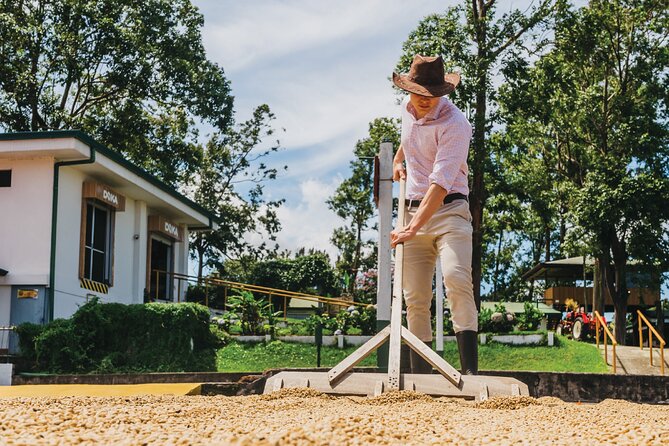
The best reason to visit Hacienda Doka is simple: you get to see coffee as a farm product rather than a black drink in a mug. The tour explains the work behind the bean, including cultivation methods, harvesting, separation, peeling, drying, roasting, and packaging.
That order matters. Many coffee tastings skip straight to flavor. Here, you first learn why a bean changes at each stage. You may get to handle coffee at different points in the process, which makes the lesson easier to remember than a talk filled with technical terms.
The plantation also presents coffee as a balance between nature and science. You’ll hear about growing methods and the effort to produce an even, high-quality bean. The age-old brewing techniques add useful context, especially if you already care about how roast and preparation affect the final cup.
This is not a long farm stay or a slow rural walk. The guided portion moves through the main ideas in roughly 75 minutes. That makes it a good fit for a half-day near San Jose, or for a stop before continuing elsewhere in Costa Rica.
More Coffee Farm Tours in the world:
- Award Winning Farm Tour: Coffee, Chocolate and Unique Gifts
★ 5.0 · 484 reviews - La Herradura Coffee Farm: tour in Europe’s only plantation
★ 4.8 · 430 reviews - Big Island: Volcanoes, Waterfalls, & Coffee Farm Day-Trip
★ 4.9 · 414 reviews
What happens inside the coffee operation
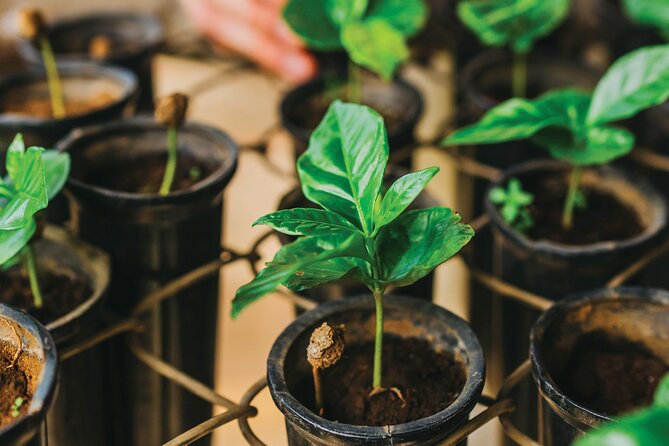
The coffee section is arranged as a process, which helps you keep track of what you are seeing. You begin with the plant and the act of picking. One especially hands-on part allows you to pick coffee beans from the plant, giving you a direct sense of where the whole chain begins.
From there, the tour follows the bean through factory stages. You can see how the beans are separated, peeled, dried, and prepared for sale. Packaging is part of the story too. It shows that coffee production does not end when the bean leaves the fruit.
The roasting portion is important, but you should set your expectations carefully. The experience explains coffee from planting through roasting, and the tour is widely praised for making production easy to understand. Still, one account specifically wished there had been more actual roasting in operation. If watching every mechanical step is your top priority, ask what will be running on the date you plan to visit.
The guide makes a real difference here. Ray has been singled out for making the experience both enjoyable and informative, while Andrea is noted for explaining production with clarity and enthusiasm. Guides can change, but the format gives them plenty to work with: machinery, beans at different stages, farm methods, and the final tasting.
I would pay attention to the small physical details. Touching beans at multiple stages helps you notice how much the product changes before it becomes something you brew at home. It also gives children and adults who are not coffee experts a reason to stay engaged.
The sugar mill comes with a question mark
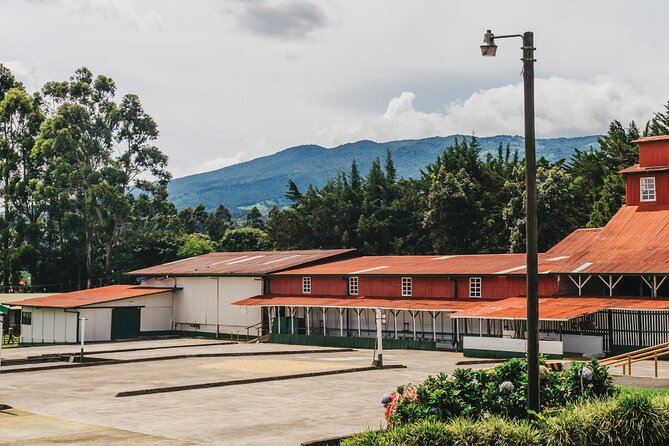
The sugar-cane section is presented as part of the experience, with an explanation of how raw cane can become sugar, molasses, and other sweet products. That sounds like a fine companion to the coffee tour because it adds another traditional Costa Rican crop and another kind of food production.
The practical catch is that access and operation may not match the description every time. Some accounts found only a partial, out-of-use mill on the grounds. The area could be visited, but there was no active processing or detailed demonstration. Another account received no sugar-cane portion at all.
So, treat the mill as a possible extra rather than the reason to pay $35. If it is working, you gain a useful second lesson. If it is not, the coffee operation remains the reliable core of the visit. Ask at the start whether the mill is active that day, particularly if sugar production is a major interest.
This is also a reminder that Doka Estate is a working agricultural site, not a stage set that guarantees every machine will run on demand. That can be part of the appeal, but it calls for sensible expectations.
Natural trails and the butterfly garden
After the coffee presentation, you can walk the natural trails and visit the butterfly garden. The grounds give the experience breathing room after the factory portion, and they are a good place to take photographs.
The butterfly garden is the clear highlight for many people. It adds movement and color to a tour that otherwise focuses on plants, machinery, and processing. If you are deciding whether to stay after the guided section, I would make time for the butterflies rather than leaving as soon as the tasting ends.
The available details do not specify the trail length or the number of butterfly species, so you should not plan this as a major hiking outing. Think of the paths as a short extension to the plantation visit. You can use them to slow down, look around, and make the most of your time at the estate.
The garden also helps families. Younger children may not care about every stage of drying or packaging, but a walk among butterflies can keep the visit enjoyable for everyone. Adults who came mainly for coffee get a pleasant outdoor finish.
More Coffee Tours in the world:
- Hanoi Coffee Experience: 6 Brews, 9 Recipes & 3 Liquor Tastings
★ 5.0 · 2,945 reviews - Medellin: Coffee Tour with Transport, Snacks and Tastings
★ 4.7 · 1,357 reviews - Istanbul: Turkish Coffee Making and Fortune Telling Workshop
★ 4.9 · 1,308 reviews - Hanoi Coffee Workshop: Taste Salt, Coconut and Egg Coffee
★ 5.0 · 1,286 reviews
Coffee and chocolate are the proper finale
The included samples are small but well chosen. Coffee lets you connect the explanation to the finished product, while chocolate provides a sweet contrast and an easy crowd-pleaser.
This is not a full meal. Food and drinks beyond the samples are not included, so plan accordingly. A separate lunch may be available at the estate, but the cost and exact arrangement are not part of the stated $35 tour price. One account found the buffet lunch good in quality but expensive, with only one walk to the buffet. I would check the current meal rules and price before adding lunch to your plans.
The tasting is useful even if you are not a serious coffee drinker. You have just seen how the bean is produced, so the sample gives the tour a clear ending rather than stopping at a machine room. If you do love coffee, you will probably want to browse the coffee shop afterward, though the available details do not state what products or prices are offered.
Is $35 a fair price?

At $35 per person, the value depends on what you want from a plantation visit. For a roughly 75-minute guided lesson, coffee and chocolate samples, access to the butterfly garden, and time on the grounds, the price is reasonable if you are already near Doka Estate.
The cost is easier to justify for coffee fans, families, and anyone who wants a structured introduction to Costa Rican agriculture. You are not paying only for a drink tasting. You are paying for an explanation of cultivation, a look at production machinery, the chance to handle beans, and a short walk through the estate.
The value is less convincing if your main goal is an active sugar-cane demonstration or a long farm tour. Those elements may not be operating, and the visit is not designed as an all-day experience. You also need to arrange your own transportation, which can raise the total cost.
A group limit of 25 people helps keep the tour from becoming unmanageably large, though the experience can still feel more or less personal depending on the group and guide. A minimum of two people is required to book, and the provider may cancel after confirmation if that minimum is not met, offering an alternative or a full refund.
Timing, transport, and who will enjoy it
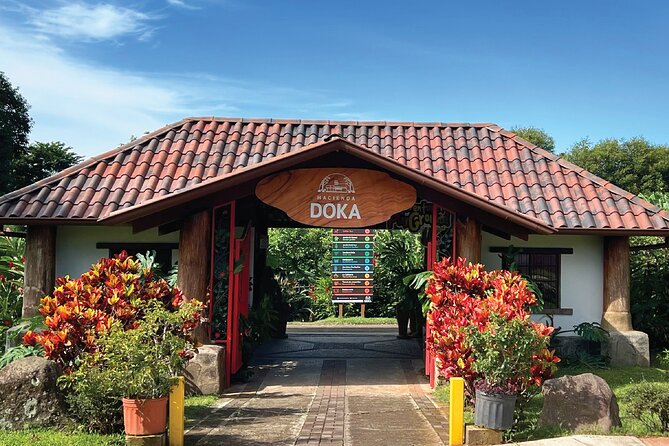
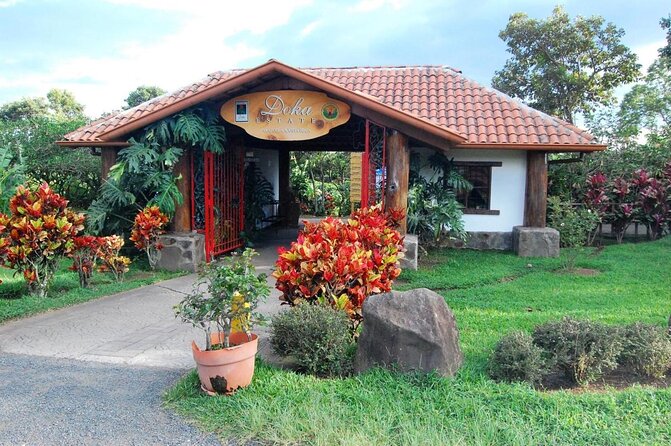
The meeting point is Doka Estate Costa Rica Coffee Tour and Plantation in Sabanilla, Alajuela Province. The activity begins and ends there. Transportation is not included, so you need to arrange your own way to the estate from San Jose or elsewhere.
The tour is listed at about 1 hour and 15 minutes, but leave room for a longer visit if you want to walk the grounds, see the butterfly garden, browse the coffee shop, or stop for food. Some people spend closer to 1.5 hours overall.
I would choose this experience for:
- Coffee drinkers who want to understand farming and processing
- Families looking for a short educational stop with butterflies
- First-time visitors who want a manageable introduction to Costa Rican coffee
- People with a free morning or afternoon near San Jose
- Anyone who enjoys seeing a food product made from start to finish
I would choose something else if you want a long plantation trek, a guaranteed sugar-cane production show, or included hotel transport. The experience is strongest when you see it as a focused coffee lesson with a pleasant garden finish.
Service animals are allowed, and the site is near public transportation. Most people can participate. The available information does not give detailed terrain or mobility guidance, so anyone with specific access needs should confirm the conditions before booking.
Tips for getting more from your visit
Arrive ready to pay attention to the sequence. The useful part is not one single machine or one dramatic view. It is seeing how cultivation, picking, processing, drying, roasting, and packaging fit together.
Ask your guide questions about the beans in front of you. Guides such as Ray and Andrea have been praised for explaining the process clearly, and a specific question can turn a general tour into a more useful lesson.
Keep time for the butterfly garden. It is easy to focus so closely on coffee that you leave before seeing one of the most enjoyable parts of the property.
If the sugar mill matters to you, ask whether it is running before you commit to the visit. The stated program includes sugar production, but the operation may be partial or inactive.
Finally, do not assume the $35 covers a meal or transportation. It covers the tour and coffee and chocolate samples. You will need to handle the trip to Doka Estate and any additional food or drinks yourself.
Should you book the Hacienda Doka Coffee Experience?
Yes, if you want a clear, compact look at Costa Rican coffee production near San Jose. The strongest parts are the step-by-step explanation, the chance to handle beans, the friendly guide-led presentation, and the butterfly garden afterward.
Book with one qualification: make coffee your priority. The sugar mill may be open, inactive, or only partly available, and the amount of live roasting you see can vary. At $35, this is a solid choice for a focused agricultural experience, especially if you value learning how a familiar cup begins on a plantation.
Free cancellation is available if you cancel at least 24 hours before the start time. Changes or cancellations inside that window are not accepted for a refund.
FAQ
Where does the Hacienda Doka Coffee Experience begin and end?
It begins at Doka Estate Costa Rica Coffee Tour and Plantation in Sabanilla, Alajuela Province, and ends back at the same meeting point.
How long does the tour last?
The guided activity lasts about 1 hour and 15 minutes. Allow up to 1.5 hours if you stay for the grounds, butterfly garden, or coffee shop.
How much does the tour cost?
The listed price is $35 per person.
Is transportation included?
No. Transportation is not included, so you must arrange your own way to and from Doka Estate.
Are coffee and chocolate included?
Yes. Coffee and chocolate samples are included. Other food and drinks are not included.
Does the tour include the sugar mill?
The experience includes a visit to the sugar mill area and explains sugar, molasses, and related products. The mill may not always be operating, and the processing portion may not be available.
Can I visit the butterfly garden?
Yes. The butterfly garden is part of the estate experience, and you can also walk the natural trails after the guided tour.
How many people can join the tour?
The maximum group size is 25 people. A minimum of two people is required for a booking.
Can I cancel for a refund?
Yes, if you cancel at least 24 hours before the experience start time. Cancellations or changes made less than 24 hours before the start time are not eligible for a refund.
Just listed in the world
- Yerevan: Private Coffee Tour with 2 Café Stops★ 5.0 · 2 reviews
- Vietnamese Coffee 101 Workshop★ 5.0 · 11 reviews
- Vietnamese Coffee Making Class in Hoi An★ 5.0 · 4 reviews
- Turkish Coffee and Traditional Turkish Dessert Cooking★ 4.6 · 8 reviews
- Ubud: Waterfall, Holy Water Temple,Swing&coffee plantation★ 5.0 · 9 reviews
- Vancouver: Street Art & Craft Coffee Walking Tour w/ Tasting★ 4.8 · 11 reviews
- The Colors of Coffee in the Farms of Coatepec★ 5.0 · 3 reviews
- Vienna: Guided Viennese Coffee-House Tour★ 5.0 · 2 reviews
Coffee Farm Tours, compared.
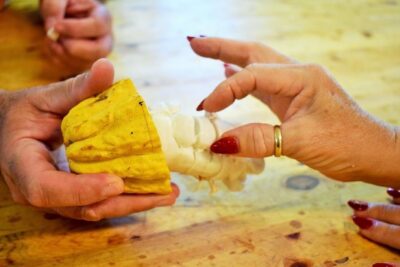
Award Winning Farm Tour: Coffee, Chocolate and Unique Gifts
Read our review →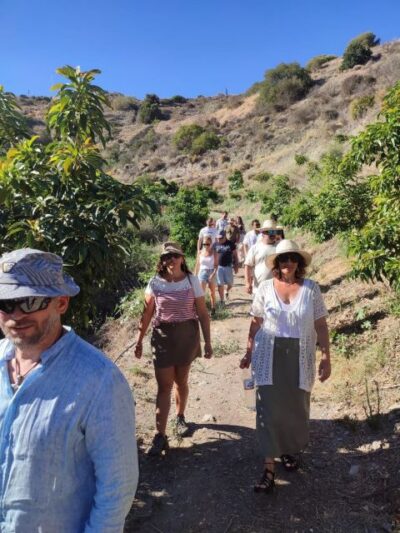
La Herradura Coffee Farm: tour in Europe’s only plantation
Read our review →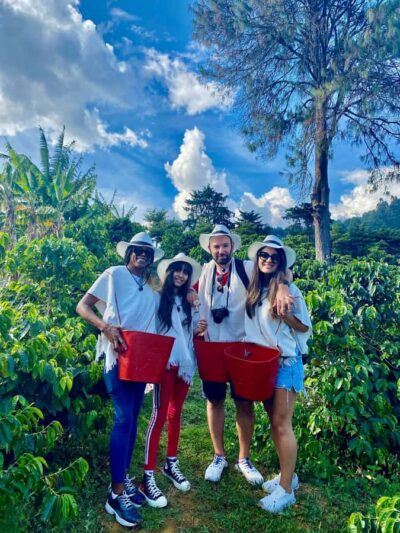
Medellín Coffee Farm Tour with Trolley and Cable Car Ride
Read our review →
Private Cocora Valley, Salento & Coffee Farm Tour
Read our review →
Liamuiga Natural Farm Tour – St.Kitts’ Coffee Farm
Read our review →
Lists this coffee tour turns up in