
REVIEW · ANTIOQUIA
Medellín Coffee Farm Tour with Trolley and Cable Car Ride
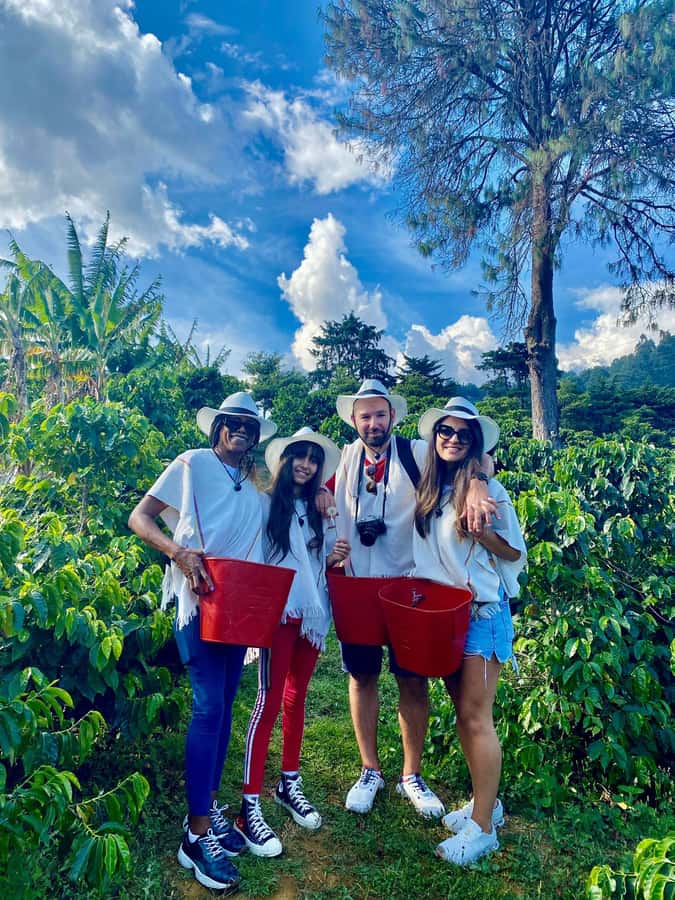
Medellín’s most unusual coffee outing is not out in the countryside. It takes you uphill into Barrio La Sierra, where a local family grows and processes coffee within the city. You ride the electric trolley, glide above the hills by cable car, walk through Comuna 8, pick coffee berries, and follow them from field to cup.
I like the hands-on harvest, which turns coffee from a breakfast habit into a piece of hard work you can see and feel. I also like the chance to hear about Comuna 8 from local guides such as Melissa, Carolina, David, and Arturo, rather than viewing the neighborhood only from a passing cable car.
The main drawback is the amount of uphill walking and stairs. This is not a gentle café visit, and the tour is not suitable for people with mobility impairments. Bring closed shoes, allow five hours, and do not count on buying a full meal along the way.
Key points at a glance
- Coffee inside Medellín: Visit a working urban coffee farm in Barrio La Sierra rather than traveling several hours to the countryside.
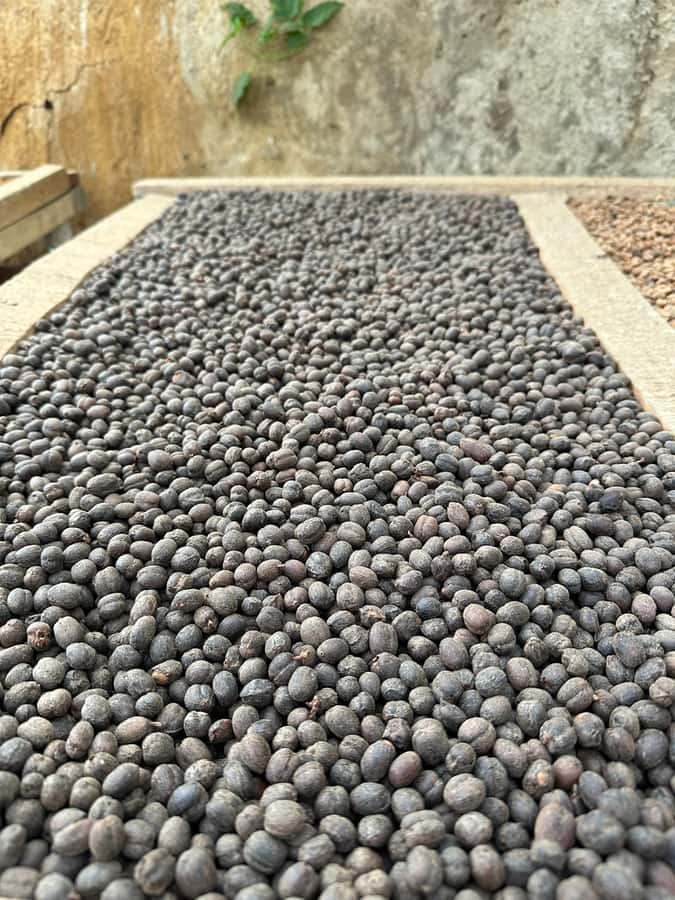
- A real harvest: Pick coffee cherries by hand, then see cleaning, fermenting, drying, roasting, grinding, and brewing.
- Trolley plus cable car: Public transport is part of the experience, with wide views over Medellín and the surrounding hills.
- Comuna 8 context: Learn how Barrio La Sierra has changed and how the coffee project supports local families and community efforts.
- Small-group feel: The experience is often relaxed and personal, with plenty of room for questions and translation.
- Plan for hills: Expect walking, steps, and uneven paths. Closed shoes and insect repellent are sensible choices.
From San Antonio station to the hills of Comuna 8
The tour begins at the street-level entrance to the San Antonio Tranvia station, underneath the San Antonio metro station. Look for the sign for San Antonio Tranvia station and meet your guide there. The meeting point matters because San Antonio is a busy transport hub, and the trolley entrance is not the same as a random meeting spot outside the metro.
From there, you ride Medellín’s electric trolley for about 30 minutes. This is not wasted transit. It gives you a quick look at the city as you move away from the central area, and your guide can begin explaining the route and the community you are about to visit.
The cable car ride lasts about 12 minutes. As the carriage climbs, Medellín opens below you in layers, with dense neighborhoods spreading up the sides of the valley. The ride is one of the tour’s strongest visual moments, but it also prepares you for the walking ahead: Barrio La Sierra is built on a steep hillside.
I like that the trolley and cable car are part of the price rather than extra transport you must arrange yourself. They also make the outing feel connected to ordinary Medellín life. You are not simply being driven to a staged farm; you are crossing the city by the same public systems that link its neighborhoods.
More Coffee Farm Tours in Colombia
- Comuna 13 & Coffee Farm Private Tour in Medellin | The Best Combo
★ 5.0 · 46 reviews - Coffee Farm & ATVs Private Tour in Medellin: Stunning Views & Fun
★ 5.0 · 31 reviews - From Medellin: Day Trip to a Jardin Coffee Plantation
★ 4.5 · 16 reviews
Walking through Barrio La Sierra
Once you leave the cable car, the tour continues on foot through Barrio La Sierra. This is a residential community, not a polished tourist district, so the experience asks for attention and respect. Your guide provides the local setting, explains the changes in Comuna 8, and helps you understand how the coffee project fits into the neighborhood.
The community walk is important because it adds meaning to the farm visit. You see that this is an urban coffee project tied to people and place, not only a lesson about agriculture. The tour focuses on transformation, local work, and the way families are building new possibilities in an area that has faced serious hardship.
The walking can be strenuous. One account describes about 500 stairs, and several parts of the route include uphill streets or steps. The exact effort will depend on your pace and route that day, but you should assume a workout rather than a flat stroll.
Wear closed shoes with a good grip. If you wear shorts, insect repellent is useful once you reach the farm. The tour can continue in light rain, so a small rain layer is sensible, although no specific weather equipment is included.
Casa Finca de La Sierra and the family behind the coffee
The tour visits Casa Finca de La Sierra and its museum before moving into the coffee-growing area. This gives you a place to hear the family story and understand how coffee production became part of the neighborhood’s future.
The family welcome is one of the most personal parts of the experience. Rosa and her relatives explain their work, answer questions, and show how the coffee operation fits into daily life. The visit can feel less formal than a large plantation tour, which is exactly its strength. You are close to the people doing the work, and your guide helps translate when needed.
English and Spanish tours are available. Guides named in past departures include Melissa, Carolina, David, Arturo, Valentina, Camilo, Christian, Felipe, Emily, Anna, and Annie. The specific guide depends on the date, but the best guides do more than translate coffee terms. They also explain the neighborhood and help the family’s story make sense to an English-speaking group.
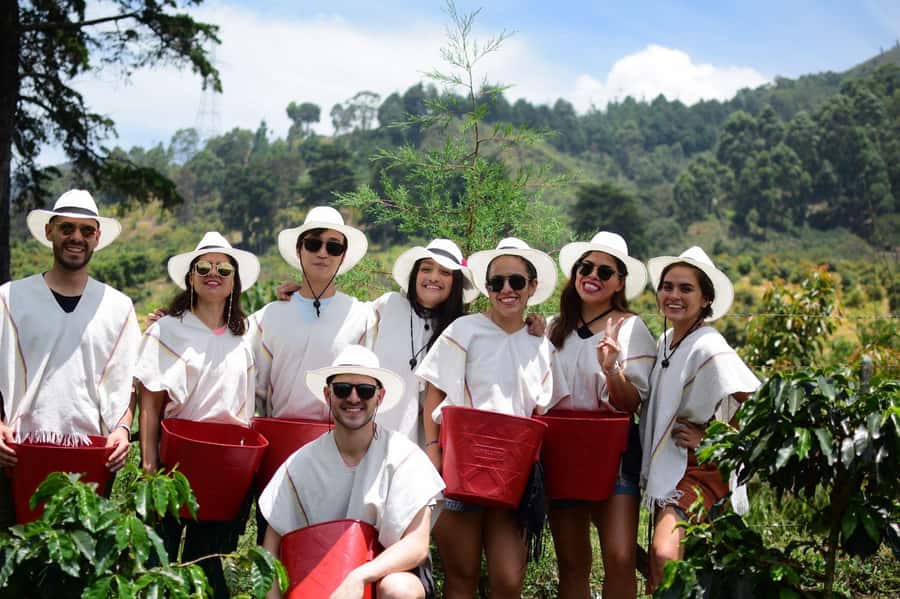
The group size has often been small, which helps. You can ask about farming, roasting, local life, or the history of Comuna 8 without waiting behind a large crowd. Small groups also make the farm visit feel more like a hosted meeting than a performance.
Picking coffee cherries by hand
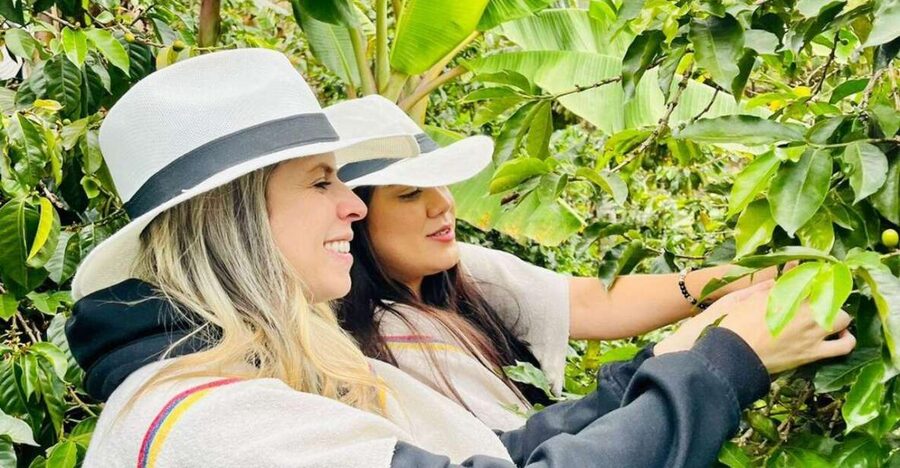
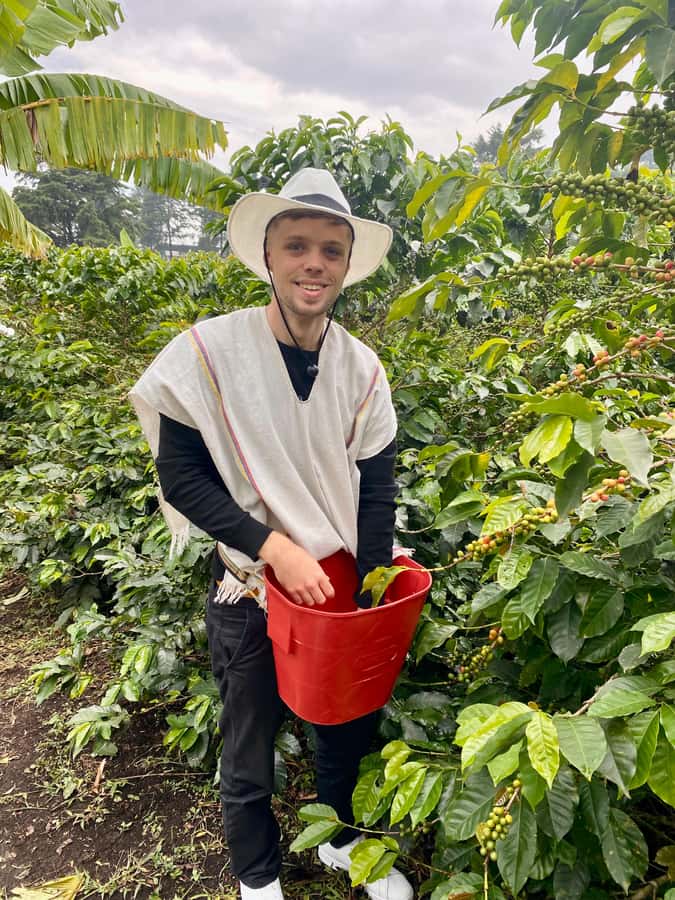
At the farm, you get to harvest coffee berries yourself. This is the moment that changes the tour from a demonstration into a working lesson. You walk among the plants, choose ripe fruit, and see the scale of the crop at close range.
Coffee looks simple when it arrives in a cup. Picking it shows the opposite. You quickly understand that each berry must be selected, gathered, and handled before anyone can roast it. Even a short harvest gives you a better sense of the labor behind the drink.
The farm visit is especially useful for people who have already done standard coffee tastings. You are not only being told about altitude, roasting, or flavor. You are handling the raw product and then watching the stages that follow.
The family may involve younger members in the visit and teaching process. That adds a community and education angle, though you should remember that this remains a local working site, not a purpose-built museum with every step arranged for display.
More Coffee Farm Tours in Medellin
- Medellin: Coffee Farm and Barista Workshop Experience
★ 4.4 · 9 reviews - Medellin: Coffee Farm Tour & Spa with Overnight Glamping
★ 4.5 · 3 reviews - Guatapé & Coffee Farm, all in one day
★ 5.0 · 3 reviews - Medellín: Coffee Tour Experience at a Coffee Farm
★ 4.8 · 3 reviews
From cherry to cup
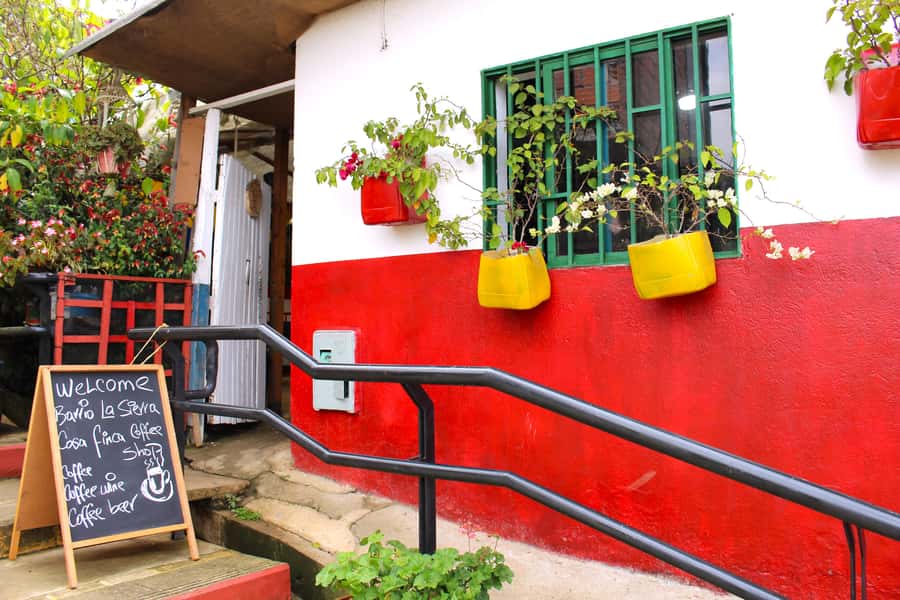
The coffee lesson follows the beans through the main stages of production. You can expect to see or hear about cleaning, fermenting, drying, roasting, grinding, and brewing. The exact order and length of each explanation may vary, but the purpose is clear: show how much work separates a picked berry from a finished drink.
The roasting section is particularly helpful because it connects the raw bean to the flavor in your cup. Grinding and brewing then bring the process home. By the tasting stage, you have seen enough of the chain to understand why small changes in processing matter.
You drink plenty of locally grown coffee during the visit. A pastry or local snack may also be served, but this is not a meal stop. One practical point is easy to miss: there is no regular food for purchase along the route, so eat beforehand if you need a substantial meal.
Coffee bags are not included in the $56 price. You may be able to purchase coffee from the farm, but buying a bag is an extra expense, not part of the tour. If you want to take home beans, ask the farm team or guide about current availability and payment before you leave.
One small limitation is that the tasting is not designed as a formal comparison of several coffees. If you want a technical tasting with multiple origins and side-by-side notes, this is not that. The focus is the full production story, the local family, and the chance to drink coffee connected to the place you have just visited.
Why the community story matters
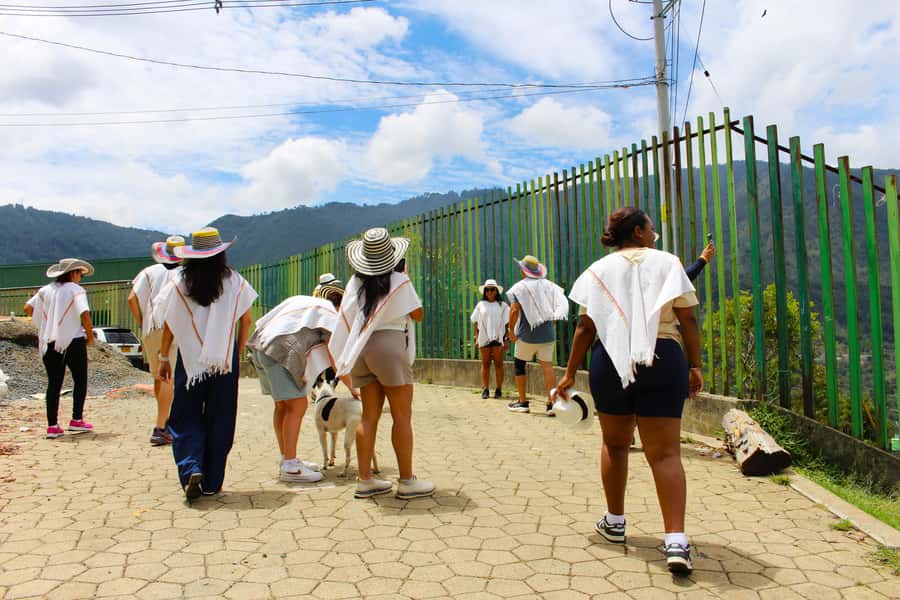
The tour’s social value comes from where it takes place and who runs the farm. Barrio La Sierra is presented as a neighborhood that has moved through difficult years and is now working toward a stronger future. The coffee project gives families a way to share agricultural knowledge, welcome visitors, and support local education and work.
I would not treat the tour as a complete lesson in Medellín’s social history. It is a short community visit, not a university course. Still, it gives you a more grounded view of Comuna 8 than a cable car ride alone.
The best guides make this part clear without turning it into a lecture. Arturo, David, Melissa, Carolina, and others have been praised for answering questions, translating carefully, and connecting coffee production with the city around it. You come away with two linked stories: how coffee is made and how a hillside community is changing.
The ethical side also deserves a practical look. You are visiting a real neighborhood, so listen to your guide, avoid treating residents as photo subjects, and follow any instructions about where to walk or take pictures. Your payment supports a local family and community project, but respectful behavior is just as important as the money.
Is $56 a fair price?
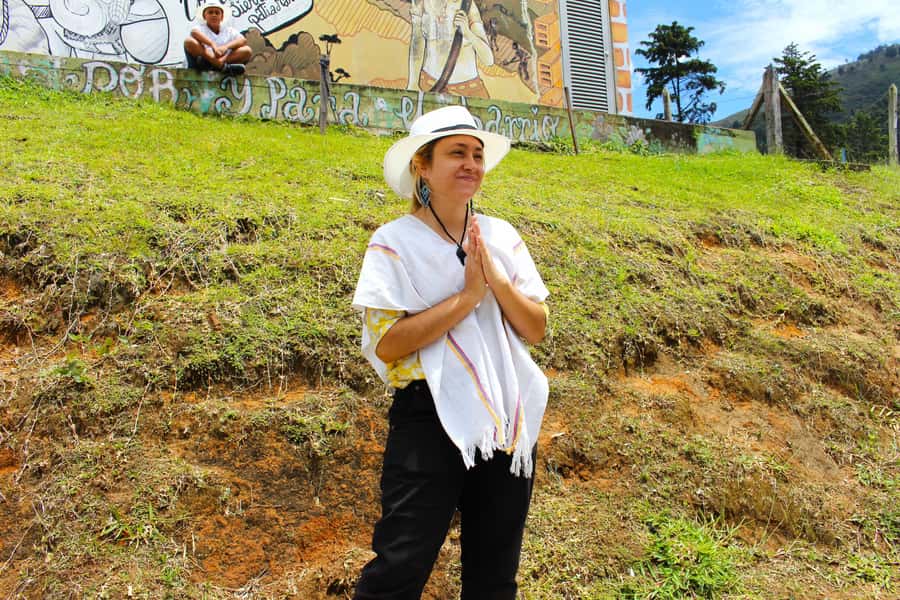
At $56 per person, this costs more than a coffee tasting in central Medellín. The price includes the electric trolley and cable car rides, the guided walk, the Casa Finca de La Sierra and museum visit, the farm experience, coffee tasting, and return to San Antonio.
The value is strongest if you would otherwise need to organize several separate activities. You get city transport, hillside views, a neighborhood walk, a working farm, cultural context, hands-on harvesting, and refreshments in about 270 minutes. A conventional plantation tour may offer more acreage, but it would not offer this same city-to-community route.
The price is less compelling if you want a quick tasting, a comfortable coach ride, or a full meal. You are paying for access, interpretation, and the local connection. The walking effort and small-scale setting are part of the value, not problems the operator can remove.
Free cancellation up to 24 hours before the start gives you some useful flexibility. You can also reserve and pay later. When booking, you must provide your full name and passport number, but you should not bring your passport on the tour.
Who will enjoy this coffee tour?
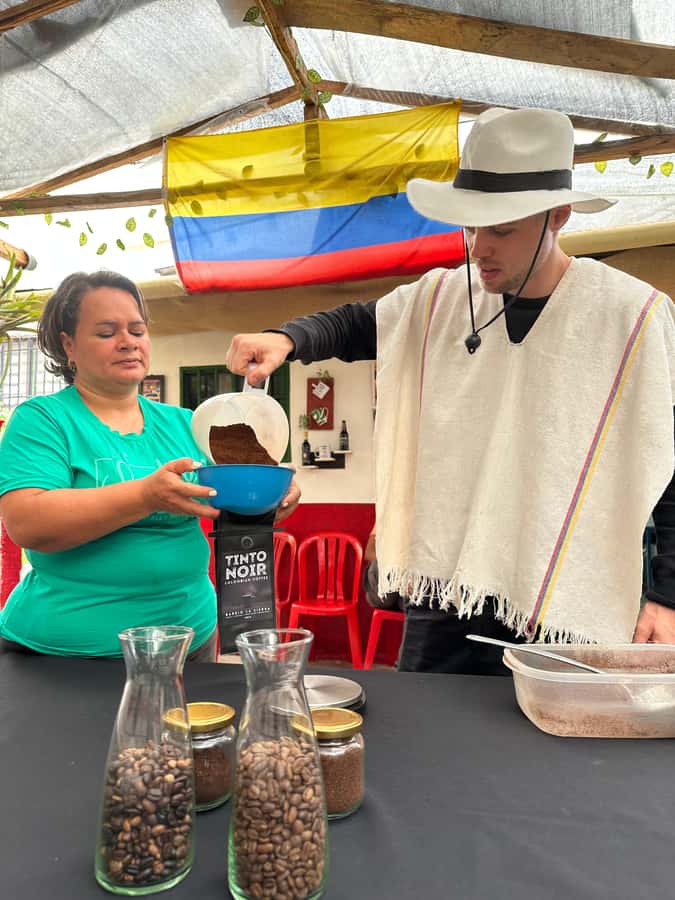
I would choose this for you if you want coffee, public transport, local history, and physical activity in one outing. It suits curious visitors who prefer meeting a family and walking a neighborhood over spending the day in a polished tourist attraction.
It is also a good choice for non-coffee drinkers. The harvest, city views, family story, and Comuna 8 history remain worthwhile even if coffee is not your main interest. The process is the real subject, with tasting as the reward.
Families with older children may enjoy the hands-on parts, but the hills and stairs deserve an honest check first. One account said even parents around 70 managed the route, yet mobility differs from person to person. The operator specifically lists the experience as unsuitable for people with mobility impairments.
If you want a serious specialty coffee class, you may find the tasting too basic. If you want the most rural plantation setting in Colombia, you should travel outside Medellín. But if you want an unusual city experience that brings coffee production into the neighborhood, this is a strong fit.
Should you book it?
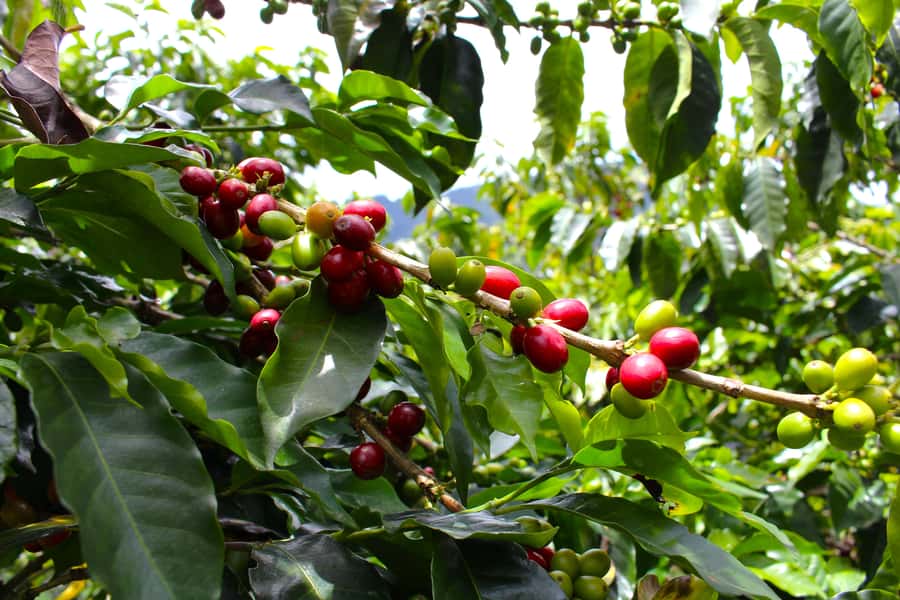
Book this tour if you want to see a side of Medellín that is easy to miss, ride the trolley and cable car with purpose, and take part in the coffee process rather than simply order a cup. The harvest and the family welcome give the outing its strongest moments, while the guides add useful context about Comuna 8.
Skip it if steep streets, long walks, or stairs will make five hours uncomfortable. Also skip it if you expect a buffet, a formal multi-coffee tasting, or a luxury farm visit.
For everyone else, $56 is a fair price for a small-group experience with transport, views, local interpretation, and real participation. Wear sturdy closed shoes, eat before meeting at San Antonio, bring water and rain protection, and arrive ready to walk uphill.
FAQ
Where does the Medellín coffee farm tour begin?
The guide meets you in front of the main entrance to the San Antonio Tranvia station, at street level underneath the San Antonio metro station.
How long does the experience last?
The tour lasts 270 minutes, or about four and a half hours.
What transport is included?
The experience includes the electric trolley ride and the cable car ride, along with the guided walking portions and return to San Antonio.
What languages are available?
Live guiding is available in English and Spanish.
Do I get to pick coffee berries?
Yes. The tour includes harvesting coffee berries by hand at the farm.
What parts of coffee production will I learn about?
You learn about the process from seed to cup, including harvesting and the later stages of cleaning, fermenting, drying, roasting, grinding, and brewing.
Is food included?
Welcome refreshments, coffee, local snacks, or a pastry may be provided, but there is no regular food available for purchase along the route. Eat beforehand if you need a full meal.
Are coffee bags included in the price?
No. Coffee bags are not included. Any purchase of coffee is an additional expense.
Is the tour suitable for people with mobility impairments?
No. The route includes uphill walking and steps, and the activity is listed as unsuitable for people with mobility impairments.
Just listed in Medellin
- Medellin: Coffee Farm Tour & Spa with Overnight Glamping★ 4.5 · 3 reviews
- Medellin: Coffee and fruit tour★ 4.9 · 12 reviews
- Medellin: The Best Coffee Tasting Experience★ 5.0 · 5 reviews
- Medellin: Avoeden Café Coffee Brewing Workshop★ 5.0 · 12 reviews
- Guatape Coffee Villa including Rock Town & Waterfall★ 5.0 · 12 reviews
- Guatapé & Coffee Farm, all in one day★ 5.0 · 3 reviews
- From Medellin: Private Envigado Coffee Tour with Tastings★ 4.3 · 4 reviews
- Medellín: Coffee Tour Experience at a Coffee Farm★ 4.8 · 3 reviews
Coffee Farm Tours, compared.
Award Winning Farm Tour: Coffee, Chocolate and Unique Gifts
Read our review →
La Herradura Coffee Farm: tour in Europe’s only plantation
Read our review →
Private Cocora Valley, Salento & Coffee Farm Tour
Read our review →
Liamuiga Natural Farm Tour – St.Kitts’ Coffee Farm
Read our review →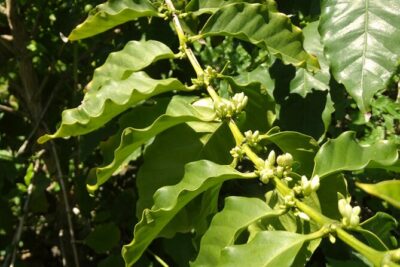
Lists this coffee tour turns up in