
REVIEW · NAIROBI
Nairobi Coffee Farm and Factory Tour
Kenyan coffee becomes far more interesting when you see the work behind the cup. At Fairview Coffee Estate, just outside Nairobi, you walk through the growing fields, follow beans through harvesting, grading, drying, processing, and roasting, then sit down to taste the finished coffee.
I like the private format, since your party gets its own transport and farm visit rather than joining a large coach group. I also like the way guides such as Moses, Obed, Ann, Elvis, James, and Alex have been praised for explaining the process clearly and keeping the visit friendly. The main caution is the unclear timing and farm fee: the experience is described as about two to three hours, while the estate visit is also listed as four hours, and one booking included a reported $30 estate charge.
Key points to know before you book
- Fairview Coffee Estate is about 20 minutes from central Nairobi, giving you a quick change from city streets to open farmland.
- The tour follows the whole coffee chain, from trees and harvesting to grading, drying, factory work, roasting, and tasting.
- Private transport and hotel pickup are included, useful if you do not want to arrange a taxi to the estate.
- Coffee and snacks are provided, with several grades or roasts available to taste.
- Guides are a major strength, with Moses, Obed, Ann, Elvis, James, Alex, and others praised for clear and friendly service.
- Check the final cost and duration before departure, since the supplied details give different figures for the estate fee and total length.
Why Fairview makes a good Nairobi side trip
Nairobi is often treated as a starting point for a safari, but the city also gives you a chance to see how one of Kenya’s best-known exports is made. Fairview Coffee Estate offers a simple change of pace: fresh country air, green fields, scenic views, and a practical lesson in coffee production.
The estate is described as roughly 20 minutes from Nairobi’s city center. That short drive matters. You do not need to spend a full day reaching a rural farm, and the trip fits neatly into a free morning or afternoon. Your driver collects you from your hotel, handles the return trip, and provides bottled water.
This is a private experience, so only your party participates. That can make a real difference during the walk and tasting. You can ask questions at your own speed, spend more time on the parts that interest you, and avoid being tied to a large group’s schedule.
The setting also gives you something that a city café cannot. You see coffee plants growing in the ground, not just roasted beans in a bag. The estate connects the drink in your cup to farming, manual work, machinery, grading, and careful preparation.
More Coffee Farm Tours in Kenya:
- Coffee Farm Tour (Fairview)
★ 4.8 · 71 reviews - Nairobi: Coffee Factory and Farm Tour with Transfer
★ 4.5 · 60 reviews - Coffee Farm Village & Factory Half Day Tour with Pick-Up
★ 5.0 · 33 reviews
Walking through the coffee fields
The visit begins at Fairview Coffee Estate, where a farm guide introduces you to the plants and the early stages of production. You can expect to walk through the coffee fields and see the trees at close range. The exact conditions will depend on the season, but the tour is built around showing how coffee is grown and harvested.
The farm walk is useful because it makes coffee varieties and grades easier to understand. Several people who took the tour singled out the chance to see different coffee trees and learn how the beans are assessed. You are not simply told that Kenyan coffee is exported around the world. You see the starting point for yourself.
The estate setting is part of the appeal. The property is described as green and scenic, with country air only a short drive from the capital. Wear shoes suited to a walk on farm ground, and bring a light layer if you prefer not to rely on Nairobi’s daytime warmth. The available information does not promise a long hike, so think of this as a guided farm walk rather than a strenuous outdoor activity.
Guides appear to shape this portion of the experience. Elvis has been described as funny and engaging, while Alex was praised for explaining much about Kenya during the drive as well as at the farm. Ann, Moses, Obed, and others have also been singled out for their clear explanations and helpful manner.
The guide assigned to you may vary. That is worth knowing, but it is not necessarily a concern. The repeated strength of the tour is the quality of the personal explanation, not one fixed personality or scripted performance.
From harvested bean to working factory
The most useful part of the visit is the step-by-step production lesson. You follow coffee from growing and harvesting through grading, drying, processing, and roasting. This gives you a better sense of why a cup of coffee involves far more work than the final drink suggests.
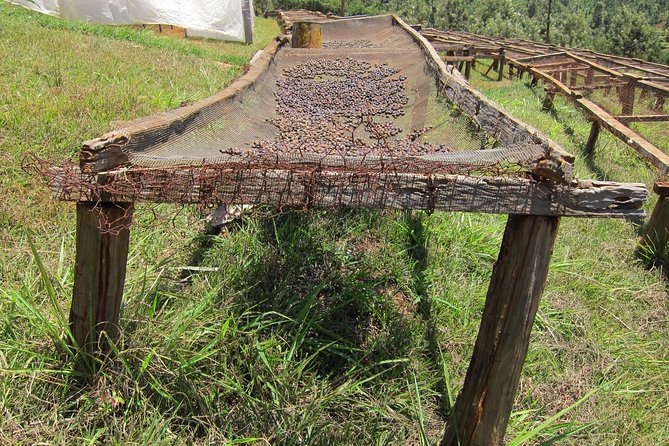
At the estate, you may see beans drying and learn how different grades are separated. The production process is labor-intensive, and the tour explains how the raw coffee changes before it becomes something you can brew. If you already enjoy coffee, this adds detail to a familiar daily habit. If you are only a casual drinker, it gives you a clearer idea of what quality control means.
The factory portion also helps put Kenyan coffee in an economic context. Coffee is presented as one of the country’s important exports, often called Kenya’s black gold. The tour connects the farm to the wider economy without turning the visit into a lecture on trade.
You should expect an educational tour rather than a hands-on farming workshop. The available details describe walking, viewing, listening, and tasting. They do not promise that you will pick coffee cherries, operate machinery, or roast your own batch. That distinction matters if you are looking for a practical craft class.
The tour can also help you understand why different roasts taste different. The experience includes learning about grades and roasting, then tasting several types. One detailed account described sampling four grades and buying a dark roast to take home. Packaged farm coffee is not included in the tour price, but you can purchase it separately if stock and estate sales arrangements allow.
The coffee tasting is the payoff
The tasting gives the visit a clear ending. After learning how the beans are grown and processed, you try the finished product with the background fresh in your mind. Coffee and snacks are included, and the tasting may feature several grades or roasts.
This is not just a free cup handed over at the end. The tasting has value because you have already seen the differences in production. You can compare the coffees with a better understanding of what you are drinking. Several accounts describe tasting different grades, while one describes four grades in particular.
I would book this even if coffee is not the main reason you are in Nairobi. The farm walk and factory explanation carry much of the experience, and the tasting simply makes the lesson more enjoyable. That said, people who dislike coffee or avoid caffeine should check what tasting options are available before booking. The supplied details do not promise tea or decaffeinated alternatives.
Snacks are included, but this is not presented as a full meal. Plan to eat before or after if you need lunch. The tour’s half-day scale makes it easy to combine with another Nairobi activity, but the uncertain duration means you should leave a sensible gap rather than schedule two timed attractions back to back.
More Coffee Tours in Kenya:
- Nairobi: Guided Coffee Farm Tour with Tastings
★ 5.0 · 24 reviews - Coffee farm tour, coffee roasting and tasting experience
★ 5.0 · 20 reviews - Private Half-Day Tour in Fairview Coffee Farm from Nairobi
★ 5.0 · 13 reviews - Day Tour to Fairview Coffee Estate From Nairobi
★ 4.9 · 8 reviews
Guides, drivers, and the private format
The guide and driver are important here because the experience has two distinct parts. Your driver handles the hotel transfer and may explain sights along the way, while the estate guide leads the farm and factory visit.
Moses has been praised for being engaging and enthusiastic, and one account noted that he also drove safely and communicated well. Obed has been described as friendly and helpful. Tim was noted for being punctual, responsive, and informative before and during the trip. Elvis, Ann, James, Alex, and the local guide Irin have also received strong personal praise.
You may not be able to request a particular guide, but you can ask when booking if someone specific is available. The names associated with especially strong feedback include Moses, Obed, Ann, Elvis, James, Alex, Tim, and Irin.
The private setup gives you more control than a standard group outing. If you want extra detail about grading, roasting, or Kenyan coffee exports, you can ask without holding up a busload of people. If you prefer a quiet visit, you can keep the conversation focused.
The tradeoff is price. At $98.50 per person, this is not the cheapest way to drink Kenyan coffee. You are paying for private transportation, hotel pickup and return, a private tour, bottled water, snacks, coffee, and the guide’s time. For a solo visitor, the price may feel high. For a small group splitting transport costs and valuing convenience, it makes more sense.
What the $98.50 price really covers
The listed price is $98.50 per person, with group discounts offered. Included services are private transportation, hotel pickup and drop-off, bottled water, coffee and snacks, and all listed fees and taxes.
There is one point you should clarify before paying. A detailed account reported a separate $30 fee for the farm, even though the included items say all fees and taxes are covered. Because those two details do not match, ask the operator, Safari Port, whether the estate admission is included in your exact booking and whether the $30 charge applies.
Packaged coffee is not included. If you want beans to take home, budget separately. This is actually a useful option for coffee fans, since one visitor bought a dark roast after tasting several grades, but it should not be confused with a complimentary souvenir.
The price is easier to justify if you are staying in Nairobi without a car. Hiring a taxi, arranging a return ride, finding the estate, and organizing a farm guide would take time and add uncertainty. With pickup included, the tour turns the visit into a straightforward half-day plan.
The value is weaker if you already have private transport and only want a quick coffee tasting. In that case, you may pay for services you do not need. The strongest reason to choose this tour is the complete farm-to-cup explanation paired with transport, not the beverage alone.
Timing, pickup, and practical planning
The overall duration needs careful attention. The tour summary describes an approximate length of two to three hours, while the Fairview stop is listed as four hours. Since hotel pickup, traffic, the farm walk, factory explanation, and tasting all affect the schedule, allow more time than the shorter estimate suggests.
Ask for the expected pickup time, return time, and total duration before the day of the tour. This is especially important if you have a flight, train, restaurant booking, or another timed activity.
Hotel pickup and drop-off are included, but the supplied details do not specify every Nairobi neighborhood covered. Provide the exact hotel address when booking and confirm that it is within the pickup area.
The experience is available with a mobile ticket, and confirmation is received at booking. Most people can participate, according to the supplied information. Still, the tour includes a walk around a coffee estate, so tell the operator in advance about any mobility concern or need for a slower pace. No detailed accessibility information is provided.
Free cancellation is available if you cancel at least 24 hours before the start time. Changes or cancellations made inside that window are not accepted for a refund.
Who will enjoy this coffee farm tour
This is a strong choice for coffee enthusiasts, food-focused visitors, and anyone with a spare half-day in Nairobi. It also suits you if you prefer a private outing and want a guide to handle the driving.
Families and mixed-interest groups may find it useful because the experience is not only about tasting coffee. The estate, production machinery, drying beans, and scenic setting give non-coffee drinkers something to follow. The tour is also a good fit for people who want an activity beyond Nairobi’s usual city sights.
It is less suitable if you want a long rural excursion, an active farm work session, or a full-day plantation visit. The available details describe a guided introduction to coffee production, not an overnight agricultural stay or a broad countryside tour.
I would also think twice if your schedule is extremely tight. The location is close to Nairobi, but the conflicting duration figures make a generous time allowance sensible.
Should you book the Fairview visit?
Book it if you want to understand Kenyan coffee rather than simply purchase a bag of it. The best parts are the private hotel transfers, the short trip from Nairobi, the full explanation from plant to roast, and the chance to taste several grades after seeing the process.
The main things to confirm are the total length and the possible $30 farm fee. Ask about those before departure, then decide if $98.50 per person fits your budget. For a small group that values convenience and personal guiding, this is a practical and well-rounded Nairobi outing. For a solo visitor seeking only a cup of coffee, it may be more than you need.
FAQ
How much does the Nairobi Coffee Farm and Factory Tour cost?
The listed price is $98.50 per person. Group discounts are offered, but the exact discount is not provided.
Where does the coffee tour take place?
The visit takes place at Fairview Coffee Estate, described as about 20 minutes from Nairobi city center.
Is hotel pickup included?
Yes. Private transportation, hotel pickup, and hotel drop-off are included.
How long does the tour last?
The experience is described as approximately two to three hours, while the estate visit is also listed as four hours. Confirm the expected total duration before booking other activities.
Is this a private tour?
Yes. Only you and your party participate in the private activity.
What will I see at Fairview Coffee Estate?
You can expect to see coffee trees and learn about harvesting, grading, drying, processing, and roasting. The tour also includes a coffee tasting.
Are coffee and snacks included?
Yes. Coffee and snacks are included. Packaged farm coffee for sale is not included in the tour price.
Is the farm admission fee included?
The supplied details say all fees and taxes are included, but one account reported a separate $30 farm fee. Confirm this charge with Safari Port before your visit.
What is the cancellation policy?
You can cancel at least 24 hours before the experience starts for a full refund. Cancellations or changes made less than 24 hours before the start time are not accepted for a refund.
Just listed in Kenya
- Private Half-Day Tour in Fairview Coffee Farm from Nairobi★ 5.0 · 13 reviews
- Fairview Estate Coffee Farm Tour With Pick up★ 5.0 · 2 reviews
- Private Tour to Fairview Coffee Farm in Nairobi with Pickup★ 5.0 · 2 reviews
- Coffee Farm Half-Day Tour in Kenya★ 3.0 · 2 reviews
- Coffee Farm Tour (Fairview)★ 5.0 · 4 reviews
- Nairobi: Beads Factory Tour with Pickup & Coffee★ 5.0 · 7 reviews
- Fairview Coffee Estate Tour From Nairobi★ 5.0 · 3 reviews
- FAIRVIEW COFFEE FARM DAY TOUR★ 4.0 · 5 reviews
Coffee Farm Tours, compared.
Award Winning Farm Tour: Coffee, Chocolate and Unique Gifts
Read our review →
La Herradura Coffee Farm: tour in Europe’s only plantation
Read our review →
Medellín Coffee Farm Tour with Trolley and Cable Car Ride
Read our review →
Private Cocora Valley, Salento & Coffee Farm Tour
Read our review →
Liamuiga Natural Farm Tour – St.Kitts’ Coffee Farm
Read our review →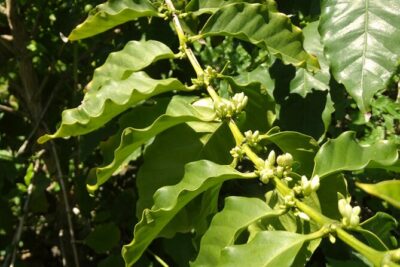
Lists this coffee tour turns up in