
REVIEW · SARAJEVO CANTON
Sarajevo: Bosnian Coffee Workshop with Brewing Lesson
Bosnian coffee is not a quick caffeine stop. It is a small social ceremony, and this hands-on workshop lets you take part rather than simply watch someone else prepare it. You walk Sarajevo’s old coppersmith street, see beans crushed by hand, then make and pour your own coffee in a traditional copper set.
I like the route’s sense of place, especially the stop in Kazandžiluk, where the sound of hammers and the smell of freshly pounded coffee make the tradition feel real. I also like the relaxed pace and the chance to talk with Armin, a local licensed guide who explains the customs behind each careful step.
The main consideration is that this is about ritual and conversation, not a large sightseeing tour or a lesson for professional baristas. At $23 for a group of up to one person, the listed price is excellent for a private booking, but you should confirm the final group and pricing details when reserving.
Key points to know before booking
- Kazandžiluk comes first: Walk Sarajevo’s oldest craft street and see copperwork made by hand.
- Coffee is pounded, not simply ground: A small local coffee shop still uses an old-fashioned method.
- You brew it yourself: Learn how to heat the water, manage the foam, mix the grounds, and pour properly.
- The coffee comes with lokum: The sweet adds a traditional touch to the slow tasting ritual.
- Armin brings local context: He shares favorite Sarajevo places and explains how the custom fits daily life.
- Expect a small, easygoing outing: The activity lasts about 1.5 to 2 hours and accepts no more than 10 participants.
Starting at Sarajevo’s Sebilj fountain
The meeting point is the Sebilj fountain on the main square of Sarajevo’s Old Town. This is a practical place to begin because it puts you right among the old streets, shops, and cafés, rather than at a distant transport stop.
If you prefer, the guide can pick you up at your accommodation. That option matters if you are still finding your way around Sarajevo or would rather avoid navigating to the square. Ask for the pickup when you reserve, since the activity information presents it as an available arrangement rather than an automatic service.
The tour is offered in English, Bosnian, Croatian, Serbo-Croatian, and Serbian. With a small group of up to 10 people, you should have room to ask questions and watch the brewing steps without standing at the back of a crowd.
This is also an easy outing physically. The focus is on walking through the Old Town, watching demonstrations, sitting for coffee, and taking part in a simple brewing lesson. Wear clothing suited to the weather, since part of the experience takes place outdoors.
More Coffee Making Classes in the world:
- Istanbul: Turkish Coffee Making and Fortune Telling Workshop
★ 4.9 · 1,308 reviews - Hanoi Coffee Workshop: Taste Salt, Coconut and Egg Coffee
★ 5.0 · 1,286 reviews - Hanoi: Salt Coffee Workshop Awake Your Senses With 6 Brews
★ 5.0 · 792 reviews
Kazandžiluk, where copper and coffee meet
The first real stop is Kazandžiluk, Sarajevo’s historic coppersmith street. Copper coffee sets are not just attractive souvenirs here. They are part of how Bosnian coffee is traditionally served, and the street helps explain why the equipment has such a strong place in the coffee ritual.
You can expect the sound of copper tools and the sight of artisans hammering designs by hand. That detail gives the workshop more depth than a standard café tasting. You are not only learning how to drink coffee. You are seeing the craft behind the small pot, tray, cups, and serving pieces used at the table.
I like this opening because it connects the drink to Sarajevo’s working Old Town. The copperware is practical, decorative, and tied to local custom. You get a better sense of why coffee is usually served as a set rather than in a plain mug.
The street is also a good reminder that Sarajevo’s coffee culture is not confined to a café menu. It is linked to craft, hospitality, and the act of sitting down together. Your guide can explain those connections while you walk, and the small group format should make the conversation feel more personal.
Watching coffee beans being pounded by hand
The route continues to a tiny coffee shop that many people might pass without noticing. Here, coffee beans are crushed in the old-fashioned way. The smell of freshly pounded coffee is a key part of the experience, since it gives you a direct connection to the preparation before water ever reaches the pot.
This is not a high-speed demonstration designed to move a crowd along. The point is to notice the method and understand that Bosnian coffee begins with care. The beans are prepared for a drink that is meant to be made slowly and shared.
You may find this stop more interesting if you already enjoy coffee, but you do not need specialist knowledge. The workshop is designed for beginners, and the guide explains the process in ordinary terms. If you are more interested in Sarajevo’s daily customs than in coffee itself, the stop still works because it shows a living local practice.
One practical note: the description does not promise that every participant takes home coffee or equipment. You are there to observe the pounding and learn the ritual, then use the supplied copper set during the workshop.
Brewing your own coffee in a small Old Town café
After the coppersmith street and coffee shop, you walk to a quiet coffee bar in the Old Town. This is where the workshop becomes participatory. Instead of receiving a finished drink, you prepare Bosnian coffee yourself.
The lesson covers the basic sequence:
- Heat the water.
- Control the foam.
- Mix the coffee grounds.
- Brew the coffee in the copper set.
- Pour it correctly.
- Drink it in the traditional way.
Those steps sound simple, but the details matter. The foam, the grounds, the pour, and the timing all affect the final cup. Your host guides you through the process so you can focus on the ritual rather than worry about getting everything right.
I especially like the lesson’s emphasis on pouring. Bosnian coffee is served with the grounds left in the pot, so you need to pour carefully and leave them behind rather than tipping the whole mixture into the cup. The experience is designed to show not only what to do, but why the method is handled with such care.
The activity uses a copper coffee set, supplied for the workshop. That makes the lesson feel more connected to what you have just seen in Kazandžiluk. You have watched copper being shaped, then use the finished style of equipment to prepare the drink.
The setting is a peaceful local coffee bar, but the supplied information does not name the café. That is worth keeping in mind if you are hoping to visit one particular venue later. The value is in the preparation and conversation, not in a guaranteed famous address.
More Brewery Stops in the world:
- Istanbul: Turkish Coffee Brewing on Sand + Gift Set
★ 4.9 · 49 reviews - Coffee Brewing Workshop
★ 5.0 · 28 reviews - Medellin: Avoeden Café Coffee Brewing Workshop
★ 5.0 · 12 reviews - Discover Japanese Coffee Brewing Experience at Tokyo
★ 4.9 · 8 reviews
What the coffee ritual means in Sarajevo
The most important lesson is that Bosnian coffee is a pause. You do not brew it simply to finish a cup and move on. You sit, sip, talk, and allow the moment to last.
Your host explains how Bosnians traditionally drink the coffee and why they do not rush it. That conversation is a major part of the activity. You learn about local life while sitting with the drink, rather than hearing a long lecture detached from the place.
This is where the workshop earns its two-hour length. If the entire outing were only a quick demonstration, it might feel expensive or thin. The slower format gives you time to prepare the coffee, ask questions, taste it with lokum, and understand why the custom still matters.
The coffee is served with lokum, a soft sweet that balances the strong, unfiltered drink. It also gives the tasting a clear local character. You should not expect a modern coffee flight, milk options, or a menu of roast profiles. This is one traditional preparation, served as part of a social custom.
If you are used to filtered coffee, the texture may be different because the grounds remain in the pot. Pour slowly and stop before the sediment reaches your cup. The guide will show you how, and there is no need to treat the first attempt as a test you can fail.
Armin’s role in making the experience personal
The guide named in the recent booking feedback is Armin. He is described as a local licensed guide who explains the coffee tradition with warmth and enthusiasm, and who shares some of his favorite Sarajevo places.
That personal layer is useful. A coffee workshop can easily become a short cooking class with a few cultural facts added on. Armin’s local perspective helps connect the drink to the city around you, particularly as you walk the Old Town and talk about everyday life.
Recent participants also received a certificate or diploma connected to Bosnian coffee. This appears in the individual experience feedback, but it is not listed among the guaranteed inclusions, so treat it as a possible extra rather than something promised with every booking.
The main inclusions are clear: Bosnian coffee, use of a copper set, the brewing lesson, lokum, and a professional licensed local host. Personal expenses are not included. That generally means you should budget separately for anything you choose to buy during the walk.
Is $23 good value for this Sarajevo activity?
The listed price is $23 per group up to one person. Read that wording carefully. It suggests a private booking price for one participant, rather than a standard per-person rate for a large public tour. Confirm the current booking terms if you are traveling with more than one person.
For that price, the experience gives you several things in one compact outing:
- A guided walk through Kazandžiluk.
- A look at traditional coffee pounding.
- A hands-on brewing lesson.
- Use of a copper coffee set.
- Coffee and lokum.
- Conversation with a licensed local guide.
- A small-group setting capped at 10 people.
I consider that good value for someone who wants a cultural activity rather than another quick Old Town walk. The coffee itself is not the expensive part. You are paying for access to the preparation, the explanation, the setting, and the chance to take part.
The value is lower if you only want to drink Bosnian coffee. You can find coffee in Sarajevo without booking a workshop, and this activity will feel unnecessary if you have no interest in making the drink yourself. It makes more sense for a first visit, a coffee enthusiast, or anyone who wants a calm way to understand local hospitality.
The booking terms also offer useful flexibility. You can reserve now and pay later, and cancellation is free up to 24 hours before the activity for a full refund. Starting times vary, so check availability for the date you want.
Who will enjoy this coffee workshop most?
I would choose this activity for anyone who likes food traditions, small-group tours, or practical cultural lessons. It suits couples, solo visitors, and small groups who want to spend a quiet part of the day in Sarajevo’s Old Town.
It is particularly good for:
- Coffee lovers who want to learn a traditional preparation.
- First-time visitors looking for local context.
- People who prefer conversation to a large sightseeing group.
- Visitors interested in Sarajevo’s craft traditions.
- Families or friends who enjoy making something together.
- Anyone who wants an easy activity lasting about two hours.
It may be less suitable if you want a fast schedule packed with major sights. The experience moves slowly by design. You are expected to stop, listen, brew, and sip.
It is also not a substitute for a full Sarajevo history tour. The focus is coffee, copper craft, local life, and hospitality. You will see part of the Old Town, but the workshop does not promise a broad tour of the city’s monuments or museums.
Practical tips for getting the most from the visit
Wear weather-appropriate clothing because the activity begins with an outdoor walk. Comfortable shoes are sensible for the Old Town streets, though the supplied information describes the outing as easy and relaxed.
Arrive at the Sebilj fountain with enough time to find the meeting point. If you want accommodation pickup, arrange it ahead of time rather than assuming the guide will know where to meet you.
Go with an open mind about the coffee itself. Bosnian coffee is traditionally prepared with finely ground coffee and served without filtering the grounds out. The ceremony and the company are as important as the taste.
Ask questions during the brewing lesson. The best part of a hands-on workshop is being able to check small details, especially how much foam to keep and when to stop pouring. The group is limited to 10, so you should have a reasonable chance to take part.
If you hope to receive a certificate, ask whether it is included on your date. It was given to some recent participants, but it is not named in the formal list of inclusions.
Should you book this Sarajevo coffee experience?
Book it if you want to understand Sarajevo through one everyday tradition. The combination of Kazandžiluk, hand-pounded beans, copper equipment, local conversation, and your own brewing attempt gives the activity more substance than a simple café visit.
I would especially recommend it for a first or second day in Sarajevo, when you are still getting to know the Old Town and want an easy introduction to local customs. Armin’s local suggestions can also help you choose what to see and where to go next.
Skip it if you are looking for a major sightseeing itinerary, a technical coffee course, or a long list of attractions. This is a small, slow experience. Its strength is the chance to sit down, learn a simple ritual, and give Sarajevo’s coffee culture the time it deserves.
FAQ
Where does the Bosnian coffee workshop start?
The activity starts in front of the Sebilj fountain on the main square in Sarajevo’s Old Town. The guide can also pick you up from your accommodation if you request it.
How long does the experience last?
The stated duration is two hours, while the additional information gives a range of 1.5 to 2 hours. Check the available starting times when booking.
What languages does the guide speak?
The activity is offered in English, Bosnian, Croatian, Serbo-Croatian, and Serbian.
Is the workshop suitable for beginners?
Yes. The workshop is described as beginner-friendly and suitable for coffee lovers and people interested in culture. No previous brewing experience is required.
How many people can join the activity?
It is a small-group activity limited to 10 participants. The listed price is shown as $23 per group up to one person, so confirm the current price for your party when reserving.
What is included in the price?
The price includes Bosnian coffee, use of a copper coffee set, a hands-on brewing lesson, lokum, and a local host who is a professional licensed guide.
What should I bring?
Bring clothing suitable for the weather. The experience includes walking outdoors in Sarajevo’s Old Town.
Can I cancel the booking?
You can cancel up to 24 hours in advance for a full refund. The activity also offers reserve now and pay later booking.
Just listed in the world
- Vietnamese Coffee 101 Workshop★ 5.0 · 11 reviews
- Vietnamese Coffee Making Class in Hoi An★ 5.0 · 4 reviews
- Yerevan: Private Coffee Tour with 2 Café Stops★ 5.0 · 2 reviews
- Turkish Coffee and Traditional Turkish Dessert Cooking★ 4.6 · 8 reviews
- Ubud: Waterfall, Holy Water Temple,Swing&coffee plantation★ 5.0 · 9 reviews
- Vancouver: Street Art & Craft Coffee Walking Tour w/ Tasting★ 4.8 · 11 reviews
- The Colors of Coffee in the Farms of Coatepec★ 5.0 · 3 reviews
- Vienna: Guided Viennese Coffee-House Tour★ 5.0 · 2 reviews
Coffee Making Classes, compared.
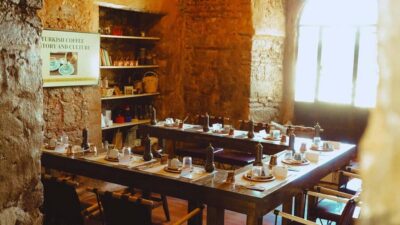
Turkish Coffee Making and Fortune Telling Workshop
Read our review →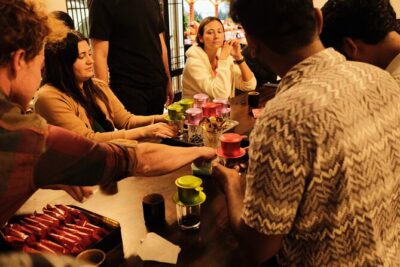
Hanoi Coffee Workshop: Taste Salt, Coconut and Egg Coffee
Read our review →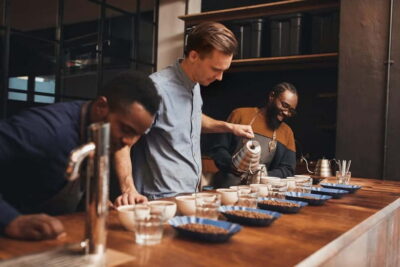
Salt Coffee Workshop Awake Your Senses With 6 Brews
Read our review →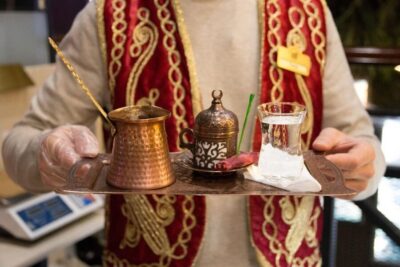

Turkish Coffee Making and Fortune Telling Workshop
Read our review →
Fun & Easy Vietnamese Coffee Workshop in Hồ Chí Minh City
Read our review →
Irish Coffee Masterclass at the Irish Whiskey Museum
Read our review →Lists this coffee tour turns up in