
REVIEW · WEST NUSA TENGGARA
Lombok: Coffee Plantation Tour With Tasting
Coffee here is not just a drink served at the end. It is a crop you can touch, taste, and follow from a hillside garden at about 700 meters to the roasting machine. At Konbayan Espresso and Farm, you’ll see Arabica and Robusta trees, sample sweet coffee cherries, and learn how the beans are handled after harvest. The tree-to-cup path is the tour’s real strength.
I like the mix of farm work and café craft. You get a close look at natural and honey processing, sun-drying, moisture checks, and roast profiles, then sit down with coffee made to your choice. I also like the personal scale: this is a private group with English or Indonesian guiding, and Hadi, the owner, and Dasan, a barista, have led the plantation visit. The drawback is practical: the advertised $70 price does not include hotel pickup, meals, or some motorbike transport, so check the transfer plan before paying.
Key points at a glance
- A real working coffee route: Follow coffee from Arabica and Robusta trees to fermentation, drying, roasting, and the cup.
- A hillside plantation at about 700 meters: The farm visit includes a panorama and a garden where coffee grows beside cloves, vanilla, pepper, cacao, Indian walnut, and ginger.
- Hands-on flavor context: Taste sweet coffee cherries before trying the finished coffee.
- Small, private format: The tour is designed for a private group, with guiding in English or Indonesian.
- A proper café finish: Expect Konbayan espresso and a farm signature drink, with coffee choices such as espresso or latte macchiato available according to the drink service.
- Useful take-home items: You receive a Konbayan coffee menu and a coffee bean souvenir.
Starting at 8 a.m. with the farmers
The early start is not a marketing flourish. The tour begins at 8 a.m. to match the farmers’ schedule, giving you the best chance to see the plantation during its working hours. Meet at Konbayan Espresso and Farm, identified by the shop sign. Hotel pickup is not included in the standard arrangement, although one past booking included a pickup and return, so treat that as an add-on to confirm rather than a guaranteed service.
I would arrive a little early. The day has several stops, and the plantation visit is planned for roughly one hour. If you are trying to fit this around another Lombok activity, remember that the stated duration is five hours, not simply a quick coffee tasting.
For groups of more than two, the instructions say you must rent a motorbike from the parking area to reach the plantation. That is an important cost and comfort point. Ask Konbayan exactly how the transfer works for your group before you book, especially if you are not comfortable riding a motorbike or are carrying bags.
More Coffee Farm Tours in the world:
- Award Winning Farm Tour: Coffee, Chocolate and Unique Gifts
★ 5.0 · 484 reviews - La Herradura Coffee Farm: tour in Europe’s only plantation
★ 4.8 · 430 reviews - Big Island: Volcanoes, Waterfalls, & Coffee Farm Day-Trip
★ 4.9 · 414 reviews
Walking among Arabica and Robusta trees
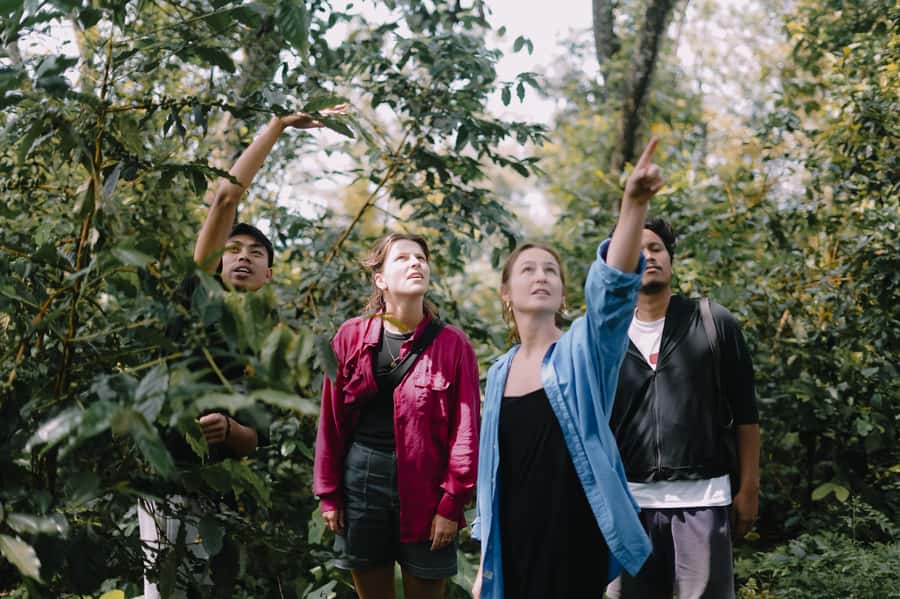
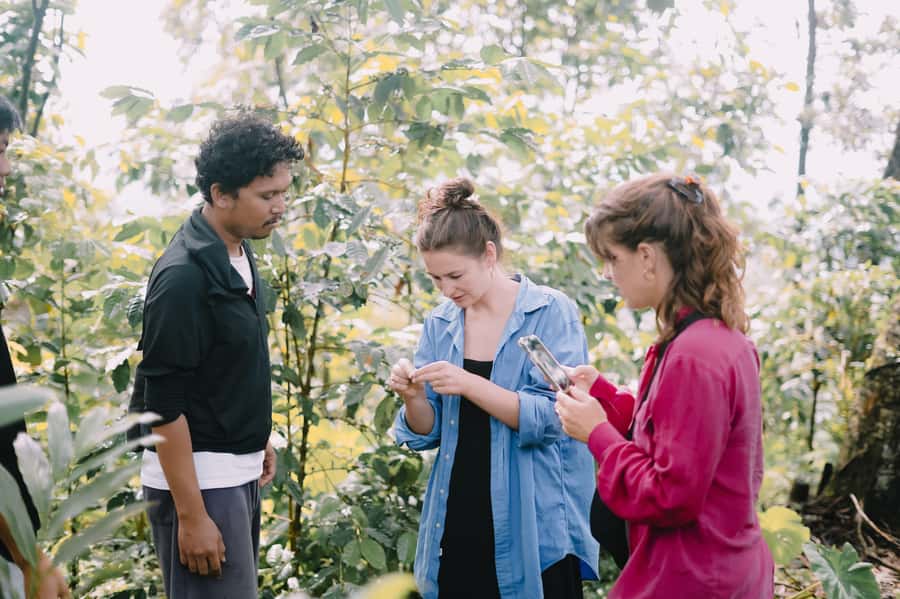
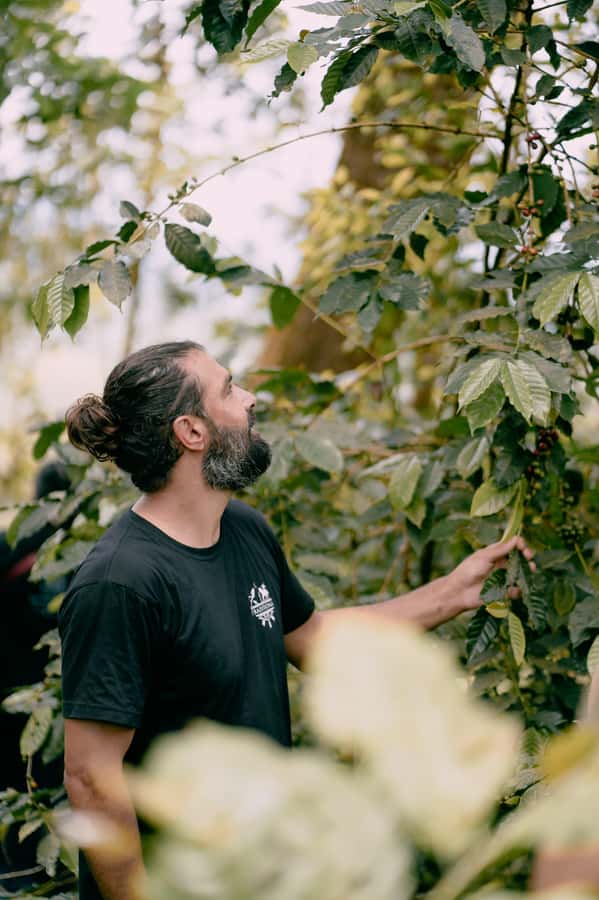
The plantation section puts the crop in view before anyone talks about roast notes. You’ll learn about caring for the trees, maintaining the plants, and harvesting the cherries. The route is at a hillside plantation around 700 meters high, with a panorama that adds a welcome sense of place to what could otherwise be a technical farm lesson.
Hadi, the owner, and Dasan, the coffee shop barista, have guided this part together. That pairing makes sense: Hadi can explain the farm, while Dasan can connect the raw fruit to the final café drink. You may see both Arabica and Robusta, which gives the visit more substance than a single-variety introduction.
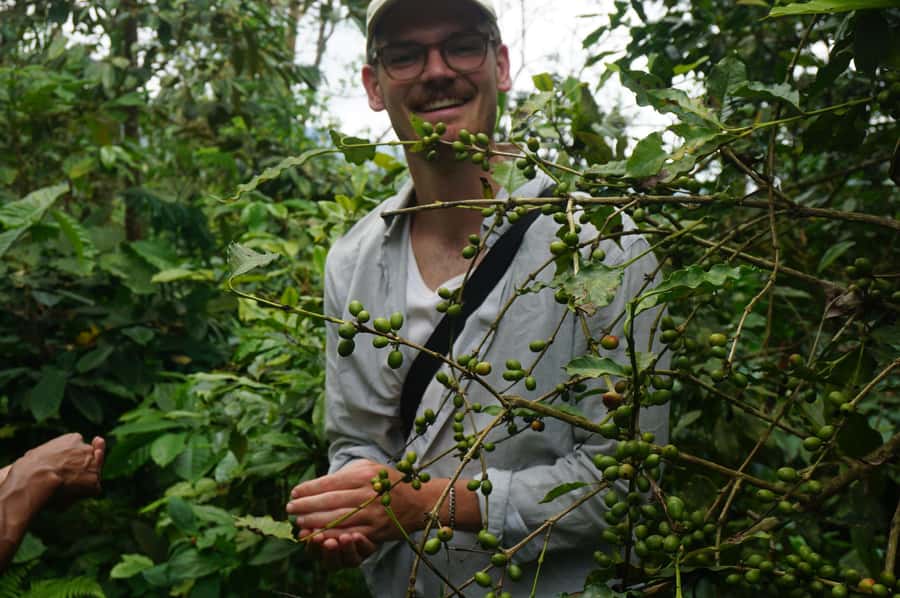
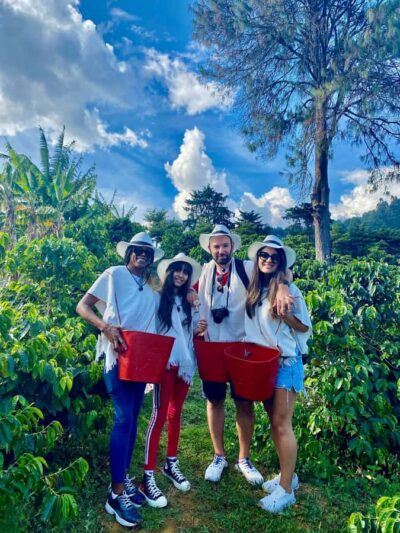
One particularly good detail is the chance to taste the coffee cherries. They are sweet, and sampling them helps you understand that coffee begins as fruit, not as a dry brown bean. You can also see how coffee fits into a wider garden system, with cloves, vanilla, pepper, cacao, Indian walnut, and ginger growing nearby. The ginger may even be dug up during the visit.
I like this part because it keeps the tour grounded. You are not only looking at rows of plants for a photograph. You are learning what the farmer handles before the crop reaches the processing room.
The plantation is on a slope, so wear shoes you can manage on uneven ground. The official information does not describe the exact walking surface, but a hillside farm visit calls for sensible footwear and a willingness to spend time outdoors. Babies under one year are not considered suitable, and strollers and baby carriages are not allowed.
Seeing natural and honey processing in the warehouse
After the farm, the tour moves to the warehouse to observe the natural and honey processes. This is where the coffee story becomes more technical.
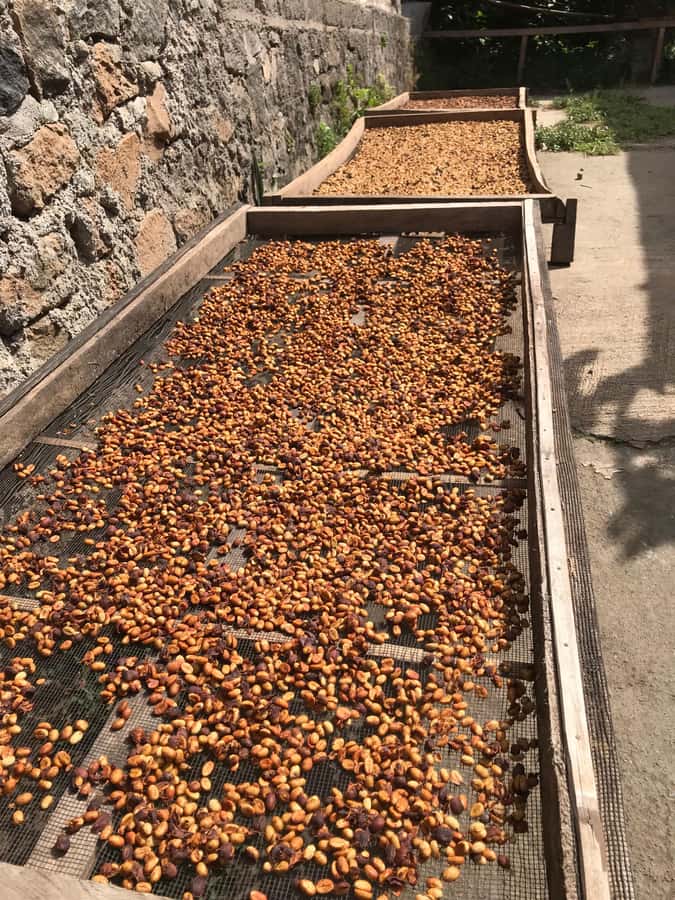
In natural processing, the coffee fruit is dried with the fruit still associated with the bean, allowing the drying stage to shape the eventual flavor. Honey processing uses some of the fruit layer during drying. The tour presents these methods as part of the usual production work at Konbayan, so you can compare how coffee is handled after picking rather than hearing only a general explanation.
The value here is seeing the transition from harvested cherry to a product ready for careful drying and roasting. The stop is observational, not a promise that you will operate the equipment yourself. If you want a particular explanation, ask questions as you go. The guides speak Indonesian and English, and the private format should make it easier to pause for clarification.
This section may appeal most to people who already enjoy coffee and want to understand why beans from the same region can taste different. It is also useful for beginners because the steps are shown in order. You do not need specialist vocabulary to follow the basic chain: fruit, processing, drying, green coffee, roast, cup.
Checking sun-dried beans in the greenhouse
The greenhouse is scheduled for about an hour, making it one of the longer stops. Here you’ll observe coffee beans drying in the sun and learn how the moisture content of dried coffee is determined.
That moisture check is a small detail with a big practical role. Coffee cannot simply be left to dry until it looks right. The beans need to reach a suitable condition before the next stage, and the tour shows that coffee quality depends on measurement as well as tradition.
This may be the least glamorous stop, but I would not skip it. Sun-drying is easy to photograph, yet the moisture test explains why the process takes care. If the beans are not ready, roasting will not rescue poor preparation. The greenhouse also gives you a clearer sense of the time and patience behind a finished drink.
The schedule allows roughly one hour here, but exact timing can change with farm work and conditions. The supplied details do not promise a particular weather arrangement or a hands-on drying activity, so think of this as a guided observation stop.
More Coffee Tastings in the world:
- Hanoi Coffee Experience: 6 Brews, 9 Recipes & 3 Liquor Tastings
★ 5.0 · 2,945 reviews - Medellin: Coffee Tour with Transport, Snacks and Tastings
★ 4.7 · 1,357 reviews - Seattle Coffee Tour: Capitol Hill Cafes, Tastings & Local Stories
★ 5.0 · 489 reviews - Buggy Ride Into the jungle with cave coffee & chocolate tasting
★ 5.0 · 465 reviews
Watching the roasting room shape the coffee
The roasting room brings the beans into café territory. Machines are used to roast the green coffee according to the desired roast profile. You’ll observe how the raw beans change through heat and how the roast is selected for the intended result.
I like that the tour does not end with a generic cup poured at the counter. You get to see the roast stage first, then taste the outcome. That order makes the final coffee more interesting because you have just followed the beans through farming, processing, drying, and roasting.
The information provided does not give a list of roast levels or a promise that you can choose the machine settings. Still, the phrase desired roast profile is useful: roasting is not treated as one fixed step. It is part of the flavor decision.
For coffee fans, this may be the most satisfying technical stop. For anyone less interested in machinery, the visit is short enough to remain manageable, and the reward comes immediately afterward in the coffee shop.
Returning to Konbayan for the tasting
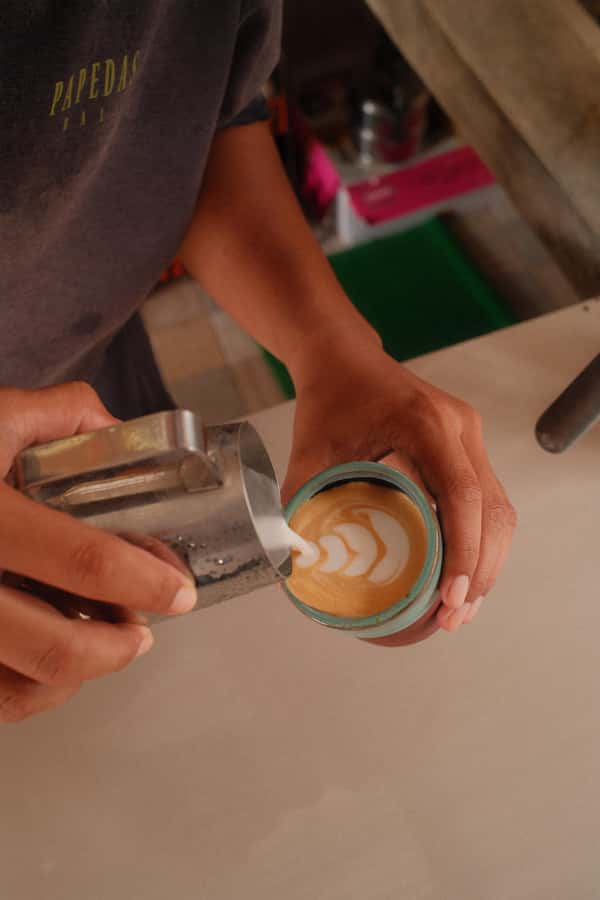
At the end, you return to the café for coffee. The included drinks are Konbayan espresso and a farm signature drink. The tour information also describes choices such as espresso or latte macchiato, with oat milk available in at least one recent experience. Since drink options can depend on the café’s service that day, confirm your preference when booking or on arrival.
The tasting is where the farm details become useful. You have seen the cherries, processing methods, drying beans, and roasting equipment. Now you can pay attention to the finished cup with a little more understanding. I like this structure because the tasting feels earned rather than tacked on.
One booking also included fresh passion fruit from a plant beside the café and a homemade meal. Those extras are not listed as standard inclusions, so do not assume they form part of the $70 package. The activity information says drinks and meals may need to be paid for yourself, which is a point worth clearing up before you sit down.
You receive a Konbayan coffee menu and a Konbayan coffee bean souvenir to take home. The souvenir is modest, but it extends the experience beyond the café and gives you something useful rather than a decorative trinket.
What $70 buys you in Lombok
At $70 per person, this is not the cheapest way to drink coffee in Lombok. The price makes more sense if you want a private, five-hour experience with access to the plantation, processing areas, greenhouse, roasting room, guided interpretation, and included coffee tasting.
I see three main sources of value. First, the tour connects the farm and café instead of treating them as separate attractions. Second, the private group format lets you ask questions and move at a pace suited to your party. Third, the experience includes both a farm visit and a finished drink, plus the coffee bean souvenir.
The price is less attractive if you mainly want a scenic café stop or a short explanation of coffee. You may also need to budget for transport from your hotel, meals, and motorbike rental if your group has more than two people. Since pickup is not included, ask for the full door-to-door cost before booking.
There is some flexibility in the booking terms: you can reserve now and pay later, and cancellation is free up to 24 hours in advance. Those terms are helpful if your Lombok schedule is still shifting, but they do not remove the need to confirm transport and extra charges.
Who will enjoy this coffee tour most
I would recommend it to coffee drinkers who want to understand production rather than simply order a latte. It also suits couples, friends, and families with older children who can manage a farm walk and a morning schedule. The English and Indonesian guide options are useful, and the private format should feel more personal than a large group outing.
It is a strong choice if you care about local agriculture, small-scale production, or the difference between Arabica and Robusta. The garden’s other crops add variety, and tasting the coffee cherry gives you a direct link to the plant.
I would pause before booking if you dislike early starts, uneven outdoor settings, or motorbike transfers. It is also not suitable for babies under one year, and strollers and baby carriages are not allowed. If a relaxed café morning is your priority, the five-hour structure may feel too long.
A possible waterfall detour
One plantation visit included a stop at the viewpoint for Sendang Gile waterfall. That sounds like a worthwhile extra if your route and timing allow it, but it is not listed among the standard inclusions. Do not count on it as part of the fixed tour unless Konbayan confirms it in advance.
This is a good example of why a private group can help. You may be able to discuss a short detour, but the coffee schedule and farmer timetable still come first. Ask before the day begins, not after the roasting session.
Should you book the Konbayan coffee tour?
Book it if you want a full coffee story, from fruit on the tree to a drink in the café, and you value a private guide more than a low price. The strongest parts are the hillside plantation, the chance to taste coffee cherries, the look at natural and honey processing, and the final cup prepared after you have seen the roast.
I would book with two checks in writing: how you will reach the plantation and what meals or extra drinks cost. If those details work for you, the tour offers a thoughtful five-hour look at Lombok coffee, with enough farming and café technique to make the $70 feel reasonable.
FAQ
Where does the Lombok coffee tour begin?
The meeting point is Konbayan Espresso and Farm. Look for the shop sign at the meeting location.
What time does the tour start?
The tour starts at 8 a.m. according to the farmers’ schedule.
How long does the experience last?
The stated duration is five hours. The plantation visit is estimated at one hour, and the greenhouse visit is also estimated at one hour.
Which languages are available?
The live guide can conduct the tour in Indonesian or English.
Is hotel pickup included?
Hotel pickup is not included in the standard activity details and must be added separately. Confirm the pickup cost and arrangement before booking.
What happens if my group has more than two people?
Groups larger than two must rent a motorbike from the parking area to go to the plantation, according to the activity information.
What is included in the coffee tasting?
The included tasting features Konbayan espresso and a farm signature drink. A Konbayan coffee menu and coffee bean souvenir are also provided to take home.
More Eating and Drinking in the world
- Vienna for Food Lovers: Cafés, Markets & Austrian Cuisine
★ 5.0 · 1,063 reviews - Hanoi: Vietnamese Street Food Tour with Egg Coffee
★ 4.9 · 315 reviews - Da Nang Cooking Class with Coffee Tasting and Market Visit
★ 5.0 · 310 reviews - Hungry in Vienna? A Food Lover’s Coffee & Market Walk
★ 4.9 · 276 reviews
Just listed in the world
- Yerevan: Private Coffee Tour with 2 Café Stops★ 5.0 · 2 reviews
- Vietnamese Coffee 101 Workshop★ 5.0 · 11 reviews
- Vietnamese Coffee Making Class in Hoi An★ 5.0 · 4 reviews
- Turkish Coffee and Traditional Turkish Dessert Cooking★ 4.6 · 8 reviews
- Ubud: Waterfall, Holy Water Temple,Swing&coffee plantation★ 5.0 · 9 reviews
- Vancouver: Street Art & Craft Coffee Walking Tour w/ Tasting★ 4.8 · 11 reviews
- The Colors of Coffee in the Farms of Coatepec★ 5.0 · 3 reviews
- Vienna: Guided Viennese Coffee-House Tour★ 5.0 · 2 reviews
Coffee Farm Tours, compared.
Award Winning Farm Tour: Coffee, Chocolate and Unique Gifts
Read our review →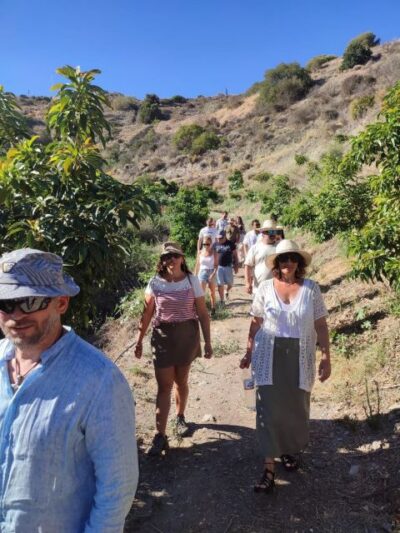
La Herradura Coffee Farm: tour in Europe’s only plantation
Read our review →
Medellín Coffee Farm Tour with Trolley and Cable Car Ride
Read our review →
Private Cocora Valley, Salento & Coffee Farm Tour
Read our review →
Liamuiga Natural Farm Tour – St.Kitts’ Coffee Farm
Read our review →
Lists this coffee tour turns up in