REVIEW · COPENHAGEN
Brew and Brunch Mastering the Perfect Espresso with Breakfast
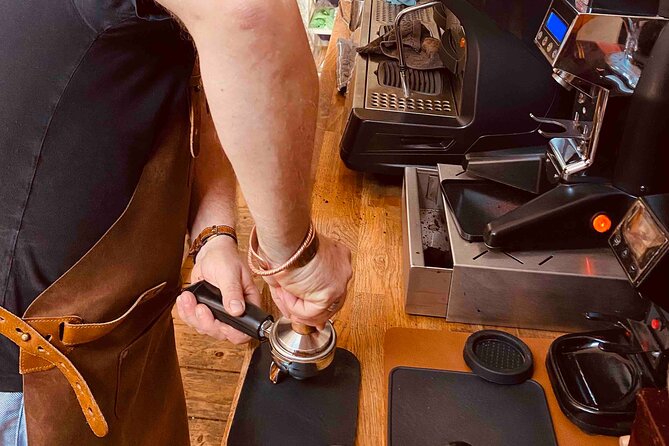
The best part of this Copenhagen experience is that you learn espresso in a working neighborhood cafe, not in a polished cooking studio built only for visitors. Mark, the owner, is an SCA-certified roaster and barista who explains the process step by step, then lets you make your own espresso.
I like the small group limit of 10, which gives you room to ask questions. I also like the simple breakfast: a soft or hard-boiled egg, croissant, fresh orange juice, and a coffee of your choice. The main thing to consider is the 11:30 a.m. class, held during cafe opening hours. Regulars may be around, and you might even be asked to prepare an espresso for a customer.
Key points to know before booking
- Learn in a real local cafe: The class takes place at Mark’s working cafe on Holmbladsgade, where local customers may be present.
- Practice, not just theory: You finish by making your own espresso after learning the full preparation process.
- A proper small breakfast is included: Expect a boiled egg, croissant, fresh orange juice, and coffee.
- Small group setting: The maximum is 10 people, so there is a fair chance to ask detailed questions.
- Good for coffee beginners and hobbyists: The lesson applies to both commercial machines and home espresso machines.
- Allow 90 minutes: The class starts and ends at Holmbladsgade 14 in Copenhagen.
Learning espresso in a working Copenhagen cafe
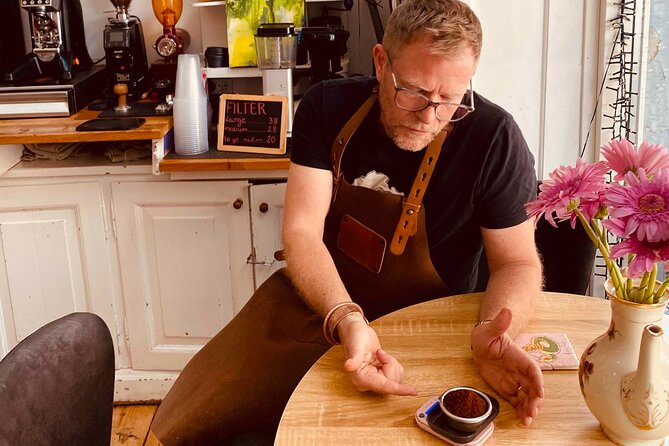
This is a practical coffee class with a local feel. You meet at Holmbladsgade 14, 2300 København, and stay there for the full experience. There is no sightseeing route or series of cafe stops. Instead, the cafe itself becomes your classroom, breakfast room, and practice space.
That setting matters. You see espresso being made in the same kind of place where it is served to everyday customers. At the 11:30 a.m. session, the cafe is open, so you should expect some contact with regulars while the class is under way. That may make the lesson feel less controlled than a private workshop, but it also gives you a more honest picture of cafe coffee service.
The host is Mark, the cafe owner. He is an experienced roaster and barista with SCA certification. The class is offered in English, Portuguese, German, or French, which is useful if you want instruction in a language other than English.
The tone is casual. You can ask as many questions as you like, and the emphasis stays on specialty coffee rather than on rushing through a fixed demonstration. If you already know the basics, you can ask more specific questions. If espresso is new to you, the step-by-step format gives you a clear place to begin.
More Coffee Tours in the world:
- Hanoi Coffee Experience: 6 Brews, 9 Recipes & 3 Liquor Tastings
★ 5.0 · 2,945 reviews - Medellin: Coffee Tour with Transport, Snacks and Tastings
★ 4.7 · 1,357 reviews - Istanbul: Turkish Coffee Making and Fortune Telling Workshop
★ 4.9 · 1,308 reviews
The 90-minute lesson, from coffee to extraction
The central idea is simple: a good espresso depends on a series of steps, and each one needs attention. The class explains those steps in order, rather than treating espresso as a mysterious skill that only professionals can master.
That makes this useful for two kinds of people. You may be visiting Copenhagen and want a focused local activity connected to cafe culture. Or you may already own a home espresso machine and want to understand why your coffee does not taste as good as it does in a good cafe.
The information provided does not list every technical stage by name, so you should not expect a detailed equipment specification or a written recipe in advance. What you can expect is a clear lesson built around process and consistency. The aim is to leave with a better understanding of how to repeat the result on either a commercial machine or a home machine.
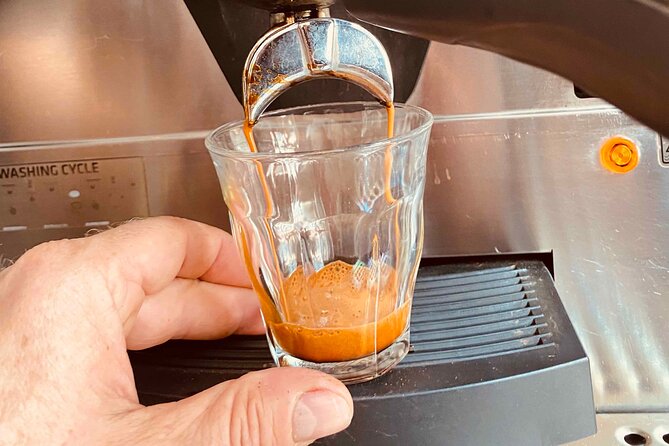
The hands-on part is important. You do not simply watch Mark prepare coffee and then leave with a cup. The class culminates with each participant making an espresso. That gives you a chance to put the instructions together while the lesson is still fresh.
It also makes the experience more useful after your trip. A tasting alone can help you identify what you enjoy, but practice helps you remember what to do. You can make mistakes, ask what went wrong, and see how the method works in real time.
Breakfast gives the class a relaxed start
The included meal is small but well suited to a morning coffee lesson. You receive a boiled egg, either soft or hard, a croissant, fresh orange juice, and a coffee of your choice.
I like this arrangement because the food does not compete with the main activity. It is enough to make the class feel like breakfast rather than a lecture, but the focus remains on espresso. The orange juice and egg add something fresh and savory, while the croissant fits naturally with the cafe setting.
The breakfast also gives you time to settle in before the practical work begins. Coffee technique can become overly technical if every minute is spent discussing extraction. A simple meal keeps the pace human and gives you an easy way to chat with Mark and the other people in the group.
Do not book this expecting a large brunch spread. The meal is specifically described as a mini-breakfast. If you need a substantial meal, you may want to plan another meal later. For a 90-minute morning activity, though, the portion is a sensible match.
Your coffee is part of the breakfast, and the class is built around choosing and preparing coffee rather than simply drinking a preselected cup. That makes the meal part of the lesson, not just an added snack.
Why the local cafe setting matters
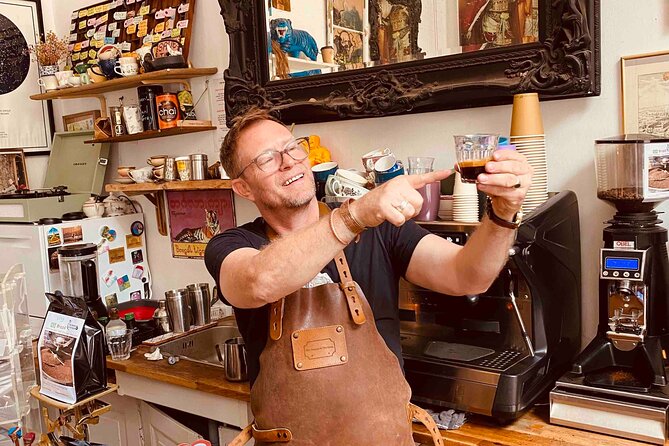
Many coffee classes take place in spaces designed for instruction. This one happens in Mark’s actual neighborhood cafe, a business that aims to introduce visitors to local experiences.
You get a look at coffee as part of daily life in Copenhagen. Regular customers may come in while you are learning, and you may interact with them during the session. The unusual possibility is that you could end up making an espresso for a customer.
That detail is worth considering before you book. If you prefer a quiet, private class where every minute is reserved for your group, the open cafe environment could be a distraction. If you like seeing how a cafe works during normal service, it adds a useful layer to the experience.
The working setting may also help you understand the difference between making one espresso for yourself and preparing coffee as part of a cafe routine. You see the social side of the job, not just the mechanics of the machine.
The group size helps keep this manageable. A maximum of 10 people is small enough for questions and individual practice, though the exact amount of hands-on time will depend on attendance and the pace of the session.
Still in the world, but a different cup:
- Hanoi Coffee Workshop: Taste Salt, Coconut and Egg Coffee
★ 5.0 · 1,286 reviews - Vienna for Food Lovers: Cafés, Markets & Austrian Cuisine
★ 5.0 · 1,063 reviews - Big Island Highlights: Coffee, Volcano, Black Sands & Waterfall
★ 5.0 · 1,054 reviews - Hanoi: Salt Coffee Workshop Awake Your Senses With 6 Brews
★ 5.0 · 792 reviews
What makes the espresso practice useful at home
The class is not limited to commercial cafe equipment. Its stated aim is to help you make a great espresso on either a commercial machine or a home espresso machine.
That is a strong point for anyone who wants practical value from the lesson. You can connect the method to the equipment you use at home instead of treating cafe espresso as something that only works behind a professional counter.
You should still keep your expectations realistic. The class can teach you the importance of following the right steps, but the equipment, coffee, grinder, and water available at home may differ from what you use in the cafe. The lesson gives you a framework. It cannot guarantee that every home machine will produce the same result.
This is where questions become especially valuable. Ask Mark how the method changes between a commercial machine and a home setup. The description specifically encourages questions, so use the opportunity to explain what kind of machine you own or hope to buy.
The experience is also a good fit if you want to improve your coffee vocabulary and judgment. You may leave with a clearer idea of which parts of preparation affect the final cup and which habits need more care.
A friendly class with a strong teaching focus
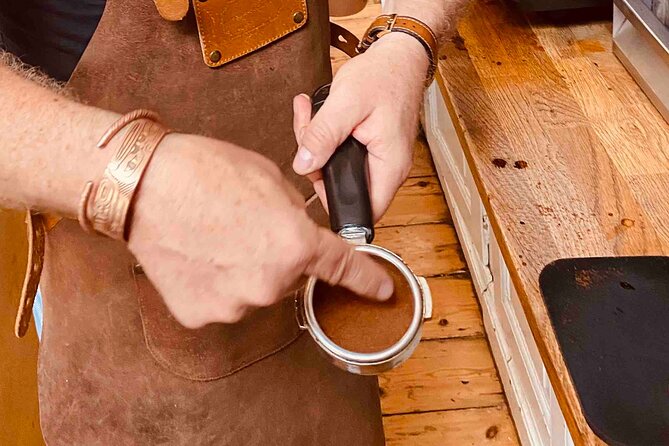
The tone is informal rather than academic. The class is meant to be open, with questions welcomed throughout. That makes it approachable for a first-time learner, while the focus on specialty coffee gives it enough substance for someone who already enjoys making coffee.
The strongest praise for the experience centers on Mark’s warmth, passion, and ability to explain coffee. The useful takeaway here is not simply that he knows the subject. It is that the class is built around discussion, which means your experience improves if you arrive with questions.
You might ask about the difference between espresso and other coffee styles, how roasting affects taste, or which parts of the process matter most on a home machine. Only ask about topics connected to the class and your own goals, since the stated focus is the method for making espresso.
The language options are another practical advantage. Instruction is available in English, Portuguese, German, and French. You should select the language that lets you ask precise questions, especially if you are interested in technical details.
The positive response to the class also points to its atmosphere. The experience is described as friendly and open, with plenty of information to take away. That combination suits people who want education without a formal classroom mood.
Price, timing, and overall value
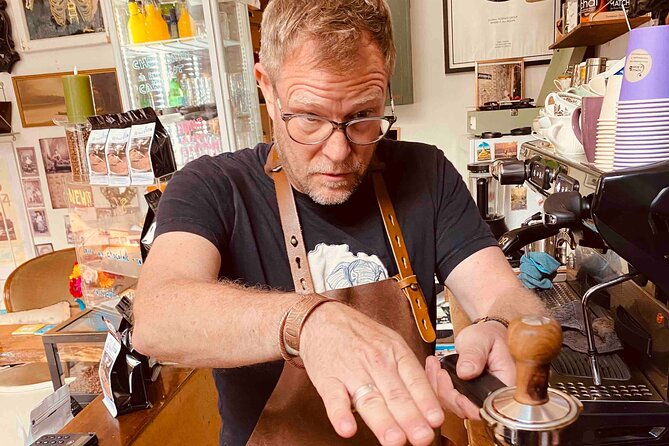
At $38.99 per person, the price includes the 90-minute class, breakfast, coffee, and the chance to prepare your own espresso. I see the value mainly in the instruction and practice, not in the food alone.
A croissant, egg, orange juice, and coffee would not by themselves justify treating this as a major Copenhagen activity. The price makes more sense if you want to learn a skill and enjoy a local cafe setting at the same time.
The class is also reasonably focused. You are not paying for a long tour padded with unrelated stops. You spend the entire session at one cafe, working through a specific subject. Coffee lovers who would otherwise pay for several cafe visits may find this a better use of one morning.
It is booked, on average, 27 days ahead, so you should not leave it until the last minute if the date matters. This is especially important for a small class with a maximum of 10 people.
The meeting point is near public transportation, though no specific route or station is provided. The activity ends back at the same location, which keeps the logistics simple. You do not need to arrange a separate return transfer.
Who should book this espresso class
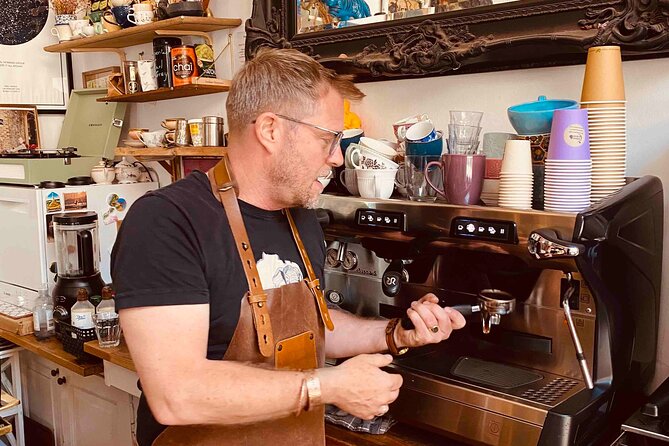
I would recommend it most strongly to:
- Coffee lovers who want a more informed morning than a standard cafe visit
- People with a home espresso machine who want better habits
- Beginners who prefer hands-on teaching to watching a demonstration
- Couples looking for a relaxed Copenhagen activity
- Visitors who enjoy meeting local business owners and seeing a cafe during normal service
- Anyone who likes asking detailed questions in a small group
It is less suited to you if you want a large meal, a private lesson with no interruptions, or a broad tour of Copenhagen’s coffee scene. It is also not the right choice if you only want to drink espresso and do not want to practice making it.
The 11:30 a.m. timing is worth noting. You will be taking the class during opening hours, so the cafe may have regular customers around you. That is part of the character of the experience, but it means the room may not feel like a silent classroom.
Service animals are allowed. Confirmation is provided when you book. The experience requires a minimum number of participants and may be canceled if that number is not met. It also has a weather-related cancellation condition, with another date or a full refund offered in those cases.
Cancellation is free up to 24 hours before the start time. Inside that window, the amount paid is not refunded, and changes are not accepted. Since the class is often booked well ahead, check your plans before reserving.
My verdict on the Copenhagen coffee class
Book this if you want to learn a useful espresso routine from Mark in his real neighborhood cafe, with breakfast and a chance to practice. The strongest reasons to go are the small group, open question time, local setting, and final hands-on espresso.
Think twice if your priority is a private, perfectly quiet lesson or a full brunch. The open cafe can bring interruptions, and the meal is intentionally modest.
For the right person, $38.99 is a fair price for a focused 90-minute class that combines coffee education, breakfast, and local contact. You leave with more than a cup. You leave with a method you can try again at home.
FAQ
Where does the espresso class begin?
The class begins at Holmbladsgade 14, 2300 København, Denmark.
Where does the activity end?
The activity ends back at the meeting point on Holmbladsgade.
How long does the class last?
The experience lasts approximately 1 hour and 30 minutes.
What food is included?
Breakfast includes a soft- or hard-boiled egg, a croissant, fresh orange juice, and a coffee of your choice.
Who teaches the class?
The class is hosted by Mark, the cafe owner. He is an experienced roaster and barista certified by the Specialty Coffee Association.
What languages are available?
The guide is available in English, Portuguese, German, and French.
Will I make my own espresso?
Yes. The class ends with each participant making their own espresso.
How many people can join?
The activity has a maximum of 10 travelers.
Can I cancel for a full refund?
Yes. You can cancel at least 24 hours before the experience start time for a full refund. Cancellations and changes made less than 24 hours before the start time are not accepted for a refund.
Just listed in the world
- Vietnamese Coffee 101 Workshop★ 5.0 · 11 reviews
- Vietnamese Coffee Making Class in Hoi An★ 5.0 · 4 reviews
- Yerevan: Private Coffee Tour with 2 Café Stops★ 5.0 · 2 reviews
- Turkish Coffee and Traditional Turkish Dessert Cooking★ 4.6 · 8 reviews
- Ubud: Waterfall, Holy Water Temple,Swing&coffee plantation★ 5.0 · 9 reviews
- Vancouver: Street Art & Craft Coffee Walking Tour w/ Tasting★ 4.8 · 11 reviews
- Coffee pleasure walking tour★ 5.0 · 12 reviews
- The Colors of Coffee in the Farms of Coatepec★ 5.0 · 3 reviews
Coffee Tours, compared.
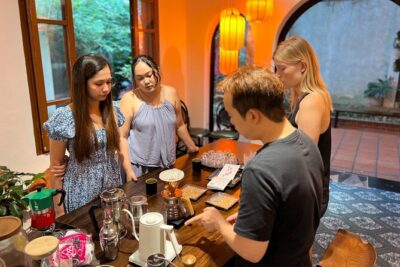
Hanoi Coffee Experience: 6 Brews, 9 Recipes & 3 Liquor Tastings
Read our review →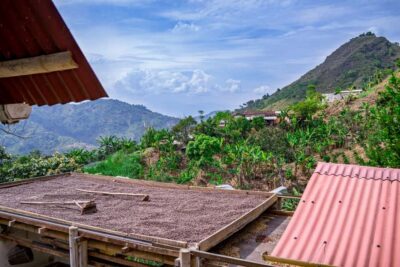
Coffee Tour with Transport, Snacks and Tastings
Read our review →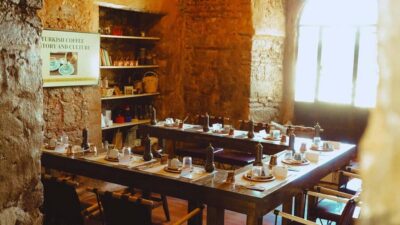
Turkish Coffee Making and Fortune Telling Workshop
Read our review →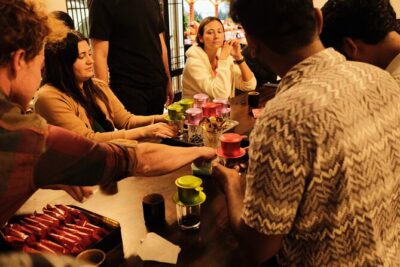
Hanoi Coffee Workshop: Taste Salt, Coconut and Egg Coffee
Read our review →
Vienna for Food Lovers: Cafés, Markets & Austrian Cuisine
Read our review →
Salt Coffee Workshop Awake Your Senses With 6 Brews
Read our review →