REVIEW · ILE-DE-FRANCE
Paris Left Bank: Writers, Revolution, and Black Coffee
The Latin Quarter is where Paris turns books, faith, student arguments, and political ideas into street-level drama. This 90-minute walk follows that story from the Seine to the Panthéon, passing Shakespeare & Company, the Sorbonne, medieval lanes, Roman bathhouses, and corners most first-time visitors miss. I like the clear route and the way the tour connects famous names such as Hemingway and Cyrano de Bergerac to real places.
I also like that local guides bring their own ties to the neighborhood. Yago, Mathieu, Floriane, and others have been praised for personal stories, strong historical detail, and an easygoing manner. The main consideration is pace: 90 minutes gives you a lively introduction, not a slow museum visit, and no monument or museum admission is included.
Key points to know before you book
- Notre-Dame to the Panthéon: The route crosses the heart of the Left Bank, beginning beside the Seine and ending near one of Paris’s great civic monuments.
- A literary and academic Paris: Shakespeare & Company, the Sorbonne, Hemingway, Dante, Picasso, and Cyrano de Bergerac all fit into the story.
- Local guides with personal ties: Guides such as Yago, Mathieu, and Floriane add stories about student life, cafés, churches, cinema, and the neighborhood today.
- Small-group English walk: The experience runs in English, in a small group, rain or shine.
- Good value at $23: You pay for a focused guided walk, with no extra museum fees built into the price.
- Not suited to wheelchair users: Expect medieval lanes, uneven streets, and a walking route without wheelchair suitability.
Why the Latin Quarter makes a good first walking tour
The Latin Quarter is one of Paris’s best areas for a walking introduction because the scenery changes quickly. You move from the Seine and Notre-Dame into narrow medieval streets, then toward the Sorbonne and the Panthéon. In a short distance, the neighborhood shifts from religious center to university district to political stage.
I like the theme here because it is more specific than a general Paris highlights walk. The focus is on people who questioned authority, wrote books, made art, studied, argued, or helped turn ideas into public action. You hear about writers and artists, but you also get the less polished side of Paris: cheap black coffee, crowded student life, sharp opinions, and institutions that have been challenged for centuries.
The guide’s role matters. This is not built around a headset or a long list of dates. The best version of the tour depends on someone who can explain why the Sorbonne still carries weight, how the university once operated under church influence, and why the area continues to draw students and independent thinkers. The guides praised most warmly, including Yago, Mathieu, Floriane, and Mathew, are described as personal, enthusiastic, and closely connected to the district.
More Coffee Tours in the world:
- Hanoi Coffee Experience: 6 Brews, 9 Recipes & 3 Liquor Tastings
★ 5.0 · 2,945 reviews - Medellin: Coffee Tour with Transport, Snacks and Tastings
★ 4.7 · 1,357 reviews - Istanbul: Turkish Coffee Making and Fortune Telling Workshop
★ 4.9 · 1,308 reviews
Starting under the Horseman statue
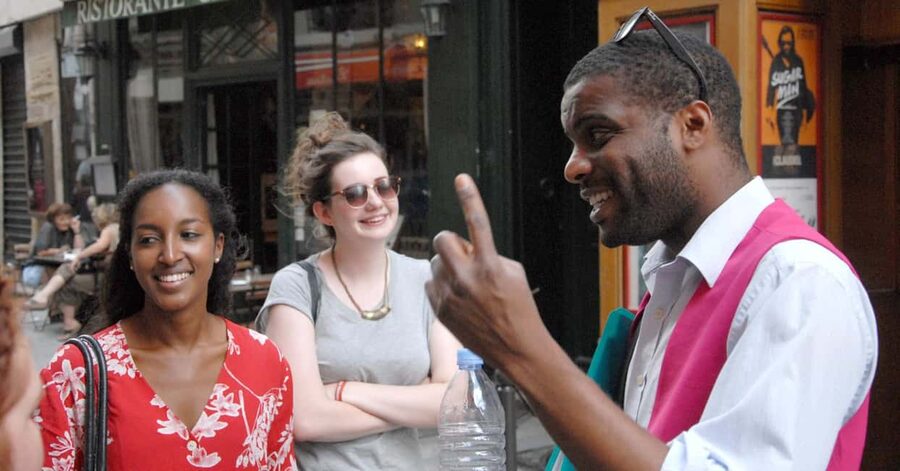
Meet beneath the Horseman statue, the Statue de Charlemagne et ses leudes, in front of Notre-Dame. The guide wears a pink vest, which should make the group easier to spot near one of Paris’s busiest sights. The tour begins right on time, so do not plan to arrive at the last minute.
This is a useful meeting point. You are already beside the Seine, with Notre-Dame as an immediate reference, and you can reach it from several central parts of Paris. The organizers provide a second chance to find the group at 77 rue Galande, in front of Café Odette, about 20 minutes after departure if you miss the start. Still, I would treat that as a rescue option, not part of the plan.
Bring a reusable water bottle. The walk includes stops for water and shade, but there is no promise of indoor shelter. The tour operates rain or shine, so check the forecast and wear shoes that can handle old streets.
Square René Viviani and the Seine-side beginning
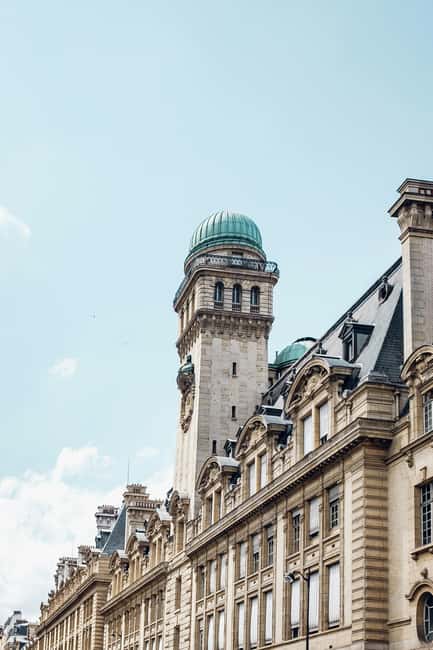
The first stop is Square René Viviani, where the walk settles into the Left Bank. A 10-minute visit gives the guide time to establish the setting before the route moves into the older lanes.
The square is close to Notre-Dame but feels less ceremonial than the cathedral plaza. This is a good place to hear how the river, churches, booksellers, and university district fit together. The tour is not simply pointing at buildings. It is setting up the idea of the Latin Quarter as a place where religion, education, literature, and politics have long occupied the same few streets.
You should also use this first stop to get a feel for the group. The activity is designed as a small-group walk, and the guide may use photos or a book to make past scenes clearer. One guide brought supplementary photographs, a simple touch that can help when a medieval building or old institution is difficult to picture from the street.
Notre-Dame and the medieval Paris around it
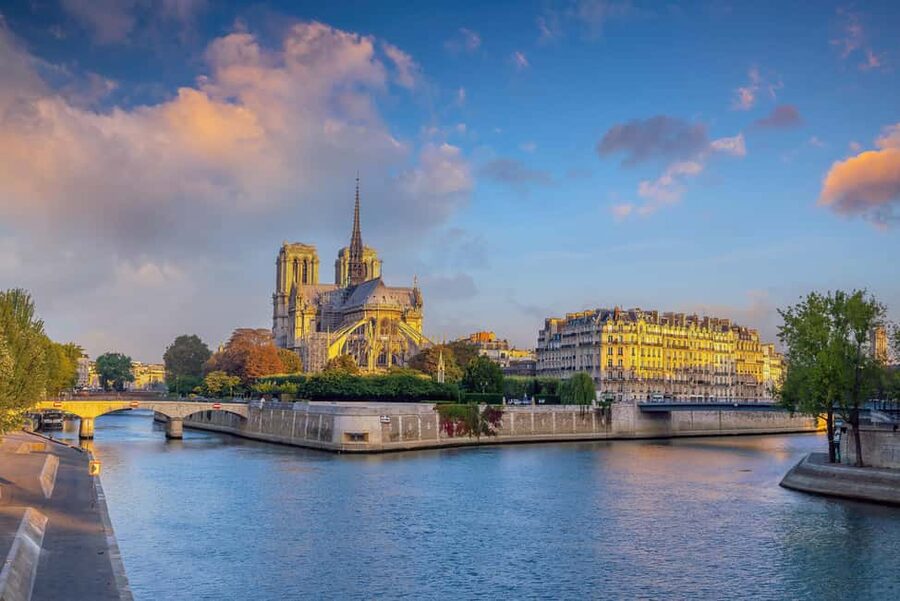
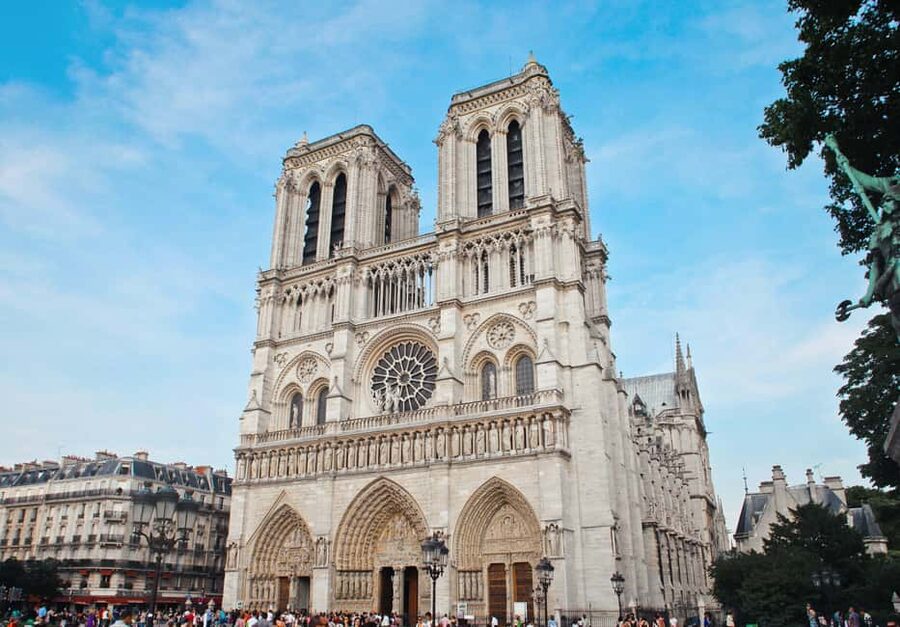
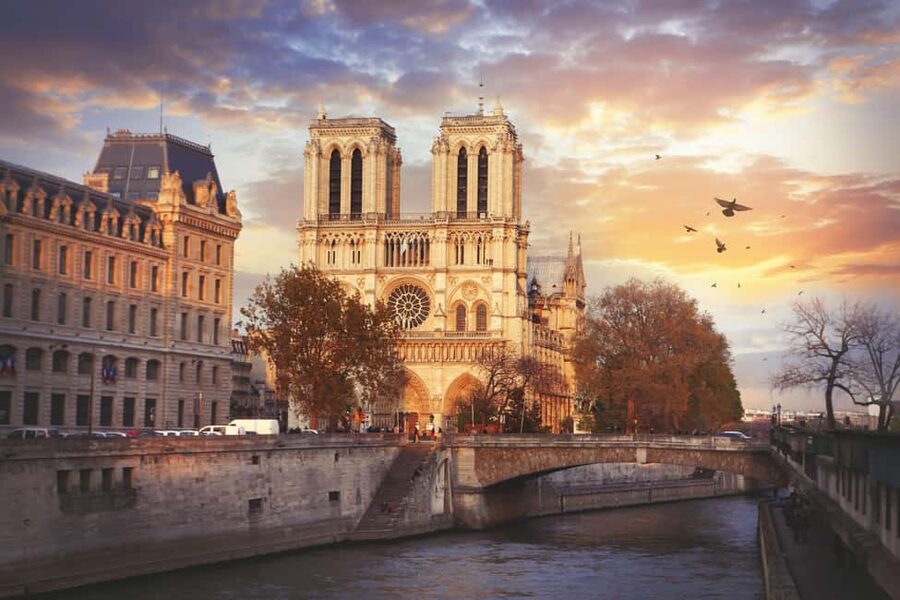
Notre-Dame gets about 10 minutes. The tour does not include entry to the cathedral, and the route should not be confused with a cathedral admission tour. Instead, the guide uses the exterior and its surroundings to explain the old Left Bank and the religious world that shaped early university life.
That distinction matters. If you want a long look inside Notre-Dame, book a separate visit and allow more time. Here, the cathedral is part of a larger story about how Paris developed around faith, schools, river trade, and dense medieval streets.
The short stop works well for a walking tour because it keeps the group moving toward the Latin Quarter rather than spending most of the allotted 90 minutes at one sight. You get context, orientation, and a chance to connect the cathedral with the institutions across the river.
Still in the world, but a different cup:
- Hanoi Coffee Workshop: Taste Salt, Coconut and Egg Coffee
★ 5.0 · 1,286 reviews - Vienna for Food Lovers: Cafés, Markets & Austrian Cuisine
★ 5.0 · 1,063 reviews - Big Island Highlights: Coffee, Volcano, Black Sands & Waterfall
★ 5.0 · 1,054 reviews - Hanoi: Salt Coffee Workshop Awake Your Senses With 6 Brews
★ 5.0 · 792 reviews
Shakespeare & Company and the literary Left Bank
Shakespeare & Company receives another 10-minute stop. The famous English-language bookshop gives the tour a natural bridge from medieval Paris to the international literary quarter that developed around it.
This is where the stories of Hemingway and other writers make sense. The point is not only that famous authors came to Paris. It is that the Left Bank offered a mix of cheap rooms, cafés, publishers, students, artists, and fellow outsiders. The neighborhood became a place where people could write, argue, experiment, and find an audience.
You should expect a look at the shop and its place in the district, not a long shopping session. Ten minutes is enough to understand why the location matters, but not enough to browse every shelf. If you want to buy a book, return after the tour.
This section is also a good example of the tour’s balance. It does not present the Latin Quarter as a museum frozen in the past. English-speaking visitors, independent writers, students, and curious passersby are still part of its identity.
The Sorbonne and the weight of an institution

The route then heads toward the Sorbonne, with about 10 minutes devoted to the university area. The information provided refers to both Sorbonne University and La Sorbonne, so you should think of these as connected stops in the same academic story rather than two separate campus tours.
The guide explains how Europe’s oldest university system began under church control and later fought for greater independence. That change is central to understanding the Latin Quarter. Education here was never just about classrooms. It was tied to who could teach, who could decide what counted as truth, and how ideas could challenge authority.
I especially like this part for visitors who want more than pretty streets. The Sorbonne gives the neighborhood intellectual shape. You learn why its name still carries international weight, and why the Latin Quarter has a long record of student protests, arguments, and political pressure.
Do not expect access to every university building. The walk is an exterior and neighborhood-based experience, with the guide providing the context. If you want a formal university tour, this will not replace one. If you want to understand what the Sorbonne means to Paris, the stop earns its place.
Medieval lanes, English Street, and quiet courtyards
Between the larger landmarks, the route uses narrow streets and older passages that are easy to miss when you walk alone. The tour description points to medieval Paris, the street of the English, hidden courtyards, and lanes that most tourists do not find without local guidance.
This is where the $23 price begins to make sense. You are not paying only to stand outside famous buildings. You are paying for a route through the smaller spaces between them, plus the explanation that turns an ordinary doorway or side street into part of the story.
The exact order of these passages can vary with street conditions and group movement. That is normal for a city walk. You should expect the guide to lead you through the district rather than present every stop as a formal site with a ticket desk.
The old lanes also create the main physical drawback. They can be tight, uneven, and difficult for wheelchair users, and the experience is explicitly not suitable for wheelchair users. Wear supportive shoes, especially if you are combining this walk with a full day on foot.
Roman bathhouses and the Musée de Cluny
The Musée National du Moyen Âge, also known as the Musée de Cluny, appears in the route for a 10-minute guided stop. The important feature here is the Roman bathhouse remains, which connect the medieval and modern district to an even older Paris.
You will not be taking a full museum tour in 10 minutes, and admission is not included. Instead, the guide gives you a quick reading of the site and explains why Roman remains sit beneath a neighborhood better known for university buildings and bookshops.
That short format is both useful and limited. It gives you a reason to return to the museum if ancient or medieval Paris interests you. But if you want to see its full collection, plan a separate visit and budget for entry.
The stop helps broaden the walk beyond the familiar literary names. The Latin Quarter is not only Hemingway and cafés. It carries traces of Roman Paris, medieval religion, university life, modern cinema, and student politics.
Churches, cinema, jazz, and the everyday neighborhood
The route also includes brief visits whose exact names and timing are not fully specified. There is a short guided segment of about three minutes, along with another five-minute visit. The walk’s broader themes include an art-house cinema, churches, jazz, student life, and the neighborhood’s café culture.
A church visit may be possible during the walk, depending on access and conditions. One guide has been praised for bringing the group into a particularly beautiful church, while another part of the route connects the district with jazz and its film culture. These details show the value of having a local guide, but you should not treat any one interior visit as guaranteed.
The black coffee theme is a small but effective idea. It gives the tour an everyday hook. You are not only hearing about grand writers and political movements. You are also hearing about how students and artists use the district, where they meet, and why the café remains part of the intellectual life of Paris.
There is also mention of the Luxembourg Garden in the wider route. The walk finishes at the Panthéon, so the exact amount of time spent near the gardens may depend on the route chosen that day. I would see these references as part of the neighborhood’s larger setting rather than promise of a long garden visit.
The Panthéon finish and what you can do next
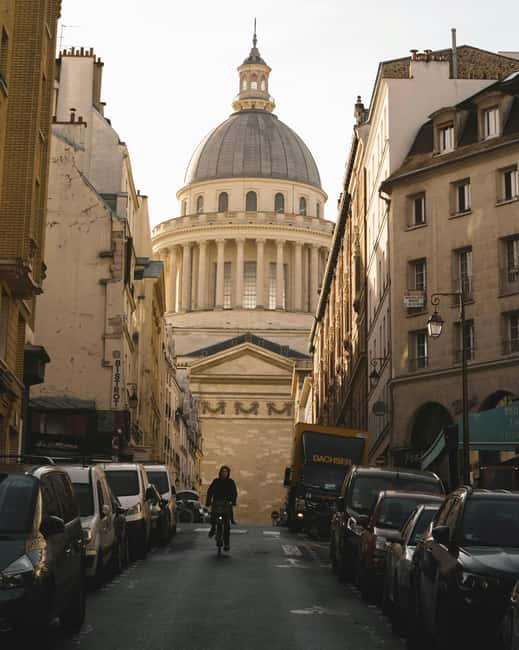
The tour ends at the Panthéon. This is a strong finish because the building carries the weight of French national memory and gives the walk a clear endpoint after the smaller lanes and university streets.
Entry is not included, so you can decide later if you want to go inside. That flexibility is useful. Some people will be ready for lunch or another museum after 90 minutes. Others will want to continue with the Panthéon, the Luxembourg Garden, or a return to the Sorbonne area.
Ask the guide for local suggestions before the group breaks up. One guide has provided an extensive restaurant list and practical advice about finding quieter times to enter Notre-Dame. Those are the sorts of details that can make a short orientation walk more useful for the rest of your stay.
Guide style and group experience
The strongest thread in the guide feedback is personal connection. Yago is described as young, dynamic, and passionate about Paris, with stories about jazz, Catholic life, academic institutions, and cinema. Mathieu and Mathew are noted for clear information and personal knowledge of the area. Floriane is described as authentic and enthusiastic.
Names and guide assignments can change, so you should not book expecting one specific person unless the provider confirms it. The important point is the style: a local English-speaking guide who can add personal observations to the historical outline.
The small-group format should make it easier to ask questions than on a large city tour. Still, 90 minutes is a compact time frame. If the guide spends extra time on a lively discussion, some minor stops may be shortened. That is a reasonable trade for a walk that feels conversational rather than rushed through a script.
Is $23 a fair price?
At $23 per person, this is a sensible price for a 90-minute guided walk in central Paris. The cost covers the guide and the route, but not admission to Notre-Dame, the Musée de Cluny, the Panthéon, or any other monument or museum.
I would book it for the orientation and access to local stories, not as a substitute for paid sightseeing. The value is strongest if you are new to the Latin Quarter, enjoy literature and history, or want help finding the older lanes and courtyards without planning the route yourself.
The price is less compelling if you already know the district well or prefer to spend two or three hours inside museums. In that case, use the $23 for a separate museum visit and explore the streets independently.
You can cancel up to 24 hours ahead for a full refund, and you can reserve now and pay later. Those policies make it easier to fit the walk into a changing Paris schedule.
Who should book this Latin Quarter walk?
I recommend it most for first-time visitors, readers, students, history fans, and anyone who wants the Left Bank explained through people and ideas rather than only monuments. It also suits visitors who have already seen the major Paris sights and want a more focused neighborhood walk.
The tour is less suitable for wheelchair users, anyone needing a long indoor program, or anyone who dislikes walking in poor weather. You should also choose a different activity if you want extended entry time at Notre-Dame, the Sorbonne, the Musée de Cluny, or the Panthéon.
Should you book it?
Book this tour if you want a lively introduction to the Latin Quarter in English, with medieval streets, literary landmarks, university history, and personal stories from local guides. The strongest reasons are the compact route, the small group, and the chance to hear about the area from guides who know it as a lived-in neighborhood.
Skip it if your main goal is museum entry or a slow architectural study. For $23, you get a focused 90-minute portrait of the Left Bank, not an all-day sightseeing package. For many visitors, that is exactly the right amount of structure before exploring the quarter on their own.
FAQ
How long does the Paris Left Bank tour last?
The tour lasts 90 minutes.
Where does the tour meet?
Meet the guide in a pink vest under the Horseman statue, the Statue de Charlemagne et ses leudes, in front of Notre-Dame.
Where does the tour finish?
The walk finishes at the Panthéon.
Is the tour offered in English?
Yes. The tour has a live English-speaking guide.
Does the price include museum or monument entry?
No. Entry to museums and monuments is not included.
Can wheelchair users join the tour?
No. The activity is not suitable for wheelchair users.
Just listed in the world
- Bali: Ubud Monkey Forest, Coffee Plantation, and Market Tour★ 5.0 · 5 reviews
- Chill coffee or meal break at illy Caffè in St.Mark’s Square★ 4.7 · 9 reviews
- Private Ubud Tour: Sacred Monkeys, Coffee, Temple, Waterfall★ 4.8 · 3 reviews
- Venice: Sunrise Walking Tour with Espresso★ 4.6 · 12 reviews
- Bali ,Tegallalang, Tirta Empul, Coffee, Lunch & Batur Hot Spring★ 4.0 · 2 reviews
- Mount Batur Sunrise Trekking (Private, Breakfast and Visiting coffee plantation)★ 5.0 · 27 reviews
- Venice Delights: Coffee & Food Experience Walking Tour★ 5.0 · 2 reviews
- Coffee Plantation and River with Waterfalls in Puerto Rico★ 4.5 · 9 reviews
Coffee Tours, compared.
Hanoi Coffee Experience: 6 Brews, 9 Recipes & 3 Liquor Tastings
Read our review →
Coffee Tour with Transport, Snacks and Tastings
Read our review →
Turkish Coffee Making and Fortune Telling Workshop
Read our review →
Hanoi Coffee Workshop: Taste Salt, Coconut and Egg Coffee
Read our review →
Vienna for Food Lovers: Cafés, Markets & Austrian Cuisine
Read our review →
Salt Coffee Workshop Awake Your Senses With 6 Brews
Read our review →