
REVIEW · SAN JOSE
Britt Coffee Tour from San José
Coffee here is not treated as a simple beverage. You follow the bean from seedling to roasted cup, then sit down for a tasting that shows why soil, weather, growing conditions, and luck all matter. The presentation has some theater to it, but it also gives you a clear picture of how Costa Rican coffee is made.
I like two things right away: the tour fits neatly into a San José morning, and lunch, coffee, chocolate tastings, and hotel transportation are included. Guides such as Luis, Apa, and Chos bring plenty of humor and energy, which helps the technical parts go down easily.
The main drawback is value. At $83.80 per person, this is not a bargain if you only want a quick look at a coffee plant and a cup of coffee. Also, transportation has not always been punctual, so build in patience around pickup time.
Key points at a glance
- Seed-to-cup teaching: See seedlings, growing stages, roasting, and coffee cupping in one compact visit.
- Lively guides: Luis, Apa, and Chos have been praised for funny, interactive presentations and strong coffee knowledge.
- Easy San José outing: The short format, 10:00 am start, and included hotel transport make this simple to add to a city stay.
- Lunch is part of the deal: A filling meal is included, though food quality may vary from very good to merely adequate.
- Good for mixed groups: Well-laid paths, frequent seating, and limited walking suit many ages and fitness levels.
- Coffee to take home: The farm can ship fresh coffee, and the gift shop gives you a practical way to stock up.
Coffee begins with a seedling, not a souvenir bag
The visit starts in a garden setting where you can settle in with a cup of gourmet coffee. That opening is useful because it gives you a taste before the teaching begins. You are not asked to understand coffee production in the abstract. You begin with the finished drink, then work backward.
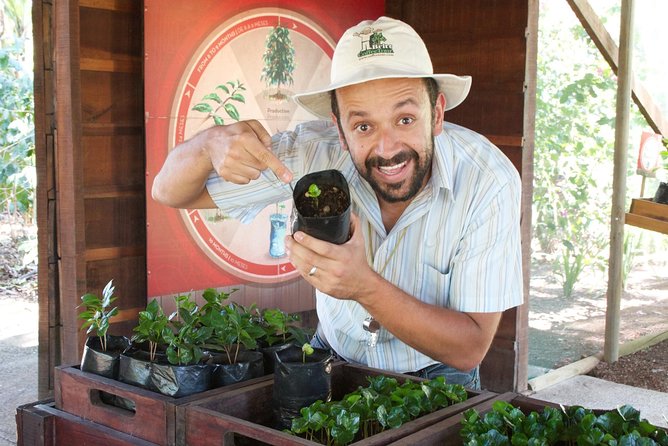
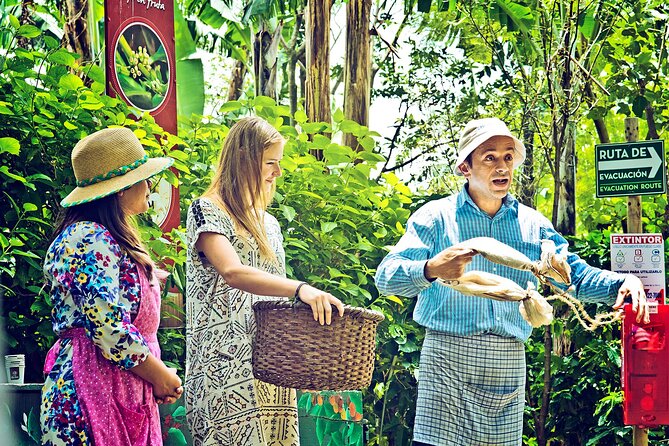
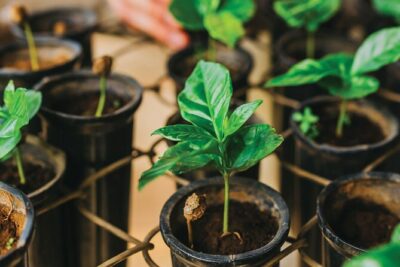
From there, the guide takes you to the seedlings. You see the small plant that begins the process and follow its growth until it is ready for the coffee plantation. This section may sound basic, but it answers a question many coffee drinkers never stop to consider: what does a coffee plant look like before it produces the beans in your kitchen?
The experience is built around the full chain of production. The guide explains how the plant develops and how it moves from nursery care to plantation growth. Details about soil, weather, environment, and chance help correct the idea that good coffee comes from roasting alone.
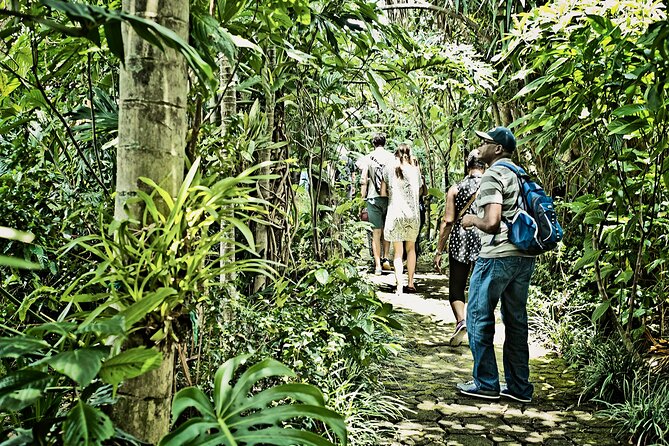
You will walk between displays and growing areas rather than trek through a large working farm. That makes the tour manageable, but it also means you should not expect a long agricultural expedition. The site is compact, and one visitor described it as a small place with a quick tour. For a first introduction, that compact design works well. For serious coffee fans who want extended time among the fields, it may feel limited.
More Coffee Tours in the world:
- Hanoi Coffee Experience: 6 Brews, 9 Recipes & 3 Liquor Tastings
★ 5.0 · 2,945 reviews - Medellin: Coffee Tour with Transport, Snacks and Tastings
★ 4.7 · 1,357 reviews - Istanbul: Turkish Coffee Making and Fortune Telling Workshop
★ 4.9 · 1,308 reviews
The roasting room turns theory into aroma
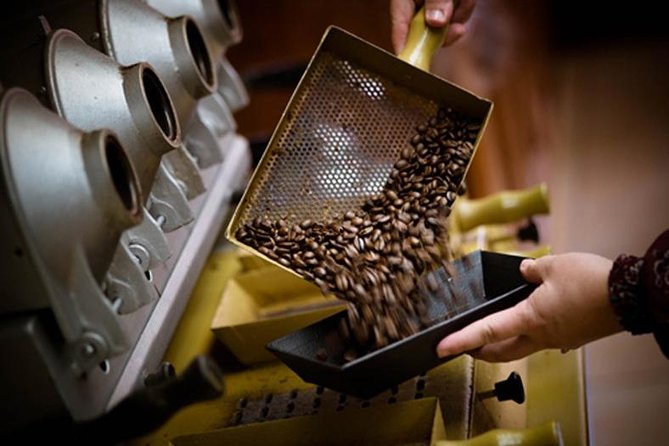
The next part moves to the roasting plant. Here, the focus shifts from cultivation to selection and heat. You learn what a coffee taster looks for when choosing beans and how the roasting process changes the color, smell, and character of the grain.
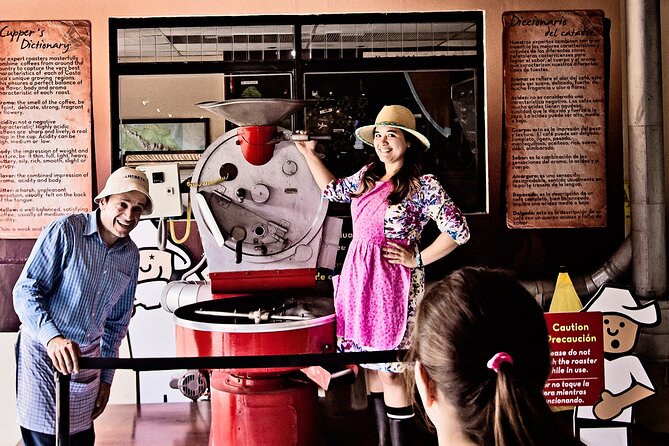
A particularly useful feature is the chance to roast a coffee sample with the guide. You can watch and smell the bean as it changes. The aroma of freshly roasted coffee is not a small detail here. It is the moment when the process becomes physical and memorable.
This section helps explain why two coffees made from the same basic crop can taste different. The guide connects the final flavor to the bean and the roasting choices. The presentation is designed for a general audience, so you do not need prior coffee knowledge.
The guides are a major part of the experience. Luis has been praised for explaining how weather, soil, surroundings, and chance work together. Apa is described as engaging and happy to answer questions. Chos is known for a theatrical style. Those names matter because this tour depends heavily on the person leading it. The content is organized, but a lively guide can make the same material far more memorable.
English and Spanish displays help support the spoken presentation. If you do not catch every point, the visual material gives you another way to follow the process.
Cupping gives you a better way to taste coffee
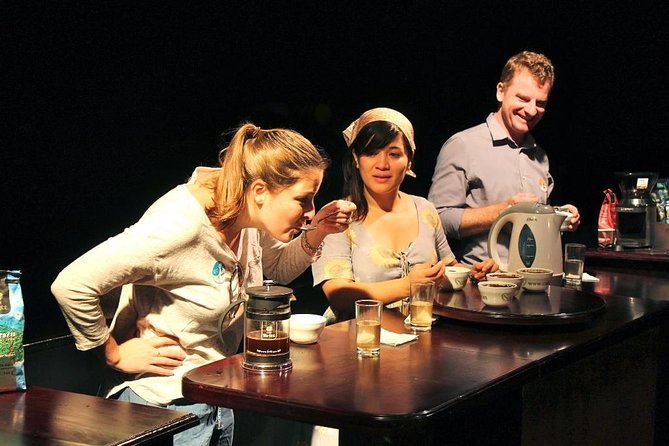
After the roasting demonstration, you take a seat in the amphitheater for a coffee cupping demonstration. This is the tasting portion, but it is more useful than simply sampling several drinks and picking a favorite.
The guide shows how coffee is assessed and why professional tasters pay attention to specific qualities. You get to connect the earlier stages, from the plant and bean to roast and aroma, with what you taste in the cup.
The coffee is served without sugar for the tasting. If you normally sweeten your coffee, bring a couple of sugar packets or ask about options before the tasting starts. This is a small practical point, but it can make the difference between enjoying the sample and finding it too strong.
Coffee and chocolate varieties are included. That broadens the appeal for family groups and for anyone who is not a regular coffee drinker. One especially useful detail is that even a self-described non-coffee drinker was persuaded to try and enjoy the coffee. You should not count on the same result for everyone, but the tasting is not aimed only at coffee experts.
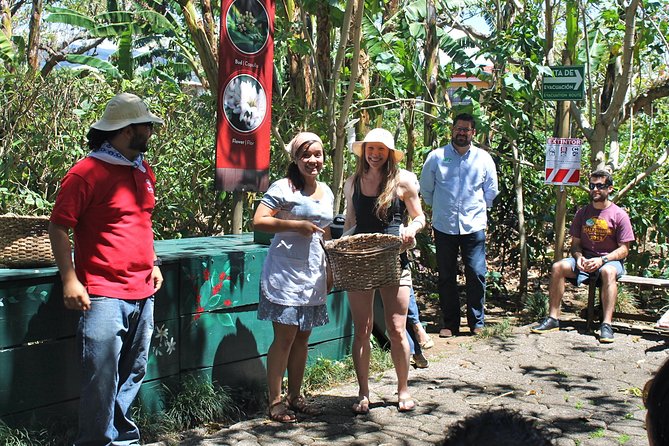
The cupping is also where the tour’s entertainment style is most apparent. Guides use humor, questions, and audience interaction rather than giving a dry factory lecture. Most of the feedback praises that approach, though you should not expect every guide to be equally comic.
Lunch adds real value, with a small caveat
Lunch is included, which changes how you should judge the $83.80 price. You are not paying only for a short talk and a few samples. The package includes transport from San José, the guided visit, coffee and chocolate, and a meal.
Several people describe the lunch as filling or excellent, and one person specifically praised the restaurant enough to plan another meal there. Another account describes the food as just average, with dry chicken. That range is worth noting. I would treat lunch as a useful inclusion, not the main reason to book.
The tour can also accommodate some dietary needs. A visitor who could not eat the standard included meal received an alternative prepared on site. That suggests the staff may try to help, but you should still raise any allergy or dietary concern when booking or before lunch rather than assume a substitute is guaranteed.
The food makes the short schedule easier. You do not need to arrange a separate meal immediately after the coffee visit, and the combination works well for a morning outing from the capital.
Still in the world, but a different cup:
- Hanoi Coffee Workshop: Taste Salt, Coconut and Egg Coffee
★ 5.0 · 1,286 reviews - Vienna for Food Lovers: Cafés, Markets & Austrian Cuisine
★ 5.0 · 1,063 reviews - Big Island Highlights: Coffee, Volcano, Black Sands & Waterfall
★ 5.0 · 1,054 reviews - Hanoi: Salt Coffee Workshop Awake Your Senses With 6 Brews
★ 5.0 · 792 reviews
A short visit with enough walking for most people
The coffee portion is listed as about one hour, while the full experience runs roughly two hours once lunch, transport, and the surrounding activities are considered. That is the right scale for a day in San José. You can spend the rest of the day on other sightseeing instead of giving up a full morning and afternoon.
The paths are described as well laid out, with seating along the route. People with moderate mobility can manage the visit more easily than the word plantation might suggest. One older couple in their eighties had no trouble with the limited walking, and another account notes that a companion with mobility issues was able to use the paths and available seats.
You should still bring comfortable clothes and shoes. Insect repellent is also recommended, along with a camera. The tour calls for a moderate level of physical fitness, so it is not designed as a completely stationary presentation.
The maximum group size is 25. That is large enough for a lively group but small enough for a guide to take questions. Smaller departures are possible, and one person had a very small pickup group. The exact feel will depend on the date and the number booked.
The shop is part of the practical appeal
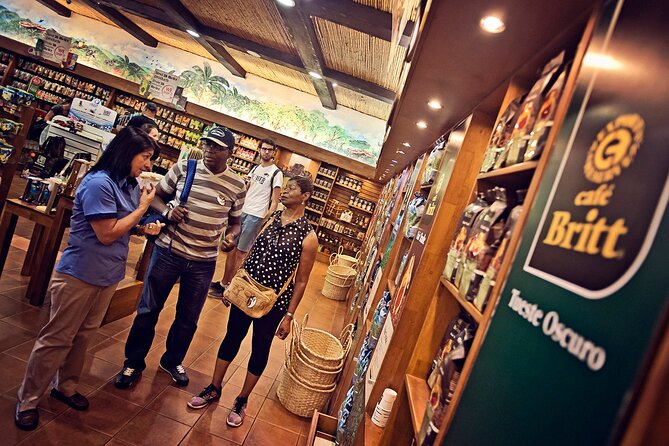
The visit ends with an easy chance to buy coffee and chocolate. The gift shop and bakery add a little more time to the stop, and the bakery may be tempting if you like sweets.
More important, the farm can ship fresh coffee to your home. That is useful if you do not want to fill your luggage with beans or worry about keeping them in good condition during a longer Costa Rica trip. You can taste first, decide what you like, and arrange shipping rather than buying blindly.
The shop can also affect your sense of value. If you already plan to buy Costa Rican coffee, the included tasting and direct access to the producer make the visit more worthwhile. If you are not interested in purchasing anything, you should judge the tour mainly on the guide, demonstrations, lunch, and transportation.
What the $83.80 price really buys
The price is reasonable for a bundled half-day-style outing, but it is high for a one-hour educational stop. The difference comes down to how much you value convenience.
You receive roundtrip transport from San José hotels, a guide, coffee and chocolate tastings, lunch, and access to the coffee-growing and roasting presentation. You also avoid arranging a taxi or rental car to reach the site. For a first-time visitor who wants an easy introduction without planning several separate pieces, that package has clear value.
The price is harder to defend if you are already staying near the farm, have your own transport, or have visited several coffee operations in Costa Rica. One person who enjoyed the tour still felt it should cost closer to $45. That is a fair warning: the experience is polished and convenient, but not a low-cost local stop.
I would book it for a first coffee visit from San José, especially if you want lunch and transport handled in one reservation. I would think twice if you are a dedicated coffee enthusiast seeking a large working farm, long field time, or a more technical tasting session.
Transportation deserves a little planning
Pickup begins around the 10:00 am start, with hotel transportation from San José included. You should confirm your hotel pickup details and keep the local contact number, +506 8813 4239, available for day-of questions.
The transportation record is mostly positive, but there has been at least one serious delay of about an hour without advance notice. That person had to call to find out if the vehicle was still coming. I would not schedule a flight, timed museum entry, or other must-not-miss activity immediately after the tour.
The operator requires at least two people for the tour to run. If that minimum is not met, you can be offered another date or experience, or receive a full refund. The experience can also be changed or refunded if poor weather cancels it.
Free cancellation is available until 24 hours before the start time. Within 24 hours, changes and refunds are not accepted, so keep that cutoff in mind when arranging a city itinerary.
Who will enjoy this coffee tour most
This is a good match for you if you want a friendly introduction to Costa Rican coffee rather than a specialist class. Families have plenty to do, since the format includes gardens, demonstrations, tastings, chocolate, lunch, and a shop.
It also suits mixed-age groups. The paths are limited, seating is available, and the information is presented in an accessible way. You can take photos, ask questions, and enjoy the setting without needing strong coffee expertise.
Food lovers will get the most from the seed-to-cup explanation and tasting. Coffee buyers will appreciate the chance to sample before purchasing and the option to ship coffee home.
You may want something else if you dislike staged presentations, want a long walk through coffee fields, or consider $83.80 too much for a compact outing. The tour is polished and entertaining, but it is not a rough, farm-only experience.
Should you book the Britt Coffee Tour?
Book it if you want an easy two-hour activity from San José with transport, lunch, tastings, and a guide who can make coffee production fun. The strongest reasons are the clear seed-to-cup sequence, the roasting demonstration, the cupping session, and the practical option to ship coffee home.
Skip it if you are looking for the cheapest possible coffee stop or a large agricultural operation. Also leave extra time around pickup and return. For most first-time coffee visitors, the convenience and well-run presentation make the cost defensible, especially when lunch and transport are part of the package.
FAQ
How long does the Britt Coffee Tour from San José last?
The full experience lasts approximately two hours. The guided coffee portion is listed as about one hour, with lunch and other parts of the visit adding time.
What time does the tour start?
The stated start time is 10:00 am.
Is transportation from San José included?
Yes. Transportation from hotels in San José is included.
What happens on the tour?
You visit coffee seedlings, learn about plant growth, see the roasting process, help roast a sample, attend a coffee cupping demonstration, taste coffee and chocolate, and have lunch.
Is lunch included?
Yes. Lunch is included in the tour price. Alcoholic drinks are not included.
How much does the experience cost?
The listed price is $83.80 per person.
Is the tour suitable for people with limited mobility?
The tour requires a moderate fitness level, but the paths are well laid out and seating is available along the way. The walking is described as limited by people who managed it comfortably at older ages.
How many people can join the tour?
The maximum group size is 25 people. The tour also requires a minimum of two participants to operate.
Can I cancel for a full refund?
Yes, if you cancel at least 24 hours before the experience starts. Cancellations or changes made less than 24 hours before the start time are not refunded. Weather or minimum-participant cancellations may result in another date, another experience, or a full refund.
Just listed in the world
- Bali: Ubud Monkey Forest, Coffee Plantation, and Market Tour★ 5.0 · 5 reviews
- Chill coffee or meal break at illy Caffè in St.Mark’s Square★ 4.7 · 9 reviews
- Private Ubud Tour: Sacred Monkeys, Coffee, Temple, Waterfall★ 4.8 · 3 reviews
- Venice: Sunrise Walking Tour with Espresso★ 4.6 · 12 reviews
- Bali ,Tegallalang, Tirta Empul, Coffee, Lunch & Batur Hot Spring★ 4.0 · 2 reviews
- Mount Batur Sunrise Trekking (Private, Breakfast and Visiting coffee plantation)★ 5.0 · 27 reviews
- Venice Delights: Coffee & Food Experience Walking Tour★ 5.0 · 2 reviews
- Intensive Old San Juan Opulent Coffee/Rum/Tastings Walking Tour★ 5.0 · 11 reviews
San Jose Coffee Tours, compared.
Poás Volcano and Coffee Tour with Tasting and La Paz Falls
Read our review →
Poas Volcano + Coffee tour + Waterfall tour day from San Jose
Read our review →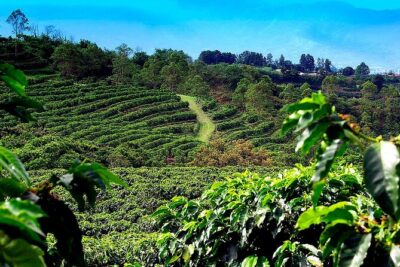
Poas Volcano + Coffee Plantations & La Paz Waterfall Gardens Trip from San Jose
Read our review →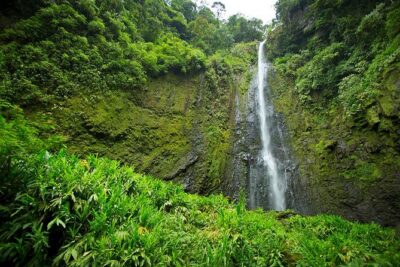
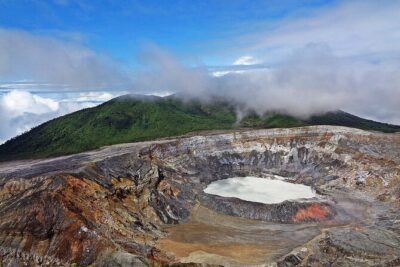
Super Combo Tour: Waterfalls Gardens + Coffee Tour + Poás Volcano
Read our review →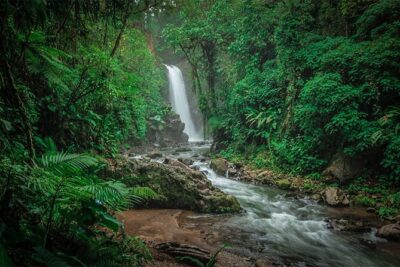
Doka Coffee Tour, Poas Volcano and La Paz Waterfall Day Trip from San Jose
Read our review →Lists this coffee tour turns up in