
REVIEW · ANTIGUA
Experience: Organic Coffee, Avocados, Honey & More!
The best part of this Antigua outing is that you do not simply look at a farm. You handle the coffee from bean to cup, make tortillas and guacamole, and taste honey produced on the property. Michael, also called Maykol in the tour information, leads the visit with help from his family.
I like the small maximum of 10 people and the short drive from Antigua. I also like that the farm visit connects food with practical lessons about compost, pollinators, and soil care. The main consideration is that this is a walking, hands-on farm visit, not a polished coffee museum, so muddy ground, uneven paths, changing weather, or seasonal differences may be part of the experience.
Key points to know before you book
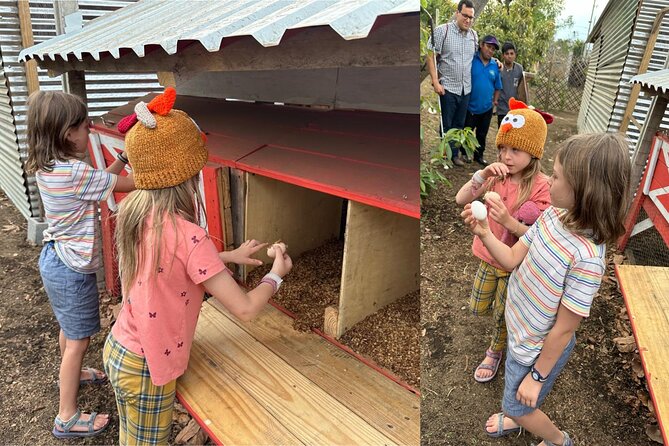
- Coffee from harvest to cup: Pick coffee berries when available, roast the beans, grind them, and brew your own drink.
- Family-run farm: Michael and his family share a working two-acre property, personal stories, and their approach to sustainable agriculture.
- Fresh food workshop: Help make corn tortillas and guacamole with farm avocados, then eat what you prepare.
- Bees and useful farm technology: Learn why pollinators matter, see the honey process, and sample the finished product.
- Small and close to Antigua: Transportation begins at Casa del Jade at 9:30 a.m., with the farm roughly a short drive away.
- A practical sustainability lesson: See four types of organic compost and learn how you can make similar fertilizer at home.
A working farm, not just a coffee tasting
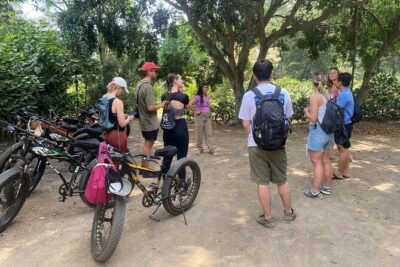
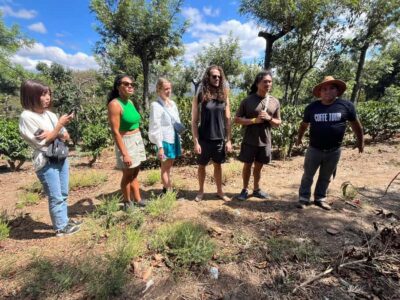
Little Green Farm offers a useful change of pace from Antigua’s cobbled streets, churches, cafés, and tour buses. The farm is in the area of San Pedro Las Huertas, a short drive from town. You pass through the community on the way to the property, then spend the visit walking through the farm rather than sitting through a formal presentation.
The experience lasts about two to three hours. The exact rhythm depends on the group, the season, and how much time you spend with each activity. The formal farm portion is described as about an hour and a half, with transport included before and after.
I would choose this outing for anyone who wants to understand where everyday food comes from. Coffee, avocados, honey, tortillas, insects, and compost all become part of one connected lesson. That makes the visit more useful than a quick tasting where you sample a product without seeing the work behind it.
The farm is family-owned, and that shapes the mood. Michael’s daughter Elisa has helped with some visits, and family dogs and cats may be around the property. Those details are not the reason to book, but they help make the experience feel personal rather than commercial.
More Coffee Tours in the world:
- Hanoi Coffee Experience: 6 Brews, 9 Recipes & 3 Liquor Tastings
★ 5.0 · 2,945 reviews - Medellin: Coffee Tour with Transport, Snacks and Tastings
★ 4.7 · 1,357 reviews - Istanbul: Turkish Coffee Making and Fortune Telling Workshop
★ 4.9 · 1,308 reviews
Getting to San Pedro Las Huertas from Antigua
You meet at Casa del Jade, Edificio El Jaulón, at 4a Calle Oriente 10 in Antigua. The stated start time is 9:30 a.m., and the activity ends back at the meeting point. The drive to the farm is short, with the property located at 5 Avenida Sur No. 183 A in San Pedro Las Huertas.
The included transport matters. You do not need to arrange a taxi, puzzle out a rural route, or spend the morning trying to find the entrance. The farm is close enough to fit neatly into a half-day, leaving time for lunch and other Antigua sightseeing.
One practical detail: some past visitors arranged a more convenient pickup or drop-off location directly with Michael. The official meeting point is Casa del Jade, so contact the operator ahead of time if you need to clarify transport details. Do not assume that every hotel pickup is automatic.
The group limit is 10 people. That is small enough for questions and hands-on work without turning the visit into a crowded demonstration. If you prefer a quiet, private-feeling outing, ask about the group arrangement before booking.
Walking through coffee plants and making your own cup
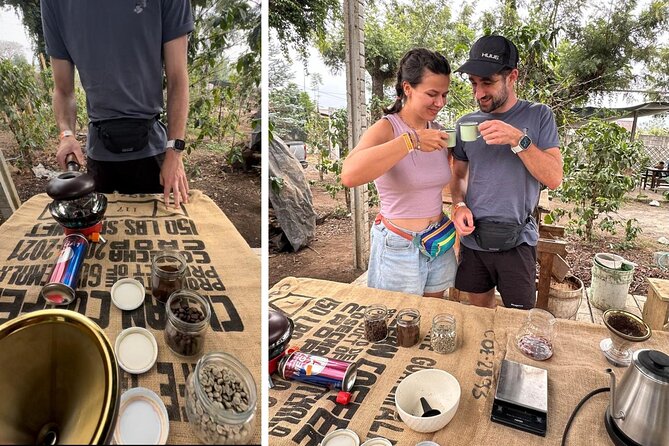
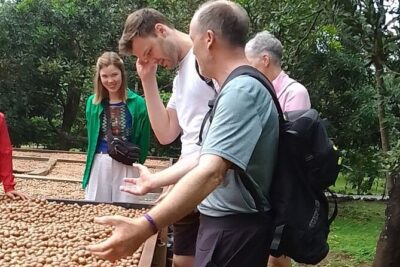
Coffee is the central thread of the visit. You walk through the coffee plantation, learn about the plants, and taste the coffee produced through the farm’s process. At the most hands-on point, you may pick coffee berries, roast the beans, grind them, and brew a cup yourself.
This sequence is valuable because it slows down a drink that most of us consume without thought. You see that coffee is not simply a bean scooped into a machine. It begins as fruit, then requires several stages before it becomes something you can grind and drink.
The roasting is especially appealing for coffee fans. You get a direct sense of how the beans change as they are heated, then prepare a small amount for tasting. The scale is informal and educational, not a professional barista course, so book this for the experience rather than advanced technical instruction.
Availability can depend on the growing season. The tour description includes coffee tasting and farm activities, while some past visits included picking coffee berries. The exact harvesting step may vary with the time of year. If picking is the main reason you want to go, ask about current conditions before you reserve.
The coffee activity works well for families because it gives children a task at each stage. Older children can take part in roasting and grinding, while adults tend to enjoy the farming explanation and the chance to compare the finished drink with coffee bought in a café.
Avocado trees, tortillas, and guacamole
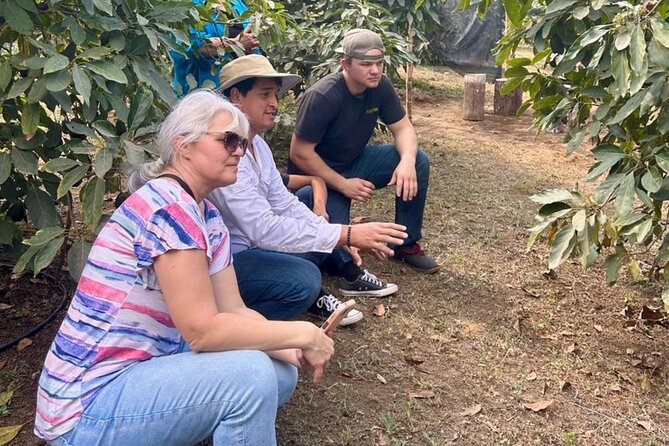
After the coffee section, you walk among the avocado trees and learn how the farm supports them. The focus is not just on the fruit. Michael explains composting, beneficial insects, and the role of pollinators in creating a healthy growing system.
When avocados are in season, you help make guacamole. The activity is paired with handmade corn tortillas, which you shape and cook as part of the farm-to-table meal. Then you eat the avocado with the tortillas.
This is one of the strongest parts of the experience because it combines a lesson with a meal. You do not simply hear that local food is fresher. You handle the ingredients, prepare them, and taste them in a simple dish.
Seasonality is worth keeping in mind. Guacamole is specifically described as available in season, so the exact food experience may change. Other food tastings may still be available, but you should not book with the expectation that every listed crop will be at its peak on every date.
The tortilla workshop also adds a cultural element without pretending to be a full cooking class. You learn a basic preparation directly from the family, then eat the result. For many people, that feels more meaningful than watching a demonstration from a distance.
Still in the world, but a different cup:
- Hanoi Coffee Workshop: Taste Salt, Coconut and Egg Coffee
★ 5.0 · 1,286 reviews - Vienna for Food Lovers: Cafés, Markets & Austrian Cuisine
★ 5.0 · 1,063 reviews - Big Island Highlights: Coffee, Volcano, Black Sands & Waterfall
★ 5.0 · 1,054 reviews - Hanoi: Salt Coffee Workshop Awake Your Senses With 6 Brews
★ 5.0 · 792 reviews
Bees, honey, and the farm’s pollinators
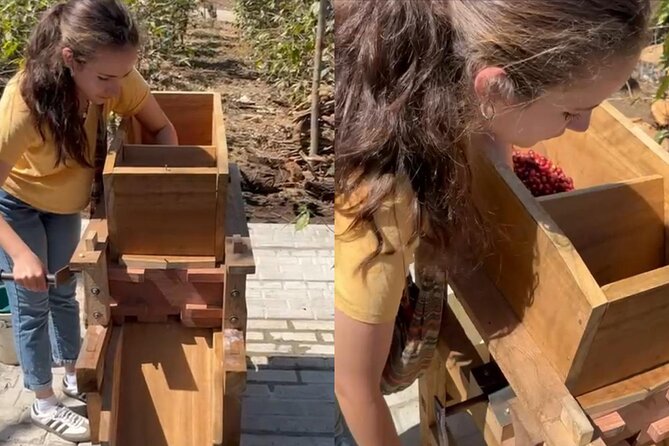
The bee section explains why pollinators matter to a farm growing fruit. You learn about bees, see technology used to obtain honey, and taste the honey itself.
This part gives the tour a wider focus. The visit is not only about producing food for visitors. It shows how insects, flowering plants, fruit trees, and farming methods affect one another. That is a useful idea to carry home, especially if you garden or want to reduce waste and chemical use.
The honey tasting is brief, but it gives you a direct link between the farm’s bees and a product on your plate. The technology demonstration adds something beyond a standard beekeeping talk, although the provided details do not specify the equipment or how long you spend with the hives.
You will not be signing up for a technical beekeeping course. Think of this as one part of a wider farm visit, with enough explanation to show why bees matter and how honey is collected.
Four compost systems and practical organic farming
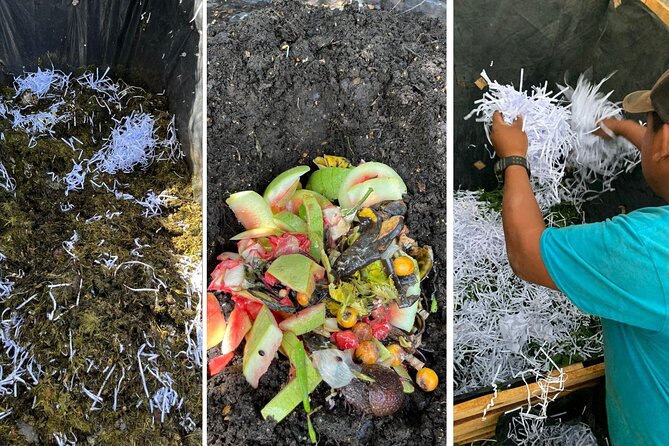
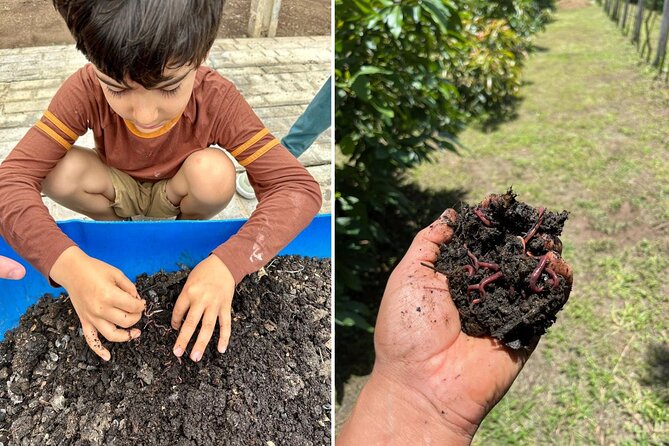
The sustainability lesson is the most distinctive part of the tour. You see four different ways of making organic compost and learn how to create fertilizer yourself.
Michael also explains how the farm works toward organic production. The visit covers the use of available resources, soil care, and ways to attract helpful insects for pollination and natural balance. Past experiences also included seeing livestock and other working parts of the property.
I like this section because it turns a broad idea into something you can understand at home. Organic farming can sound vague when it is presented only as a label. Seeing several compost methods gives you a clearer picture of how kitchen scraps, farm material, soil, plants, and animals can fit into one cycle.
The tour is particularly well suited to gardeners, families, and anyone curious about low-waste living. You can ask practical questions rather than simply admire the farm. The owner’s personal interest in building and improving the property is part of the teaching.
Keep your expectations sensible. This is a small family farm, not a large commercial operation with a fixed visitor center and a long list of formal exhibits. You may find that the visit develops through conversation and demonstration. That is a strength if you like flexibility, but less ideal if you want a tightly scripted tour.
What the small group and family setting mean
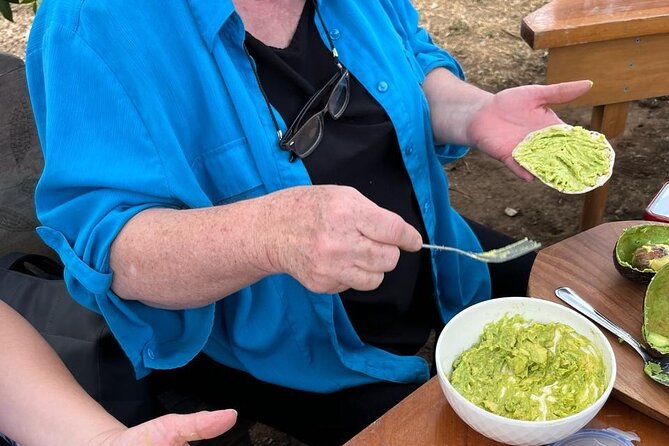
The maximum group size is 10 people, and the owner leads the activity. That gives you a better chance to ask about coffee growing, avocado trees, compost, or bees without waiting for a large crowd to move along.
The family setting is central to the appeal. Michael shares the property and its projects, while family members may take part in food preparation or the farm visit. The experience can feel more like being shown around someone’s working home than entering a public attraction.
That personal approach has a clear advantage: the farm’s story is connected to the family’s effort, history, and plans. It also means the tone may be conversational rather than polished. If you want a professional stage show with timed performances, this is not the right fit.
Children tend to have plenty to do. Coffee grinding, tortilla making, guacamole preparation, open space, animals, and simple farm tasks give the morning variety. The activity is also suitable for solo visitors and couples who want a local experience outside Antigua’s center.
The walking is not described as difficult, and most people can participate. Still, wear practical shoes and clothing you do not mind using around a farm. The tour requires good weather, so rain can cause a date change or cancellation.
Is the $59 price good value?
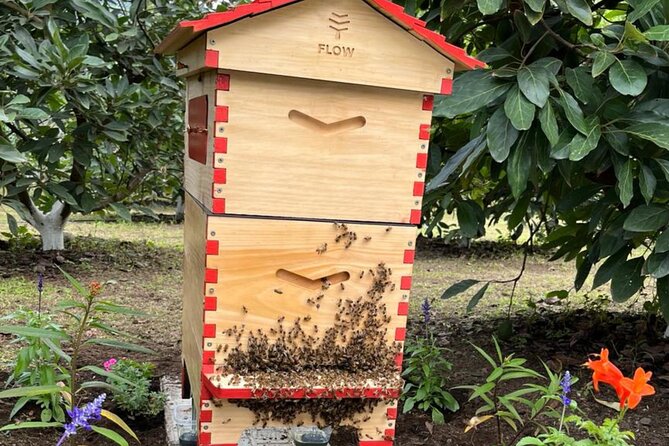
At $59 per person, the price is reasonable if you value several activities in one short outing. You are paying for transport, a guided farm visit, coffee preparation, food making, tastings, and a small group rather than a single plantation photo stop.
The value is strongest for people who would otherwise book separate coffee, food, and countryside activities. Here, the coffee, avocado, honey, compost, and transport are combined into one morning. You also support a family-run local operation rather than spending the entire budget with a large attraction.
It may feel less worthwhile if you only want to drink excellent coffee or see a large plantation. The visit is about participation and conversation, not a formal coffee certification or a long agricultural tour. The farm is compact, around two acres according to the information shared during past visits, so the range of crops and facilities is limited by design.
The perfect length is another value point. Two to three hours is long enough to learn and eat without taking up an entire day. You can return to Antigua for lunch, shopping, museums, or an afternoon excursion.
Who should book this Antigua farm visit?
I would recommend it most strongly to:
- Coffee drinkers who want to see and handle each step from fruit to brew.
- Families with children who prefer activities over long explanations.
- Gardeners and sustainability-minded visitors who want concrete compost and pollinator ideas.
- Food-focused visitors who enjoy making tortillas and guacamole.
- Solo visitors and couples looking for a personal outing beyond central Antigua.
- People who support small local businesses and prefer a family-run experience.
I would think twice if you have limited mobility, dislike walking on farm paths, or want a highly formal attraction. The activity is described as a walking tour, and the outdoor setting means weather can affect the day.
Free cancellation is available up to 24 hours before the start time. Changes or cancellations inside that period are not refunded. The operator may also offer another date or a full refund if poor weather or an unmet minimum number of participants forces cancellation.
FAQ
Where does the tour begin?
The meeting point is Casa del Jade, Edificio El Jaulón, 4a Calle Oriente 10, Antigua Guatemala.
What time does the activity start?
The stated start time is 9:30 a.m.
Where does the tour end?
The activity ends back at the meeting point in Antigua.
Is transportation included?
Yes. Transport to and from the farm is included in the experience.
How many people can join the tour?
The maximum group size is 10 people.
How long does the experience last?
The tour lasts approximately two to three hours. The walking portion at the farm is described as about one hour and 30 minutes.
Will I make coffee during the visit?
Yes. The activities include handling coffee and, depending on conditions, picking berries, roasting beans, grinding them, and brewing your own coffee.
Is guacamole always included?
Guacamole is made when avocados are in season. The tour also includes avocado farming, tortillas, honey tasting, coffee, and lessons about compost and organic farming.
Should you book Little Green Farm?
Book it if you want a hands-on morning with food, farming, and a local family, rather than another sightseeing stop in Antigua. The strongest reasons are the coffee process, the homemade tortillas and guacamole, the honey tasting, and the clear practical lessons about compost and pollinators.
Before booking, confirm seasonal details if coffee picking or fresh guacamole matters most to you. If you are comfortable with a small outdoor farm, a conversational guide, and activities that may adjust to weather and the day’s conditions, this $59 experience offers a personal and useful way to see another side of the Antigua area.
Just listed in the world
- Vietnamese Coffee 101 Workshop★ 5.0 · 11 reviews
- Vietnamese Coffee Making Class in Hoi An★ 5.0 · 4 reviews
- Yerevan: Private Coffee Tour with 2 Café Stops★ 5.0 · 2 reviews
- Turkish Coffee and Traditional Turkish Dessert Cooking★ 4.6 · 8 reviews
- Ubud: Waterfall, Holy Water Temple,Swing&coffee plantation★ 5.0 · 9 reviews
- Vancouver: Street Art & Craft Coffee Walking Tour w/ Tasting★ 4.8 · 11 reviews
- The Colors of Coffee in the Farms of Coatepec★ 5.0 · 3 reviews
- Vienna: Guided Viennese Coffee-House Tour★ 5.0 · 2 reviews
Antigua Coffee Tours, compared.
From Antigua or Guatemala : Coffee & Culture Full-Day Tour
Read our review →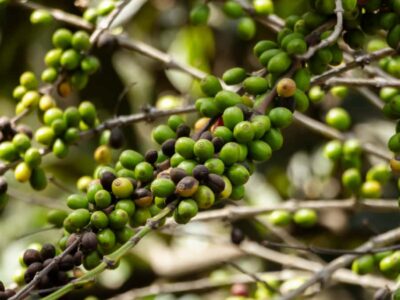
Lists this coffee tour turns up in