
REVIEW · CAIRO
Egyptian Coffee Tasting & Local Breakfast
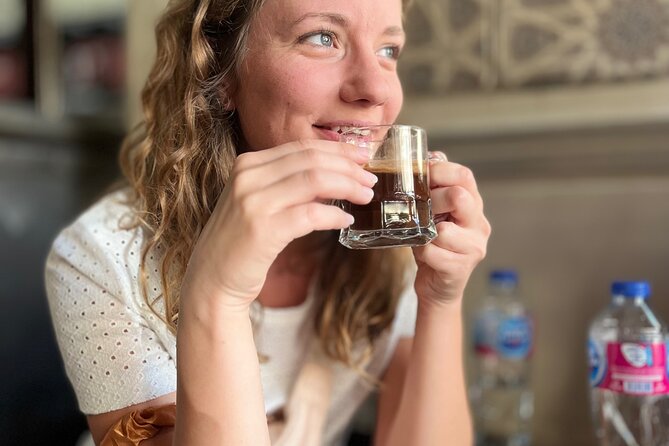
Egyptian coffee and tea are not just drinks here. They are how people welcome you, start the morning, catch up with friends, and make time for conversation. This 90-minute walk with Ahmed and Shorouk, an Egyptian married couple, turns that everyday habit into a small food and culture lesson.
I like two things right away: the tour keeps its focus on local coffee and tea customs, and it includes a breakfast prepared by local hands rather than stopping at a standard sightseeing café. I also like the group limit of five, which should make it easier to ask questions and talk with the guides.
The main consideration is its short length. You visit two stops, but this is a focused morning tasting, not a full Cairo food tour or a major sightseeing walk. If you want several meals or a packed schedule, you may find the experience too brief.
Key points at a glance
- Two Cairo tasting stops: Follow a walking route centered on specialty coffee and tea, with explanations of different types and brewing traditions.
- Ahmed and Shorouk lead the experience: Their perspective comes from daily Egyptian life and from their own family customs around offering coffee and tea.
- Breakfast is part of the cultural lesson: A local meal gives you something substantial to eat while you talk about food, hospitality, and routine.
- A maximum of five people: This is a small-group activity, useful if you prefer conversation over a large organized outing.
- A 9:00 a.m. start: The timing suits an early Cairo food experience and leaves much of the day free afterward.
- $25 per person: The price covers a 90-minute walking and tasting experience with breakfast, making it reasonable if you value personal interpretation and local context.
Why Egyptian coffee and tea make a good Cairo introduction
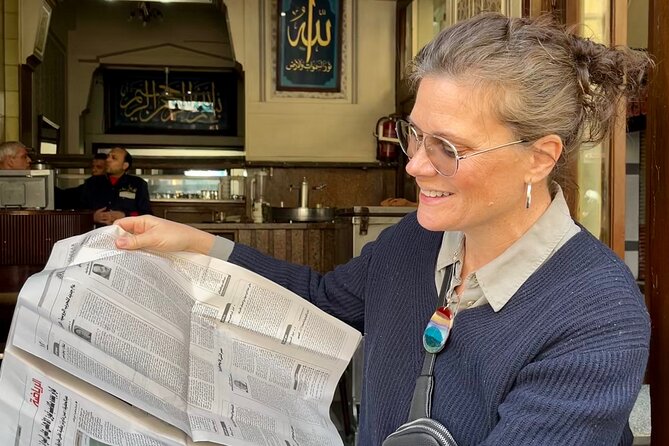
Cairo can be a lot to take in. The pyramids, museums, mosques, markets, traffic, and street life all compete for your attention. Coffee and tea offer a calmer way to understand the city because they reveal what happens during an ordinary visit to someone’s home.
Ahmed and Shorouk explain that coffee and tea are among the first things offered when someone arrives at a house. That detail matters. You are not simply tasting beverages selected for tourists. You are learning about a social habit that reaches into breakfast, family visits, meals, and meetings with friends.
I like food experiences that explain why something matters, not just what it tastes like. Here, the drinks serve as an entry point into Egyptian hospitality. You can expect discussion of the history of coffee and tea in Egypt, the different types available, and the way people use these drinks to share thoughts and keep in touch.
This also gives the tour a useful advantage over a standard café stop. You are not left to order a drink and guess at its place in local life. The guides connect each tasting to customs and conversation.
More Coffee Tastings in the world:
- Hanoi Coffee Experience: 6 Brews, 9 Recipes & 3 Liquor Tastings
★ 5.0 · 2,945 reviews - Medellin: Coffee Tour with Transport, Snacks and Tastings
★ 4.7 · 1,357 reviews - Seattle Coffee Tour: Capitol Hill Cafes, Tastings & Local Stories
★ 5.0 · 489 reviews
Meeting Ahmed and Shorouk at 9:00 a.m.
The meeting point is 71 Noubar Street in Al Balaqsah, in the Abdeen area of Cairo. The experience begins at 9:00 a.m. and ends back at the same meeting point, so you do not need to arrange a second pickup location at the end.
The start time is practical. You can enjoy breakfast early, then continue with sightseeing, shopping, or another booked activity. You should still allow time to reach Noubar Street, especially if you are unfamiliar with Cairo. The meeting point is near public transportation, but the supplied details do not specify which lines or stations serve it, so check your route before leaving.
Ahmed and Shorouk are not presented as anonymous food hosts. They are an Egyptian couple sharing a subject that is part of their own culture and home life. That personal angle is important here because coffee and tea customs are best explained through examples from ordinary family visits, not through a lecture alone.
A posted rating of 5 out of 5 from five ratings suggests a very positive early response, and the strongest praise focuses on the activity being fun, different from regular sightseeing, and useful for learning about Cairo and typical Egyptian life. With only five ratings, I would treat that as encouraging rather than final proof, but it does point to the experience’s clearest strength: personal conversation.
The first coffee and tea stop
The route includes two stops, both selected around specialty coffee and tea in Cairo. The exact café names and tasting menu are not provided, so you should not book this expecting a fixed list of particular beans, blends, or pastries.
What is clear is the purpose of the first part of the walk. You learn that Egyptian coffee and tea are not defined only by preparation. They also work as social tools. The guides explain types of drinks and the place they hold in Egyptian routines, then give you a chance to taste them.
This approach should suit you if you want context with your food. You may notice differences between the drinks, but the bigger takeaway is how they fit into the day. Coffee can be part of breakfast and welcoming visitors. Tea is commonly served after meals and during time with friends.
The word specialty signals that this is not meant to be a generic coffee break. Still, the available details do not say exactly how many drinks you receive, how large the servings are, or whether you choose from a menu. Keep your expectations flexible. The value is the combination of tasting and explanation, not a formal coffee certification course.
The walking element also matters. Moving between stops helps you see the city around the food rather than sitting in one venue for the entire hour and a half. No separate sightseeing landmarks are promised, so think of the route as a neighborhood walk with a culinary focus.
The second stop and the local breakfast
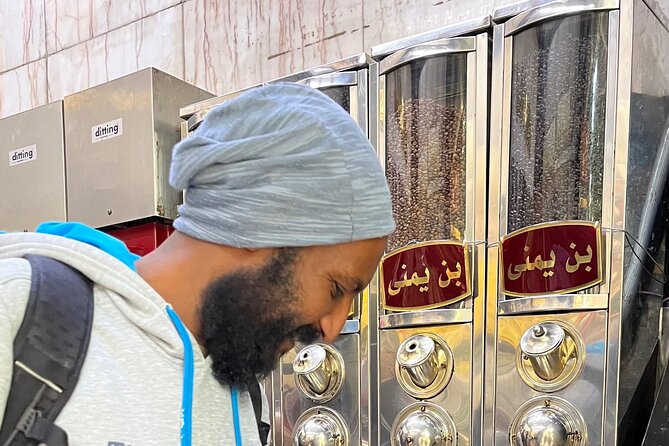
The second stop is paired with an authentic Egyptian breakfast prepared by local hands. This is the most substantial part of the experience, since you are not only sampling a drink but also sitting down to eat and talk.
The exact dishes are not listed. That means you should not assume a particular bread, bean dish, cheese, egg preparation, or pastry. What you can count on is the breakfast setting and the chance to discuss Egyptian food customs while eating.
I consider this a strong use of the limited 90-minute schedule. A breakfast table gives the conversation somewhere to go. You can ask how the meal relates to the drinks, how people start the day, and how hospitality works in a home. The food becomes a practical example rather than an abstract cultural topic.
The experience also says that it supports small producers. That gives the meal and tastings an extra local connection, although the information does not identify the producers or explain exactly how the payment is divided. I would see this as a welcome part of the design, but not the main reason to book.
Because the tour combines drinks, food, and conversation, it may be more filling than a simple tasting. If you have dietary restrictions, allergies, or strong food preferences, ask the provider before booking. The available details do not describe substitutions or special menus.
More Eating and Drinking in the world:
- Vienna for Food Lovers: Cafés, Markets & Austrian Cuisine
★ 5.0 · 1,063 reviews - Buggy Ride Into the jungle with cave coffee & chocolate tasting
★ 5.0 · 465 reviews - Hanoi: Vietnamese Street Food Tour with Egg Coffee
★ 4.9 · 315 reviews - Da Nang Cooking Class with Coffee Tasting and Market Visit
★ 5.0 · 310 reviews
What makes the small group worth the price
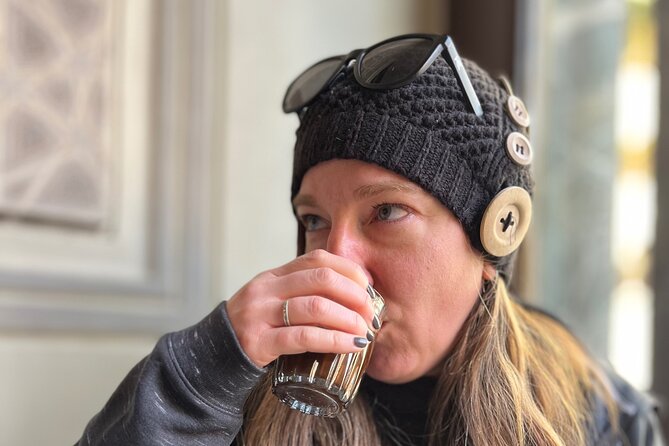
At $25 per person, the price is modest for a 90-minute food experience that includes two tasting stops and breakfast. I would judge the value mainly by how much you want personal interpretation.
A large group could make this sort of activity feel like a quick succession of samples. Here, the maximum is five people. That should give you more space to ask Ahmed and Shorouk about Egyptian routines, coffee preparation, tea customs, and the food in front of you.
The small size may also help if you are shy about asking questions in a new country. A conversation with a couple who lives within the culture can cover details that a printed menu cannot. One early description of the experience particularly praises Ahmed’s understanding of Egyptian and Cairo history, local life, and daily customs. That makes the guide’s explanation a central part of what you are paying for.
The price is less attractive if you are seeking quantity. The activity is only about an hour and a half, and there are two stops rather than a long series of cafés. You may prefer a longer food walk if you want a full lunch, many tastings, or several neighborhoods.
For me, the calculation is simple: $25 is fair for a small-group introduction to Egyptian hospitality and breakfast culture. It is not necessarily a bargain if your only goal is to buy a coffee and a meal.
Who should book this Cairo food experience
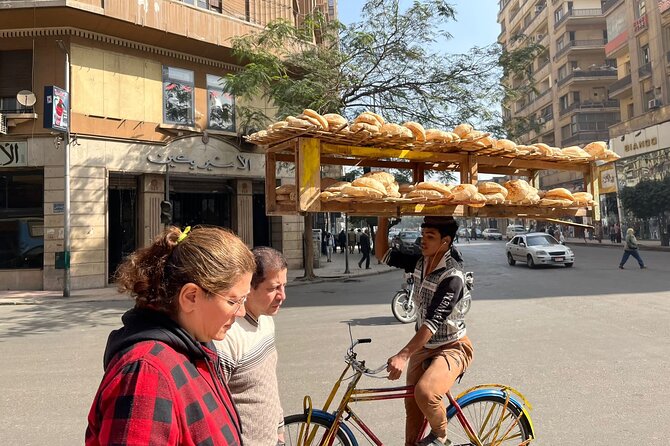
I would recommend it most strongly to first-time visitors who want an easy cultural starting point. The subject is approachable, the morning timing is convenient, and the activity does not require a full day away from Cairo’s main sights.
It also suits people who prefer local conversation to a formal lecture. Ahmed and Shorouk’s role as an Egyptian couple gives the experience a family and home-life angle. You are likely to get more from it if you enjoy asking questions and comparing food habits between countries.
This is a good match for:
- Couples who want a relaxed morning activity
- Solo visitors who appreciate a small group
- Anyone curious about Egyptian breakfast and hospitality
- Coffee and tea fans who want cultural context
- People with a free morning before a museum or sightseeing plan
- Visitors looking for an experience different from the usual Cairo highlights
I would be more cautious if you need a fully specified menu, exact tasting list, or detailed accessibility information before booking. The route is near public transportation, and most people can participate, but no further accessibility details are provided.
Families may also want to consider the short format and the focus on conversation. Children who enjoy trying new food could have a good time, but the supplied information does not describe child pricing, child portions, or activities designed specifically for young participants.
Planning around the 90-minute schedule
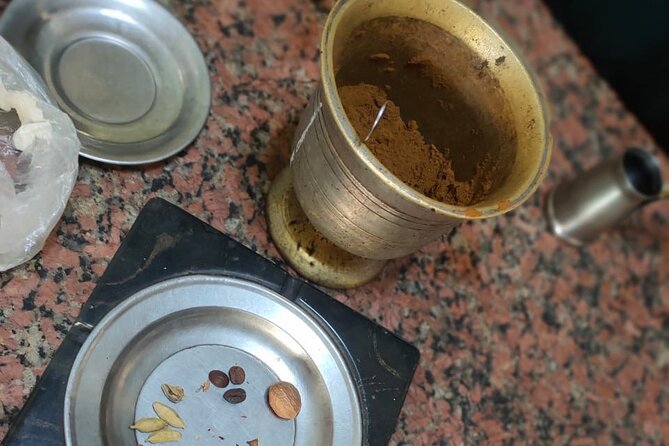
The tour begins at 9:00 a.m. and returns to the original meeting point. Since it is a walking experience, wear comfortable shoes and arrive ready to move between the two stops. That is practical advice rather than a special requirement, as the route details do not state its exact walking distance.
You should avoid scheduling an important appointment immediately afterward. The activity is listed as approximately 1 hour and 30 minutes, but food conversations can run at a natural pace. Leave room for the return walk and for finding onward transportation.
The tour is booked an average of 33 days ahead. That booking pattern suggests that planning early is sensible, especially because the group is capped at five people. You do not need to overplan the rest of your day, but this is not the sort of small activity I would leave until the last morning of a short Cairo visit.
A mobile ticket is provided, and confirmation is received at booking. The experience ends where it starts, which makes the logistics simpler than an activity that leaves you in another part of the city.
Cancellation is free if you cancel at least 24 hours before the start time. Changes or cancellations made within 24 hours are not accepted for a refund, so keep that deadline in mind when arranging your Cairo schedule.
The limits you should know before booking
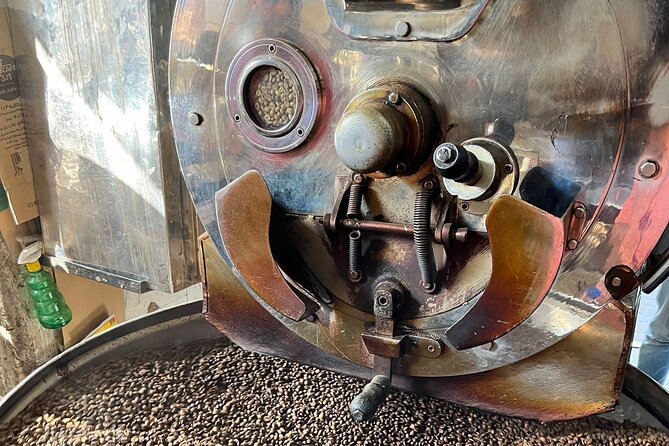
The available information is strong on the idea and light on specifics. You know the number of stops, the start time, duration, meeting point, group size, breakfast, and general subject. You do not know the exact café names, food dishes, drink portions, or full walking distance.
That is not automatically a problem. In fact, some people prefer a flexible local experience rather than a rigid menu. But you should book with the right expectations. This is an introduction to Egyptian coffee, tea, and breakfast culture, not a professional tasting class.
The tour also does not promise major landmarks. If you want to see the Citadel, the Egyptian Museum, Khan el-Khalili, or the pyramids during the same activity, this is not the right choice. Its interest comes from daily life, not headline attractions.
The five-rating sample is another reason to keep your judgment measured. The early response is very positive, with particular praise for Ahmed, the unusual format, and the chance to learn about Cairo beyond standard sightseeing. That is useful evidence, but not enough to guarantee that every group will have the same conversation or pace.
Should you book Egyptian Coffee Tasting and Local Breakfast?
Book it if you want a small, personal introduction to Cairo through breakfast, coffee, and tea. The best reasons are the Egyptian couple leading it, the five-person limit, the two tasting stops, and the chance to connect drinks with everyday hospitality.
I would especially choose it near the beginning of a Cairo stay. It can give you useful context for later meals and café visits, while the early start leaves time for other plans. The $25 price is reasonable when you value conversation and cultural explanation as much as the food itself.
Skip it if you want a long food crawl, a guaranteed list of dishes, or a tour built around famous sights. For everyone else, this is a focused and friendly way to spend a Cairo morning, with enough breakfast to make it feel like more than a coffee stop.
FAQ
Where does the Egyptian Coffee Tasting and Local Breakfast begin?
It begins at 71 Noubar St, Al Balaqsah, Abdeen, Cairo Governorate 4280130, Egypt.
What time does the experience start?
The experience starts at 9:00 a.m.
How long does the activity last?
It lasts approximately 1 hour and 30 minutes.
Where does the experience end?
It ends back at the meeting point.
How many stops are included?
The walking route includes two stops for coffee and tea tasting.
Is breakfast included?
Yes. The experience includes an Egyptian breakfast prepared by local hands.
Who leads the experience?
The experience is led by Ahmed and Shorouk, an Egyptian married couple.
How many people can join?
The activity has a maximum of five participants.
Can I cancel for a full refund?
Yes. You can cancel for a full refund if you cancel at least 24 hours before the experience start time.
Just listed in the world
- Vietnamese Coffee 101 Workshop★ 5.0 · 11 reviews
- Vietnamese Coffee Making Class in Hoi An★ 5.0 · 4 reviews
- Yerevan: Private Coffee Tour with 2 Café Stops★ 5.0 · 2 reviews
- Turkish Coffee and Traditional Turkish Dessert Cooking★ 4.6 · 8 reviews
- Ubud: Waterfall, Holy Water Temple,Swing&coffee plantation★ 5.0 · 9 reviews
- Vancouver: Street Art & Craft Coffee Walking Tour w/ Tasting★ 4.8 · 11 reviews
- The Colors of Coffee in the Farms of Coatepec★ 5.0 · 3 reviews
- Vienna: Guided Viennese Coffee-House Tour★ 5.0 · 2 reviews
Coffee Tastings, compared.
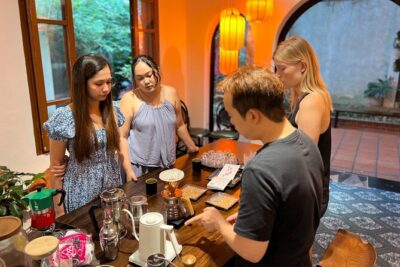
Hanoi Coffee Experience: 6 Brews, 9 Recipes & 3 Liquor Tastings
Read our review →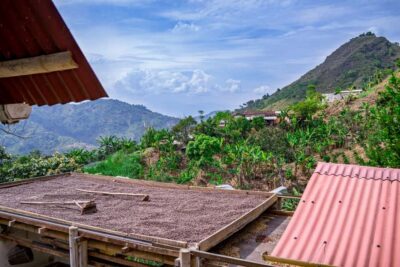
Coffee Tour with Transport, Snacks and Tastings
Read our review →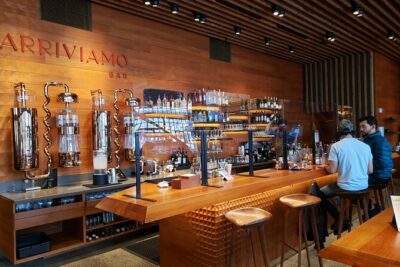
Seattle Coffee Tour: Capitol Hill Cafes, Tastings & Local Stories
Read our review →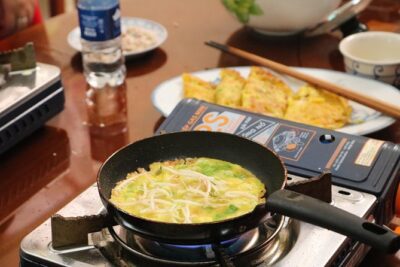
Da Nang Cooking Class with Coffee Tasting and Market Visit
Read our review →
Private Walking Tour, Food Tasting and Bosnian Coffee in Sarajevo
Read our review →
Poás Volcano and Coffee Tour with Tasting and La Paz Falls
Read our review →
Coffee Farm Tour with Roasting & Tasting Workshop – Da Lat
Read our review →Lists this coffee tour turns up in