
REVIEW · CENTRAL VIETNAM
Da Nang – Coffee Workshop: Make 6 Kinds of Vietnamese Coffee
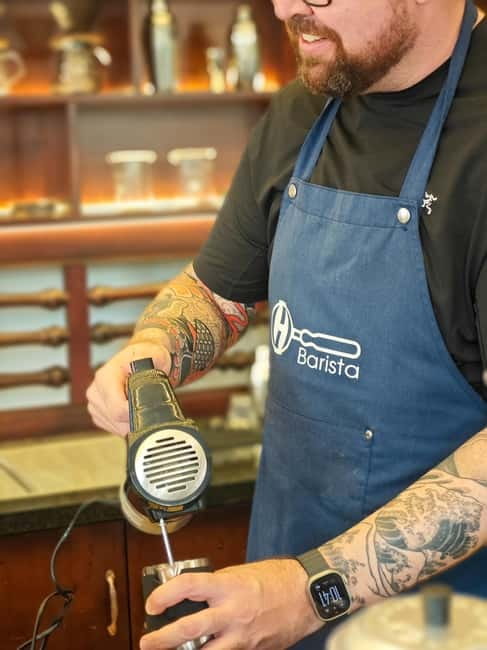
Vietnamese coffee is not just a strong drink served over ice. At Experience Coffee in Da Nang, you learn how the country’s coffee culture works, then make six different styles yourself. Sally leads the session in English, explaining the beans, the brewing method, and the role coffee plays in everyday life.
I like the hands-on phin brewing, because you leave with a skill you can repeat at home. I also like the open conversation with local staff, who can offer practical advice about Da Nang and other parts of Vietnam. The main consideration is the flexible 90 to 180 minute length, so the session may take a good part of your afternoon.
- Six coffee styles in one workshop: Try cà phê sữa đá, bạc xỉu, egg coffee, coconut coffee, salted coffee, and another traditional preparation.
- A real phin lesson: Learn how Vietnam’s small metal filter controls the slow drip into your cup.
- Sally’s patient instruction: The workshop is designed for beginners, with explanations that let you follow each step.
- Six coffee samples to take home: You receive coffee to continue experimenting after your visit.
- Local conversation: Da Nang staff can suggest places to eat, go out, and explore.
- A small surprise at the end: Every participant receives a secret gift.
What happens at 169/1 Trần Phú
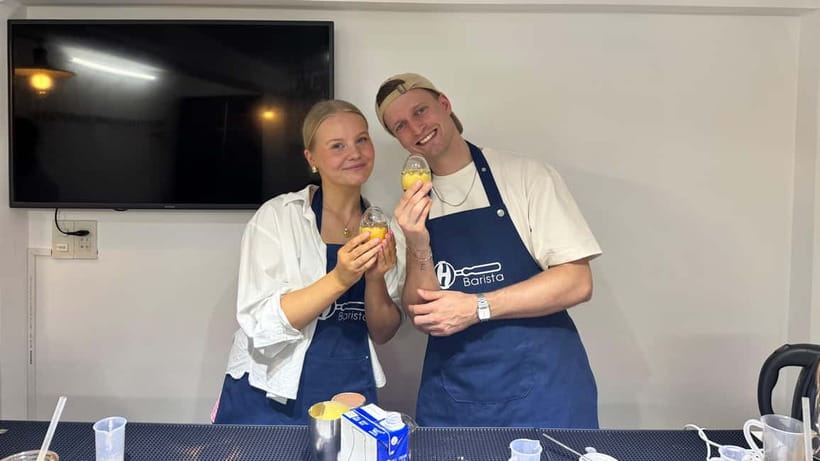
The workshop takes place at Experience Coffee, at 169/1 Trần Phú in Hải Châu District. This is not a coffee farm or a street-food crawl. It is a café-based cultural session, which makes it a useful choice if you want a calm indoor activity in central Da Nang.
The room uses a classic white and blue color scheme, with classic music in the background. That setting matters. Coffee preparation can feel rushed in a busy café, but here the pace is built around explanation, tasting, and conversation. You have time to notice how the ingredients and brewing choices change the final cup.
You meet the local instructor and staff at the venue. Sally is specifically named as the teacher, and the workshop is conducted in English, with Vietnamese also available. Her role is practical: she explains the different coffee types, shows you how to prepare them, and gives you time to try the process yourself.
Since hotel pickup and drop-off are not included, you make your own way to the address. The activity begins and ends at the same meeting point. Bring comfortable shoes, water, and a camera if you want to record the brewing steps or photograph the coffee setup.
Why the phin filter matters
The phin is the small metal filter commonly associated with Vietnamese coffee. It sits directly on top of your cup and allows hot water to pass slowly through ground coffee. Unlike a machine that gives you a finished drink in seconds, the phin makes the brewing process part of the experience.
You learn how to set up the filter and prepare coffee through hands-on instruction. That is more useful than simply watching someone make a cup. You can ask questions, see how the drip develops, and understand why Vietnamese coffee often arrives as a concentrated brew that is later mixed with condensed milk, ice, or other ingredients.
I especially like this part for anyone who wants a souvenir with practical value. A café visit gives you a taste. A phin lesson gives you a method you can use back home. The venue also sells Vietnamese coffee beans and phin filters, so you can buy the basic equipment if you want to continue.
The exact group size is not provided, so you should not assume a private class or a large group. The session is suitable for coffee enthusiasts at all levels, including complete beginners. If you already make coffee at home, the value lies more in comparing Vietnamese styles and learning how local ingredients shape the drink.
More Coffee Making Classes in Vietnam
- Hanoi Coffee Workshop: Taste Salt, Coconut and Egg Coffee
★ 5.0 · 1,286 reviews - Hanoi: Salt Coffee Workshop Awake Your Senses With 6 Brews
★ 5.0 · 792 reviews - Da Nang Coffee Making Workshop
★ 4.9 · 543 reviews
Comparing Robusta, Arabica, Culi, and local beans
Coffee in Vietnam is not one single flavor. The workshop introduces Robusta, Arabica, Culi, and local beans, giving you a useful framework for understanding the cups you drink elsewhere in the country.
Robusta is strongly associated with Vietnamese coffee and is known for a firm, powerful taste. Arabica offers a different profile, while Culi refers to distinctive beans that are often treated as a separate style in Vietnamese coffee culture. Local beans add another layer, connecting the cup to regional production.
You do not need technical coffee knowledge to follow this section. The point is to notice differences and connect them to the drinks you taste. A coffee mixed with condensed milk will behave differently from an egg coffee, and a preparation served over ice will give you a different first impression from a hot brew.
This is also where the workshop adds cultural context. You are not simply sampling six sweet drinks. You are learning why Vietnamese coffee often uses bold beans and why condensed milk, ice, coconut, egg, and salt have become familiar partners.
Six Vietnamese coffees, from iced milk to egg coffee
The tasting is the heart of the session. You work through six Vietnamese coffee variations, including several of the country’s best-known preparations.
Cà phê sữa đá is Vietnamese iced coffee with condensed milk. It is the essential starting point for understanding the country’s café culture: strong coffee, sweet milk, and ice in a compact glass. You learn to prepare it rather than only ordering it from a menu.
Bạc xỉu contains more milk and less coffee than cà phê sữa đá. That makes it a helpful comparison. If you find standard Vietnamese iced coffee too forceful, bạc xỉu shows how changing the coffee-to-milk balance produces a gentler drink.
Egg coffee is made with a creamy egg mixture. Its texture is the main surprise, and learning about it in a workshop gives you more context than encountering it without explanation. You get to understand how a coffee drink can become almost dessert-like while still keeping coffee at its center.
Coconut coffee brings coconut into the mix, creating another contrast in flavor and texture. It is a good reminder that Vietnamese coffee is not limited to one traditional formula.
Salted coffee uses salt as a counterpoint to bitterness and sweetness. It may sound unusual if you have not tried it, but the workshop gives you a chance to taste the balance directly instead of guessing from the name.
A sixth preparation is included, though the supplied details do not identify it by name. That is worth keeping in mind if you are booking specifically to taste a particular drink. The confirmed list includes cà phê sữa đá, bạc xỉu, egg coffee, coconut coffee, and salted coffee, with one additional style included in the six-drink program.
The session includes six different types of coffee to bring home. The information does not specify the portion size or packaging, so treat these as useful take-home samples rather than a large supply of beans. The secret gift at the end adds a small bit of fun, but the lasting value is the brewing skill and the chance to repeat the drinks later.
Learning with Sally instead of just ordering a cup
Sally’s teaching style is described as patient, which matters in a practical workshop. Coffee preparation has several small steps, and a rushed explanation can leave you unsure about what to repeat at home. Patient instruction gives you time to watch, try, and correct your method.
The workshop also makes room for open conversation. The staff are Da Nang locals, so you can ask about the city, places to go out, and lesser-known local stops. The information does not promise a formal sightseeing walk or a set list of recommendations, but the conversation can help you plan the rest of your stay.
This local contact is one of the better reasons to book the workshop instead of learning from a video. You can ask a question that matches your own trip: where to find a certain style of coffee, how to buy beans, or what to do after the class. The advice is informal, so it may vary by staff member and your interests, but it adds a human connection to the lesson.
The class is conducted in English. Vietnamese is also listed as an available language, although the workshop description specifically identifies English as the teaching language. If clear English instruction is important to you, this is a strong fit. If you need another language, confirm before booking.
More Vietnamese Coffee Experiences in Vietnam:
- Egg coffee & Course on 4 traditional types of Viet coffee
★ 4.9 · 487 reviews - Fun & Easy Vietnamese Coffee Workshop in Hồ Chí Minh City
★ 5.0 · 293 reviews - Hanoi Cooking Class: Pho/Bun Cha/Banh Xeo…+Free Egg/Salt Coffee
★ 5.0 · 267 reviews - Hanoi: Vietnamese Coffee Workshop with 6 Brews and 8 Recipes
★ 5.0 · 237 reviews
Is $30 a fair price in Da Nang?
The price is $30 per person. That is more than the cost of ordering several individual coffees in Da Nang, so the value depends on what you want from the outing.
If you only want a cheap iced coffee, this is not the right purchase. You are paying for 90 to 180 minutes of instruction, coffee tasting, cultural background, local conversation, six coffee items to bring home, and a small gift. The class also gives you a phin brewing method that you can use after your trip.
I consider the price reasonable for a visitor who enjoys coffee and wants an activity with more substance than a standard café stop. It is also good value for couples or friends who want a shared indoor experience and do not want to spend the day sightseeing in the heat.
The value is weaker if you dislike sweet drinks, avoid caffeine, or already know Vietnamese coffee preparation well. There is also no food included, and hotel transportation is not included. You should budget separately for getting to Trần Phú and for any beans or filters you decide to buy at the venue.
Who will enjoy this workshop most?
This experience suits coffee enthusiasts of all levels, but it is especially useful for people who like to understand what they are tasting. You do not need to know the difference between Robusta and Arabica before arriving. The workshop is designed to explain those basics as you go.
It works well for solo visitors because the format encourages conversation and making new friends. It also suits couples, friends, and anyone looking for an activity that is social without being physically demanding.
Families with older children might find it interesting, though the provided information does not give a minimum age. If you are booking with children, check the age policy first. The class involves coffee tasting, so it may not suit young children or anyone sensitive to caffeine.
I would also recommend it to visitors who want a useful souvenir. You can buy beans and a phin filter at the venue, then recreate a Vietnamese coffee ritual at home. That is more memorable than buying a generic souvenir because it connects a daily habit to your time in Da Nang.
What may not suit you
The flexible duration is both a benefit and a limitation. A 90-minute version could fit neatly between other plans, while a three-hour session may feel long if you only want a quick tasting. Leave some room in your schedule rather than arranging a tight connection afterward.
The experience stays at the café. You will not visit a plantation, tour a roasting facility, or explore several coffee shops. If you want to see coffee production outside the city, choose a different activity.
The coffee selection may also be sweet and strong. Cà phê sữa đá, egg coffee, coconut coffee, and salted coffee each have their own balance, but the workshop is built around Vietnamese-style preparations rather than plain filter coffee. Anyone avoiding dairy, sugar, eggs, or caffeine should ask about alternatives before booking, since no substitutions are specified.
Finally, the activity has a perfect rating from four published assessments, but that is a small sample. I would treat it as a positive sign about Sally’s instruction and the friendly atmosphere, not as proof that every session will be identical.
Practical details before you book
The meeting point is Experience Coffee at 169/1 Trần Phú, Hải Châu District, Da Nang City. Use the supplied map link when planning your route, and remember that the activity returns to this same location.
Wear comfortable shoes even though this is an indoor café workshop. Bring water and a camera. You may also want a small amount of luggage space for six coffee samples, a possible secret gift, and any beans or phin filter you purchase.
You can reserve now and pay later, which helps if your Da Nang plans are still moving around. Cancellation is allowed up to 24 hours in advance for a full refund. Those terms are useful when weather, transport, or sightseeing plans are uncertain.
Should you book the Da Nang coffee workshop?
Book it if you want to do more than order Vietnamese coffee. For $30, you get a guided tasting, hands-on phin instruction, local conversation, six coffee styles, take-home coffee samples, and a small gift. The strongest parts are Sally’s patient teaching and the chance to understand the drinks by making them yourself.
Skip it if you want a quick, inexpensive café visit, dislike sweet coffee, or prefer an outdoor food and farm experience. For most coffee lovers spending time in central Da Nang, though, this is a friendly and practical way to take a piece of Vietnamese coffee culture home.
FAQ
Where does the Vietnamese coffee workshop take place?
The workshop takes place at Experience Coffee, located at 169/1 Trần Phú in Hải Châu District, Da Nang City.
How long does the workshop last?
The workshop lasts between 90 and 180 minutes. The exact duration can vary.
Which coffee styles are included?
The confirmed coffee styles include cà phê sữa đá, bạc xỉu, egg coffee, coconut coffee, and salted coffee. A sixth coffee type is also included, though its name is not specified in the available details.
Will I learn how to use a phin filter?
Yes. The workshop includes hands-on instruction on brewing Vietnamese coffee with the traditional phin filter.
Is the workshop taught in English?
Yes. The workshop is conducted in English. Vietnamese is also listed as an available language.
Who teaches the workshop?
Sally leads the coffee instruction. The staff are local to Da Nang and can share advice about the city and Vietnam.
Are coffee items included to take home?
Yes. The experience includes six different types of coffee to bring home.
Is hotel transportation included?
No. Hotel pickup and drop-off are not included. The activity begins and ends at the Experience Coffee meeting point.
Can I buy coffee beans or a phin filter there?
Yes. Participants have the opportunity to purchase Vietnamese coffee beans and phin filters at the venue.
Just listed in Vietnam
- Vietnamese Coffee 101 Workshop★ 5.0 · 11 reviews
- Vietnamese Coffee Making Class in Hoi An★ 5.0 · 4 reviews
- Hoi An Vietnamese Coffee Workshop: Hands-On Brewing Class★ 5.0 · 3 reviews
- Authentic Vietnamese Coffee Making Experience in Hoi An★ 5.0 · 13 reviews
- Vietnamese Egg Coffee Making Course in Hoi An★ 3.5 · 2 reviews
- Hoi An Coffee Tasting And Old Town Discovering Tour★ 5.0 · 4 reviews
- Coffee Making and Banh Mi Class Hoi An★ 5.0 · 5 reviews
- Hoi An Coffee Making Workshop★ 5.0 · 7 reviews
Vietnamese Coffee Experiences, compared.

Salt Coffee Workshop Awake Your Senses With 6 Brews
Read our review →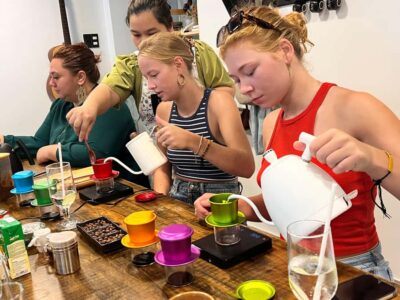
Egg coffee & Course on 4 traditional types of Viet coffee
Read our review →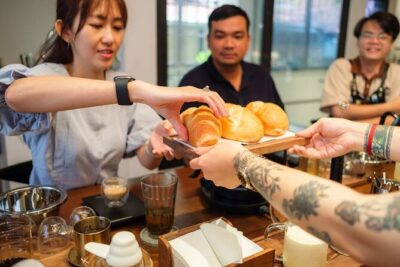
Fun & Easy Vietnamese Coffee Workshop in Hồ Chí Minh City
Read our review →
Hanoi Cooking Class: Pho/Bun Cha/Banh Xeo…+Free Egg/Salt Coffee
Read our review →
Vietnamese Coffee Workshop with 6 Brews and 8 Recipes
Read our review →
Vietnamese Coffee & Culture Exploration in Hồ Chí Minh City
Read our review →
Hanoi Coffee Workshop: Master 6 Signature Vietnamese Coffee
Read our review →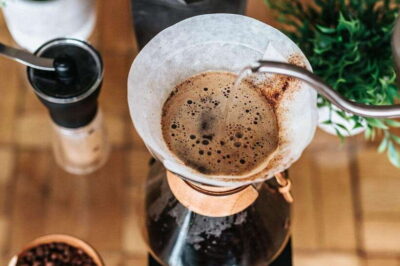
Hands-on Vietnamese Coffee Making Class with Long
Read our review →Lists this coffee tour turns up in