

REVIEW · HO CHI MINH CITY
Coffee Workshop in Ho Chi Minh City: Discover the art of coffee
Vietnamese coffee is more than a strong drink with condensed milk. In this hands-on Ho Chi Minh City workshop, you handle coffee cherries, sort green beans, roast samples, taste different levels, and brew with a traditional phin filter. It gives you a clear look at the work behind the familiar café cup.
I like the small maximum of 15 participants, which leaves room for questions and personal help. I also like the full farm-to-cup path: you are not just shown a finished drink, you take part in several stages of making it. The possible drawback is that the teaching can become quite technical, and one session was harder to follow because of the instructor’s English.
Key points to know
- Coffee starts with the cherry: You examine ripe coffee fruit and learn how the bean is processed inside.
- You sort green beans yourself: Defective beans are removed by hand, making quality control easy to understand.
- Three roast levels are compared: You taste how roasting changes aroma and flavor.
- Phin brewing is the final skill: You prepare a traditional Vietnamese coffee using the slow-drip metal filter.
- The group is capped at 15: Some sessions may be much smaller, even down to one participant.
- The class meets in District 7: The start and finish are at The Signature M7 in Phú Mỹ Hưng.
Why this coffee class is different from a café stop
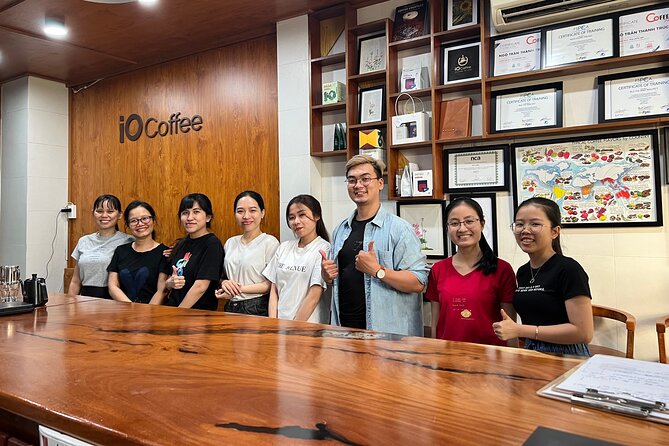
A café visit gives you the pleasure of drinking Vietnamese coffee. This class explains why the drink tastes the way it does.
Vietnam is one of the world’s major coffee-producing countries, and its coffee identity is closely tied to Robusta beans. You learn how those beans are harvested, processed, roasted, and brewed before you make a cup yourself. That makes the experience useful for anyone who wants more than a quick coffee break.
I especially like the way the class connects ordinary objects to the larger process. A coffee cherry is not just a red fruit on a plant. The green bean inside must be removed, dried or processed, sorted, and roasted before it becomes something you recognize in a cup.
The class follows the SCA Introduction to Coffee program, so it has a structured teaching plan rather than a loose café demonstration. That is good news if you enjoy clear explanations and practical tasks. It also means the session may feel more like a short course than a casual tasting.
The tone can vary with the instructor. Chris has been described as kind, funny, and able to adapt the class to one person. Danny has also been praised for patient explanations. At the same time, one participant found a young instructor’s English difficult to understand, so communication may not be equally smooth in every session.
More Coffee Making Classes in Ho Chi Minh City
- Fun & Easy Vietnamese Coffee Workshop in Hồ Chí Minh City
★ 5.0 · 293 reviews - Ho Chi Minh City: Fun and Easy Coffee Workshop for Beginners
★ 4.9 · 121 reviews - HCM: Egg Coffee Class with local Instructor & Snack
★ 4.7 · 8 reviews
Starting with coffee cherries and green beans
The first section deals with farming and processing. You examine the structure of a ripe coffee cherry and learn how the bean sits inside the fruit. This simple step matters because it changes the way you think about coffee. Before roasting, grinding, and brewing, the product is an agricultural crop.
You also see a small demonstration of three coffee processing methods. The supplied information does not name each method, so I would not book this class expecting a detailed technical lecture on every regional system. Still, comparing several approaches helps you see that processing is not a minor step between picking and roasting.
The class then moves to bean selection. You handle green beans and look for defects, removing those that do not meet the desired standard. This is one of the most useful parts for beginners because coffee quality becomes something you can inspect rather than an abstract claim on a package.
I would pay attention to color, shape, and consistency during this exercise. You are not simply told that some beans are better than others. You take part in the basic quality check. That gives the lesson a practical edge and may help you make better choices when buying coffee later.
The farming section also gives you a better sense of labor. Coffee does not appear at a roastery as a clean brown bean. It begins with careful harvesting and selection. Even in a short workshop, touching the fruit and green beans makes that process easier to remember.
Roasting three levels by hand
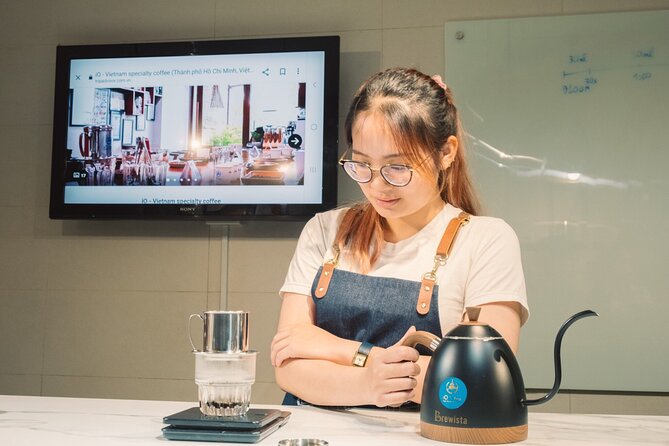
Next comes roasting. You get hands-on experience and compare three roast levels. This is where the class becomes especially useful for people who know they like coffee but have trouble explaining why one cup suits them more than another.
Roasting changes the flavor, aroma, and character of coffee. By tasting different roast levels side by side, you can look for your own preference instead of accepting a general rule that dark roast or light roast is best.
The class presents roasting as a sensory process, not just a technical one. You watch the beans change and then taste the results. That link between what happens to the bean and what reaches your palate is a strong teaching tool.
The amount of technical detail may be a plus or a minus. If you are serious about coffee, the scientific side gives the workshop substance. If you only want a few easy tips for making better coffee at home, some sections may feel more detailed than expected.
That distinction matters when you consider the $71 price. You are paying for instruction, several stages of coffee handling, tasting, and your own brewing practice. It is not the cheapest way to drink Vietnamese coffee, but it offers more than a tasting flight or a café visit.
Tasting coffee at three roast levels
The tasting section lets you compare the roast samples. This is often where the earlier lessons begin to make sense. You can connect the farming and roasting work with the flavors in the cup.
You are encouraged to explore the coffee rather than simply accept a score or label. Notice which roast you prefer and why. You might find that you enjoy the fuller taste of a darker roast, or you may prefer the cleaner character of a lighter one. The point is to identify your own taste.
The class also helps you distinguish lower-quality coffee from better coffee through demonstrations and tasting. I would treat this as a useful introduction, not a professional certification. Two hours is enough to sharpen your senses and show you what to notice, but not enough to turn you into an expert cupper.
Still, the tasting is valuable because many coffee buyers judge beans only by price or packaging. Here, you get a direct comparison. You can notice differences in smell and flavor before someone explains what to look for.
One practical tip: do not rush this part. The workshop contains several activities, and it may be tempting to focus on the final drink. The roast comparison is one of the best chances to understand your own coffee preferences, so take a moment with each sample.
More Coffee Making Classes in Vietnam
- Hanoi Coffee Workshop: Taste Salt, Coconut and Egg Coffee
★ 5.0 · 1,286 reviews - Hanoi: Salt Coffee Workshop Awake Your Senses With 6 Brews
★ 5.0 · 792 reviews - Da Nang Coffee Making Workshop
★ 4.9 · 543 reviews - Hanoi: Vietnamese Coffee Workshop with 6 Brews and 8 Recipes
★ 5.0 · 237 reviews
Brewing Vietnamese phin coffee
The final stage is the most recognizable Vietnamese experience: making coffee with a phin filter.
A phin is a small metal filter that sits over your cup. It produces coffee slowly, giving you time to watch the brewing process. You learn how the traditional method works and then prepare your own cup with Vietnamese Fine Robusta beans.
This is more personal than being handed a finished cà phê phin in a café. You see the grounds, manage the filter, and watch the coffee drip. The result is a better understanding of why Vietnamese coffee culture values patience and strong flavor.
The class focuses on brewing an authentic cup rather than turning the process into a complicated show. That makes the skill practical. Once you return home, you should be able to repeat the basic method with a phin filter and suitable coffee.
The information provided does not promise a full lesson in every popular Vietnamese preparation, so do not expect a separate demonstration of every drink made with condensed milk, yogurt, or coconut. The focus is traditional phin coffee and the natural taste of the Fine Robusta beans.
I like that the drink comes at the end of the session. You first see the raw material, then process and roast samples, taste them, and finally brew. That order gives your cup a story. It also means you can ask better questions about grind, roast, and brewing because you have already handled the coffee at earlier stages.
A small group, with an occasional private-class feel
The class accepts no more than 15 participants. That is a sensible limit for a workshop involving beans, roasting, tasting, and individual brewing. A larger crowd would make hands-on work less useful.
The actual group may be smaller. One participant ended up alone and received a private-style session, with Chris adapting the course to that person. You should not assume you will get a one-person class, but the possibility shows that the experience can remain personal when attendance is light.
A small group also gives you a better chance to ask about coffee preferences, brewing problems, or bean quality. If you are shy about asking questions in a large class, this format should feel more manageable.
The trade-off is that the experience depends partly on the instructor. Chris and Danny have both been praised for patience and clear help. Yet one participant found the English difficult to understand with a different young instructor. If precise technical language matters to you, keep that limitation in mind.
The class is recommended by 94 percent of its participants and carries a 4.9 rating from 35 reviews. Those numbers suggest strong satisfaction, but they do not erase the communication concern or the possibility that the technical material may not suit every coffee drinker.
Location and timing in District 7
The workshop begins and ends at The Signature M7, in the Phú Mỹ Hưng area of District 7. The meeting point is in the lobby of Block A and B.
This is not a central District 1 café experience. You need to plan your route to District 7, though the location is near public transportation. The activity lasts about two hours and returns to the same meeting point, so you can plan another activity afterward without arranging a separate pickup location.
The fixed start point is useful because there is no uncertainty about where the class finishes. On the other hand, you should allow enough time to reach Phú Mỹ Hưng rather than treating this as a walk-in stop during a central sightseeing day.
The mobile ticket makes entry simple. Confirmation is provided when you book, and service animals are allowed. The activity information does not state hotel pickup, drop-off, food, or transport between your accommodation and the workshop, so plan to make your own way there.
Who will get the most from the $71 price
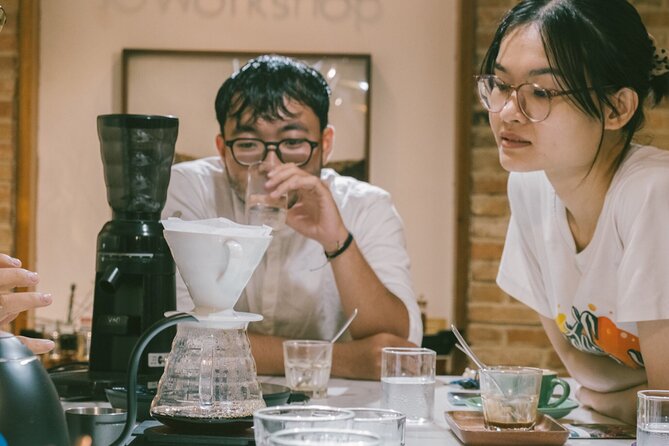
At $71, this is best viewed as a short coffee course, not a cheap tasting. The value comes from the range of activities: coffee cherry handling, processing demonstrations, green bean sorting, hands-on roasting, tasting at three roast levels, and phin brewing.
I think the price makes the most sense for:
- Coffee drinkers who want to understand Vietnamese Robusta
- People who want to brew phin coffee at home
- Visitors who prefer a practical class to a standard sightseeing stop
- Anyone curious about how coffee quality is judged
- Couples or small groups who enjoy learning together
It may be less suitable if you only want a quick introduction to Vietnamese café culture. You can drink a cup for far less money in Ho Chi Minh City. It may also disappoint you if you expect a relaxed social activity with little technical content.
The strongest value is the chance to compare coffee at several stages. You are not paying only for the final cup. You are paying to see what comes before it and to practice the method yourself.
Booking advice and cancellation terms
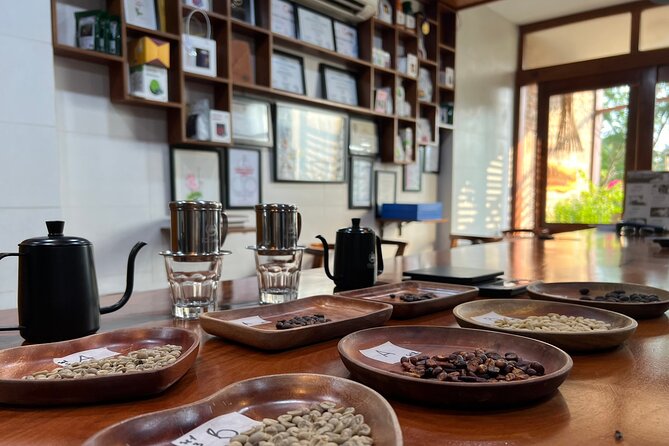
The class accepts a maximum of 15 people, so booking ahead is sensible if your schedule is fixed. Confirmation arrives at booking, and cancellation is free if you cancel at least 24 hours before the start time.
If you cancel within 24 hours, you receive no refund, and changes made inside that period are not accepted. The cut-off follows local Ho Chi Minh City time, so check the clock carefully if you are booking from another time zone.
I would also contact the provider before booking if clear English instruction is essential to you. The teaching quality has been praised, but one session had a communication problem. That does not mean every class will have the same issue, but it is a fair consideration for a technical workshop.
Should you book this Ho Chi Minh City coffee workshop?
I would book it if you want to understand Vietnamese coffee from farm to cup and enjoy doing things with your hands. Sorting green beans, comparing three roast levels, and brewing with a phin give you useful skills that a normal café visit cannot provide.
I would skip it if you want only a casual coffee stop, if District 7 is inconvenient, or if technical explanations sound tedious. The class has real substance, and that is both its strength and its possible weakness.
For coffee fans, the final phin cup is only part of the reward. You leave with a clearer sense of how coffee is grown, processed, roasted, judged, and prepared. That makes the $71 worthwhile for the right person: someone who wants to bring a little Vietnamese coffee knowledge home, along with the beans and brewing habit to use it.
FAQ
Where does the coffee workshop begin and end?
The workshop begins at The Signature M7, in the lobby of Block A and B, in the Phú Mỹ Hưng area of District 7, Ho Chi Minh City. It ends back at the same meeting point.
How long does the workshop last?
The experience lasts approximately two hours.
How many people can join the class?
The maximum group size is 15 participants. Some sessions may be smaller, and one recorded session had only one participant.
What coffee activities are included?
You learn about harvesting, examine coffee cherries, see three processing methods, sort green beans, roast coffee, taste three roast levels, and brew Vietnamese coffee with a traditional phin filter.
Will I brew coffee myself?
Yes. You make an authentic Vietnamese phin coffee using Vietnamese Fine Robusta beans during the brewing section.
Is the workshop available by mobile ticket?
Yes. A mobile ticket is provided, and confirmation is received at the time of booking.
What is the cancellation policy?
You can cancel for a full refund up to 24 hours before the experience starts. Cancellations or changes made less than 24 hours before the start time are not accepted and are not refunded.
Just listed in Ho Chi Minh City
- HCM: Egg Coffee Class with local Instructor & Snack★ 4.7 · 8 reviews
- Mastering Egg Coffee-Course on 4 traditional types of Viet coffee★ 5.0 · 16 reviews
- Ho Chi Minh Best Walking Tour: Food, Coffee & History★ 5.0 · 19 reviews
- Ho Chi Minh Street Food Tour and Vietnamese Coffee★ 5.0 · 28 reviews
- Vietnam Coffee Journey – Make extraordinary tasty coffee yourself★ 5.0 · 30 reviews
- Vietnam Flavour: Market-to-Table & The Art of Egg Coffee★ 5.0 · 53 reviews
- Saigon Unseen: Culture, Coffee, Hidden Spots Motorbike Adventure★ 5.0 · 60 reviews
- 1 hour Egg Coffee Cooking Class with Snack and Local Instructor★ 5.0 · 72 reviews
Coffee Making Classes, compared.
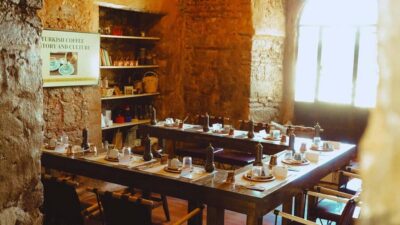
Turkish Coffee Making and Fortune Telling Workshop
Read our review →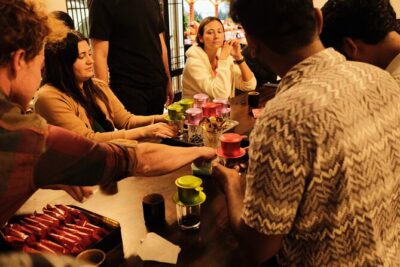
Hanoi Coffee Workshop: Taste Salt, Coconut and Egg Coffee
Read our review →
Salt Coffee Workshop Awake Your Senses With 6 Brews
Read our review →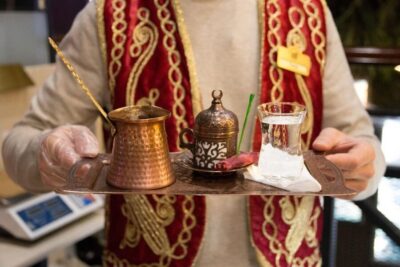

Turkish Coffee Making and Fortune Telling Workshop
Read our review →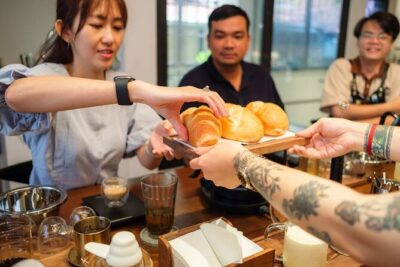
Fun & Easy Vietnamese Coffee Workshop in Hồ Chí Minh City
Read our review →
Irish Coffee Masterclass at the Irish Whiskey Museum
Read our review →Lists this coffee tour turns up in