
REVIEW · MARMARA REGION
Istanbul: Turkish Coffee Brewing on Sand + Gift Set
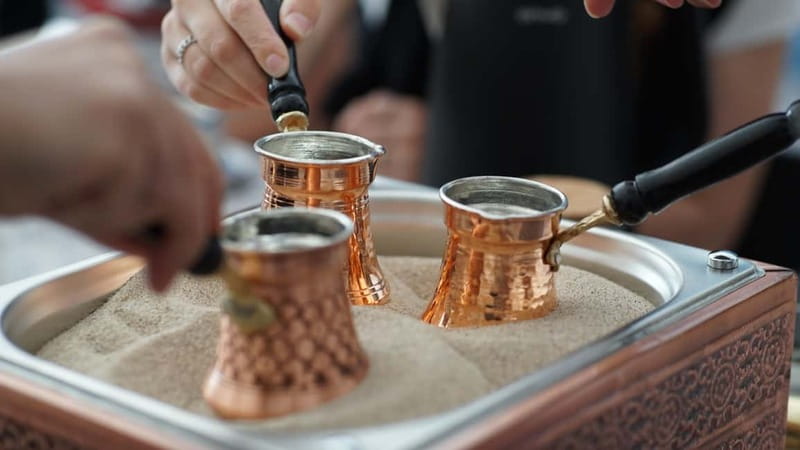
The most memorable part of this Istanbul workshop is the sand brewing. You grind the beans by hand, manage the foam, and move the coffee pot across heated sand until the brew is ready. This turns a familiar drink into a slow, hands-on ritual tied to Ottoman-era customs.
I like two things right away: you get to make the coffee yourself, and the take-home set gives the class lasting value. The history lesson, Turkish delights, menengiç coffee, and fortune reading add variety, too. The one thing to consider is that fortune telling is playful and traditional rather than a serious predictive service, and coffee drinkers who prefer a quick caffeine stop may find 90 minutes a long time.
Key points to know before booking
- Hand-grind and brew the coffee yourself: You control the process from beans to foam, with guidance from the instructor.
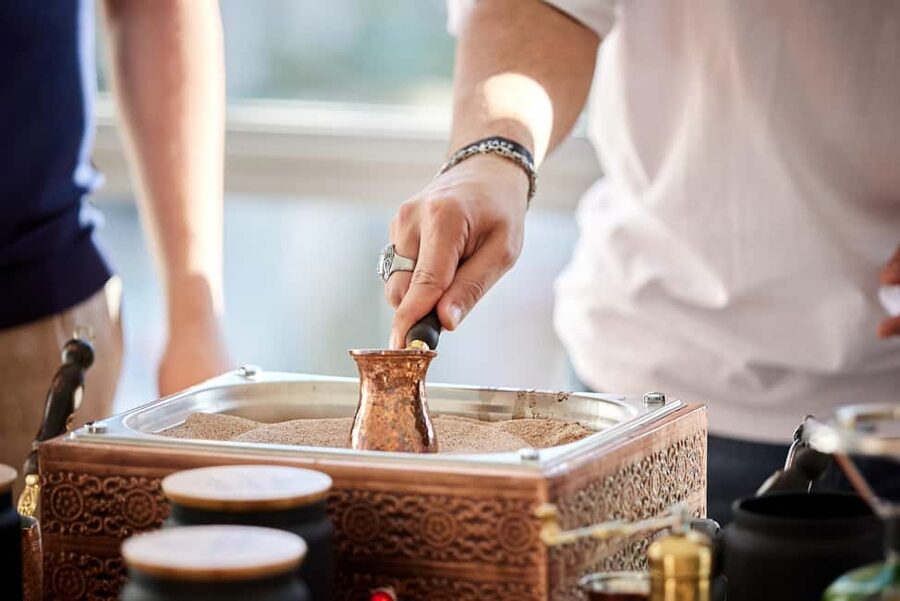
- Use heated sand instead of a standard stovetop: The sand pan gives the brewing process a visual, old-style setting.
- Taste two different Turkish drinks: Traditional Turkish coffee comes with menengiç coffee, a caffeine-free drink with a nutty flavor.
- Learn the Ottoman coffee ritual: The workshop explains why Turkish coffee received UNESCO Intangible Cultural Heritage status.
- Take home a useful gift set: You receive a copper cezve, cup, coffee, and a Turkish coffee booklet.
- Meet guides who work in three languages: Sessions are offered in English, Turkish, and Russian, with guides such as Esin, Zeynep, Ilham, and Rostum receiving especially warm praise for their teaching style.
A coffee workshop between Galataport and Galata Tower
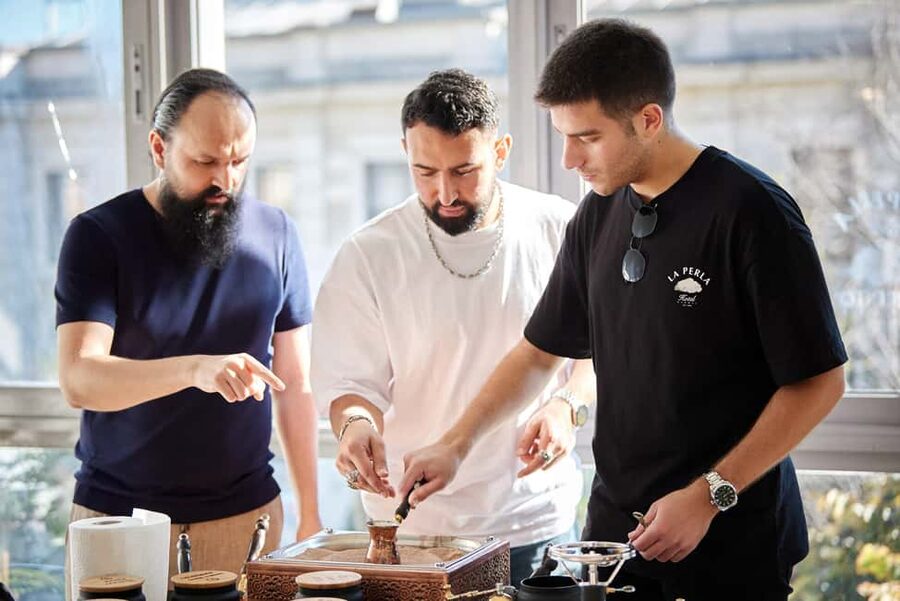
The workshop takes place in a spacious, bright studio between two useful Istanbul landmarks: Galataport and Galata Tower. The meeting point is diagonally to the right of Arada Beyrut Cafe and directly across from Lavander Cafe.
That location makes the class easy to pair with sightseeing. You can schedule it around a walk through the Galata area, time at the waterfront, or a meal nearby. Still, allow a few extra minutes to find the studio. The directions rely on nearby cafes rather than a large landmark sign, so checking the meeting point before you set out is sensible.
The room is described as high-ceilinged and open, with other creative workshops taking place nearby. That matters because this is not presented as a private home lesson or a formal cooking school. It has a social studio feel, with enough space to watch, ask questions, and work at a comfortable pace.
The experience lasts 90 minutes. That is enough time for instruction, preparation, tasting, and the fortune-reading portion without turning the class into a full-day commitment. Group size can vary. One person had a private-feeling session, while another joined a group of seven, including a partner. If you want plenty of personal attention, a smaller group would be ideal, but the format appears designed to work in both settings.
More Turkish Coffee Experiences in Istanbul:
- Istanbul: Turkish Coffee Making and Fortune Telling Workshop
★ 4.9 · 1,308 reviews - Istanbul: Turkish Coffee Making and Fortune Telling Workshop
★ 4.9 · 451 reviews - Turkish Coffee on Sand Workshop: Fortune Telling & Gift Set
★ 5.0 · 309 reviews
First step: learning why Turkish coffee matters
The class begins with context rather than a rushed demonstration. You learn about the path of coffee through Turkey and its place in Ottoman social life. The point is not simply to memorize dates. You begin to see coffee as a way people pause, welcome one another, and spend time together.
Turkish coffee has UNESCO Intangible Cultural Heritage status, and the workshop explains why. The value lies in the method and the social customs around it: finely ground coffee, careful brewing, a foam-topped cup, sweet snacks, conversation, and the custom of reading the grounds afterward.
This introduction helps the practical part make sense. Without it, moving a small pot through sand could feel like a novelty. With it, you understand that the brewing style is part of a larger ritual.
Guides vary by session, but the names that appear repeatedly in the supplied material include Esin, Zeynep, Ilham, Rostum, Torgul, Rain, Daryn, and Ali. Their roles go beyond showing you which way to hold the grinder. They explain the background, answer questions, and keep the tone relaxed.
Language should not be a major barrier if you book the right session. Instruction is offered in English, Turkish, or Russian. One family found Zeynep especially accommodating when some members had difficulty with English, using another family member to help interpret. That suggests the pace can be adjusted when needed, though you should select the language that best suits your group at booking.
Grinding the beans by hand
Next comes the part that makes this more than a tasting: you grind the coffee yourself. A hand-operated grinder gives you a direct feel for the work behind the cup. It is slower than pressing a button, but that is the point.
The beans are selected and ground for the traditional brewing method. You are not simply watching an instructor prepare a polished sample. You take part in the basic decisions and physical steps, with help when needed.
This is also where the class works well for mixed groups. Coffee experts can ask about texture, roasting, and foam. Beginners can focus on the rhythm of the grinder and the difference between freshly ground coffee and a packaged blend.
Do not expect a detailed professional barista course. The workshop is about Turkish coffee culture and home preparation, not espresso extraction, latte art, or commercial cafe training. If your main goal is to improve your morning Turkish coffee, however, the hands-on instruction should be useful.
Brewing on sand and controlling the foam
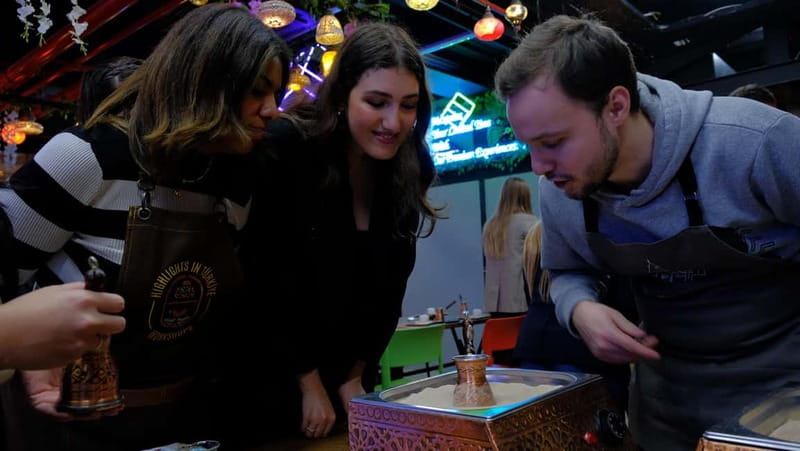
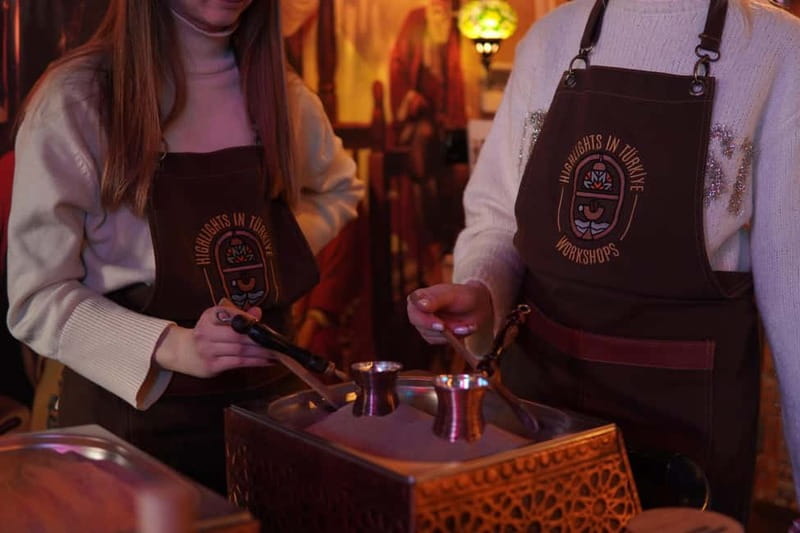
The central demonstration uses a traditional roasting pan filled with heated sand. You place the cezve in the sand and manage the heat by moving it through the pan. This method gives you more to watch than an ordinary pot on a kitchen burner.
Foam control is one of the small skills you work on. Turkish coffee is served with a layer of foam, and the class shows you how to handle the brewing process without rushing it. The instructor guides you through the timing and movement, but you remain involved.
This is the workshop’s most photogenic stage, though the appeal is not only visual. The sand encourages a slower pace. Instead of cranking up the heat and walking away, you watch the coffee closely and make small adjustments.
The process also makes a useful home lesson. You take away a cezve and a booklet, so the class can continue in your own kitchen. The booklet covers Turkish coffee history and brewing techniques. The supplied information does not specify every recipe detail, so think of it as a practical starting point rather than a complete coffee encyclopedia.
More Specialty Coffee Tours in Istanbul:
- Cartagena: Colombian Specialty Coffee Tasting
★ 4.4 · 130 reviews - Coffee Farm Tour with Roasting & Tasting Workshop – Da Lat
★ 5.0 · 126 reviews - Private Coffee Roasting Class
★ 5.0 · 101 reviews - Experience specialty coffee with sustainable coffee farmers
★ 4.9 · 91 reviews
Tasting Turkish coffee, menengiç coffee, and local sweets
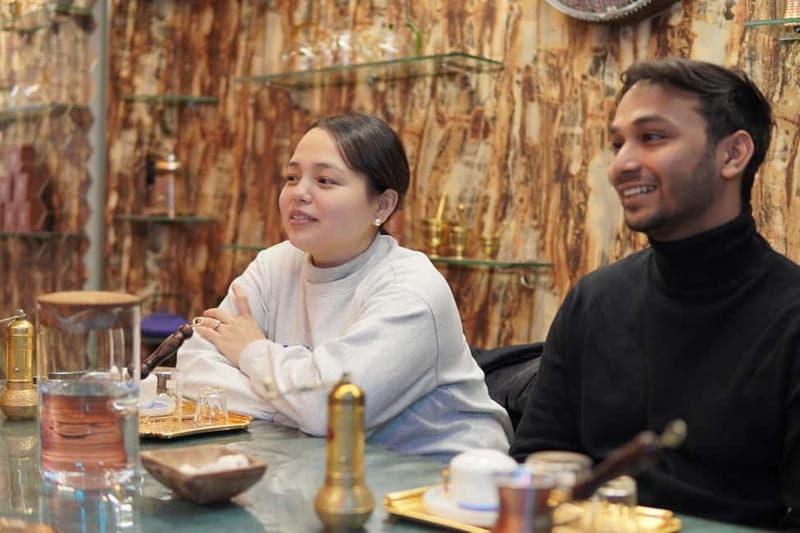
You taste the coffee after brewing, along with Turkish delights and other snacks. This pairing matters because Turkish coffee is traditionally served as a social treat, not as an isolated drink swallowed on the way to the next sight.
The traditional coffee is strong and finely textured. The grounds remain in the cup, which is why you stop drinking before reaching the sediment at the bottom. If you normally take coffee with milk or prefer a mild filter brew, the flavor and texture may be an adjustment.
The second tasting is menengiç coffee. It is caffeine-free and has a nutty flavor, giving you a clear contrast with traditional coffee. This is a good inclusion for people who want to try a local drink but avoid caffeine, as well as for anyone who wants more than one flavor during the session.
The snacks also help soften the intensity of the coffee. One attendee specifically praised the Turkish delight, and the sweets give the tasting a more complete Turkish setting. Portions and exact snack choices are not specified, so do not book this as a meal replacement.
The fortune-reading ceremony
After the coffee is finished, you turn the cup upside down and let the grounds settle into patterns. The instructor then helps interpret the shapes and symbols.
This custom is part of the social life of Turkish coffee. It turns the final grounds into a story and gives the group something to discuss. The atmosphere is light and participatory, with the guide translating the shapes into an entertaining reading.
I would treat this as cultural theater and conversation rather than a promise about your future. That is also what makes it accessible. You do not need to believe in fortune telling to enjoy the ritual, and you can approach it as a traditional way to end a shared cup.
The fortune reading is often the part people remember most, especially when the guide brings humor and personality to it. Irem is specifically associated with a cup reading that one participant found unusually accurate, while Esin was praised for combining coffee instruction with a fun, friendly reading. The quality of this section will naturally depend on your guide and your own willingness to play along.
What the gift set adds to the $33 price
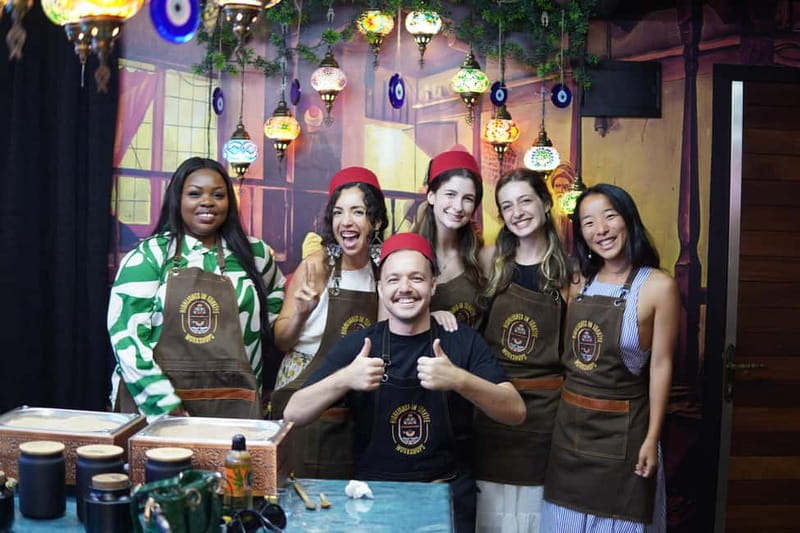
At $33 per person, this is not priced like a simple coffee tasting. You are paying for a 90-minute class, instruction, several tastes, the sand-brewing setup, and a physical gift set.
The included items are:
- A traditional copper cezve
- A coffee cup
- Premium Turkish coffee beans or ground coffee
- A hand-operated grinder for use during the class
- A Turkish coffee booklet
- Turkish delights and snacks
- An exclusive package to take home
The wording around the grinder is worth noting. You use a hand grinder during the class, while the explicitly listed take-home pieces are the cezve, cup, coffee, and booklet. If taking the grinder home matters to you, confirm that detail before booking.
The copper cezve alone makes the package more useful than a standard souvenir. You can repeat the ritual after returning home, using the booklet as a guide. The value is strongest for coffee lovers, people shopping for a practical Istanbul gift, or anyone who enjoys bringing home an activity rather than another decorative item.
For a visitor on a tight budget, $33 may feel high for a coffee lesson. For someone who would otherwise buy a cezve, coffee, and cup separately, the price is easier to justify. You also avoid spending the whole afternoon on the activity, which helps if your Istanbul schedule is full.
The guides make a real difference

A hands-on class depends heavily on the instructor. Here, the guide is not just a presenter. The guide has to explain a centuries-old custom, supervise hot sand and coffee, help with grinding, manage different language needs, and keep the fortune reading entertaining.
Esin appears especially suited to that role. She is described as friendly, funny, patient, and at ease with questions. Zeynep is praised for clear explanations and for helping families who needed extra language support. Ilham is associated with a calm atmosphere and plenty of coffee stories, while Rostum is noted for speaking several languages and making the session interactive.
Other names appear in individual sessions, including Torgul, Rain, Daryn, and Ali. That means your experience may have a different personality depending on the day. The consistent pattern is an instructor-led format with room for questions rather than a silent demonstration.
The average score is 4.9 from 49 ratings, which points to strong satisfaction, but you should still match the activity to your interests. The high marks focus heavily on the guides, the gift set, the history, and the fortune reading. If those elements appeal to you, the experience is likely to feel worthwhile. If you only want to drink a good cup of coffee, a cafe visit will cost less and take less time.
Who should book this Istanbul activity

I would recommend it most strongly for:
- Coffee lovers who want to learn a traditional preparation method
- First-time Istanbul visitors seeking a cultural activity indoors
- Couples and families who enjoy doing something together
- People who want an unusual souvenir they can use at home
- Visitors interested in Ottoman customs and Turkish social traditions
- Anyone curious about caffeine-free menengiç coffee
- Small groups who appreciate conversation and personal instruction
It also suits a rainy or tiring day because the work takes place inside a bright studio. The 90-minute length makes it easier to fit between other plans than a long cooking class.
You may want to skip it if you dislike strong coffee, do not enjoy participatory demonstrations, or have no interest in fortune telling. The class is not built around sightseeing, so it will not give you city views or a tour of nearby landmarks. You come for the ritual, not the scenery.
Free cancellation up to 24 hours before the activity and the option to reserve now and pay later add flexibility. Starting times vary, so check the available schedule before arranging other plans around it.
Should you book the Turkish coffee workshop?
Book this experience if you want to slow down, make something with your hands, and learn a Turkish custom you can repeat at home. The combination of sand brewing, menengiç coffee, sweets, fortune reading, and the cezve gift set gives the 90 minutes a clear sense of purpose.
I would consider it good value at $33 for coffee enthusiasts and culture-focused visitors, especially because the gift set is included. Go in expecting a friendly cultural workshop, not a rigorous coffee certification or a full meal. Choose it for the stories, the ritual, the practical brewing lesson, and the chance to leave Istanbul with a useful reminder of the city.
FAQ
Where does the Turkish coffee workshop take place?
It takes place in a bright, spacious studio in Istanbul, between Galataport and Galata Tower. The studio is diagonally to the right of Arada Beyrut Cafe and directly across from Lavander Cafe.
How long does the activity last?
The workshop lasts 90 minutes. Starting times vary, so check availability when booking.
What languages are available?
The instructors offer the activity in English, Turkish, and Russian.
What types of coffee will I taste?
You will taste traditional Turkish coffee and menengiç coffee. Menengiç coffee is caffeine-free and has a nutty flavor.
Do I make the coffee myself?
Yes. You hand-grind the beans, use the cezve, brew the coffee on heated sand, and practice managing the foam with guidance from the instructor.
Is fortune telling part of the workshop?
Yes. After drinking the coffee, you join a traditional coffee-ground reading ceremony in which the shapes and symbols in the cup are interpreted.
What is included in the gift set?
The take-home set includes a traditional copper cezve, a cup, coffee, and a Turkish coffee booklet. The activity also includes a hand-operated grinder for grinding the beans and Turkish delights or other snacks during the session.
Can I cancel the booking?
You can cancel up to 24 hours in advance for a full refund. You can also reserve now and pay later.
More Brewery Stops in Istanbul
- Coffee Brewing Workshop
★ 5.0 · 28 reviews - Sarajevo: Bosnian Coffee Workshop with Brewing Lesson
★ 5.0 · 3 reviews - Buon Ma Thuot: Specialty Coffee Tour and Brewing Experience
★ 5.0 · 2 reviews
Just listed in Istanbul
- Istanbul: Turkish Coffee Trail★ 3.6 · 16 reviews
- Afternoon Bosphorus Boat and Bus Tour with cable car from Pierre Loti Coffee★ 3.0 · 25 reviews
- Turkish Coffee Trail★ 4.5 · 38 reviews
- Istanbul: Guided Shopping Trip with Turkish Coffee Tasting★ 4.7 · 37 reviews
- Turkish Coffee on Sand and Fortune-Telling Workshop by Gentlemen★ 5.0 · 54 reviews
- Istanbul Sand Brewed Turkish Coffee Workshop in Old Town★ 5.0 · 54 reviews
- Istanbul: Sand Brewed Turkish Coffee Workshop in Old Town★ 4.9 · 142 reviews
- Istanbul Turkish Coffee Making & Fortune Telling Workshop★ 5.0 · 173 reviews
Turkish Coffee Experiences, compared.
Turkish Coffee Making and Fortune Telling Workshop
Read our review →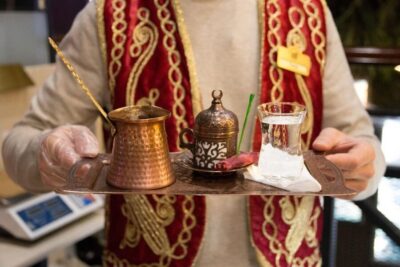
Turkish Coffee Making and Fortune Telling Workshop
Read our review →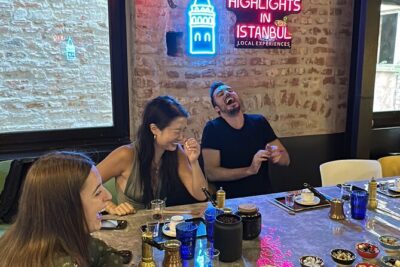
Turkish Coffee on Sand Workshop: Fortune Telling & Gift Set
Read our review →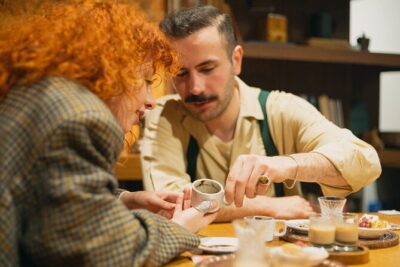
Istanbul Turkish Coffee Making & Fortune Telling Workshop
Read our review →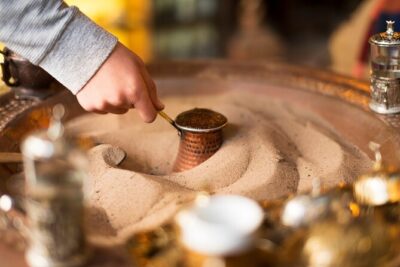
Sand Brewed Turkish Coffee Workshop in Old Town
Read our review →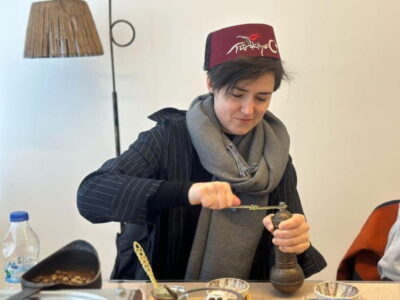
Turkish Coffee Workshop + Fortune Telling + Gift Set
Read our review →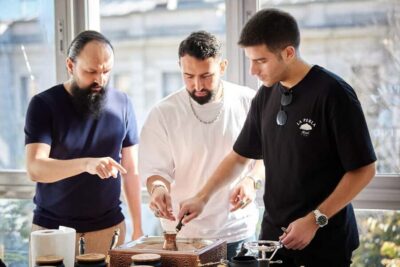
Turkish Coffee Workshop on Sand & Fortune + Gift
Read our review →Lists this coffee tour turns up in