REVIEW · AMMAN
7-Day Private Tour, Jordan Espresso
Jordan Espresso packs Jordan’s biggest sights into seven days, from Amman’s Citadel and Roman Theater to Petra’s Treasury, Wadi Rum’s red desert, and a final rest at the Dead Sea. It is a road trip first and a guided sightseeing tour second, with your own group, private transport, and an English-speaking driver leading the way.
I like the clear route south, which takes in Madaba, Mount Nebo, the King’s Way, Petra, and Wadi Rum without forcing you into a large coach group. I also like the practical touches: airport pickup, Wi-Fi, mineral water, and drivers such as Sami and Mohammed, who are praised for friendly help, patience, and careful explanations. The catch is that the advertised price does not include accommodation, entrance fees, a guide, or optional transfers, so your final cost can be much higher than $754.99 per person.
Key points to know before booking
- Amman to the Dead Sea in seven days: The route covers Jordan’s major historic and scenic stops in a logical southbound loop.
- A genuinely private format: Only your group takes part, giving you more control than a scheduled coach tour.
- Sami and Mohammed are named drivers: Both are described as friendly, helpful, and attentive to questions and comfort.
- Several long driving days: The King’s Way day lasts about nine hours, and the Petra to Wadi Rum day lasts about eight.
- The desert ride costs extra: Jeep tours, camel rides, and hot-air balloon rides are not included.
- Budget carefully: You need a Jordan Pass before travel, while hotels and entrance tickets are also outside the basic price.
A fast route through Jordan’s essential sights
Jordan Espresso works best for someone who wants a lot of Jordan in one week and prefers a private car to a fixed group schedule. You move from the capital to the Roman ruins of Jerash, out to the eastern desert castles, then south through Madaba and Petra before finishing at Wadi Rum and the Dead Sea.
That route gives you strong variety. One day brings Roman columns and city streets. Another brings Umayyad frescoes and desert forts. Then come Nabataean tombs, red sandstone, Bedouin country, and a resort stay beside the salt-heavy waters of the Dead Sea.
The pace is not gentle. Day 4 includes Madaba, Mount Nebo, Wadi Al-Mujib, Shobak Castle, and the drive to Petra, with about nine hours on the schedule. Day 5 combines Petra with Wadi Rum. You will see a great deal, but you should expect time in the vehicle and limited freedom for slow, unplanned exploring.
More Week-Long Trips in the world:
- 7 Days Tanzania Luxury Safari Experience & Coffee Walking Tour
★ 5.0 · 6 reviews
Arrival in Amman and the value of private transport
Your trip begins at Queen Alia International Airport, where a representative meets you after customs with a sign showing your name. The transfer to your Amman hotel takes about 30 minutes, followed by check-in and free time.
Private airport pickup is useful after a flight, especially since you do not need to work out onward transport on arrival. You should provide a WhatsApp number so the operator can contact you more easily about pickup arrangements.
The vehicle includes air conditioning, Wi-Fi, and mineral water. Each person may bring a small or medium-sized bag, so pack with the vehicle’s storage limits in mind. Accommodation is not included unless your selected tour option says otherwise. That is an important point: the tour price is for the transport and planned experience, not automatically for seven nights of hotels.
Amman’s Citadel, Souq, and Roman Theater
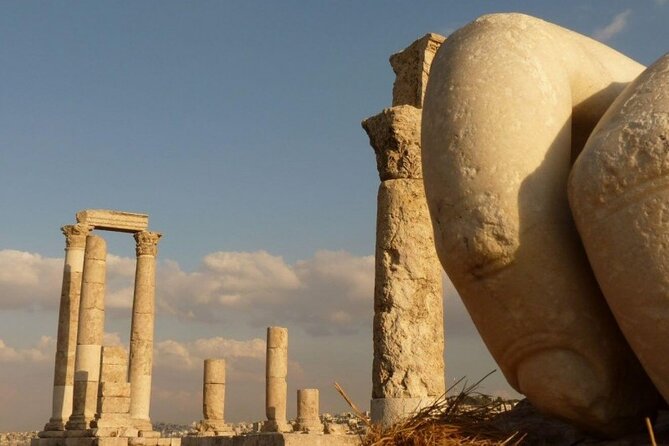
Your second day begins in central Amman, where ancient sites sit inside a busy modern capital. At the Citadel, you can see remains from the Roman period through the early Islamic era. The hilltop setting also gives you a useful view over the city and helps explain how Amman grew around its historic center.
The Archaeological Museum follows, with a collection that includes several Dead Sea Scrolls. The museum is small enough to fit into a city day without taking over the schedule, yet it adds useful context before you visit other major sites.
You then walk through the Souq. This is one of the better parts of the day because it connects the monuments to ordinary city life. You get a look at shops, movement, and daily routines rather than seeing Amman only through its ancient remains.
The final major stop is the second-century Roman Theater, built to hold about 6,000 people. The theater gives you a strong sense of the scale of Roman Amman, and its position in the downtown area makes it easy to pair with the Souq.
The city portion lasts about two hours, followed by the drive to Jerash. Entrance tickets are not included, so plan to use the Jordan Pass or pay separately. The pass must be obtained before your travel date through the official Jordan Pass website.
Jerash and the eastern desert castles
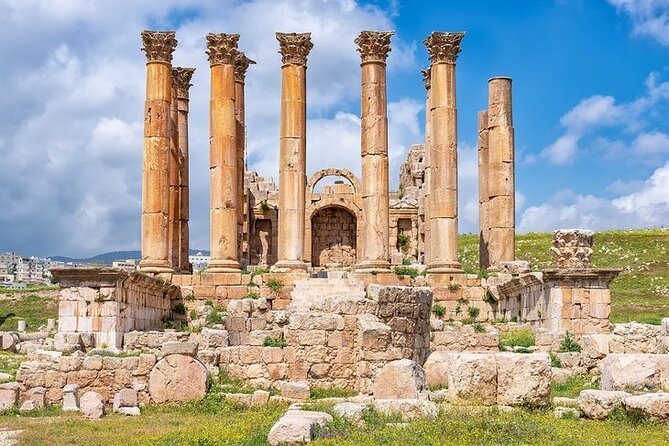
Jerash is one of the strongest stops on the route. Its ruins show Greco-Roman planning mixed with local and eastern influences. Columns, streets, public buildings, and open spaces make the site easier to understand than a single isolated monument.
The scheduled visit lasts about three hours. That gives you time to see the main remains without turning the day into a full archaeological expedition. Jerash is especially attractive in spring, when the surrounding hills can be green and the weather is often more comfortable for walking.
If your timing matches the annual Jerash Festival of Culture and Arts, the city also hosts a three-week summer program with folk dance, music, and theater. The tour information does not promise festival access, so treat that as a possible bonus rather than part of the booking.
Day 3 changes the mood completely. You head east to the desert castles, including Qasr Amra, Qasr Kharanah, and Azraq Castle. Qasr Amra is a UNESCO World Heritage site known for its zodiac dome and early Umayyad frescoes. These paintings make the site special because they offer a glimpse into the decoration and culture of the early Islamic period.
Qasr Kharanah has a fortress-like appearance, while Azraq Castle is built from dark basalt. The three stops work well together because each has a different character. The full outing lasts about six hours, though the actual time at each castle is not specified.
This is a good day for history-minded visitors who want more than Jordan’s famous headline sights. It is also a day with considerable driving and less visual drama than Petra or Wadi Rum. Entrance fees remain separate.
More Private Coffee Bookings in the world:
- Private Walking Tour, Food Tasting and Bosnian Coffee in Sarajevo
★ 5.0 · 255 reviews - Salento: Private Cocora Valley, Salento & Coffee Farm Tour
★ 4.9 · 202 reviews - Private Coffee Roasting Class
★ 5.0 · 101 reviews - Coffee & Chocolate Private Tour in Medellin: Genuine Experience
★ 5.0 · 100 reviews
Madaba, Mount Nebo, and the King’s Way
Day 4 is the longest and most varied road day. After breakfast, you drive south toward Madaba, famous for the sixth-century mosaic map of Palestine inside St. George’s Church.
The mosaic is a compact but meaningful stop. It shows how religious geography was recorded in the Byzantine period, and it gives you something quite different from the large ruins at Jerash. You should not expect a long church visit, but the mosaic adds depth to the drive south.
Next comes Mount Nebo, associated with Prophet Moses viewing the Promised Land before his death. The stop combines religious significance with broad views over the surrounding country. As with the other sites, the tour gives no assurance that a specialist guide is included, so your English-speaking driver may provide general information rather than a full formal tour.
The route then follows the King’s Way, an ancient caravan road. A short stop at Wadi Al-Mujib lets you see a wide valley and striking geological formations. The stop is brief, so think of it as a viewpoint and break rather than a hike.
At Shobak, you visit a Crusader castle perched on a rocky, cone-shaped mountain. It adds a medieval layer to a day already filled with Roman, Byzantine, Islamic, and biblical history. The sequence is impressive, but the schedule is tight. With about nine hours listed, you will spend a good part of the day moving between sites.
Petra from the Siq to the Royal Tombs
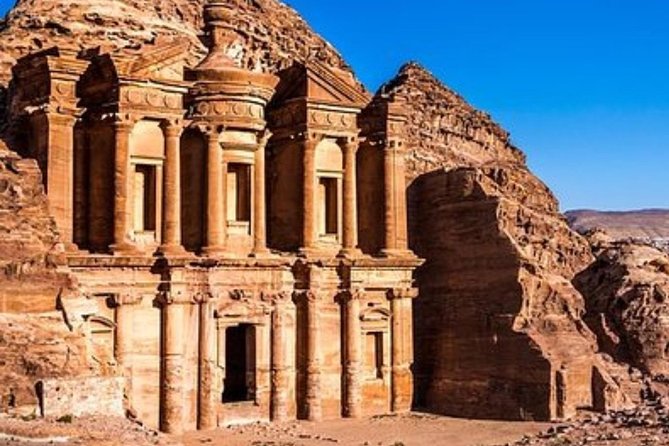
Petra receives its own major day, though the schedule begins after the previous day’s arrival and overnight stay in Petra. The approach starts at the Visitor Center, then follows the Siq, a narrow gorge that gradually builds anticipation before the Treasury appears.
The Treasury is Petra’s most famous monument, but it is only the opening scene. You continue along the Street of Facades to the Theater and the Royal Tombs. The route shows how the Nabataeans shaped tombs and public spaces from the rose-colored rock.
Petra was founded around the sixth century BC by the Nabataeans, a nomadic Arab people who settled in the area and built a commercial empire. That background matters because Petra was not simply a collection of carved tombs. It was a major center linked to trade routes across the region.
The listed Petra and Wadi Rum day lasts about eight hours, so expect a focused visit rather than time for every corner of the site. The information provided does not include the Monastery, which requires a longer walk, so do not assume it will be part of the standard route.
Comfortable walking shoes, water, sun protection, and a realistic view of the day will help. The private format may make it easier to adjust the pace, but the overall transfer schedule still limits how long you can linger.
Wadi Rum by Jeep, camel, or balloon
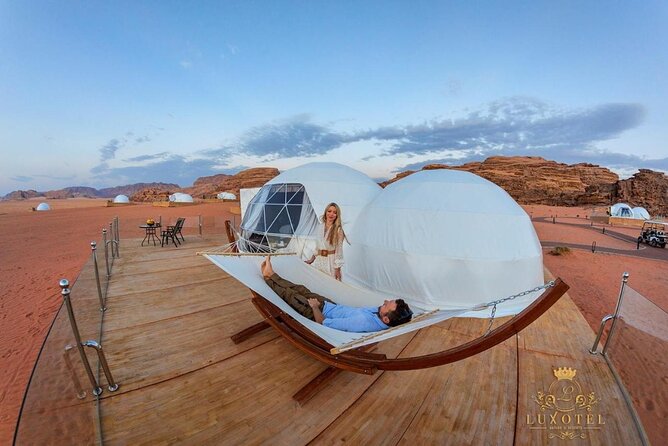
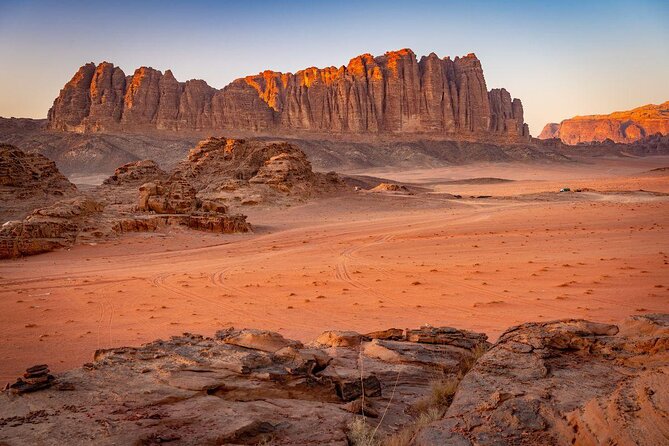
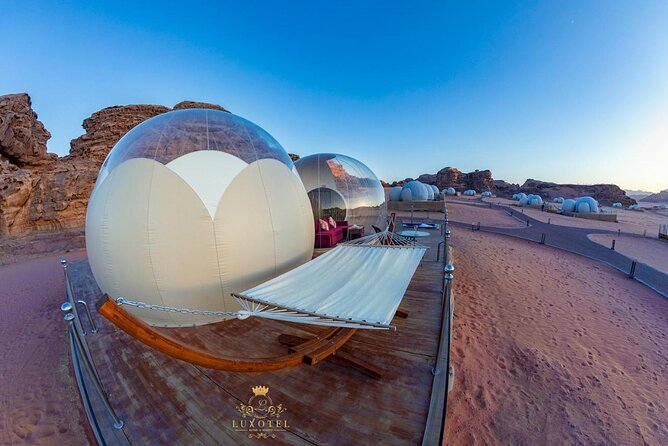
After Petra, you drive about 1.5 hours south to Wadi Rum Protected Area. The desert is known for red sand, dramatic rock formations, canyons, dunes, and Nabataean inscriptions. Bedouin communities still live in the area in traditional ways, adding a human dimension to the scenery.
A 4×4 Jeep tour is available as an optional extra. This is worth considering because the desert experience depends heavily on how you move through it. A vehicle ride lets you reach canyons, dunes, and rock inscriptions that are not part of a simple roadside stop.
Camel rides and hot-air balloon rides are also available at extra cost. None of these activities is included in the base price, so ask about the current cost before committing. The overnight stay in Wadi Rum is listed, but accommodation is generally excluded unless your chosen option specifically includes it.
Wadi Rum is one of the places where a private itinerary can feel especially useful. You can discuss the timing and optional activities with your driver, though the tour does not promise a dedicated desert guide. Keep that distinction clear when comparing it with a package that includes a Bedouin-led camp or a fixed Jeep excursion.
The Dead Sea finale

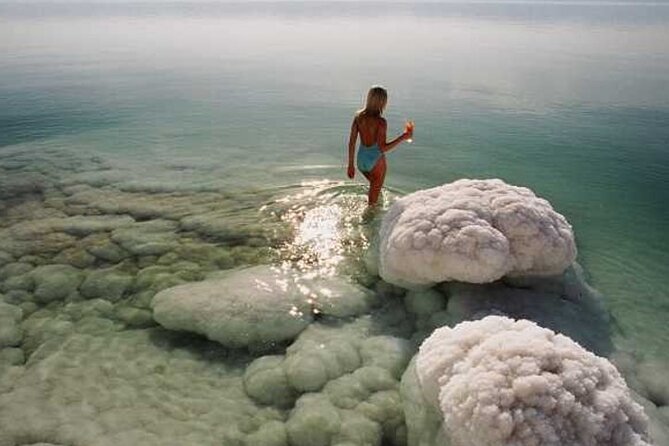
Day 6 is mostly a transfer day. You drive about 3.5 hours to the Dead Sea, check into your resort, and have the rest of the day free.
After several long sightseeing days, this pause is well placed. The Dead Sea is the lowest point on earth, and the resort setting gives you time to stop touring and enjoy the final afternoon at your own speed. The tour information does not specify resort facilities, meal plans, or a particular hotel, so check the exact accommodation option before booking.
The transfer is long, but it also marks a clean break from the desert and archaeological route. You finish beside the water rather than rushing straight to the airport. On Day 7, you check out, usually around noon, and can leave at any time for a direct airport transfer. An optional transfer may cost extra.
What the $754.99 price really covers
At $754.99 per person, the price looks attractive for a seven-day private route through Jordan. The value depends on what your chosen option includes and how many people share the vehicle.
Included are private transportation in a modern air-conditioned vehicle, Wi-Fi, mineral water, and an English-speaking driver for the trip. Only your group participates, which is a meaningful advantage if you value privacy and a flexible feel.
The price does not automatically include accommodation, a guide, optional transfers, entrance tickets, the Jordan Pass, or desert activities. Driver gratuities are highly recommended and should be added to your budget.
I would compare the final total, not just the advertised rate. Ask for the exact hotel plan, entrance arrangements, airport transfer cost, and price of the Wadi Rum Jeep ride. If you already have hotels arranged, the base price may work well. If you need a full package, another option with lodging and admissions built in could be easier to price.
The drivers and the private-tour experience
The strongest personal touch comes from the driver. Sami is described as friendly, helpful, and well informed, while Mohammed is praised for answering questions, checking comfort, and taking time to explain the meaning of each place.
That matters because this trip covers many sites in a short period. A patient driver can make long transfers easier and help you understand what you are seeing. Still, an English-speaking driver is not automatically the same as a licensed archaeological guide. If detailed site interpretation is important to you, ask if a separate guide can be arranged.
The private setup is best for couples, families, or friends who want to travel together without strangers. It also suits people who prefer to ask questions freely and make small adjustments during the day. The small and medium-sized bag limit means you should keep luggage compact.
Cancellation terms are strict close to departure. You receive a full refund if you cancel at least six full days before the start time, 50 percent if you cancel two to six full days before, and no refund within two days. Changes are not accepted inside those same short windows.
Should you book Jordan Espresso?
Book this tour if you want Jordan’s major sights in one private seven-day route and you are comfortable with long drives, separate expenses, and a quick pace. The combination of Amman, Jerash, the desert castles, Petra, Wadi Rum, and the Dead Sea is hard to beat for a first visit.
I would be more cautious if you want slow travel, extensive guided walks, or a fully packaged price with hotels and tickets already handled. Before paying, confirm the accommodation, the Jordan Pass, entrance fees, airport transfers, and optional desert rides.
For the right kind of trip, Jordan Espresso is a practical framework: you get the route, vehicle, driver, water, and Wi-Fi, while keeping the experience private. Just price the extras honestly and leave room in your schedule for the fact that Jordan is larger, hillier, and more tiring than a map may suggest.
FAQ
Where does the tour start?
The tour starts at Queen Alia International Airport on the Desert Highway in Amman, Jordan. A representative meets you after customs with a welcome sign showing your name.
Where does the tour end?
The activity ends back at the meeting point area. On the final day, you check out after breakfast, usually around noon, and can leave directly for the airport.
Is this a private tour?
Yes. Only your group participates in the activity.
Is airport pickup included?
Pickup is offered at Queen Alia International Airport. Optional transfers are not included unless specified under your selected tour option, so confirm the exact arrangement before booking.
Are hotels included?
Accommodation is not included unless it is specifically stated in the tour option you choose.
Is the Jordan Pass included?
No. You must obtain the Jordan Pass before your travel date through jordanpass.jo.
Are entrance tickets included?
No. Admission tickets are listed as not included for the scheduled sightseeing stops.
Are the Jeep ride, camel ride, and hot-air balloon included?
No. The Wadi Rum Jeep tour, camel ride, and hot-air balloon ride are optional activities available at an extra cost.
Just listed in the world
- Vietnamese Coffee 101 Workshop★ 5.0 · 11 reviews
- Vietnamese Coffee Making Class in Hoi An★ 5.0 · 4 reviews
- Yerevan: Private Coffee Tour with 2 Café Stops★ 5.0 · 2 reviews
- Turkish Coffee and Traditional Turkish Dessert Cooking★ 4.6 · 8 reviews
- Ubud: Waterfall, Holy Water Temple,Swing&coffee plantation★ 5.0 · 9 reviews
- Vancouver: Street Art & Craft Coffee Walking Tour w/ Tasting★ 4.8 · 11 reviews
- The Colors of Coffee in the Farms of Coatepec★ 5.0 · 3 reviews
- Vienna: Guided Viennese Coffee-House Tour★ 5.0 · 2 reviews
Private, compared.
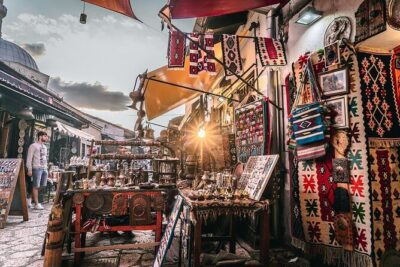
Private Walking Tour, Food Tasting and Bosnian Coffee in Sarajevo
Read our review →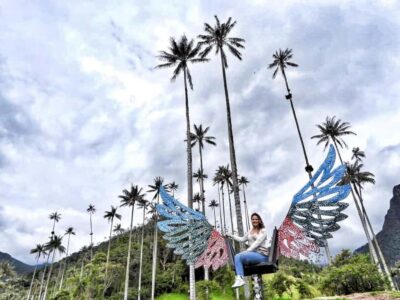
Private Cocora Valley, Salento & Coffee Farm Tour
Read our review →
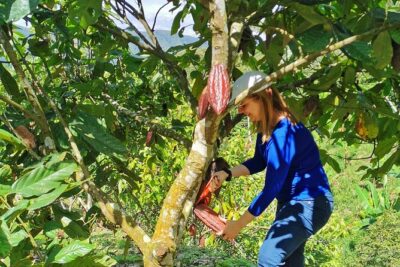
Coffee & Chocolate Private Tour in Medellin: Genuine Experience
Read our review →Hanoi Private Walking Tour with Egg Coffee Making Experience
Read our review →

Vienna Eats: Private Foodie Walk with Coffee & Markets
Read our review →