
REVIEW · ADDIS ABABA
Ethiopian Culinary Tour – Market, Food, Coffee Ceremony & more
Addis Ababa’s food culture is best understood with your hands and nose. This tour takes you from spice stalls and produce markets to a family injera-making session, then pairs lunch at Ethiopia’s oldest hotel with coffee in the mountain town of Sululta. It is a quick, flavorful way to see how food fits into daily life.
I like the hands-on injera lesson, because you make the bread and eat your own result. I also like the mix of city and countryside: crowded Merkato gives way to Sululta’s cooler mountain setting and a full coffee ceremony. The main drawback is pace. Five to six hours covers a lot, and the market sections can be noisy, crowded, and tiring.
Key points at a glance
- Make injera yourself: Learn the basic process from local women, then eat what you prepare.
- Walk through Merkato: Explore spice stalls inside Africa’s largest open-air market with a guide for help with navigation and safety.
- Taste Addis coffee twice: Stop at the old Tomoca Coffee shop, then watch beans washed, roasted, and brewed in Sululta.
- Eat at historic Taitu Hotel: Lunch is served as an assortment of Ethiopian dishes with water and hot drinks included.
- Try honey wine: The Sululta visit includes an explanation of honey-wine production and a tasting.
- Good for a short Addis stay: Hotel, house, and airport pickup are offered, with transportation, fuel, and guiding included.
Why this Addis food tour works
This is not simply a restaurant crawl. It is a city-and-food introduction built around the ingredients and customs that shape Ethiopian meals.
You see vegetables and fruit at Atkilt Tera, spices at Merkato, injera in production, coffee at Tomoca, and a more formal coffee ceremony outside the capital. Lunch at Taitu Hotel supplies the sit-down meal in the middle of the day. That sequence helps you connect what you see in the markets with what eventually appears on your plate.
The tour costs $85 per person, which is reasonable if you value private transportation, several food stops, a guide, lunch, and a full coffee ceremony. Paying separately for transport, taxis, meals, and guides could add up quickly, especially if you are new to Addis Ababa.
The best value comes from the range of stops. You are not paying for one tasting and a short walk. You receive a broad introduction to Addis food culture in a single outing. Still, this is not the right choice if you want a slow morning at one market or a detailed cooking class focused on several Ethiopian dishes.
More Coffee Ceremony Experiences in the world:
- Ethiopian Culinary Tour – Market, Coffee Ceremony and More
★ 5.0 · 10 reviews - Lalibela: Churches Full-Day Private Tour w/Coffee Ceremony
★ 4.7 · 5 reviews - Sarajevo: City Tour with Bosnian coffee ritual ☕️
★ 5.0 · 2 reviews
Atkilt Tera, where the food story begins
The day starts with pickup in the morning. Transport is offered from a hotel, private home, or airport within Addis Ababa, and the listed meeting point is Edna Mall on Cameroon Street. Confirm the exact pickup arrangement when booking, since the activity also lists the meeting point as the end location.
Atkilt Tera is the city’s large produce market. The stop gives you a look at the raw materials behind Ethiopian cooking: fruits, vegetables, and other everyday ingredients moving through a working market rather than a display made for tourists.
This part is useful because it puts the rest of the day in context. After seeing the produce, you have a better sense of where the ingredients for stews, sauces, and side dishes begin.
Expect an active morning, not a polished market hall. The tour operates in all weather, so wear practical clothing and shoes. Addis can be cool in the morning, while walking outdoors and moving through crowded streets can make the day feel warmer later.
Merkato’s spice stalls and busy streets
The tour continues to Merkato, the city’s largest open-air market and one of the main reasons to have a guide. The spice section is the focus here. You can expect strong aromas, piles of colorful seasonings, and a close look at the ingredients that give Ethiopian food its distinctive heat and depth.
Merkato is also the most demanding part of the tour. It is crowded and chaotic, and you need to stay close to your guide. One guide and driver team, Zerefa and Tamirsat, was praised for taking care of a solo participant in the market, but your assigned guide may be someone else. Guides named in connection with this experience include Abiy, Desale, Emmanuel, Samuel, and Seya.
A guide adds real value here. You get help understanding what you are seeing, and you can ask about spices and possible souvenirs. Desale was especially helpful to one participant looking for souvenirs at a fair price. That does not guarantee shopping assistance on every departure, but it is worth asking your guide before buying.
The market walk is more about observation than shopping. Bring patience, keep valuables secure, and do not expect a quiet stroll. If crowds wear you down, tell your guide. The tour has shown some flexibility, with guides adjusting stops for people who had already visited parts of Addis.
Making injera with local women
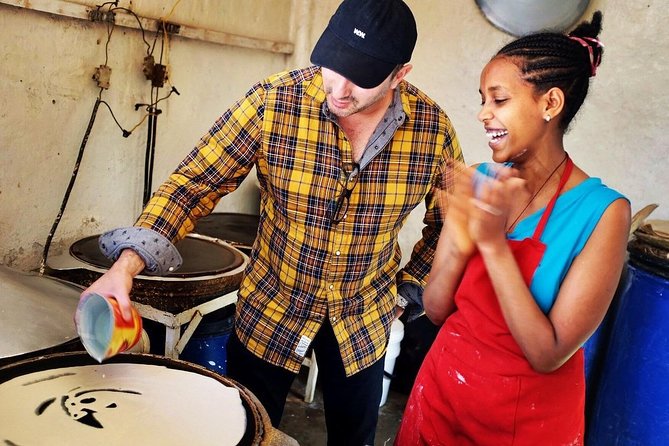
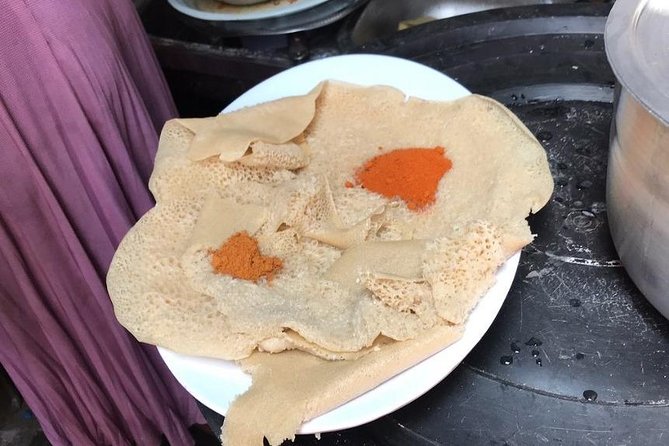
The hands-on cooking stop is the heart of the experience. You meet a group of local women who demonstrate how injera is prepared, then give you a chance to try making the traditional Ethiopian flatbread yourself.
Injera is not just bread on the side. It is the utensil, plate, and base of much Ethiopian dining. Stews and vegetables are served on it, and you tear off pieces to pick up the food. Learning the basic method gives you a more useful understanding than simply ordering it in a restaurant.
Your attempt may not look perfect. That is part of the fun. The cooking is described as a family or local business experience, not a professional culinary school class, so expect a practical demonstration and participation rather than a long lesson in recipes and technique.
You also eat what you make. That small detail matters. You are not watching a staged demonstration and then moving on. You get a direct taste of the result, even if your injera comes out uneven.
One useful limitation: the activity focuses on injera, not on preparing the stews and sauces served with it. If you want to learn how Ethiopian cooks combine herbs and spices into the dishes placed on top, ask about that in advance. One participant specifically wanted more attention to this part of the cooking tradition.
More Eating and Drinking in the world:
- Vienna for Food Lovers: Cafés, Markets & Austrian Cuisine
★ 5.0 · 1,063 reviews - Buggy Ride Into the jungle with cave coffee & chocolate tasting
★ 5.0 · 465 reviews - Hanoi: Vietnamese Street Food Tour with Egg Coffee
★ 4.9 · 315 reviews - Da Nang Cooking Class with Coffee Tasting and Market Visit
★ 5.0 · 310 reviews
Lunch at Taitu Hotel in Piassa
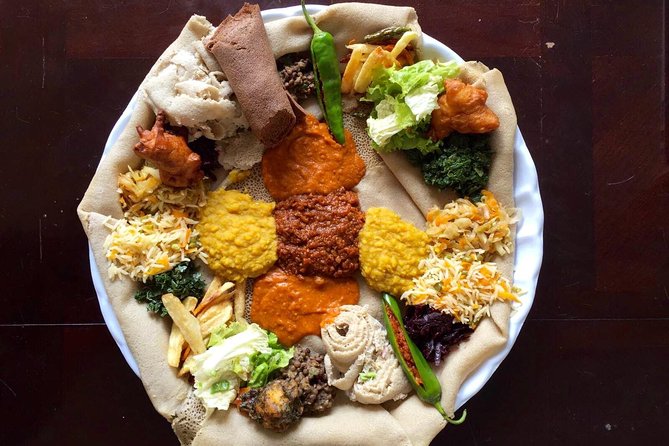
Lunch takes place at Taitu Hotel in Piassa, described as Ethiopia’s oldest hotel. The setting adds a layer of local history to the meal, but the practical appeal is the food: an assortment of Ethiopian dishes served in buffet style.
This is a good arrangement for anyone still learning what to order. Instead of choosing one unfamiliar dish from a menu, you can sample several preparations. Injera gives you the familiar foundation from the earlier cooking stop, while the buffet lets you compare different flavors and textures.
Lunch includes a bottle of water and hot drinks. Alcohol is not included, apart from the honey wine tasting later in the day. The supplied information does not promise a cooking demonstration at Taitu Hotel, so think of it as a meal and cultural setting, not another class.
The lunch stop also gives the day a needed pause. The market walk can be loud and crowded, and sitting down helps reset your energy before the coffee-focused afternoon.
Tomoca Coffee and the taste of Addis
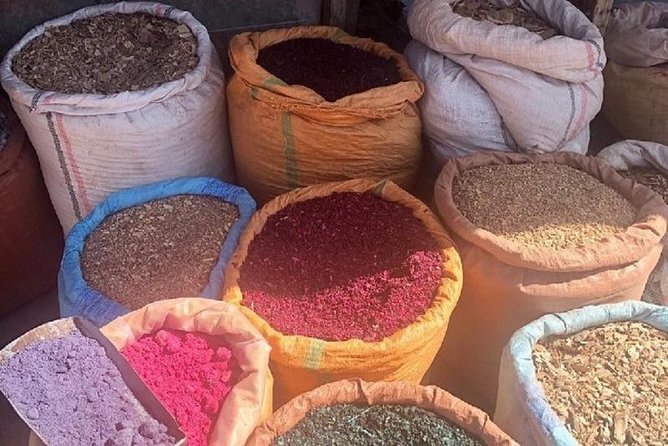
The stop at Tomoca Coffee lasts about 30 minutes. Ethiopia is closely associated with coffee, and Tomoca is presented as the city’s oldest coffee shop, with more than half a century of brewing experience.
You receive a coffee or macchiato, and you can buy roasted or ground coffee to take home. This is a short stop, but it gives you a clean comparison with the traditional ceremony later in the day.
Tomoca is a café visit in the city. Sululta is the longer cultural demonstration. Together, the two stops show coffee in different settings: a historic Addis coffee shop and a ceremony built around hospitality and ritual.
If you want coffee souvenirs, this is the easiest place to buy them. Remember that the tour includes a drink, not unlimited purchases, so any bags of coffee are an extra expense.
Sululta’s full coffee ceremony
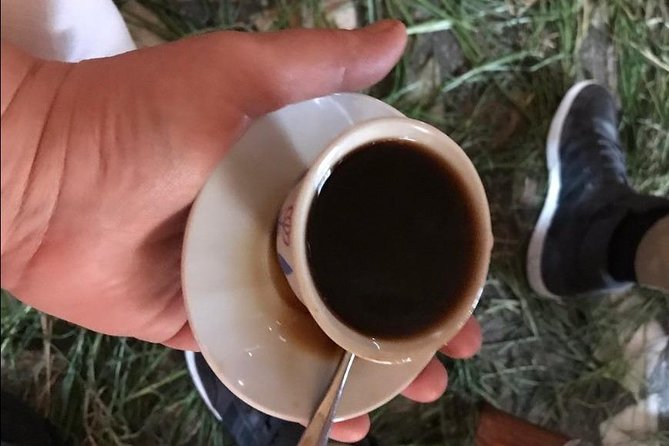
The road to Sululta changes the rhythm of the day. This mountain town outside Addis Ababa provides the setting for a two-hour visit focused on coffee and honey wine.
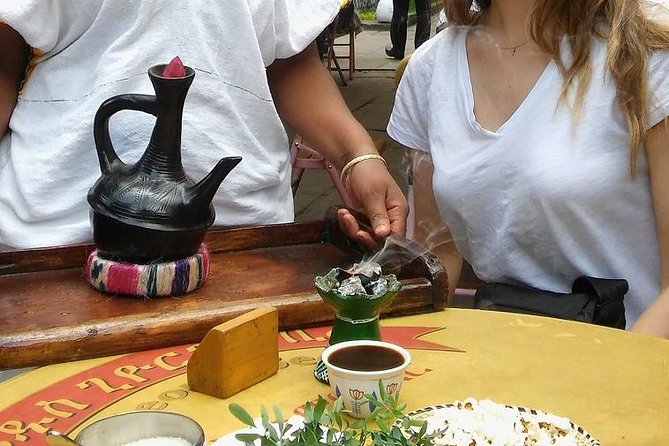
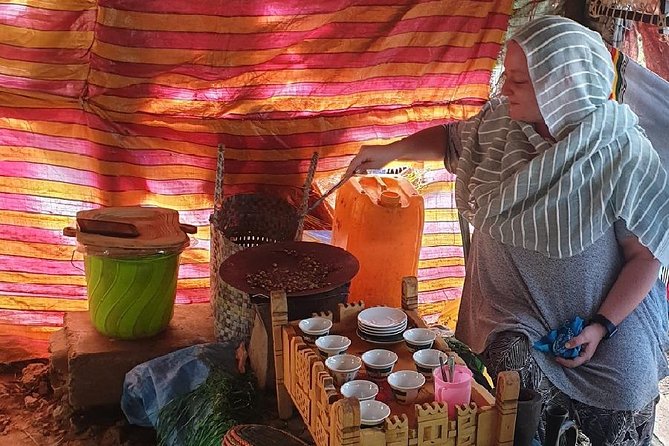
The ceremony covers the process from washing and live roasting the beans through brewing and serving the finished coffee. This takes longer than a café stop, and the slower pace is important. Coffee is not treated merely as a quick caffeine break. The preparation itself is part of the social experience.
You will have the chance to drink the coffee after watching it being made. The ceremony is one of the strongest parts of the tour for anyone interested in Ethiopian customs, and it gives you time to ask questions through your guide.
You also learn about honey wine, known locally as tej, and taste a glass. The tour information describes it as organic honey wine, while the inclusion notes make clear that honey wine is the alcoholic drink provided. Other alcohol is not included. Some past experiences also included local vodka or beer, but those are not promised as part of this tour.
Sululta adds scenery as well as food and drink. The mountain setting offers a break from central Addis, and the drive back gives you a chance to see more of the area from the vehicle. The total duration is listed as about five to six hours, even though the experience is described in places as a full-day tour. Plan for a substantial half-day rather than an all-day expedition.
Guides, flexibility, and the group size
The guide can shape the quality of this experience. The strongest guide feedback centers on clear English, warmth, local knowledge, and flexibility.
Zerefa is repeatedly associated with customized routes and strong knowledge of Addis Ababa’s history. Samuel is praised for explaining where the group was going and what each stop meant. Seya is described as especially detailed when discussing Ethiopian culture and history. Emmanuel is noted for being punctual and for selecting strong city stops.
You cannot necessarily request one of these guides, but you can ask when booking. The tour may be operated by a multilingual guide, and the maximum group size is 30 people. That is large enough to affect the market walk and cooking activity, though the actual group may be smaller.
Flexibility is a real advantage. If you have already seen Tomoca, Taitu Hotel, or another listed stop, tell the guide at the start. The route has sometimes been adjusted to include another city sight or an art gallery instead. Do not assume every replacement is guaranteed, but the guides appear able to adapt when time and traffic allow.
The included driver and vehicle also matter in Addis. You avoid arranging several taxis between distant stops, and the guide can focus on explaining the city while the driver handles the route. Pickup and drop-off are offered at Addis hotels, homes, and the airport, but confirm the details before departure.
Who should book this experience

I would choose this tour if you have one free day in Addis Ababa and want a broad first look at Ethiopian food and city life. It is especially useful for solo visitors, people staying briefly, and anyone who wants transport arranged between markets, restaurants, cafés, and Sululta.
It also suits curious eaters who are comfortable trying unfamiliar foods and drinks. You should enjoy walking through working markets, handling food, sitting at a communal-style meal, and spending time at a traditional coffee ceremony.
Families can consider it for children aged eight and older. The activity is not described as wheelchair accessible, so anyone with mobility concerns should ask the operator before booking. Market surfaces, crowds, and the hands-on cooking stop may require extra care.
I would be less likely to recommend it if you want a quiet, highly structured cooking class. It is also not ideal if you dislike crowds, do not drink alcohol but still want a tightly food-focused schedule, or prefer to spend an entire day in one neighborhood.
Practical details before you book
The price is $85, and the package includes round-trip transportation, driver, fuel, an English-speaking guide, local guides, lunch, water, and hot drinks. Admission is included where listed, while souvenirs and other drinks cost extra.
Book at least a day ahead if possible. The experience is often reserved several weeks in advance, with an average booking lead time of 26 days. That does not mean last-minute reservations are impossible, but planning ahead gives you a better chance of securing your preferred date.
Free cancellation is available up to 24 hours before the start time. Cancellations or changes inside that window are not refundable, and poor weather can lead to a new date or a full refund. Since the tour operates in all weather, dress for changing conditions.
The minimum age is eight, and confirmation is issued when you book. Most people can participate, but the market walk involves crowds and the day includes several transfers.
Should you book the Ethiopian Culinary Tour?
Book it if you want a fast but substantial introduction to Addis Ababa through food. The strongest combination is the market walk, injera making, Taitu Hotel lunch, and Sululta coffee ceremony. You get sights, smells, conversation, a meal, and hands-on participation rather than a simple sequence of tastings.
The value is strongest when you are short on time or traveling without your own transport. Ask for a flexible guide, mention any Addis sights you have already visited, and confirm pickup details. If your main goal is a serious cooking course, look for a class that also teaches the stews and spice blends. For a first food-and-culture day in Addis, this tour offers a well-rounded route at a fair price.
FAQ
How long does the Ethiopian Culinary Tour last?
The experience lasts approximately five to six hours. It is sometimes described as a full-day tour, but you should plan for a substantial half-day.
What food and drinks are included?
Lunch at Taitu Hotel, a bottle of water, and hot drinks are included. You also receive coffee at Tomoca Coffee and take part in a coffee ceremony in Sululta, with a honey-wine tasting. Other alcoholic drinks are not included.
Can I be picked up from my hotel or airport?
Yes. Pickup and drop-off are offered from any location in Addis Ababa, including a hotel, house, or airport. Edna Mall on Cameroon Street is listed as the meeting point, so confirm your exact arrangement before the tour.
Is the tour suitable for children?
The minimum age is eight. Most people can participate, but the markets can be crowded and the tour includes walking, transfers, and a hands-on cooking activity.
What happens at Merkato?
You visit the spice market in Merkato, which is described as Africa’s largest open-air market. The stop lasts about one hour and is guided.
Can I cancel for a refund?
You can cancel up to 24 hours before the experience starts for a full refund. Cancellations or changes made less than 24 hours before the start time are not refunded or accepted. If poor weather causes the operator to cancel, you can receive a different date or a full refund.
More Market Visits in the world
- Coffee Crawl & VIP Morning in Pike Place Market
★ 5.0 · 75 reviews - Coffee & Food Tastings at Pike Place Market
★ 5.0 · 67 reviews - Vietnam Flavour: Market-to-Table & The Art of Egg Coffee
★ 5.0 · 53 reviews - From Bangkok: Don Wai Market, Wat Samphran & Lotus Café Tour
★ 4.5 · 48 reviews
More Food Tours in the world
- Hungry in Vienna? A Food Lover’s Coffee & Market Walk
★ 4.9 · 276 reviews - Private Walking Tour, Food Tasting and Bosnian Coffee in Sarajevo
★ 5.0 · 255 reviews - Rome Pantheon: Award Winning Gelato Tiramisu & Espresso Food Tour
★ 5.0 · 99 reviews - Vienna Eats: Private Foodie Walk with Coffee & Markets
★ 5.0 · 77 reviews
Just listed in the world
- Yerevan: Private Coffee Tour with 2 Café Stops★ 5.0 · 2 reviews
- Vietnamese Coffee 101 Workshop★ 5.0 · 11 reviews
- Vietnamese Coffee Making Class in Hoi An★ 5.0 · 4 reviews
- Turkish Coffee and Traditional Turkish Dessert Cooking★ 4.6 · 8 reviews
- Ubud: Waterfall, Holy Water Temple,Swing&coffee plantation★ 5.0 · 9 reviews
- Vancouver: Street Art & Craft Coffee Walking Tour w/ Tasting★ 4.8 · 11 reviews
- The Colors of Coffee in the Farms of Coatepec★ 5.0 · 3 reviews
- Vienna: Guided Viennese Coffee-House Tour★ 5.0 · 2 reviews
Markets, compared.
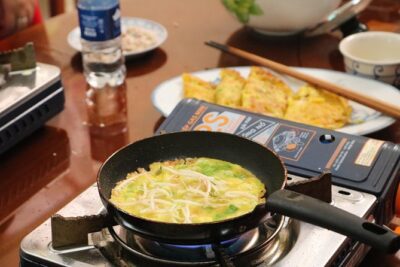
Da Nang Cooking Class with Coffee Tasting and Market Visit
Read our review →
Hungry in Vienna? A Food Lover’s Coffee & Market Walk
Read our review →
Vietnam Flavour: Market-to-Table & The Art of Egg Coffee
Read our review →
Private Floating Market, Train Market and After Rain Cafe Tour
Read our review →
Lists this coffee tour turns up in