REVIEW · HO CHI MINH CITY
Drip Craft Coffee Workshop-Discover 4 Famous Types of Viet Coffee
Vietnamese coffee is more than strong coffee poured over ice. In this two-hour private workshop, you learn how the drip method, sweetened milk, egg cream, salt, and coconut change the drink’s taste and texture. The best part is making all four cups yourself, rather than simply watching a demonstration.
I like the clear focus on four distinct styles, especially the egg and sea salt coffees, which may be new even if you already know cà phê sữa đá. I also like that the class includes the equipment, tasting, cultural background, and a question period. The main consideration is language: the available information does not name the barista or promise Spanish instruction, and one participant found that Spanish was not available.
Key points
- Four coffees in one sitting: Make egg coffee, iced condensed milk coffee, sea salt coffee, and coconut milk coffee.
- Hands-on drip brewing: Use traditional Vietnamese drip methods with guidance from a barista.
- Private format: Only your group participates, which gives you room to ask questions and work at your own pace.
- More than a tasting: Learn about coffee’s origins in Vietnam, then practice technique, layers, textures, and temperatures.
- Good value at $13: The price includes the barista, equipment, four preparations, tasting, and Q&A.
- Flexible for plant-based diets: Vegan options are available upon request.
Why four Vietnamese coffees make a useful introduction
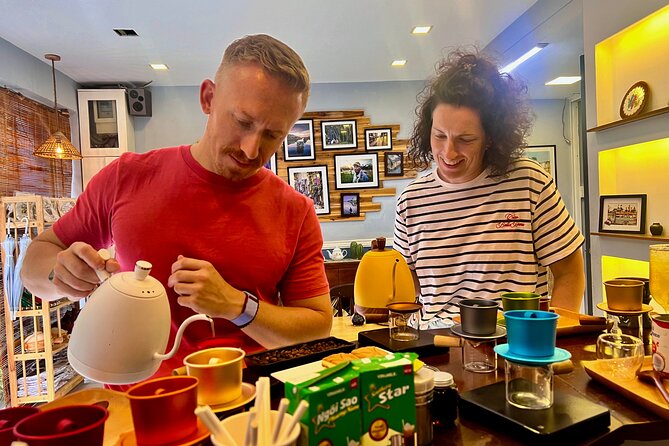
This class works because it treats Vietnamese coffee as a family of drinks, not a single recipe. In one session, you move from a dark, sweet iced coffee to egg coffee, salt coffee, and coconut coffee. Each cup shows a different way local ingredients shape the final drink.
The four styles are:
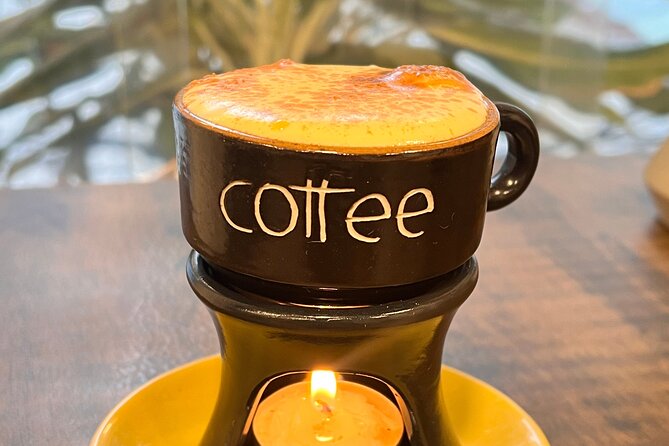
- Cà Phê Trứng Lòng Đỏ, or egg coffee: This uses an egg-based topping or cream to add softness and sweetness to the coffee.
- Cà Phê Sữa Đá, or dark roast condensed milk coffee: Strong coffee meets sweetened condensed milk and ice.
- Cà Phê Muối Biển, or sea salt coffee: Salt changes the balance of the coffee, softening some bitterness and adding a savory edge.
- Cà Phê Cốt Dừa, or coconut milk coffee: Coconut brings a creamy texture and a different kind of sweetness.
You will not simply sample four finished drinks. The class is built around making them, so you can see how the ingredients behave and how presentation affects the drink. That matters with Vietnamese coffee because the visual layers are part of the appeal.
One useful expectation-setting detail: the four drinks are presented as basic Vietnamese coffee styles, but that does not mean they are all equally unusual. Cà Phê Sữa Đá is a familiar classic, and one participant felt the final condensed milk preparation was quite basic. The egg and sea salt coffees offer more surprise, while the iced condensed milk coffee gives you the essential foundation.
More Coffee Making Classes in Ho Chi Minh City
- Fun & Easy Vietnamese Coffee Workshop in Hồ Chí Minh City
★ 5.0 · 293 reviews - Ho Chi Minh City: Fun and Easy Coffee Workshop for Beginners
★ 4.9 · 121 reviews - Coffee Workshop in Ho Chi Minh City: Discover the art of coffee
★ 5.0 · 35 reviews
Starting at 131/3 Nguyễn Thị Minh Khai
The workshop begins at 131/3 Nguyễn Thị Minh Khai, Phường Phạm Ngũ Lão, Quận 1, Ho Chi Minh City 711106. The activity ends at the same meeting point, so you do not need to arrange a separate return transfer.
The location is near public transportation, which helps if you are staying elsewhere in Ho Chi Minh City. Your mobile ticket can be used for the booking, and confirmation is received at the time of reservation. Since the exact meeting point is an address rather than a broad neighborhood label, I would keep the full address ready on your phone before setting out.
This is a private activity. Only your group takes part, which is a useful feature for a practical class. You can ask the barista to repeat a brewing step, check a texture, or explain an ingredient without competing with a large room full of people. The information provided does not give a maximum group size, so you should not assume that private means one-on-one.
Learning how Vietnamese coffee arrived and took shape
The first part of the session looks at coffee’s origins in Vietnam and its place in local culture. This context gives the recipes more meaning. You begin to understand why strong coffee, condensed milk, ice, egg, salt, and coconut appear together in Vietnamese café traditions.
The cultural introduction is not separate from the practical lesson. It helps explain why Vietnamese coffee often favors bold flavor and why sweet ingredients are used to balance it. Once you taste a dark roast with condensed milk, the later versions become easier to understand as variations on a basic coffee structure.
I would pay attention here if you want more than a cooking demonstration. The workshop connects ingredients to the way coffee is prepared and served in Vietnam. At the same time, the supplied information does not promise a long lecture or a detailed regional study. Expect a useful introduction before the hands-on work, not a full course in Vietnamese food history.
Using the traditional drip method
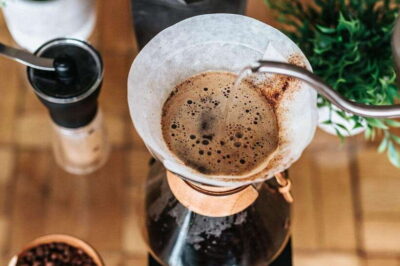
The central technique is the Vietnamese drip method. Under the barista’s direction, you learn the steps of steeping and brewing a cup, then use the provided equipment to prepare your coffee.
This is a good place to slow down. The drip method is simple to describe, but the class gives you a chance to watch the coffee move through the process and see how timing affects the cup. You are also asked to think about how the drink looks, not just how it tastes.
The barista focuses on technique and presentation. That means you will work toward attractive layers rather than stirring everything together immediately. This is especially useful for egg coffee and coconut coffee, where contrasting colors and textures are part of the experience.
The equipment is supplied, so you do not need to bring brewing tools. The details do not state that you receive equipment to take home, so treat the tools as part of the class rather than a souvenir or gift.
More Coffee Making Classes in Vietnam
- Ho Chi Minh City: Coconut/Eggs Coffee Making Class
★ 5.0 · 8 reviews - HCMc Egg Coffee Class in 1 hour with local intructor & snack
★ 4.2 · 8 reviews - HCM: Egg Coffee Class with local Instructor & Snack
★ 4.7 · 8 reviews - Hanoi Coffee Workshop: Taste Salt, Coconut and Egg Coffee
★ 5.0 · 1,286 reviews
Making Cà Phê Sữa Đá, the essential classic
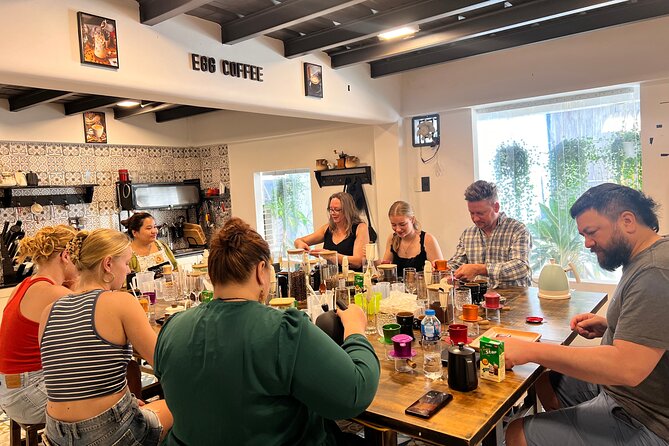
The iced condensed milk coffee is the most familiar of the four. You combine dark roast coffee with sweetened condensed milk and ice, creating the classic balance of bitter coffee and dense sweetness.
This cup is a useful starting point because it shows the basic Vietnamese preference for strong coffee with a rich sweet counterpoint. The ice also changes the experience, cooling the drink and softening its intensity.
I would not book this workshop only to learn condensed milk coffee. The recipe is one of the simplest in the set, and one participant described the final preparation as a very basic condensed latte. Its real value is as a reference point. Once you know the classic, you can better understand what egg, sea salt, and coconut add to the same coffee tradition.
Preparing egg coffee with a soft, sweet topping
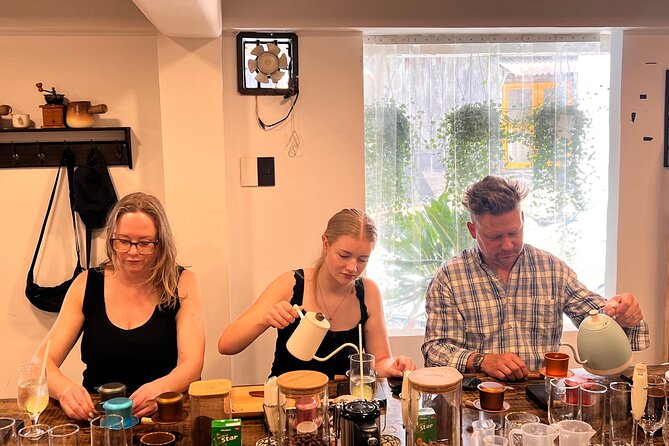
Egg coffee is likely to be the most memorable cup for many people in the class. The egg component changes the coffee’s texture, adding a soft, creamy element over the darker brew.
The workshop emphasizes balance. You are not only making a sweet topping, but learning how it meets the bitterness of the coffee beneath it. The contrast of temperatures and textures also matters, especially when a warm or freshly brewed coffee meets a cool, smooth layer.
The name supplied for this preparation is Cà Phê Trứng Lòng Đỏ. The exact ingredients and method are taught by the barista during the session, so you should follow the demonstration rather than expect a generic egg-coffee recipe. The class description does not specify whether the drink is served hot or cold, so the useful promise is the technique and tasting rather than a fixed serving style.
Testing the balance of sea salt coffee
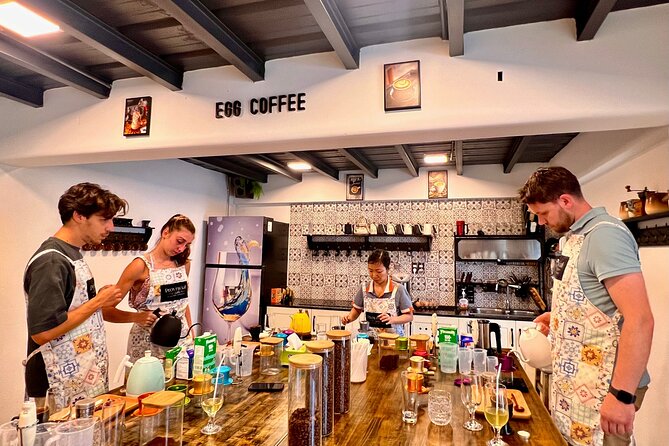
Sea salt coffee is the most distinctive idea in the four-cup lineup. A small amount of salt can change how you perceive bitterness and sweetness, making the coffee taste rounder without turning it into a salty drink.
This is where the workshop’s tasting element earns its place. You can compare the sea salt version with the condensed milk coffee and notice how two different additions affect the same dark roast. The change is not only about flavor. Salt can also alter the impression of the drink’s body and finish.
One participant singled out the egg and salt coffees as spectacular, and I can see why these are likely to be the highlights. They offer something less obvious than the standard iced coffee, while still showing how Vietnamese coffee makers work with familiar pantry ingredients.
You may already know whether you like salty-sweet flavors, but the class gives you a more measured way to try the idea. It is not a blind tasting. You are learning the preparation and then sampling the result you helped create.
Mixing coconut milk coffee for a different texture
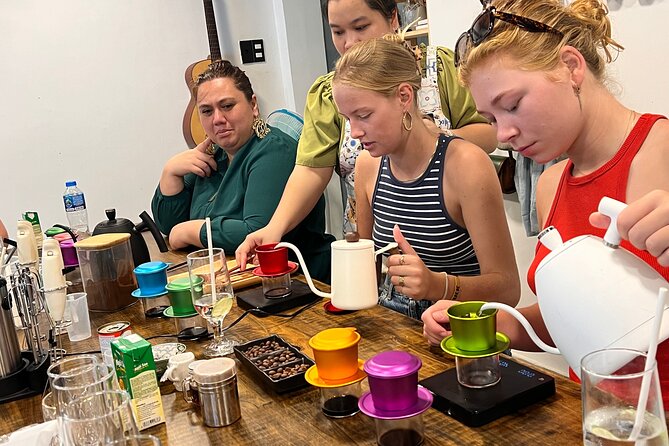
Coconut milk coffee brings a tropical, creamy note to the lineup. Cà Phê Cốt Dừa shows how coconut can soften the coffee’s sharper edges while adding its own flavor and texture.
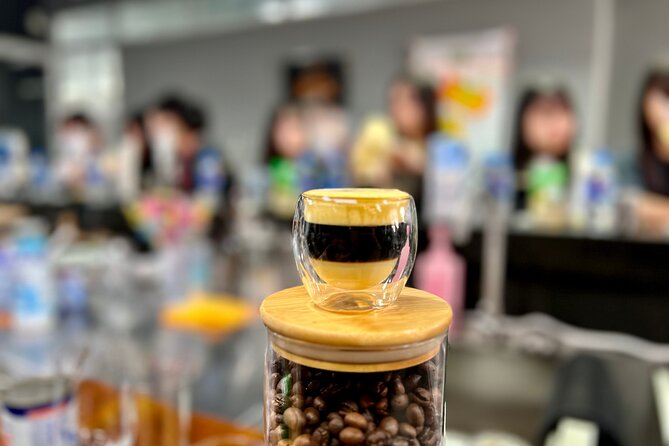
This cup also gives you another lesson in layering. The workshop asks you to think about appearance, so the final drink is meant to be visually appealing as well as pleasant to drink. The contrast between dark coffee and pale coconut creates a clear presentation.
The supplied information does not specify the precise coconut ingredient, serving temperature, or recipe proportions. You will learn those details in the class from the barista. What you can expect is a hands-on preparation that broadens the lesson beyond condensed milk and egg.
If you prefer less sweet drinks, keep that preference in mind. Vietnamese coffee styles often use sweet ingredients to balance strong coffee, and the class is built around that tradition. You can ask questions during the session, including questions about taste and substitutions.
Tasting bitter, sweet, warm, and cold together
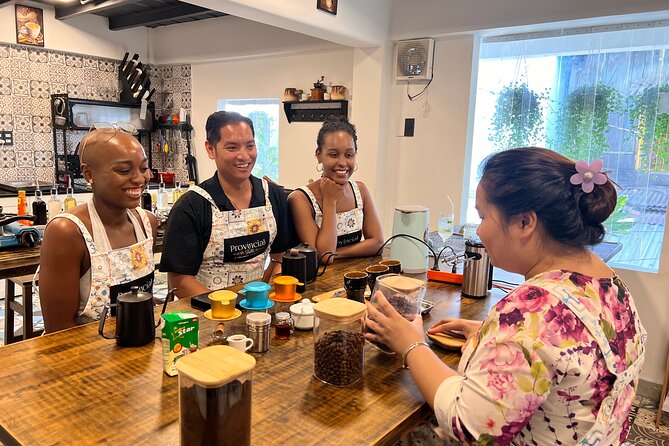
The tasting is not an afterthought. The workshop asks you to notice the relationship between bitter and sweet flavors, as well as changes in texture and temperature.
That makes the class useful even if you have limited kitchen confidence. You do not need to arrive knowing how to brew Vietnamese coffee. The barista guides you through the process, and the four drinks let you compare results within a short period.
I like this format because comparison teaches faster than a single recipe. The iced condensed milk coffee gives you a familiar benchmark. Egg coffee changes the texture. Sea salt adjusts the flavor balance. Coconut shifts both texture and taste. By the end, you have a clear sense of what makes each version different.
The presentation work also has practical value. You learn that a good cup is not only about mixing ingredients. The order, the layers, and the final appearance all affect how the drink is experienced.
Finishing with questions about Vietnam’s coffee culture
The session ends with a Q&A period and a discussion of how coffee culture in Vietnam continues to change. This gives you time to ask about the four recipes, brewing choices, ingredients, or the role of these drinks in contemporary cafés.
Because the class is private, the question period should be easier to use than in a large public demonstration. You can focus on the drink that interested you most, whether that is egg coffee, salt coffee, or the classic iced version.
The available information does not name the barista, so I cannot tell you who will lead your particular class. It does describe the instructor as a head barista, and the class includes direct guidance throughout. If instruction in a specific language matters to you, ask before booking. One participant noted that Spanish was not available.
What $13 buys you
At $13 per person, this is a strong value if you want an activity that combines instruction, tasting, and cultural context. The price covers the barista’s guidance, all necessary coffee-making equipment, four coffee styles, and the closing Q&A.
A café visit for four drinks would give you the tasting, but not the chance to make the coffee or learn the drip method. A basic demonstration might teach technique, but this experience also lets you compare four finished styles in one sitting. That combination makes the price feel reasonable.
The value is best for someone who enjoys participation. If you only want a quick drink, the two-hour format may feel longer than necessary. If you like learning a recipe and understanding why it works, the session gives you more for the money.
Vegan options are available upon request. Since egg and condensed milk are central to some versions, contact the provider in advance rather than assuming every standard preparation can be changed on the spot.
Timing, private groups, and cancellation
The experience lasts about two hours. That is long enough to cover the cultural introduction, brewing instruction, four preparations, tasting, presentation, and Q&A without turning into a full-day commitment.
The private format suits couples, families, friends, or a small group with a shared interest in food and coffee. The information confirms that only your group participates, but it does not give the exact number of people allowed.
Free cancellation is available if you cancel at least 24 hours before the local start time. Cancelling within 24 hours, or making changes within that period, does not qualify for a refund. I would check your meeting time carefully because the cutoff follows local time in Ho Chi Minh City.
Who should book this workshop
I would choose this class if you want a compact cultural activity in District 1 and prefer making something over watching a performance. It is especially suited to coffee drinkers who want to understand Vietnamese preparation, and to food-focused visitors curious about egg and sea salt coffee.
It also works well for first-time visitors who want an easy introduction to a local drink tradition. The four-cup structure gives you variety, while the barista guidance keeps the session practical.
I would think twice if you dislike sweet coffee, have no interest in hands-on preparation, or expect a long advanced brewing course. The class centers on four traditional styles, and at least one of them is intentionally basic. Language may also matter if you need Spanish instruction, since that is not confirmed.
Should you book Drip Craft Coffee Workshop?
Book it if you want to make four Vietnamese coffees, compare their textures and flavors, and leave with a better grasp of the drip method. The egg and sea salt preparations are the strongest reasons to go, while the classic iced condensed milk coffee gives the lesson a familiar starting point.
At $13, with equipment, instruction, tasting, private participation, and Q&A included, the workshop offers solid value. Just keep your expectations practical: this is a focused two-hour introduction, not an advanced barista qualification or a full food tour.
FAQ
Where does the coffee workshop start?
It starts at 131/3 Nguyễn Thị Minh Khai, Phường Phạm Ngũ Lão, Quận 1, Ho Chi Minh City 711106, Vietnam.
Where does the activity end?
The activity ends back at the same meeting point.
How long does the workshop last?
The workshop lasts approximately two hours.
How much does the experience cost?
The listed price is $13 per person.
Which Vietnamese coffees will I make?
You will make egg coffee, dark roast condensed milk coffee, sea salt coffee, and coconut milk coffee.
Is the activity private?
Yes. Only your group participates in the private activity.
Is equipment provided?
Yes. All necessary coffee-making equipment is included.
Are vegan options available?
Yes. Vegan options are available upon request.
Can I cancel for a full refund?
Yes. You can receive a full refund if you cancel at least 24 hours before the experience start time. Cancellations and changes made within 24 hours are not refunded.
More Vietnamese Coffee Experiences in Ho Chi Minh City
- Egg coffee & Course on 4 traditional types of Viet coffee
★ 4.9 · 487 reviews - Vietnamese Coffee & Culture Exploration in Hồ Chí Minh City
★ 5.0 · 202 reviews - Vietnam Coffee Journey – Make extraordinary tasty coffee yourself
★ 5.0 · 30 reviews - Ho Chi Minh Street Food Tour and Vietnamese Coffee
★ 5.0 · 28 reviews
Just listed in Ho Chi Minh City
- Sai Gon Special Coffee At Landmark 81 & Street Food tour★ 5.0 · 3 reviews
- Private Ho Chi Minh City Tour from Port & Vietnamese Egg Coffee★ 5.0 · 6 reviews
- Tea & Coffee Experience★ 5.0 · 10 reviews
- Discover Vietnam’s Coffee Culture.★ 5.0 · 5 reviews
- Hands-on making 3 Iconic Coffees of South Central North Vietnam★ 5.0 · 14 reviews
- Saigon Special Night Coffee Landmark 81 & Food Tour★ 5.0 · 2 reviews
- [Free E-sim] Half day Instagram Cafe Tour in Ho Chi Minh★ 4.5 · 8 reviews
- Saigon Unseen: Culture, Coffee, & Hidden Gems Motorbike Tour★ 5.0 · 13 reviews
Vietnamese Coffee Experiences, compared.

Salt Coffee Workshop Awake Your Senses With 6 Brews
Read our review →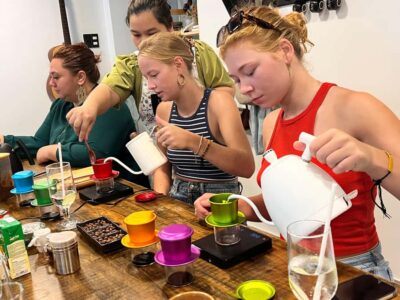
Egg coffee & Course on 4 traditional types of Viet coffee
Read our review →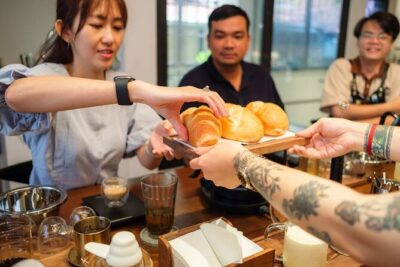
Fun & Easy Vietnamese Coffee Workshop in Hồ Chí Minh City
Read our review →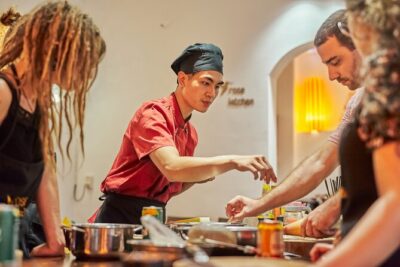
Hanoi Cooking Class: Pho/Bun Cha/Banh Xeo…+Free Egg/Salt Coffee
Read our review →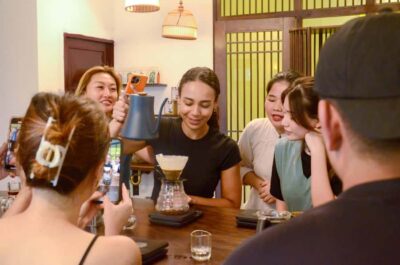
Vietnamese Coffee Workshop with 6 Brews and 8 Recipes
Read our review →
Vietnamese Coffee & Culture Exploration in Hồ Chí Minh City
Read our review →
Hanoi Coffee Workshop: Master 6 Signature Vietnamese Coffee
Read our review →