
REVIEW · HANOI
Hanoi French Quarter: Coffee and Stories
The best part of this Hanoi walk is the way it uses coffee and local stories to connect grand colonial buildings with everyday city life. You begin near St. Joseph’s Cathedral, slip into a French villa for Vietnamese coffee, and continue through the French Quarter on foot rather than from behind a bus window.
I like the small group size, which makes it easier to ask questions and hear the guide across Hanoi’s busy streets. I also like the modest price, $29, especially since coffee, tea, snacks, and ice cream are included. The main thing to consider is that this is a walking tour with several road crossings, not a relaxed vehicle tour, and the route or start time may occasionally change.
Key points to know before you book
- Coffee in a French villa: Try Vietnamese coffee with condensed milk, egg coffee, lemon coffee, or coconut coffee, depending on the available selection.
- A true walking route: You move between churches, hotels, streets, plazas, lakeside sights, and a university rather than simply stopping for photographs.
- Small groups of up to 10: The format gives you room to ask questions and makes the guide’s stories easier to follow.
- Guides with different strengths: Mina is often praised for her energy and clear English, while Thea, Pinky, Vu, Cong, Lily, and others bring their own style.
- Coffee and ice cream are included: The treats make the 2.5-hour outing feel like a neighborhood walk rather than a formal architecture lecture.
- A useful first look at Hanoi: The route covers major sights and gives you ideas for what to see, eat, and drink later in your stay.
Why this French Quarter walk works
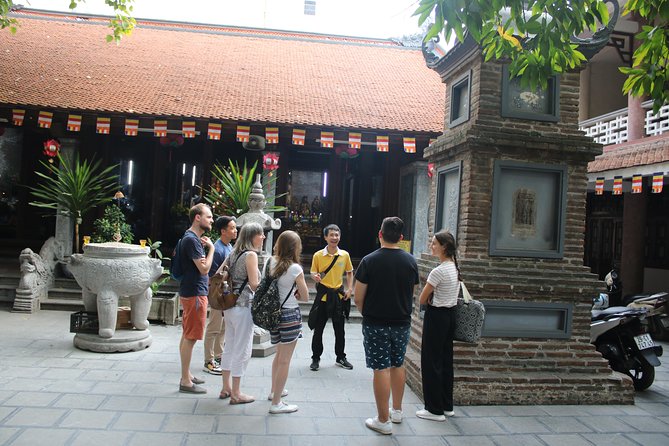
Hanoi’s French Quarter can seem like a collection of grand buildings at first: a cathedral, an opera house, a famous hotel, and wide streets around Hoan Kiem Lake. This tour gives those places a human scale. Instead of only hearing dates and architectural labels, you get stories about how the district developed, how Vietnamese life adapted to French rule, and how old buildings function in Hanoi today.
The tour lasts about two and a half hours, long enough to cover a useful slice of central Hanoi without taking your whole day. You finish at Hanoi University of Pharmacy, leaving the afternoon open for lunch, the Old Quarter, museums, or a slower return to Hoan Kiem Lake.
I would think of this as an orientation walk. It is not designed to cover every major sight in Hanoi, and there is no inside visit to every building. Its value comes from seeing several important landmarks in sequence and having a local guide explain the connections between them.
The maximum group size is 10. That matters here because the tour includes street-side explanations and busy crossings. A very large group would make it harder to hear, while a small group lets you ask about subjects that interest you, from architecture and coffee to Vietnam’s complicated colonial and wartime past.
More Coffee Tours in Hanoi:
- Hanoi Coffee Experience: 6 Brews, 9 Recipes & 3 Liquor Tastings
★ 5.0 · 2,945 reviews - Hanoi Coffee Workshop: Taste Salt, Coconut and Egg Coffee
★ 5.0 · 1,286 reviews - Hanoi: Salt Coffee Workshop Awake Your Senses With 6 Brews
★ 5.0 · 792 reviews
Meeting at St. Joseph’s Cathedral
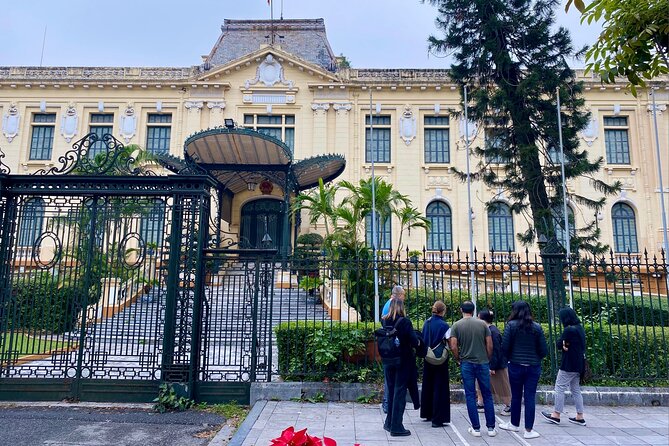
The tour begins at 6 P. Ấu Triệu, close to St. Joseph’s Cathedral in Hoan Kiem District. The cathedral is one of Hanoi’s most recognizable buildings, with a late 19th-century Gothic Revival design that immediately shows the French influence on the city.
You spend about 15 minutes here. That is enough for an introduction and a close look at the exterior, but not enough for a long architectural study. If you want extensive time for photographs, arrive early and take them before the group sets off.
Starting at the cathedral is practical. It is easy to identify, and the surrounding streets quickly put you into central Hanoi’s mix of cafés, shops, scooters, religious buildings, and older residences. The guide can use the cathedral as a starting point for explaining how Hanoi changed during the French period.
Coffee in a former French villa
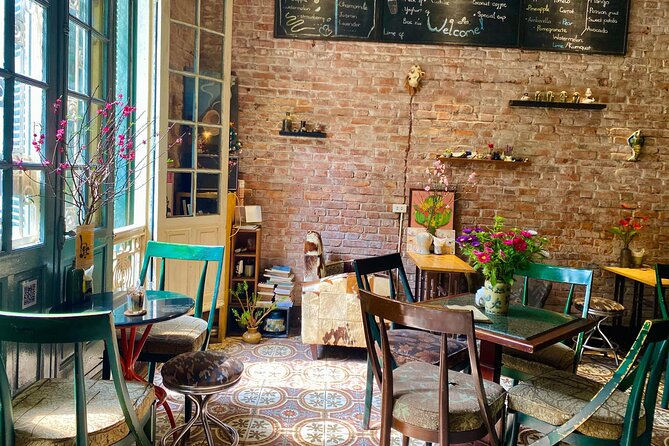
The coffee stop is the heart of the experience. At Loading T café, you try Vietnamese coffee in a French-built villa, with the guide using the setting to tell stories about the area and its past.
Vietnamese coffee with condensed milk is specifically included in the route description, but the exact drink may vary. The tour’s feedback also mentions egg coffee, lemon coffee, and coconut coffee. If you have never tried egg coffee, this is a good chance to do so in a setting linked to the neighborhood’s older buildings.
You have about 20 minutes here. That is long enough to sit down, taste the drink, and ask questions. It also gives your feet a break before the next stretch of walking.
I like this stop because it avoids treating coffee as a simple refreshment. In Hanoi, café culture is part of how people use old spaces, meet friends, and take a pause from the traffic outside. The French villa setting adds another layer, showing how a colonial-era structure can become part of present-day local life.
One practical note: coffee styles can be strong and sweet, especially with condensed milk. If you prefer less sweetness, ask the guide or café staff what options are available.
Finding Chua Ba Da on a busy street
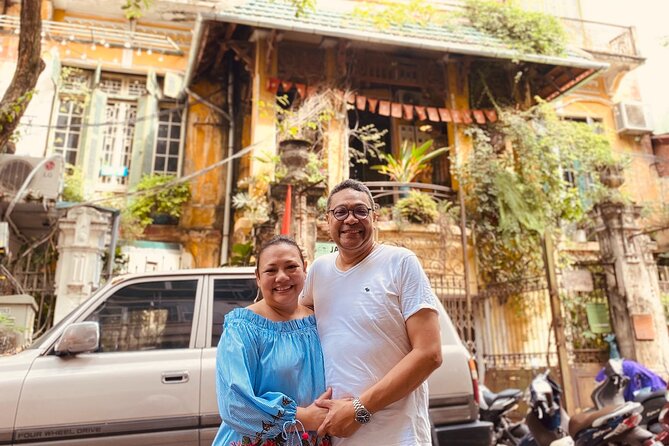
Chua Ba Da is a small pagoda tucked near one of Hanoi’s busiest streets. The stop lasts about 10 minutes, so expect a brief visit and explanation rather than an extended temple tour.
This is one of the route’s more interesting contrasts. The French Quarter is often presented through large public buildings, but a small religious site shows a quieter side of the district. You get a sense of how different layers of Hanoi exist close together, sometimes only a few steps apart.
Because the stop is short, it is worth listening closely. The guide’s explanation is likely more important than the building’s size. This is also the sort of place you might pass without noticing if you were exploring alone with a map.
Still in Hanoi, but a different cup:
- Hanoi: Master the Art of 4-6 Signature Vietnameses Coffees
★ 5.0 · 517 reviews - Hanoi: Vietnamese Street Food Tour with Egg Coffee
★ 4.9 · 315 reviews - Hanoi Cooking Class: Pho/Bun Cha/Banh Xeo…+Free Egg/Salt Coffee
★ 5.0 · 267 reviews - Hanoi: Vietnamese Coffee Workshop with 6 Brews and 8 Recipes
★ 5.0 · 237 reviews
The Metropole and Hanoi’s colonial center
The route then reaches the Sofitel Legend Metropole Hanoi at 15 Ngo Quyen Street. The hotel is one of the best-known colonial-era landmarks in the city, and the tour allows about 15 minutes in this area.
Expect an exterior-focused stop, with the guide explaining the hotel’s place in Hanoi’s past and present. One tour account describes seeing part of the hotel interior, but you should not assume that a full hotel visit is included. Access can depend on hotel rules and the group’s timing.
The Metropole is useful for understanding the social side of colonial Hanoi. It was not simply an attractive building. Hotels, government offices, shops, churches, and broad streets helped shape how the city functioned under French rule. Your guide can also place that period within Vietnam’s later history, including the difficult political and military chapters that followed.
If you are especially interested in architecture, this is a good point to ask questions. If you are more interested in daily life, ask how Vietnamese residents used or adapted the district over time. The tour works best when you treat it as a conversation rather than a fixed lecture.
Hanoi Opera House and Trang Tien Plaza
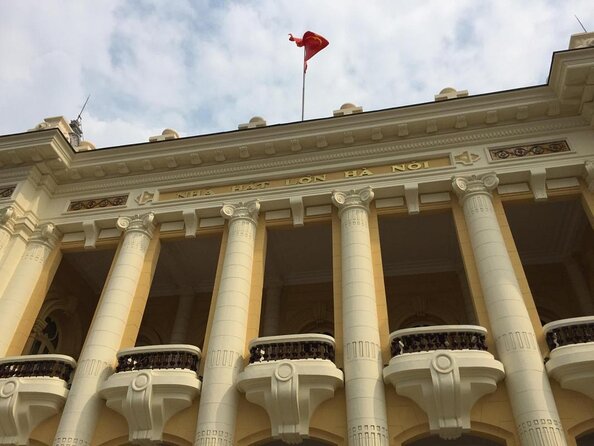
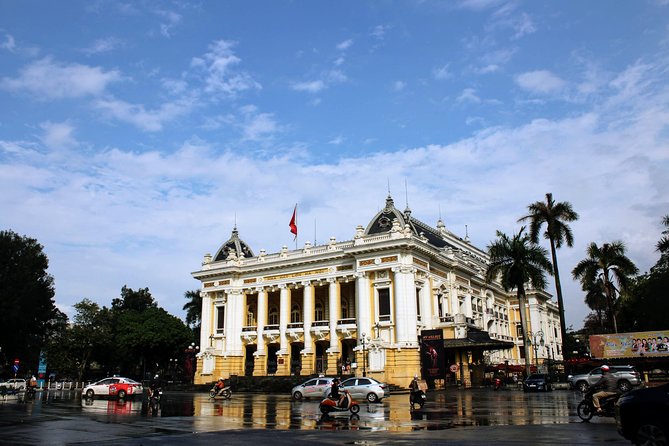
The Hanoi Opera House, at number 1 Trang Tien, receives another 15-minute stop. Its exterior reflects European architectural ideas, while its location connects it to the city’s former French administrative and cultural center.
The guide’s role is important here. A photograph can show the façade, but it cannot explain what the building represented during French rule or how culture and social class were tied to such institutions. The tour presents the Opera House as evidence of Hanoi’s changing social and cultural life.
From here, the route continues along Trang Tien Street toward Trang Tien Plaza. This street is presented as a link between early Hanoi, the French period, and the modern city. Today, it is also associated with shopping and polished commercial spaces.
I like the sequence of these two stops. The Opera House gives you the formal, grand side of the district. Trang Tien Street shows how that same urban corridor continues to serve ordinary modern purposes. The walk is not just a parade of old façades. It asks you to notice how the city keeps reusing its past.
Hoan Kiem Lake and the story of Turtle Tower
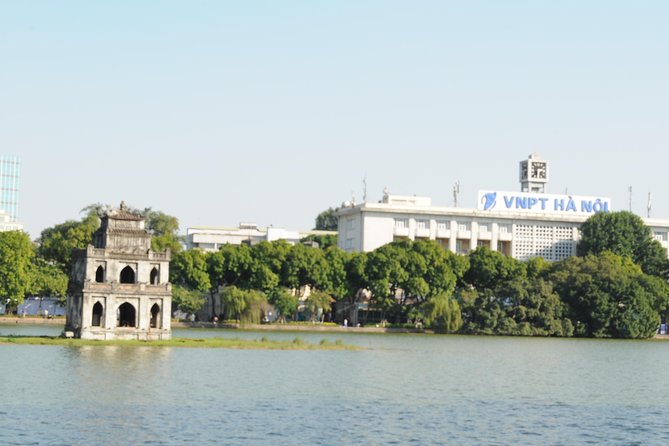
The route reaches the Lake of the Restored Sword, better known as Hoan Kiem Lake, for about 15 minutes. Turtle Tower is one of the lake’s most recognizable features, with a design that combines European and Asian elements.
This is a natural pause in the tour. After walking through streets lined with buildings, the lake opens up the view and gives the guide a chance to explain one of Hanoi’s best-known legends and symbols. The name Lake of the Restored Sword refers to the story of a ruler returning a sacred sword to a golden turtle.
You should not expect a long lakeside walk. The stop is short, and the route continues onward. Still, the lake helps tie together the city’s political stories, local beliefs, and public life. It is also a useful place to return later on your own, especially if you want more time for photographs or people-watching.
The first modern university in the route
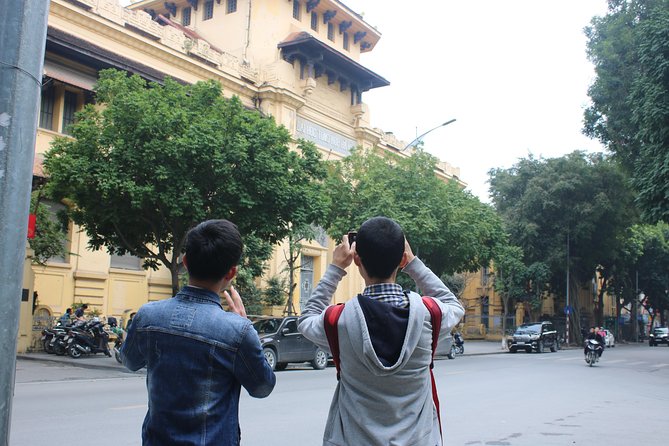
The final stop is Hanoi University of Pharmacy at 13 to 15 P. Le Thanh Tong. The tour describes it as the first modern university built by the French, and it marks the end of the route.
This stop adds an educational and institutional angle to the walk. You have already seen religious, commercial, hotel, and cultural buildings. The university helps show how French rule also shaped formal education and professional training.
The tour ends here rather than returning to the cathedral. That is worth noting when planning your day. You will need to make your own way onward, but the ending location is still central, near the French Quarter and Hoan Kiem area.
What the coffee, tea, and ice cream add
The included refreshments are not a token extra. Coffee and tea give you a seated break, while the ice cream provides a lighter finish to the walk. The exact coffee can vary, but the experience may include condensed-milk coffee, egg coffee, lemon coffee, or coconut coffee.
The ice cream is described as a highlight of the tour, and one route detail specifically calls it rice ice cream. Since the listing also describes snacks more generally, ask the guide what is being served that day if you have dietary concerns.
These stops help set the pace. Two and a half hours on Hanoi sidewalks can feel long in heat or humidity, but a drink and dessert break make the outing more manageable. They also keep the tour connected to local food culture instead of making it only about buildings.
The guides and the quality of the storytelling
The guide assigned to you may be Mina, Thea, Pinky, Vu, Cong, Lily, Dung, Quon, or another member of the local team. Mina is repeatedly described as friendly, energetic, easy to understand, and good at answering questions. Thea is praised for combining humor with strong explanations, while Pinky is noted for adjusting the walk to the interests of the group.
Vu has led tours for groups interested in the complicated effects of French rule and the American involvement in Vietnam. Cong is described as a lively storyteller with passion and humor. These different names and comments suggest that the tone can vary depending on who leads your outing.
That variation is normal for a small-group tour. You are booking the route and local company, not necessarily one specific guide. The best way to get more from the experience is to tell your guide what interests you early on. Ask about architecture, religion, coffee, colonial politics, modern Hanoi, or wartime history, and the conversation can become more useful to you.
Clear English matters on a history walk, and the available feedback repeatedly points to easy communication. Still, the amount of detail will depend on the guide and the questions you ask.
Price, pace, and practical tradeoffs
At $29 per person, this is fairly priced if you want a guided introduction to central Hanoi. You are paying for about 2.5 hours of local commentary, a small group capped at 10, coffee or tea, and ice cream. The price also avoids the cost of arranging separate café stops while you find your way between landmarks.
The value is weaker if you only want quick photographs of the main sights. You can see several exteriors on your own for less money, but you will lose the explanations and the carefully chosen coffee stop. The tour earns its price through context, not admission tickets.
Wear comfortable shoes and expect a steady urban walk. The route involves crossing roads, and the guide may need to keep the group together in traffic. Most people can participate, but anyone who finds extended walking or street crossings difficult should consider that before booking.
The tour has a mobile ticket, and confirmation is sent when you book. It operates in good weather. If poor weather forces cancellation, you can choose another date or receive a full refund. You can cancel for a full refund up to 24 hours before the start time, but cancellations or changes inside that window are not refunded or accepted.
The published start point is in front of the cathedral area, and the finish is at Hanoi University of Pharmacy. Check the final meeting message carefully, since one booking record involved a requested change in start time. It is wise to keep some flexibility in your morning or afternoon schedule.
Who should book this walk?
I would recommend it to you if this is your first visit to Hanoi and you want a quick sense of how the central districts fit together. It is also a good choice if you have only one day in the city and want history, coffee, landmarks, and practical suggestions in one outing.
Coffee fans will enjoy the range of Vietnamese drinks, especially if egg coffee or coconut coffee is new to you. People who like architecture will appreciate the sequence from St. Joseph’s Cathedral to the Opera House and Metropole. Those curious about Vietnam’s past will benefit from asking the guide about both the advantages and harms associated with French rule.
It may not suit you if you want a slow private tour, a fully indoor experience, or extensive time inside each building. The group can include up to 10 people, and the itinerary keeps moving. You should also avoid expecting a museum-style examination of every site.
Should you book Hanoi French Quarter: Coffee and Stories?
Book it if you want an affordable, social introduction to Hanoi that combines major sights with smaller stops you might otherwise miss. The coffee in a French villa, the short visit to Chua Ba Da, and the ice cream break give the route more personality than a standard landmark checklist.
I would especially choose it early in your stay. The walk gives you a map of central Hanoi, a few drinks to seek out later, and a local contact who can suggest what to do next. For the price, the small group and included refreshments make it a strong value, provided you are comfortable walking in city traffic and accept that guide assignments and timing can vary.
FAQ
How long does the Hanoi French Quarter tour last?
The tour lasts approximately 2 hours and 30 minutes.
How much does the tour cost?
The listed price is $29 per person.
What refreshments are included?
Coffee and/or tea are included, along with snacks and ice cream. The coffee may include Vietnamese coffee with condensed milk, and the available drinks can include egg, lemon, or coconut coffee.
What is the group size?
The tour has a maximum of 10 travelers.
Where does the tour start and finish?
It starts at 6 P. Ấu Triệu, Hàng Trống, Hoàn Kiếm, Hanoi, near St. Joseph’s Cathedral. It ends at Hanoi University of Pharmacy, 13 to 15 P. Le Thánh Tông, Phan Chu Trinh, Hoàn Kiếm.
What is the cancellation policy?
You can cancel at least 24 hours before the start time for a full refund. Cancellations or changes made less than 24 hours before the start time are not refunded or accepted. If poor weather cancels the tour, you can choose another date or receive a full refund.
Just listed in Hanoi
- From Egg Coffee to Street Brews: Hanoi Walking Tour★ 5.0 · 4 reviews
- Walking Tour in Hanoi Old Quarter with Street Food & Coffee★ 5.0 · 4 reviews
- Hanoi Private Walking Tour with Egg Coffee Making Experience★ 5.0 · 90 reviews
- Hanoi: Hands-On 5 Vietnamese Coffees & 3 Local Wines Tasting★ 5.0 · 14 reviews
- Hanoi 2.5 hour Guided Sightseeing Cyclo Tour & Egg Coffee Class★ 5.0 · 16 reviews
- Hanoi daily egg coffee making course with local guide★ 5.0 · 17 reviews
- Hanoi Street Food Tour with egg coffee making★ 5.0 · 22 reviews
- Ha Noi City Tour & Coffee Class★ 5.0 · 25 reviews
Hanoi Coffee Tours, compared.
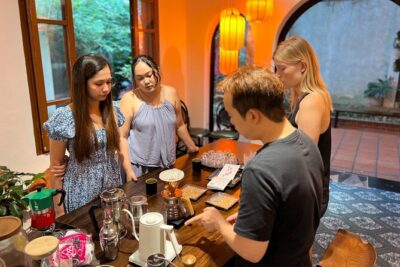
Hanoi Coffee Experience: 6 Brews, 9 Recipes & 3 Liquor Tastings
Read our review →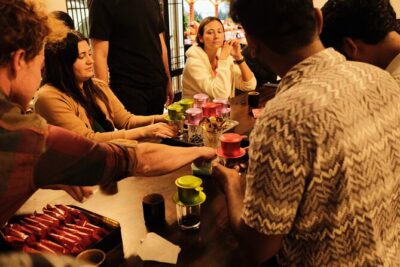
Hanoi Coffee Workshop: Taste Salt, Coconut and Egg Coffee
Read our review →
Salt Coffee Workshop Awake Your Senses With 6 Brews
Read our review →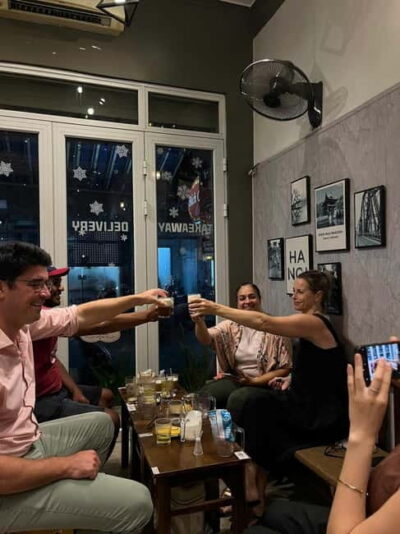
Master the Art of 4-6 Signature Vietnameses Coffees
Read our review →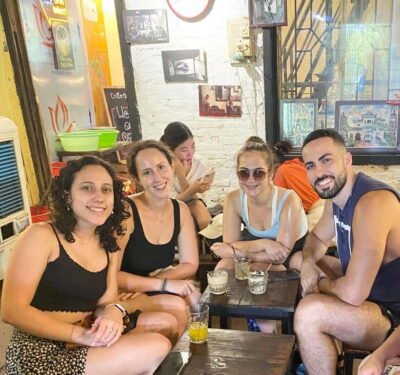
Hanoi Cooking Class: Pho/Bun Cha/Banh Xeo…+Free Egg/Salt Coffee
Read our review →
Vietnamese Coffee Workshop with 6 Brews and 8 Recipes
Read our review →
Lists this coffee tour turns up in