

REVIEW · BIG ISLAND OF HAWAII
Coffee Brewing Workshop
The best part of this Kona coffee workshop is that you do not simply sip a finished cup. You make three different brews and taste how each method changes the coffee. You also get access to the roasting room, where you can ask about the path from coffee plant to morning mug.
I like the four-person limit, which gives the session a friendly, almost private-class feel. I also like that the $20 price includes samples of medium and dark 100% Kona Coffee, plus an optional farm tour after the workshop.
The main thing to consider is the short one-hour format. You will learn useful home-brewing basics, but this is an approachable class rather than a full barista course. It is best for curious coffee drinkers who want practical tips, not advanced certification.
Key points at a glance

- Three brewing methods: Compare pour-over, French press, and espresso in one compact class.
- Roasting-room access: Ask about growing, harvesting, roasting, and the choices that shape your cup.
- Smallest possible group: A maximum of four people means plenty of time for questions and hands-on help.
- Two Kona samples: Taste medium and dark 100% Kona Coffee without cream or sugar masking the flavor.
- Optional farm tour: Continue with a look at the farm after the workshop at no added cost.
- Captain Cook setting: Meet at Hala Tree Coffee on Mamalahoa Highway and finish at the same place.
Three cups that teach you how coffee changes
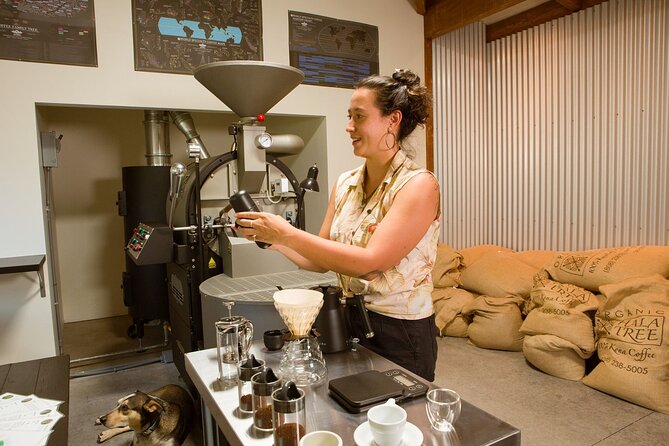
Hala Tree Coffee’s Coffee Brewing Workshop is built around a simple idea: brewing method matters. The same coffee can taste different depending on how water meets the grounds, how long the coffee brews, and how the finished cup is served.
During the roughly one-hour session, you make three types of coffee: pour-over, French press, and espresso. That gives you a useful side-by-side lesson. Instead of hearing abstract talk about extraction, you can taste the difference in the cup.
The class aims to give you a baseline for making good coffee at home. That is an important distinction. You are not signing up for a long technical program, and you should not expect an advanced espresso course. You are getting clear, practical instruction that can improve your daily routine.
For many people, the most useful moment may be the tasting itself. One couple arrived used to adding cream or sugar, then found the sampled coffee pleasant enough to drink black. That does not mean every cup will suit every palate, but it shows why tasting without additions can help you notice the coffee’s own flavor.
More Specialty Coffee Tours in the USA
- Private Coffee Roasting Class
★ 5.0 · 101 reviews - New York City Specialty Coffee Tour
★ 5.0 · 17 reviews - Roasted in Seattle: Bean to Cup Coffee Tour
★ 5.0 · 15 reviews
Pour-over, French press, and espresso in one hour
The workshop covers three familiar methods, each with its own character.
Pour-over gives you a chance to see how controlled water flow affects the cup. It is often the method home brewers choose when they want a clean, focused drink and more control over the process. The class gives you a starting point rather than assuming you already own special equipment or know the terminology.
French press offers a different style of brewing. The grounds remain in contact with the water for longer, and the finished coffee has a fuller feel. Comparing it with pour-over helps you understand that a favorite coffee bean is only part of the equation.
Espresso brings the lesson into a smaller, stronger format. Even if you do not own an espresso machine, tasting it alongside the other brews helps explain why coffee-shop drinks taste so different from a home press or filter cup.
The benefit is comparison. A single brewing demonstration can leave you nodding politely. Three methods tasted together give you something concrete to remember when you return home.
From coffee plant to roasting room
The workshop is not limited to brewing technique. You also learn about the coffee’s earlier stages, including growing, harvesting, and roasting. This broadens the lesson without turning it into a long lecture.
Access to the roasting room is a real plus. You can ask questions about how the coffee is processed and how roasting affects the final drink. The setting connects the cup in front of you with the work that came before it.
Hala Tree Coffee offers samples of medium and dark 100% Kona Coffee. Sampling both roasts helps you think about roast level as well as brewing method. A darker roast may give you a more forceful, toasted profile, while a medium roast can let different coffee notes come through more clearly. The exact impression will depend on your palate, but tasting the two side by side is more useful than choosing a bag based only on the label.
One class participant also recommended trying the cherry tea made at Hala Tree. It is not listed as a formal part of the workshop, so treat it as an extra possibility rather than a guaranteed tasting. If it is available when you visit, it may be a fun way to learn about another use for the coffee fruit.
A small group that feels personal
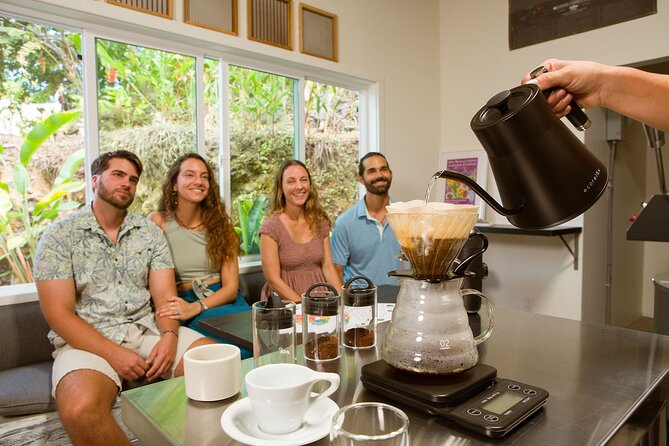
The maximum group size is four people. That number matters more here than it would on a large sightseeing outing.
You can ask a basic question without feeling that you are holding up a room full of people. You can also get help with the brewing process instead of watching from the back. For coffee beginners, this makes the class easier to follow. For experienced home brewers, it creates space to ask about small problems that are hard to solve from a video.
The instructors named in the feedback include Marissa and Kat, with Marissa receiving repeated praise for her coffee knowledge and clear explanations. Kat was also singled out for handling unusual questions and making the session fun. Guide assignments can change, but you can expect a personal teaching style rather than a scripted presentation.
The small group also explains why the activity often feels like a private lesson. Couples have booked it for a honeymoon activity, while solo participants have found the format comfortable. Families and friends can take part too, as long as the total group stays within the four-person limit.
Still in the USA, but a different cup:
- Big Island Highlights: Coffee, Volcano, Black Sands & Waterfall
★ 5.0 · 1,054 reviews - Seattle Coffee Tour: Capitol Hill Cafes, Tastings & Local Stories
★ 5.0 · 489 reviews - Award Winning Farm Tour: Coffee, Chocolate and Unique Gifts
★ 5.0 · 484 reviews - Big Island: Volcanoes, Waterfalls, & Coffee Farm Day-Trip
★ 4.9 · 414 reviews
The optional farm tour after class
After the brewing workshop, you may take a free farm tour. This is optional, which is helpful if you have other plans or want to keep the visit focused on coffee preparation.
If you stay, the farm tour adds a sense of place to the lesson. You have already discussed growing and harvesting, so seeing more of the farm helps connect those ideas with the real setting. The coffee is not just an ingredient arriving in a bag. It is a crop with a growing cycle, a harvest, and a local production story.
Do not expect the farm tour to be a separate, lengthy excursion based on the information provided. It is best viewed as a useful follow-up to the workshop. You can choose it if you want more context, or leave after the class if brewing is your main interest.
The area around Hala Tree Coffee is described as beautiful, so allow yourself a little breathing room before or after the scheduled hour if your day permits. The activity ends back at the meeting point, making it easy to continue your Big Island plans from there.
Is $20 a good value?
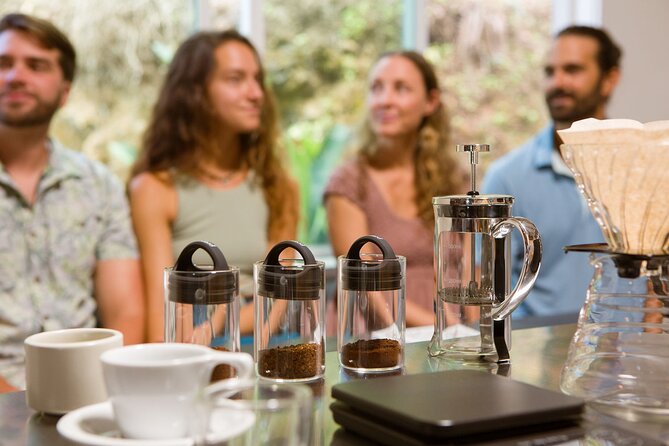
At $20 per person, this is a strong value for anyone who enjoys coffee. The fee covers about an hour of instruction, three brewing methods, access to the roasting room, medium and dark Kona samples, and the option of a free farm tour.
The value is not only in the amount of coffee you taste. You leave with ideas you can use at home. A better understanding of brewing method can save you from buying new equipment when the real problem is technique, or from blaming the beans when water and timing are the issue.
The price also keeps the risk low. If you are only mildly interested in coffee, you are not committing half a day or paying for a premium culinary event. If you are serious about coffee, the low price makes it easy to add the workshop to a Captain Cook sightseeing day.
There are a few limits. The session lasts about an hour, so there may not be time for every technical question. The experience also seems designed for a broad audience, not for professional baristas. You will get a useful foundation, but you should not book it expecting advanced latte art, coffee certification, or a long private consultation.
Who will enjoy this workshop most?
I would recommend it most strongly to:
- Coffee drinkers who want to improve their home brewing
- People curious about the difference between roast levels
- Visitors interested in how Kona coffee is grown and processed
- Couples looking for a low-key, hands-on Big Island activity
- Solo visitors who prefer a small group and direct instruction
- Anyone who enjoys tasting coffee without adding sugar or cream
It is also a good choice for someone who normally says they do not like black coffee. The tasting format gives you a chance to try the coffee on its own and see what you actually prefer.
You may want to skip it if you do not drink coffee or if your schedule is too tight to reach Captain Cook. The experience is built around tasting and brewing, so its appeal depends on at least some interest in coffee.
Planning your visit to Hala Tree Coffee
The meeting point is Hala Tree Coffee, 82-5966 Mamalahoa Highway, Captain Cook, Hawaii 96704. The activity ends at the same location.
The workshop is offered in English and uses a mobile ticket. Confirmation is provided when you book. It is commonly reserved about 15 days ahead, so booking early is sensible if you have a fixed Big Island itinerary. The group limit is four people, and a small class can fill even when larger tours still have space.
Plan around the full scheduled hour, with extra time if you want to join the optional farm tour or browse the coffee products available at the farm. Several participants bought coffee after the tasting, which is useful if you find a roast you prefer. That purchase is separate from the $20 workshop fee.
The location works best as part of a day in the Captain Cook area. You will need to arrange your own way to the meeting point, since transportation is not listed as part of the activity. Check the address carefully before setting out, especially if you are relying on a phone map in an unfamiliar part of the island.
Cancellation is free up to 24 hours before the local start time. Within 24 hours, the amount paid is not refunded, and changes made during that period are not accepted.
What makes the teaching effective
The strongest part of this experience is its balance of explanation and action. You learn about the coffee plant, the harvest, and roasting, then put some of that information to work by brewing and tasting.
That hands-on structure keeps the session from becoming a talk about coffee that you forget by dinner. You have three methods to compare, two roast styles to taste, and a chance to ask questions while the coffee is being prepared.
The guides also appear comfortable with both simple and unusual questions. That matters because coffee advice can get fussy fast. A useful class should help you make a better cup, not make you feel that you need a laboratory in your kitchen.
Expect friendly instruction rather than rigid rules. The goal is to give you a baseline, then help you understand what changes when you alter the method. You can take those lessons home and adjust them to your own equipment and taste.
Should you book the Coffee Brewing Workshop?
Yes, if you like coffee and will be near Captain Cook. The $20 price is modest, the four-person cap keeps the lesson personal, and the mix of brewing practice, Kona tasting, roasting-room access, and optional farm tour gives you more than a simple tasting stop.
Book it especially if you want practical home-brewing advice or if you are curious about why medium and dark roasts taste different. Marissa and Kat have both been praised for making the class clear, warm, and easy to follow.
Skip it if you want a major farm excursion, a full professional barista course, or an activity unrelated to coffee. For everyone else, this is a smart one-hour addition to a Big Island itinerary, with enough useful information to change the way you make your next cup.
FAQ
How long does the Coffee Brewing Workshop last?
The workshop lasts approximately one hour.
What brewing methods are included?
You brew and compare pour-over, French press, and espresso.
How many people can join the workshop?
The activity has a maximum of four travelers.
Is a farm tour included?
You can enjoy a free farm tour after the workshop, but it is optional.
What coffee samples are provided?
The workshop includes samples of medium and dark 100% Kona Coffee.
Where does the workshop meet?
It starts at Hala Tree Coffee, 82-5966 Mamalahoa Hwy, Captain Cook, HI 96704, USA.
Does the activity return to the meeting point?
Yes. The activity ends back at Hala Tree Coffee.
What is the cancellation policy?
You can cancel at least 24 hours before the local start time for a full refund. Cancellations or changes made less than 24 hours before the start time are not refunded or accepted.
More Brewery Stops in the USA
- Istanbul: Turkish Coffee Brewing on Sand + Gift Set
★ 4.9 · 49 reviews - Sarajevo: Bosnian Coffee Workshop with Brewing Lesson
★ 5.0 · 3 reviews - Buon Ma Thuot: Specialty Coffee Tour and Brewing Experience
★ 5.0 · 2 reviews
Just listed in the USA
- Coffee & Food Tastings at Pike Place Market★ 5.0 · 67 reviews
- Little Havana Walking Tour – Food Tastings, Traditions & Music★ 4.5 · 8 reviews
- Coffee Roasters of Portland Eastside Walking Tour★ 5.0 · 7 reviews
- Turkish Coffee Fortune Reading★ 5.0 · 15 reviews
- Roasted in Seattle: Bean to Cup Coffee Tour★ 5.0 · 15 reviews
- New York City Specialty Coffee Tour★ 5.0 · 17 reviews
- Downtown Knoxville Hidden Tour w/ Ice Cream, Coffee & Tennessee River Gems★ 5.0 · 20 reviews
- Coffee, Donuts & Chocolate Tour★ 5.0 · 20 reviews
Specialty Coffee and Roastery Tours, compared.
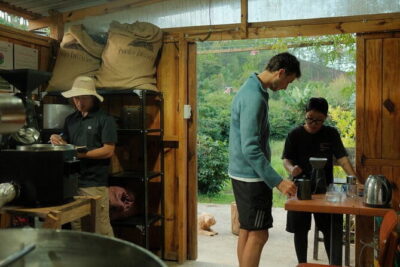
Coffee Farm Tour with Roasting & Tasting Workshop – Da Lat
Read our review →
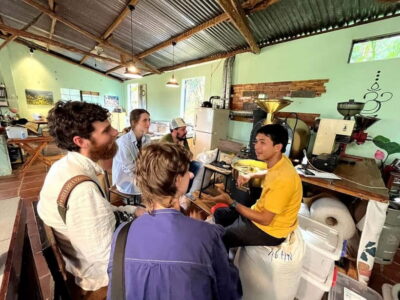
Experience specialty coffee with sustainable coffee farmers
Read our review →
Vietnamese Bread & Brew: Banh Mi Baking Class & Specialty Coffee
Read our review →
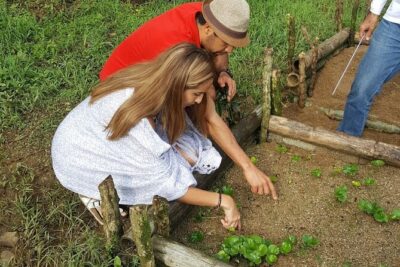
Private coffee tour near Medellín, from bean to cup.
Read our review →
Santo Domingo Small Group Walking Tour: Beer and Specialty Coffee
Read our review →Lists this coffee tour turns up in