
REVIEW · BARCELONA
Coffee and Art Tour walking Gothic Quarter, Official Guide
Barcelona’s coffee culture and art scene meet on this 2.5-hour walking tour, which links the old city with the creative life of today. You’ll hear how coffeehouses helped shape local art, visit Sala Pares, and finish in a working coffee and coworking space.
I like the mix of historic streets and living creative spaces, and I like the small group limit of 15, which gives the guide room to explain rather than rush. The main drawback is that the tour involves a fair amount of walking and includes only two art galleries, so it is not a full museum visit.
Key points at a glance
- Coffee as an art story: Learn how Barcelona coffeehouses connected artists, conversation, and new ideas, including Picasso’s first exhibition in a coffee shop.
- Three distinct old-city areas: Walk through Ribera, the Gothic Quarter, and Las Ramblas while following Barcelona’s changing identity.
- Sala Pares included: Visit one of Barcelona’s best-known galleries, linked with important Catalan painters such as Miró.
- A smaller modern gallery: See contemporary work in a tiny gallery hosted by a local artist.
- Small-group format: The tour accepts a maximum of 15 people, a useful size for asking questions.
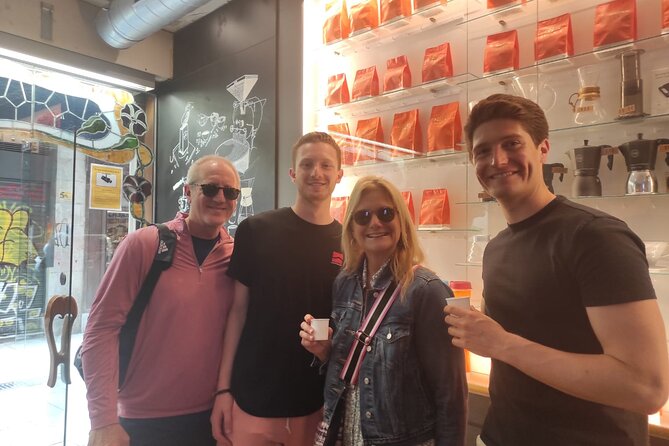
- A modern finish: End at Imagin Café, a coffee and coworking space used by entrepreneurs, artists, and gamers.
A coffee-led look at Barcelona’s creative life
Most old-city tours point out churches, Roman walls, and handsome squares. This one uses coffee and art as its organizing idea. That gives you a different way to read Barcelona, especially if you have already seen the main sights or want more than a basic walk through the Gothic Quarter.
The central idea is simple: coffeehouses have long given artists a place to meet, work, argue, and show new work. The tour connects that social setting with Barcelona’s art scene, from Modernisme and Picasso to current local creators.
I like this approach because it keeps the tour from becoming a long list of dates. You still get history, but it is tied to places where people made things and exchanged ideas. The experience also places old art beside newer work, which helps you see Barcelona as a city still being shaped rather than a museum frozen in time.
The tour begins at Plaça del Rei, a fitting starting point in the old city. From there, the route moves through the Ribera quarter, the Gothic Quarter, and toward Las Ramblas before ending in the Eixample. It is not a single-neighborhood walk. You get a sense of how different parts of central Barcelona connect.
More Guided Mornings in the world:
- Istanbul Highlights: Guided Tour with Turkish Tea or Coffee
★ 5.0 · 278 reviews - Guided Tour to the only coffee farm in Europe
★ 5.0 · 174 reviews - Vienna: Guided Viennese Coffee-House Tour
★ 4.8 · 48 reviews
Plaça del Rei and the first steps through the old city
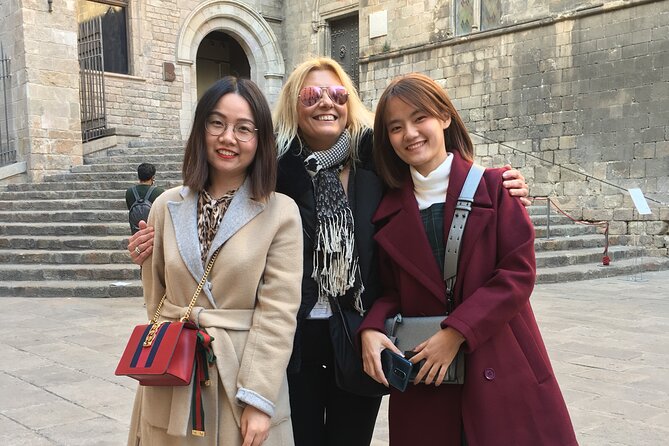
Plaça del Rei is the meeting point in Ciutat Vella, Barcelona’s old city. The square gives the walk a strong opening, with its historic setting and close connection to the Gothic Quarter.
From here, the guide introduces the city’s changing story through its streets and creative traditions. You are not simply looking at old stone. You are considering how tradespeople, artists, and coffee drinkers helped shape urban life.
The first major area is Ribera, where handmade work has been part of local life since the Middle Ages. That detail matters because it shifts attention away from grand monuments and toward the people who made the city’s objects and culture.
You might find this section especially useful if you enjoy craft, design, or neighborhood history. It offers context for Barcelona’s creative reputation without limiting the subject to famous painters. The focus is on making, working, and passing skills from one generation to the next.
Because the tour lasts about two and a half hours, the guide can give this area more attention than a quick photo stop. Still, you should expect a walking introduction rather than an in-depth study of every street or building.
The Gothic Quarter, Picasso, and coffeehouse culture
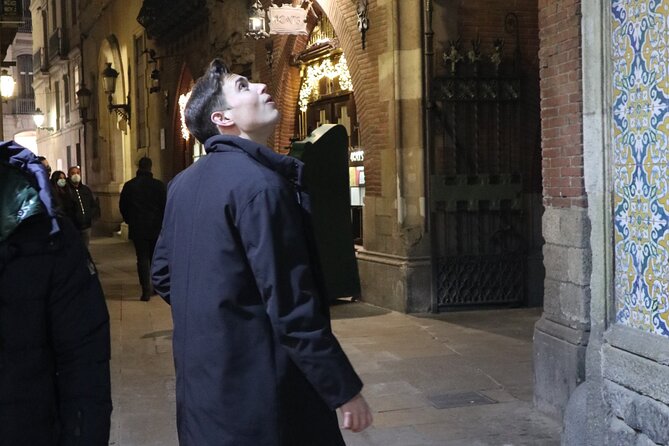
The walk continues into the Gothic Quarter, described as the origin of the city and an important source of inspiration for modernist artists, including Picasso. The most memorable idea here is that Picasso held his first exhibition in a Barcelona coffee shop.
That story gives coffee a real place in the city’s art history. It also helps explain why the tour treats cafés as cultural spaces rather than simple refreshment stops. Coffee offered artists a place to meet, show work, and reach an audience outside formal galleries.
I like the way this links a familiar drink with a larger question: where does art actually happen? In Barcelona, the answer has not always been a museum. It could be a café, a small gallery, a workshop, or a shared work space.
The Gothic Quarter can be crowded and visually intense, so the quality of the guide matters. Silvana has been praised for explaining Barcelona’s art history and for connecting Gothic art with art made today. If she leads your departure, expect the tour to place different periods side by side rather than treat them as separate subjects.
The Gothic Quarter portion may suit you best if you want history with an interpretive angle. If you mainly want a checklist of major buildings, this tour may feel less direct than a standard Gothic Quarter walk.
Las Ramblas and the changing city
The route also reaches Las Ramblas, Barcelona’s best-known boulevard. Here, the tour considers how the city has changed as it has grown into one of Europe’s most visited destinations.
That is an important part of the experience. Barcelona’s appeal has brought more entertainment aimed at short-stay visitors, and the tour sets out to look past the less authentic side of the city. Its answer is to focus on local makers, artists, and working spaces.
You should not expect a lecture about every attraction along Las Ramblas. Instead, the boulevard works as a link between the old quarters and the newer creative city. The route shows how a famous public space fits into a much larger story about tourism, culture, and daily work.
This section also gives the tour some balance. It does not pretend Barcelona has stayed unchanged. You see a city protecting old traditions while creating new ones, which is more useful than a postcard view of the past.
More Coffee Tours in the world:
- Hanoi Coffee Experience: 6 Brews, 9 Recipes & 3 Liquor Tastings
★ 5.0 · 2,945 reviews - Medellin: Coffee Tour with Transport, Snacks and Tastings
★ 4.7 · 1,357 reviews - Istanbul: Turkish Coffee Making and Fortune Telling Workshop
★ 4.9 · 1,308 reviews - Hanoi Coffee Workshop: Taste Salt, Coconut and Egg Coffee
★ 5.0 · 1,286 reviews
Sala Pares and Barcelona’s gallery tradition
One of the included visits is Sala Pares, described as Barcelona’s most emblematic art gallery. The gallery has exhibited respected Catalan painters, including Miró, so this stop gives the walking tour a more formal art setting after the street-based discussion of coffeehouses and craft.
The visit lasts about 25 minutes. That is enough time to understand why the gallery matters and view the current setting, but it is not enough for a long, specialist gallery tour. I would treat Sala Pares as a focused introduction rather than a substitute for a full afternoon at Barcelona’s major museums.
Its value comes from the contrast. You begin with public streets and informal creative spaces, then move into an established gallery with a serious place in the city’s art story. That change helps show how local art can move from a coffeehouse or studio into an institution.
If you already know Barcelona’s major museums, Sala Pares adds a smaller-scale stop to your plans. If you are new to the city’s art scene, it offers a useful first contact with Catalan painting without requiring a separate gallery itinerary.
The gallery visit is also a reason to choose this tour over a standard sightseeing walk. You are not only hearing that Barcelona has an art tradition. You are given a place where that tradition has been presented and preserved.
A tiny modern gallery hosted by a local artist
The second gallery is much smaller and is hosted by a local artist. This is a sharp change from Sala Pares. Instead of an established gallery with a long public profile, you see a more personal and current side of the city’s art scene.
That contrast is one of the strongest parts of the tour. You get two different ways of presenting art: one tied to a recognized gallery tradition, the other connected to a working local creator.
The information does not specify the artist, exhibition, or exact works shown, so you should not book this expecting a named collection or a guaranteed style of art. The appeal is the setting and the local connection.
I would especially recommend this stop to anyone curious about how artists work in Barcelona today. It gives the tour a human scale and keeps the experience from becoming only a history lesson.
At the same time, art lovers seeking a long viewing session may want to plan another gallery visit on their own. This stop is part of a walking route, not a dedicated gallery crawl.
Ending at Imagin Café in the Eixample
The tour ends at Imagin Café on Carrer de Pelai, in the Eixample. This is not presented simply as a place to have a final drink. It is a coffee and coworking space where entrepreneurs, artists, and gamers use the setting as part of their daily routine.
That final stop brings the tour’s main theme into the present. Coffeehouses once gave artists a place to meet and show work. Today, a coffee and coworking space can serve a similar social purpose for people building businesses, making art, or working in digital culture.
I like the ending because it avoids finishing at a monument and instead leaves you with a view of current city life. The tour begins with medieval streets and ends in a modern work setting. The route becomes a story about continuity, not just old versus new.
The end point is also practical. Carrer de Pelai is in a central part of Barcelona, making it a useful place to continue exploring, shop, or connect with other parts of the city. The tour begins at Plaça del Rei and finishes in a different district, so plan your onward route rather than assuming you will return to the starting square.
How much value do you get for $56.68?
At $56.68 per person, this is not the cheapest way to walk around the Gothic Quarter. You are paying for a guided theme, two gallery visits, and a small-group setting rather than simply access to public streets.
The price makes more sense if you value interpretation. A standard self-guided walk can show you the Gothic Quarter, but it may not explain the relationship between coffee culture, local craft, established galleries, and present-day creative work.
The group limit of 15 also matters. A smaller group can make it easier to hear the guide in narrow streets and ask about the art or neighborhoods you are seeing. It does not guarantee a private experience, but it is more manageable than a large coach-style group.
The tour is about seven days in advance on average, so I would not leave it until the last minute if your Barcelona schedule is tight. A mobile ticket makes the booking simple, and confirmation is provided when you book.
Free cancellation is available until 24 hours before the start time. After that point, the amount paid is not refunded, and changes are not accepted. The experience also needs a minimum number of participants, so a cancellation for that reason leads to another date or experience, or a full refund.
Who should book this Barcelona art walk?
I would choose this tour if you like:
- Art presented through places and people, not only famous masterpieces
- Walking tours that connect several neighborhoods
- Small galleries and local creative spaces
- Barcelona’s cultural life beyond the main tourist sights
- A guide who can explain how old traditions relate to current work
- A short introduction that leaves time for other plans
It suits first-time visitors who want a different angle on the old city, as well as people who have already seen the main monuments. The tour also works well for anyone who has recently moved to Barcelona and wants a starting point for learning about the city’s culture. Silvana’s art-history explanations have been singled out as a strong part of the experience.
I would be more cautious if you want a museum-heavy tour, a detailed architectural survey, or a route with very little walking. The art visits are brief, and the tour’s purpose is connection and context rather than exhaustive coverage.
The activity is near public transportation, and most people can take part. Still, you should be ready to walk through central Barcelona for about two and a half hours. The exact distance and pace are not provided, so comfortable shoes are a sensible choice.
My verdict on the Coffee and Art Tour
I would book this tour if you want to understand Barcelona through its creative habits rather than only its monuments. The combination of Ribera, the Gothic Quarter, Las Ramblas, Sala Pares, a local artist’s gallery, and Imagin Café gives the route a clear purpose.
The strongest feature is the range of settings. You move from medieval craft traditions to Picasso’s coffeehouse connection, from a respected gallery to a tiny artist-run space, and finally to a modern coworking café. That is a lot of cultural ground in 2.5 hours.
The main limitation is scope. You will not see a large collection or receive a complete history of Barcelona’s art. For $56.68, I would book it for the guide’s connections, the small group, and the unusual route, not for the number of attractions.
If that sounds like the Barcelona you want to meet, this is a thoughtful choice. If you mainly want grand buildings and famous artworks, spend your money on a conventional city walk and a museum ticket instead.
FAQ
Where does the Coffee and Art Tour begin?
The tour begins at Plaça del Rei in Ciutat Vella, Barcelona.
Where does the tour end?
It ends at Imagin Café on Carrer de Pelai, 11, in the Eixample area.
How long does the experience last?
The walking tour lasts approximately 2 hours and 30 minutes.
What places are visited during the tour?
The route includes the Ribera quarter, the Gothic Quarter, Las Ramblas, Sala Pares, a small modern art gallery hosted by a local artist, and Imagin Café.
Is admission to Sala Pares included?
Yes. Admission to Sala Pares is included in the experience.
How many people can join the tour?
The activity accepts a maximum of 15 people.
Can I cancel for a full refund?
Yes. You can cancel at least 24 hours before the experience start time for a full refund. Cancellations made less than 24 hours before the start time are not refunded.
Just listed in the world
- Vietnamese Coffee 101 Workshop★ 5.0 · 11 reviews
- Vietnamese Coffee Making Class in Hoi An★ 5.0 · 4 reviews
- Yerevan: Private Coffee Tour with 2 Café Stops★ 5.0 · 2 reviews
- Vancouver: Street Art & Craft Coffee Walking Tour w/ Tasting★ 4.8 · 11 reviews
- Turkish Coffee and Traditional Turkish Dessert Cooking★ 4.6 · 8 reviews
- Ubud: Waterfall, Holy Water Temple,Swing&coffee plantation★ 5.0 · 9 reviews
- The Colors of Coffee in the Farms of Coatepec★ 5.0 · 3 reviews
- Vienna: Guided Viennese Coffee-House Tour★ 5.0 · 2 reviews
Spain Coffee Tours, compared.
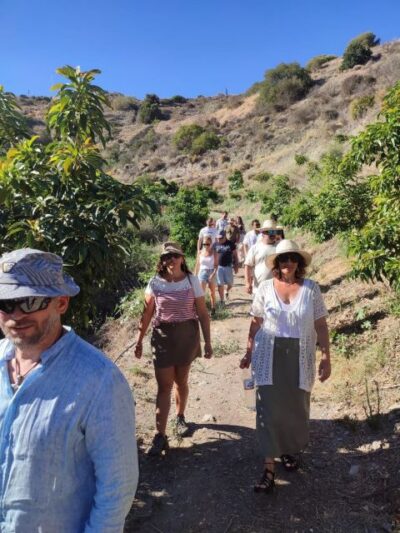
La Herradura Coffee Farm: tour in Europe’s only plantation
Read our review →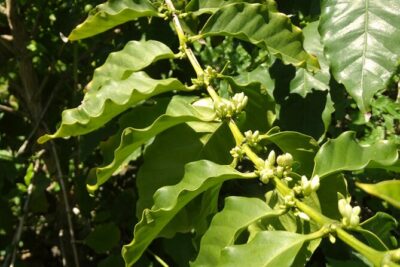

Barcelona: Sunrise Standup Paddle Tour w/ 4K Video & Coffee
Read our review →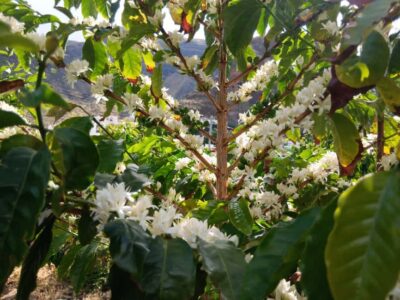
Finca Los Castaños: Agaete Valley Coffee Tour & Tasting
Read our review →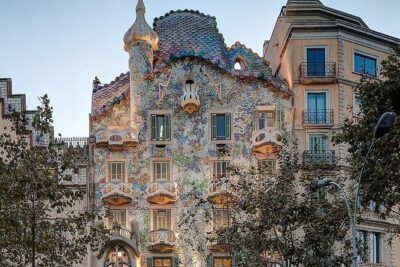

Whiskers & Coffee: Relax and Play with Adorable Cats
Read our review →
Explore Gran Canaria’s Coffee at Finca Los Castaños
Read our review →Lists this coffee tour turns up in