
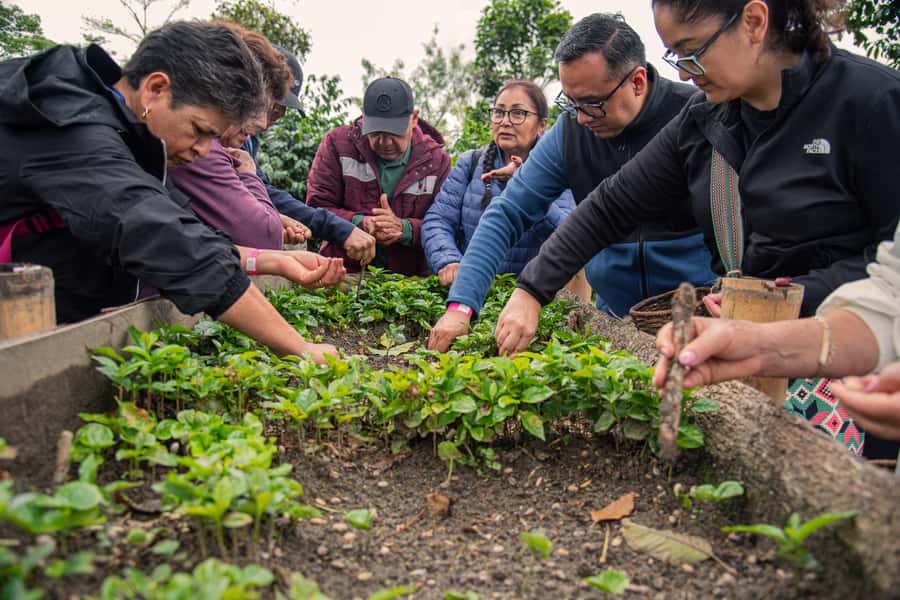
REVIEW · TOLIMA
Coffee Tour at Finca El Ocaso Salento: Traditional Spanish Farm
The most useful thing about this 90-minute coffee tour is that it follows the bean from plant to cup. You walk through the gardens and coffee plantation, then see the mill, drying systems, storage, threshing, roasting, and traditional preparation. I like the practical flow, and I like that sustainability includes real work such as composting and crop fertilization.
I also like the chance to see both mechanical and traditional drying, since those details help explain why farm coffee can taste different from ordinary café coffee. The main drawback is simple: transport is not included, and the rural road is partly unpaved, so a low car is a poor choice. The tour is in Spanish, too.
Key points to know before you go
- Coffee from seed to cup: Follow planting, growth, harvesting, milling, roasting, and preparation in one compact visit.
- A working sustainability lesson: See the composting station, crop fertilization, and the farm’s approach to protecting local fauna and flora.
- Two drying methods: Compare mechanical drying with the traditional method at the mill.
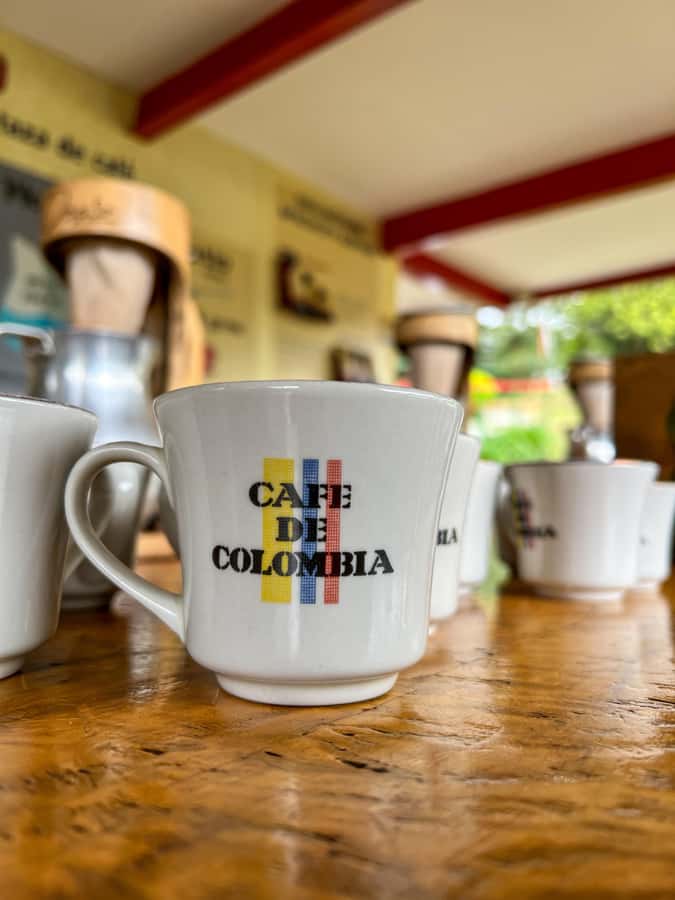
- A traditional final tasting: Coffee is prepared in a cloth strainer and pot, then served for tasting.
- Rural access matters: Willys Jeeps leave Salento hourly from 8:30 am to 4:30 pm, with transport paid separately.
- Spanish-language guiding: The live tour is in Spanish, and some material remains in its original language.
Start with the coffee plant, not the souvenir shop
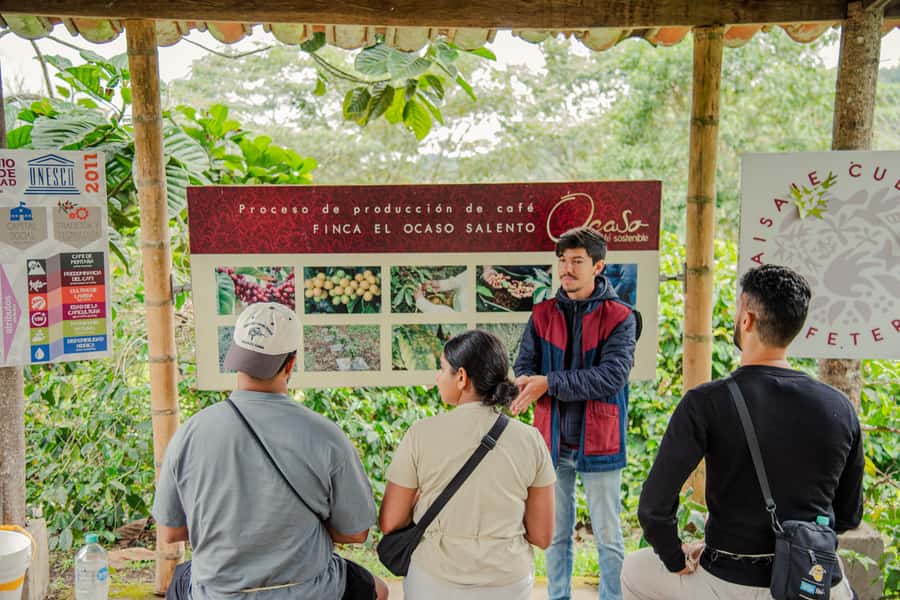
Finca El Ocaso Salento gives you the part of coffee production that is often skipped. Instead of jumping straight to a tasting, the visit begins with the plant itself: the history of coffee, the main species grown, and the way coffee trees are planted and cared for.
That order matters. Once you have seen where the fruit grows and heard how the trees develop, the later steps at the mill make more sense. Coffee is not simply roasted beans pulled from a bag. It is a crop with a long chain of work behind it.
You’ll tour the gardens and coffee plantations, with attention to planting, growth, sowing, and harvesting. The supplied details do not promise that you will harvest coffee during every visit, so think of this as an explanation and working-farm tour rather than a guaranteed pick-your-own activity.
The setting also gives the guide room to talk about fauna and flora. That is useful for anyone interested in the wider farm system, not just the drink in the cup. Coffee production affects soil, water, plants, and insects, and the tour connects those subjects to daily farm work.
More Coffee Farm Tours in Colombia
- Medellín Coffee Farm Tour with Trolley and Cable Car Ride
★ 4.9 · 277 reviews - Coffee Tour at the Finca del Café
★ 5.0 · 213 reviews - Salento: Private Cocora Valley, Salento & Coffee Farm Tour
★ 4.9 · 202 reviews
Composting makes sustainability concrete
The composting station is one of the more useful stops because it turns the word sustainability into something you can see. You’ll hear how organic material is handled and how compost supports crop fertilization.
I prefer this kind of explanation to a broad claim that a farm is eco-friendly. Here, the subject is tied to a specific station and a specific task. You can connect soil care with the health of the coffee trees and the wider farm.
The experience is promoted as coming from specialty coffee producers with certification in sustainable production. That gives the sustainability discussion extra importance, but the tour also keeps it practical. You are shown the farm’s approach to composting, fertilization, and the relationship between crops, plants, and animal life.
Bring insect repellent. It is specifically recommended, and you can buy it at the farm store if you forget. Sun block is not included, so bring your own as well. Comfortable clothes are the right choice for a plantation visit.
The mill explains what happens after harvest
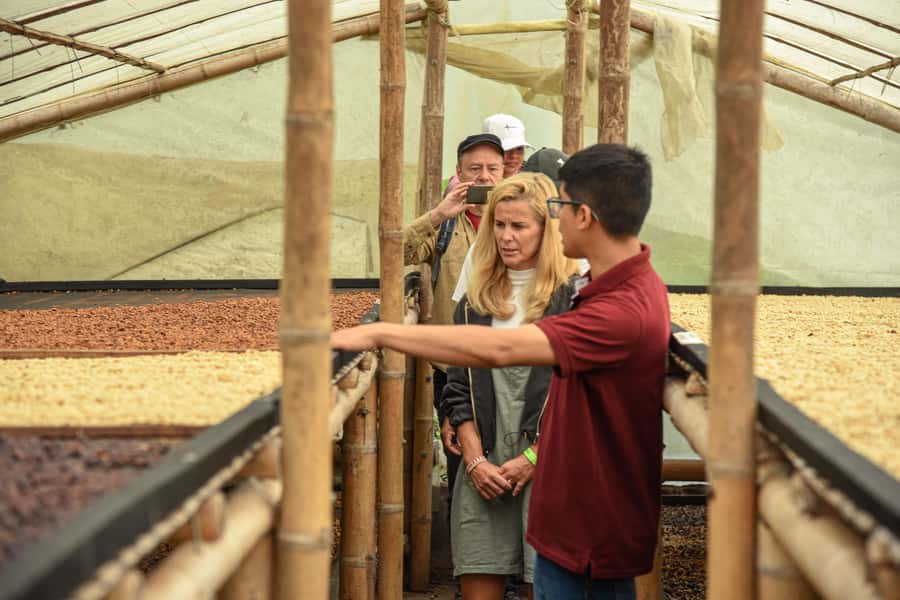
The mill is where the tour becomes especially useful for coffee drinkers. You’ll see the hopper, pulper, mechanical drying equipment, and traditional drying area.
The hopper is part of the first handling stage. The pulper then helps remove the fruit from the coffee beans. From there, drying becomes a major concern. Moisture has to be controlled before coffee can be stored and prepared for later processing.
Seeing both mechanical drying and traditional drying helps you understand that coffee production is a series of choices, not one fixed method. The tour does not promise a technical laboratory demonstration, so expect an explanatory visit rather than a detailed engineering class. Still, these are exactly the kinds of farm details that are hard to understand from a café menu.
You will also hear about storage, threshing, and commercialization. These steps fill in the part of the story between the farm and the market. Threshing removes the remaining outer layer from the dried coffee, while storage and commercialization determine how the product moves toward sale.
That information is valuable if you usually think of coffee only in terms of roast labels or tasting notes. Here, you see how handling before roasting can affect the final product.
Roasting shows why the final cup changes
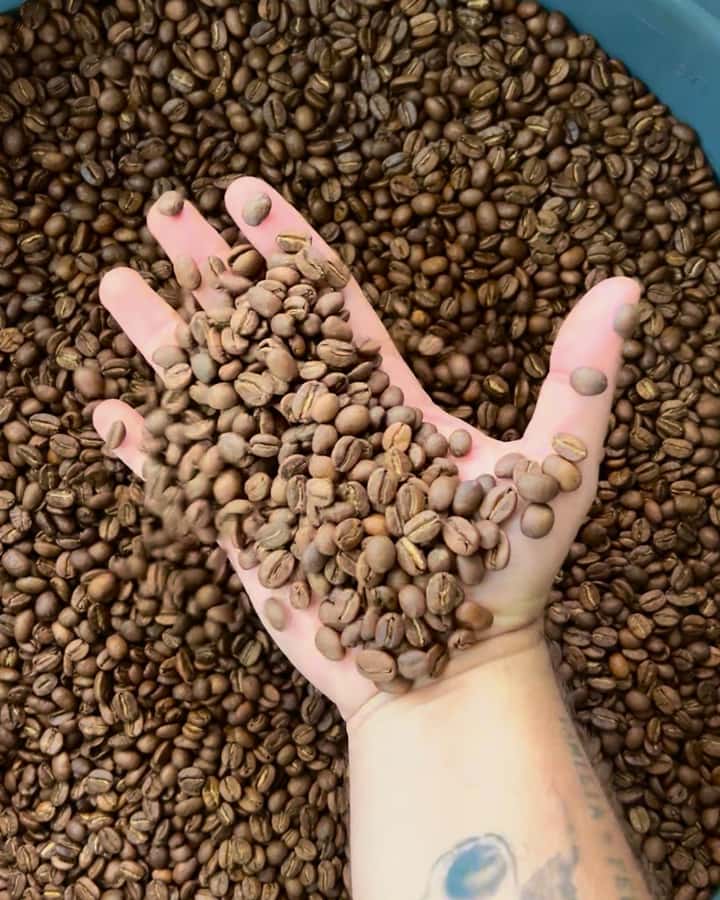
The tour covers types of roasting and why roast level matters to coffee quality. This is a short activity, so do not expect a long professional cupping session with a large range of coffees. Instead, you get a clear introduction to the relationship between roasting and taste.
Roasting changes the color, aroma, body, and flavor of coffee. A lighter roast can preserve more of the bean’s original character, while a darker roast creates a heavier, more toasted profile. The exact styles presented at the farm are not specified, so the useful takeaway is the basic connection between roast decisions and quality.
This stop is well placed after the farm and mill visit. You first see the raw material, then the processing stages, and finally the point where heat changes the beans. That makes the tasting feel earned rather than tacked on at the end.
Still in Colombia, but a different cup:
- Medellin: Coffee Tour with Transport, Snacks and Tastings
★ 4.7 · 1,357 reviews - Medellin: Coffee Tour and Wellness Spa
★ 4.8 · 209 reviews - Medellin: Coffee Tour with Hotel Transfers and Meals
★ 4.9 · 186 reviews - From Bogotá: Coffee Farm and Tequendama Falls Tour
★ 4.5 · 130 reviews
The cloth strainer is the right finish
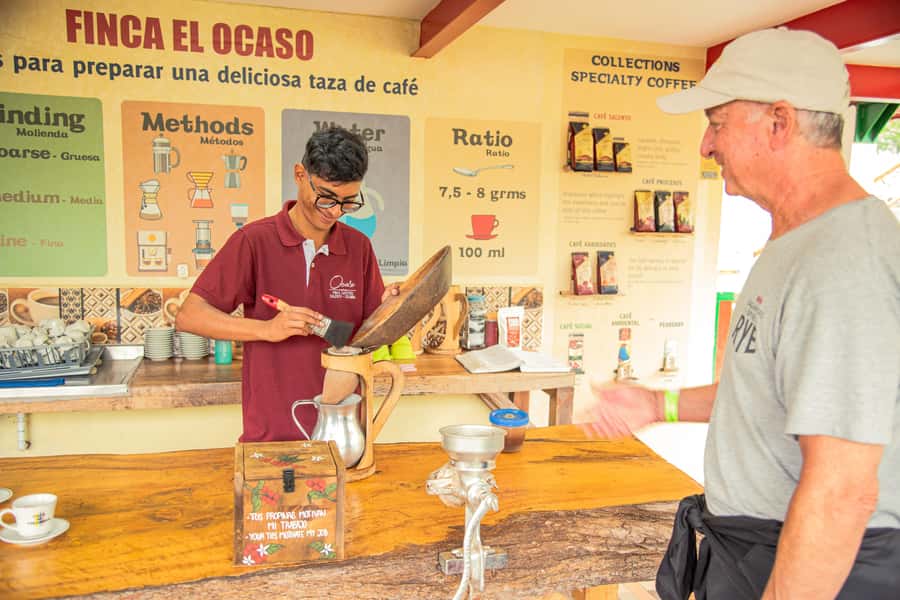
The final preparation uses a traditional cloth strainer and pot, followed by a tasting. It is a modest method, but it gives the visit a strong local character.
The cloth strainer is different from the paper filters many people use at home. It allows the brewed coffee to pass through while retaining the grounds, and it forms part of an older, simple preparation style. The pot also makes the ritual feel tied to everyday farm life rather than to a modern coffee bar.
You are not promised a full meal, and food is not included. The tasting is the food-and-drink element provided by the activity, so if you need more than a cup of coffee, plan to eat before or after the tour.
I like that the tasting comes after the production explanation. You can think about the plant, the pulper, the dryer, the storage process, and the roast while drinking the finished coffee. For a coffee lover, that connection is the main reason to choose this visit.
What the guide and language mean for your visit
The live guide language is Spanish. Some content is presented in its original language, so this is best for Spanish speakers or for visitors comfortable following a farm explanation with limited language support.
One guide connected with the experience is Nicolás. An afternoon visit with him is described as entertaining, and the available feedback also points to a friendly, good-humored guide style and a tour that is professional, complete, and easy to follow. I would still judge the language fit honestly: if you do not understand Spanish, the technical parts about processing, storage, and roasting may be harder to follow.
The strongest praise centers on the guide’s friendly manner and the educational structure. That matches the design of the visit, which moves through the farm in a sensible order rather than presenting disconnected facts.
The duration is 90 minutes. That is long enough to cover the major stages without turning the visit into an all-day commitment. It also means the pace may be fairly purposeful. If you want a slow plantation walk, extended photography stops, or a long tasting session, this may feel brief.
Getting to the farm from Salento
You must reach the farm on your own. Willys Jeeps leave Salento every hour from 8:30 am to 4:30 pm, and you can also return to Salento from the farm by Willys.
The transportation cost is separate from the $19 tour price. Build that extra expense and the timing of the Jeep into your plan. Since the road is not completely paved, arriving in a low car is not recommended.
This is one of those outings where the transfer is part of the practical decision. If you are already using public transportation in the Salento area, the farm is a reasonable choice. If you expect door-to-door pickup, this is not the right tour.
The activity does not cancel simply because it rains. Rain ponchos can be purchased at the farm, and the rural road may be less pleasant in wet weather. Wear clothes that can handle damp conditions, and bring insect repellent and sun block. Alcohol and drugs are not allowed.
Is $19 good value?
At $19 per person, I consider this good value for a focused coffee education, especially if you care about production methods rather than only getting a drink. The price includes the plantation and garden tour, sustainability discussion, composting and fertilization information, the mill visit, roasting explanation, traditional preparation, and a tasting.
The value is strongest for someone who would otherwise pay for several separate experiences: a farm walk, a processing demonstration, and a coffee tasting. You get all three in 90 minutes, though each part is necessarily compact.
The price does not include transportation or food. Those exclusions are not surprising for a rural farm visit, but they affect the total cost. Pack or arrange your meal separately, and check the Willys schedule before you leave Salento.
The flexible booking terms also help. You can reserve now and pay later, and cancellation is free up to 24 hours before the activity for a full refund. That is useful if your Salento plans depend on weather or transport.
Who should book this coffee tour?
I would choose this experience if you want to understand coffee production in plain terms. It suits people who enjoy farm visits, specialty coffee, sustainable agriculture, and traditional preparation.
It is also a good match for a short itinerary. Ninety minutes gives you a focused activity without using up an entire day. The 4.8 rating from 89 bookings supports the idea that the format works well for many visitors, especially those who value a clear guide and an educational visit.
You may want a different option if you need English guiding, included transport, a meal, or a longer hands-on harvest experience. None of those are included here. The tour is also less convenient in heavy rain, although rain does not cancel it.
For coffee enthusiasts, the best feature is the complete chain: tree, mill, roast, and cup. You do not just taste coffee. You learn why the work before brewing matters.
FAQ
Where is the coffee tour located?
The farm is in the rural area of Salento, Colombia. The listed location is Tolima, Colombia.
How long does the tour last?
The activity lasts 90 minutes.
What language is the tour in?
The live tour guide speaks Spanish. Some content is shown in its original language.
Does the tour include transportation?
No. You must arrive directly at the farm. Willys Jeeps leave Salento every hour from 8:30 am to 4:30 pm, and the transportation cost is separate.
Can I return to Salento by public transportation?
Yes. It is possible to return to Salento in a Willys from the farm. The transportation price is not included in the tour ticket.
What is included in the experience?
The tour includes the coffee history, coffee species, planting and growth information, a garden and plantation visit, harvesting and sowing information, composting, crop fertilization, sustainability, fauna and flora, the mill, drying methods, storage, threshing, commercialization, roasting, traditional preparation, and a tasting.
What should I bring?
Bring comfortable clothes and insect repellent. Sun block is also practical because it is not included. You can buy insect repellent and rain ponchos at the farm.
What happens if it rains?
The activity is not cancelled because of rain. Rain ponchos can be purchased at the farm, and the partly unpaved road may be harder to manage in wet conditions.
Should you book Finca El Ocaso Salento?
Book it if you want a clear, compact introduction to Colombian coffee production and you are comfortable with a Spanish-language tour. The farm visit gives you more than a tasting, with real attention to composting, drying, storage, roasting, and traditional brewing.
Skip it if you need included transport, food, English guiding, or a long hands-on plantation activity. For everyone else, $19 is a fair price for a well-organized look at how coffee moves from a rural farm to your cup.
Just listed in Colombia
- From Medellin: Day Trip to a Jardin Coffee Plantation★ 4.5 · 16 reviews
- Coffee Farm Tour at Finca El Ocaso from Salento★ 4.5 · 19 reviews
- Best Coffee Tour from Medellin with Lunch and Transportation★ 5.0 · 24 reviews
- Coffee, Cocoa and Trekking Tour in Minca: Nature, Crops and Production★ 4.7 · 21 reviews
- Explore the Coffee Process_From Tree to Cup & Fun by Jeep★ 5.0 · 28 reviews
- Walking Tour of Cartagena Including a Colombian Cup of Coffee★ 5.0 · 30 reviews
- Coffee Tour.★ 5.0 · 33 reviews
- Coffee Farm & ATVs Private Tour in Medellin: Stunning Views & Fun★ 5.0 · 31 reviews
Coffee Farm Tours, compared.
Award Winning Farm Tour: Coffee, Chocolate and Unique Gifts
Read our review →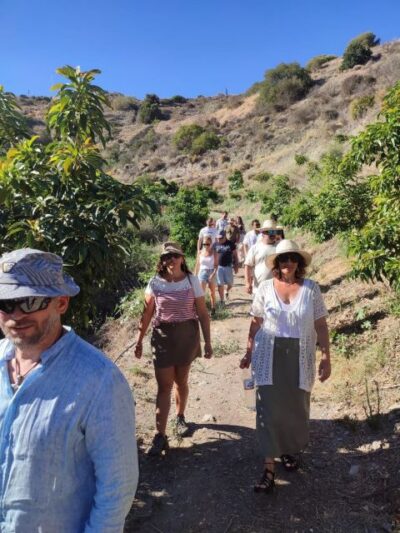
La Herradura Coffee Farm: tour in Europe’s only plantation
Read our review →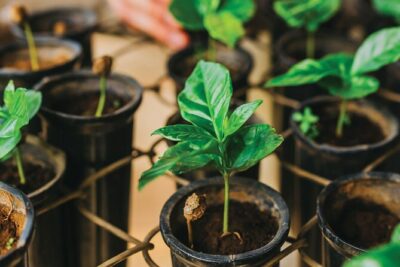
Medellín Coffee Farm Tour with Trolley and Cable Car Ride
Read our review →
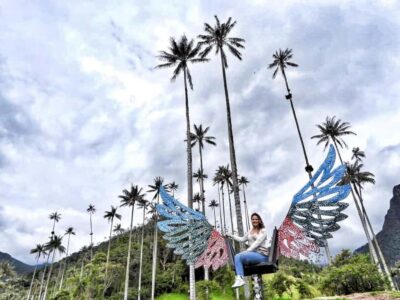
Private Cocora Valley, Salento & Coffee Farm Tour
Read our review →
Liamuiga Natural Farm Tour – St.Kitts’ Coffee Farm
Read our review →
Lists this coffee tour turns up in