
REVIEW · PEREIRA
Explore the Coffee Process_From Tree to Cup & Fun by Jeep
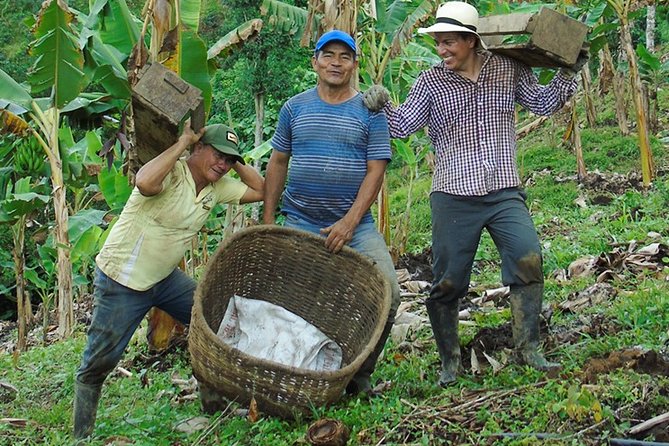
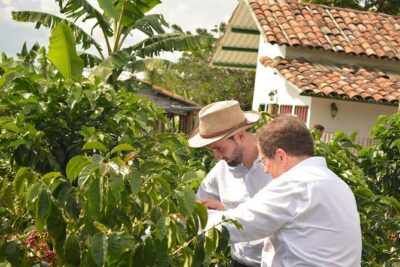
The best part of this coffee farm visit is that it treats coffee as a living farm product, not a souvenir in a bag. Arvey and Elizabeth guide you from coffee tree to harvested cherry, fermentation, drying, roasting, and final cup, while also showing how bananas, cocoa, avocados, citrus, and other crops support life on the farm.
I like the small group limit of 10, which leaves room for questions and personal attention. I also like the traditional Jeep ride from Pereira, a practical and fitting way to reach the Andean farm without making you arrange a taxi or rental car. The main consideration is simple: this is a working farm, so expect insects, uneven paths, and outdoor conditions.
What makes this coffee visit special
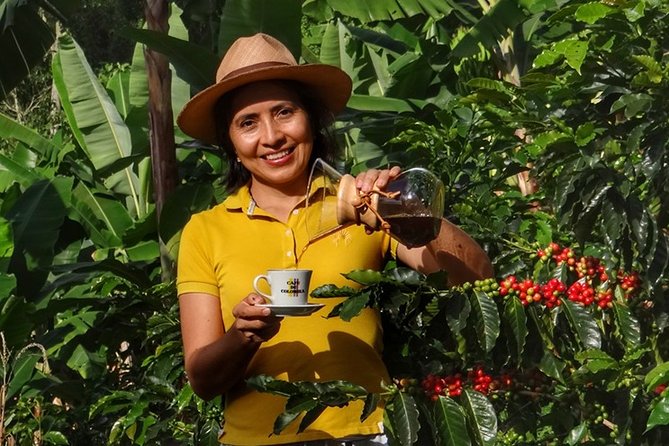
- Coffee from tree to cup: Follow planting, harvesting, washing, fermentation, drying, roasting, and brewing.
- A family-run farm: Arvey and Elizabeth personally explain their work, culture, and life as neo-peasants.
- More than coffee: See bananas, cocoa, avocados, citrus, guava, papaya, mango, guanabana, and other plants.
- Sustainability in practice: Visit the composting area, vermiculture setup, and plant nursery.
- A traditional Jeep transfer: Ride in an icon of Colombia’s coffee region while someone else handles the mountain roads.
- Coffee you prepare yourself: Learn simple brewing methods you can repeat at home.
Leaving Pereira in a traditional Jeep
The four-hour outing begins with hotel pickup in Pereira. Instead of finding your own way to a remote farm, you ride in a traditional Jeep, a vehicle closely tied to Colombia’s coffee country.
That ride is part of the setting, not just a transfer. The farm sits in the Andean hills above Pereira, and the route takes you away from the city toward quieter mountain roads. One account describes the drive as roughly 40 minutes, though exact timing can vary with your pickup point and road conditions.
I like this arrangement because it removes a common problem with rural outings: figuring out how to reach the starting point. You can focus on the views and the conversation while your driver manages the route.
The Jeep is also worth considering from a comfort point of view. It is traditional and atmospheric, but it is not the same as a private luxury vehicle. If you need extra room or have mobility concerns, ask about the transport setup when booking.
More Coffee Tours in Colombia:
- Medellin: Coffee Tour with Transport, Snacks and Tastings
★ 4.7 · 1,357 reviews - Medellín Coffee Farm Tour with Trolley and Cable Car Ride
★ 4.9 · 277 reviews - Coffee Tour at the Finca del Café
★ 5.0 · 213 reviews
Meeting Arvey and Elizabeth at the farm
Arvey and Elizabeth are not simply presenting a polished coffee attraction. They live and work on the property, and the farm reflects their shared project. Their background is unusual: Arvey was formerly an accountant, while Elizabeth was an engineer before building this agricultural life together.
That personal story gives the visit a useful human scale. You are not just hearing a general explanation of Colombian coffee production. You are seeing how one couple organizes a small farm, chooses crops, manages waste, and protects the soil.
They describe themselves as neo-peasants, a term that captures their move toward a rural life while bringing experience from outside traditional farming. Their approach combines coffee production with clean agriculture, biodiversity, and practical sustainability.
The National Tourism Awards in 2022 and the WTM Latin American Responsible Tourism Awards in Brazil in 2023 recognize the project’s responsible tourism work. The awards are not the reason to book, but they help explain why the visit includes more than a basic plantation walk.
Walking through coffee, fruit, and farm life
The farm walk introduces you to the coffee plants and the wider food system around them. You may see bananas, plantains, cocoa, avocado, orange, lemon, tangerine, guava, papaya, mango, and guanabana, along with flowering plants and other crops.
This variety matters. A small farm is not only a place where coffee trees grow in rows. It is a connected place where fruit provides food, plants support birds and insects, and organic material can return to the soil.
The property includes three avocado varieties, pineapples, citronella, cotton, and other plants. Some provide food, some have medicinal uses, and some serve the local wildlife. Cotton, for example, can help birds find material for their nests.
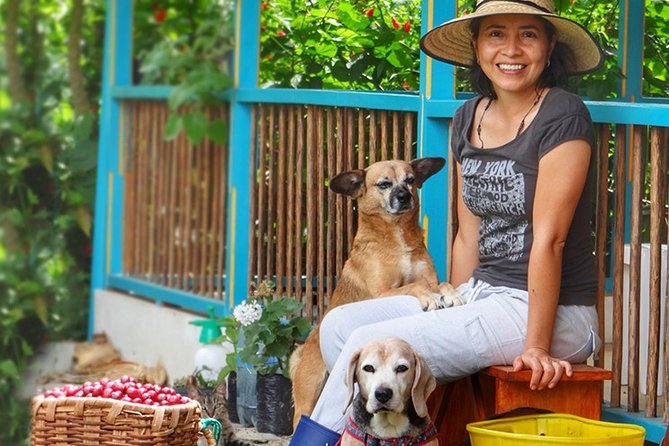
You may also meet the farm animals, including chickens, ducks, dogs, cats, and roosters. Toby and Lola, the family dogs, are part of the farm’s welcoming atmosphere. The animals are not a staged attraction, so your encounter will depend on what is happening on the property that day.
Birdlife is another pleasant part of the setting. The farm’s plant diversity has helped increase the number of bird species seen there over time, from about 30 to around 120. You should bring patience if birdwatching interests you, since sightings are naturally not guaranteed.
Understanding the coffee process step by step
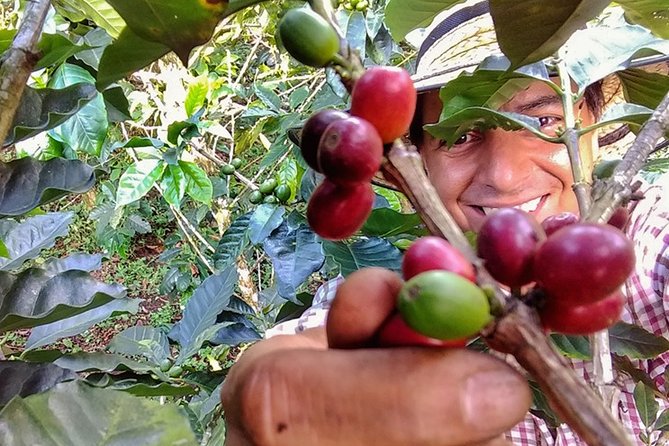
The central lesson follows the coffee cherry through its full production cycle. You begin with the plant itself, learning how coffee grows and how cherries are picked.
From there, the explanation moves into processing. You learn about washing, fermentation, drying, and quality control. The farm produces three main styles of processed beans: washed, honey, and natural.
These terms are useful because they describe real differences in how the fruit is removed from the bean and how the bean dries. Washed coffee is cleaned more thoroughly before drying. Honey processing leaves some fruit mucilage on the bean. Natural processing dries the coffee with more of the fruit around it.
You do not need to be a coffee expert to follow along. Elizabeth and Arvey explain the stages in a practical way, linking each step to the flavor in the cup. This is one of the strongest reasons to choose this farm over a quick tasting stop. You are shown why the same coffee species can taste different after different handling.
The visit also covers roasting, including the roasting curve. That lesson helps you understand that coffee flavor is shaped after harvest as well as before it. The tree, the processing method, the drying, and the roast all matter.
Still in Colombia, but a different cup:
- Medellin: Coffee Tour and Wellness Spa
★ 4.8 · 209 reviews - Salento: Private Cocora Valley, Salento & Coffee Farm Tour
★ 4.9 · 202 reviews - Medellin: Coffee Tour with Hotel Transfers and Meals
★ 4.9 · 186 reviews - From Bogotá: Coffee Farm and Tequendama Falls Tour
★ 4.5 · 130 reviews
Preparing your own Colombian coffee
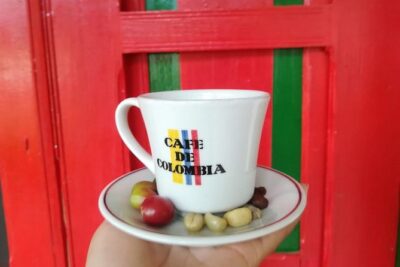
The tasting is active rather than formal. Elizabeth guides you in preparing coffee, and you make multiple cups using different brewing methods.
One account describes making a first cup soon after arriving, then preparing two more near the end of the visit. The exact sequence may vary, but you should expect hands-on brewing rather than simply watching someone serve coffee.
This is especially useful if you enjoy coffee at home. The point is not to hand you a complicated recipe requiring special equipment. The hosts show methods simple enough to repeat in your own kitchen.
Comparing coffee prepared in different ways gives you a better sense of how brewing changes taste. You can notice the effect of method, roast, and bean processing without needing a technical vocabulary.
Coffee and tea are included, along with snacks. Depending on the day, refreshments may include lemonade made from farm lemons, empanadas, or patacones. Fresh fruit may also be available when crops are in season, but the selection changes throughout the year.
That seasonal variation is a strength, not a flaw. A farm cannot offer the same fruit every month, and the experience will reflect what is growing at the time of your visit.
Sustainability you can actually see
The farm’s environmental work is shown through everyday systems rather than broad claims. You visit the composting area, see vermiculture, and learn about the plant nursery.
Vermiculture uses worms to help break down organic material into a soil amendment. Composting keeps useful organic waste on the property instead of treating it as rubbish. The nursery supports future planting and helps the farm continue its cycle of growth.
These details make sustainability easier to understand. You see where waste goes, how new plants are raised, and why a mixed farm can support more life than a single-crop plot.
The hosts also connect farming to Colombian culture and their own daily lives. That wider context is important in the Eje Cafetero, where coffee is not just an export product. It shapes work, food, family life, and regional identity.
The visit has earned recognition for responsible tourism, but you should still think of it as a small working farm rather than a model farm museum. Conditions are practical and rural. You may encounter mud, bugs, changing weather, and paths that require care.
How much the $115 price buys you
At $115 per person, this is not the cheapest coffee stop around Pereira. The price makes more sense when you consider what is bundled into the four-hour visit: hotel pickup and drop-off, private transportation, farm entry, guiding, coffee and tea, snacks, and several hours of personal instruction.
You are also paying for a small group, with no more than 10 people. That limit matters. Coffee processing has many steps, and a large group can turn a useful lesson into a distant demonstration. Here, you have a better chance to ask about roasting, fermentation, farming, or brewing.
The price is strongest for someone who wants depth and personal contact rather than a quick plantation photo. If you only want to sample a cup and take a few pictures, a shorter and cheaper stop may suit you better.
For a half-day activity in the coffee region, the included transport adds real value. You do not have to arrange a vehicle to a mountain farm, and the Jeep ride becomes part of the outing.
The experience is also a good use of time for visitors staying in Pereira who do not have enough days to travel between several coffee towns. You get a farm visit, regional scenery, food, coffee preparation, and a lesson in sustainable agriculture in one morning or afternoon.
Who will enjoy this farm visit most
I would choose this outing if you want to understand how coffee is made rather than simply buy a bag of beans. It suits coffee drinkers, curious cooks, sustainability-minded visitors, and anyone interested in Colombian rural life.
It also works for people who do not usually drink coffee. The fruit trees, animals, birdlife, farming systems, and mountain setting give the visit plenty of interest beyond the tasting.
The personal format helps families and small groups, since you can ask questions at your own pace. It may also suit visitors who prefer a calm rural activity to a packed sightseeing schedule.
The farm has made much of its route accessible to wheelchairs and blind visitors, though not every outdoor surface is necessarily easy. Service animals are allowed. If you need specific assistance, confirm the details before booking.
Bring mosquito repellent or lotion. Wear shoes suitable for a farm walk, and do not expect the same conditions as a city café. A light rain layer may also be sensible for the Andean hills, though weather details are not fixed.
Timing, cancellation, and practical planning
The activity lasts about four hours, including transportation from Pereira. Pickup and drop-off at your hotel are included, which makes the timing easier to manage.
The tour requires a minimum number of participants. If that minimum is not reached and the outing is canceled, you are offered another date or experience, or a full refund.
You can cancel for a full refund up to 24 hours before the start time. Cancellations or changes made less than 24 hours before the local start time are not refunded or accepted.
If you are coming from another city, additional transportation costs $25. Confirm that arrangement before booking so the total price does not surprise you.
The activity is often reserved well ahead of time, with an average booking lead of about 42 days. That suggests planning ahead if your Colombia schedule is fixed, especially if you want a particular date.
Should you book this coffee farm experience?
I would book it if you want a personal, hands-on introduction to Colombian coffee and do not mind rural conditions. Arvey and Elizabeth bring the subject to life through their own farm, their animals, their crops, and the work behind each cup.
The strongest features are the small group, the full coffee process, the homemade brewing lesson, and the honest look at sustainable farming. You also get convenient transport and snacks, which make the $115 price easier to justify.
Skip it if you want a polished resort-style attraction, a quick tasting, or a large commercial plantation with lots of facilities. This is a working farm. There are insects, outdoor paths, and seasonal changes.
For most visitors staying in Pereira, especially those with an interest in coffee, food, nature, or Colombian culture, this is a well-rounded half-day choice. You leave with more than a caffeine lesson. You gain a clearer sense of the people, plants, and patient farm work behind Colombia’s famous cup.
FAQ
Where does the coffee farm experience take place?
The experience is based in Pereira, Colombia, at a coffee farm in the Andean mountains above the city.
How long does the activity last?
The activity lasts approximately four hours, including the visit and transportation.
Is hotel pickup included?
Yes. Hotel pickup and drop-off in Pereira are included, along with private transportation.
How many people can join the tour?
The group is limited to a maximum of 10 people.
What is included in the $115 price?
The price includes private transportation, entrance, a guide, coffee and/or tea, and snacks.
Can visitors prepare coffee during the experience?
Yes. Elizabeth teaches you how to prepare Colombian coffee, including methods simple enough to use at home.
What happens if I need to cancel?
You can receive a full refund if you cancel at least 24 hours before the experience start time. Cancellations or changes made less than 24 hours before the start time are not accepted or refunded.
Just listed in Colombia
- Salento: Coffee Master Roasting, Brewing and Tasting Tour★ 4.8 · 6 reviews
- Private Tour to Coffee Farm (farm of your choice)★ 5.0 · 2 reviews
- Medellin: Coffee Farm Tour & Spa with Overnight Glamping★ 4.5 · 3 reviews
- Minca: Hidden Waterfall + Coffee and Cocoa Workshop★ 4.9 · 6 reviews
- Most complete COFFEE TOUR at local family farm★ 5.0 · 2 reviews
- Medellin: Coffee and fruit tour★ 4.9 · 12 reviews
- Medellin: The Best Coffee Tasting Experience★ 5.0 · 5 reviews
- Medellin: Avoeden Café Coffee Brewing Workshop★ 5.0 · 12 reviews
Pereira Coffee Tours, compared.
Full-Day Private Coffee Tour in Cocora Valley and Salento
Read our review →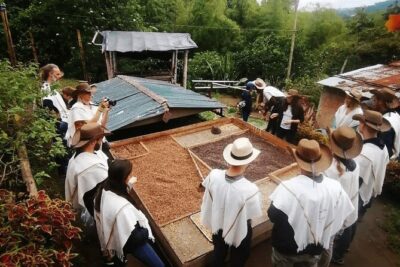
Salento and Cócora Tour plus Coffee Farm from Pereira or Armenia
Read our review →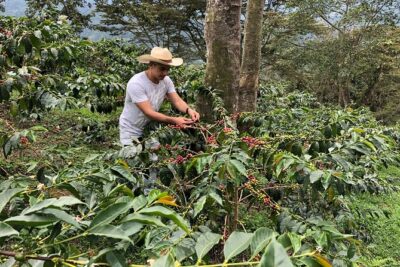
Lists this coffee tour turns up in