
REVIEW · ARUSHA
Coffee tour and Buffet Lunch with Kingstone Asilia (Arusha)
The most rewarding part of this Arusha outing is that coffee becomes a hands-on food lesson rather than a quick plantation stop. You’ll follow a coffee cherry from plant to cup, using a hand-powered pulper, pounding dried beans, then roasting and grinding them yourself.
I like the farm-to-cup work and the chance to connect it with Tanzanian culture through medicinal plants, songs, and food. I also like that lunch is cooked on site with fresh ingredients, making the meal part of the experience rather than an afterthought.
The main consideration is timing. The tour starts at 10:00 a.m., lasts about four hours, and pickup is not included in the $55 price. A hotel pickup can be arranged for an extra $15, so check the transport cost before booking.
Key points to know before booking
- Follow coffee from planting to tasting: Depending on the season, you may plant a coffee seedling, pick ripe cherries, pulp them, roast the beans, and brew your own cup.
- Meet the Kingstone Asilia family farm: The setting is on the green, quiet outskirts of Arusha, at the Kingstone Asilia Coffee Tours, Restaurant, and Bar.
- Expect more than coffee: The visit includes stories about Tanzanian history and culture, traditional medicinal plants, songs, dancing, and a home-cooked vegetarian lunch.
- Plan for transport costs: Hotel pickup in Arusha is available for an additional $15, while the advertised tour price includes fees, taxes, and lunch.
- Allow four hours: The activity begins at 10:00 a.m. and ends back at the meeting point.
- Good for families and food lovers: Children under five join free, and the practical work suits anyone curious about coffee, food, and local life.
Starting at the Kingstone Asilia farm outside Arusha
You begin at Kingstone Asilia Coffee Tours, Restaurant, and Bar on BushMoivaro Road, outside central Arusha. The farm setting gives the morning a slower pace than a city sightseeing stop. You are not simply shown a finished bag of coffee. You are taken through the work behind it.
The tour opens with the story of coffee in Tanzania and an explanation of how coffee became one of the country’s largest export crops. That background matters because it puts the small tasks ahead into context. A coffee bean may look simple in your cup, but producing it involves cultivation, careful picking, drying, processing, roasting, and grinding.
The farm is described as green and peaceful, which should appeal to you if you want a quieter activity between safari plans or busy days in Arusha. The starting point is also near public transportation, but the tour does not include private transport. If you prefer the ease of hotel pickup, the added $15 charge is worth including in your budget.
The maximum group size is 50 people. That is large enough that the experience may feel more like a group demonstration at busy times, rather than a private farm visit. Still, the hands-on stages give the outing a practical focus, and the family-farm setting adds a personal touch that a standard café tasting cannot match.
Other coffee mornings people book in Arusha:
- Materuni Waterfalls, coffee tour & Kikuletwa Hot Springs
★ 5.0 · 643 reviews - Materuni waterfalls coffee tour & Chemka hot springs Day trip
★ 5.0 · 131 reviews - Maasai village visit, Materuni waterfalls & coffee experience
★ 4.5 · 95 reviews
Planting coffee and learning about medicinal plants
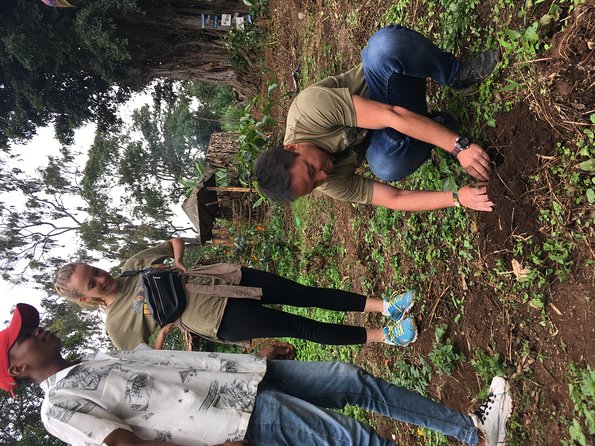
Depending on the season, you may have the chance to plant a small coffee plant. This is one of the most useful parts of the visit because it shows that coffee production begins long before the red cherries appear.
Planting is seasonal, so it should not be treated as guaranteed. The same applies to the harvest work. If the timing is right, you will continue to mature coffee trees and pick ripe cherries for processing. If not, the guides still explain the process and demonstrate the available stages.
The tour also introduces traditional Tanzanian medicinal plants. You’ll hear stories about how local plants are used, which broadens the visit beyond agriculture. This section gives you a glimpse of practical plant knowledge tied to daily life, rather than a formal botanical lesson.
I like this combination because it keeps the morning from becoming a narrow coffee lecture. You get coffee as a crop, plants as medicine, and food as a shared part of the day. Those links help you understand the farm as a living place, not simply a backdrop for photographs.
Picking ripe cherries and using the hand-powered pulper
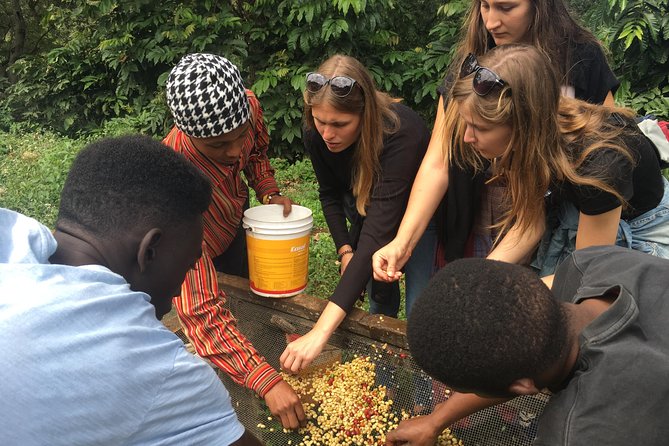
When ripe coffee cherries are available, you will fill a basket with them before moving into processing. The cherries are not yet the brown beans you recognize. They first need to be opened and prepared.
You will use a traditional hand-powered pulping machine to remove the fruit from the coffee cherry. This is a good moment to pay attention to the physical work involved. The equipment is simple, direct, and far removed from the industrial machinery used in large-scale production.
The process also gives you a better sense of why careful harvesting matters. Ripe cherries need to be selected and prepared before the beans can be dried and roasted. You are not just watching a guide operate a machine. You get to take part in a small section of the work.
The season can affect how much of this process you perform yourself. The experience promises the chance to plant and pick depending on conditions, while the traditional processing demonstration forms a more consistent part of the visit. If a full harvest is important to you, ask about current coffee conditions before booking.
Pounding dried beans with song and dance
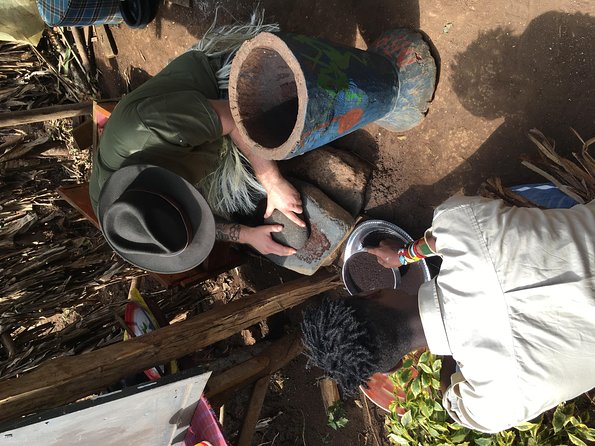
After pulping, the tour moves to pre-dried beans. You will see how a traditional method uses pounding to remove the outer layer. This is paired with a song and dance, turning a repetitive task into a shared cultural activity.
That detail makes the coffee lesson memorable. You are not only learning what happens to the bean. You are seeing how work can be connected with rhythm, cooperation, and celebration.
The activity should suit you if you enjoy joining in rather than standing at the edge of a demonstration. It may feel less comfortable if you prefer a quiet, highly technical tasting. The tour is designed as a cultural experience, so the music and movement are part of the lesson.
The simple tools also help explain the labor behind coffee. A polished café experience can hide nearly every step between the plant and the cup. Here, you can see that transformation in a straightforward way.
More Coffee-and-Lunch Trips in Arusha:
- Waterfall, coffee tour & hot springs – lunch and drinks included
★ 5.0 · 22 reviews - Materuni Waterfall, Coffee Tour and Picnic Hot Lunch
★ 5.0 · 128 reviews - Kilimanjaro: Village Walk, Coffee Tour, Waterfall, and Lunch
★ 4.5 · 56 reviews - ATV Waterfall & Organic Coffee Farm with Lunch
★ 5.0 · 36 reviews
Roasting, grinding, and tasting your own coffee
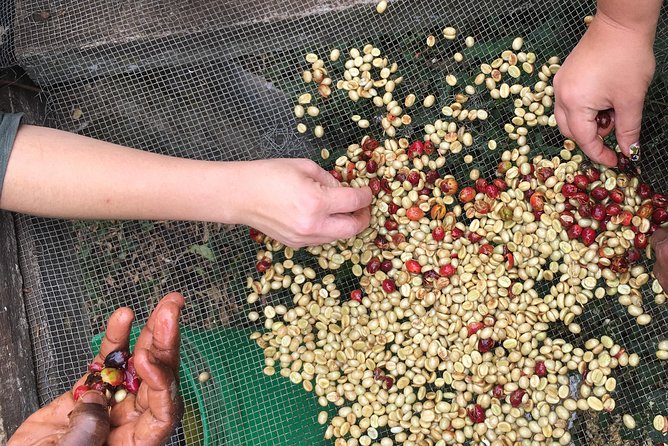
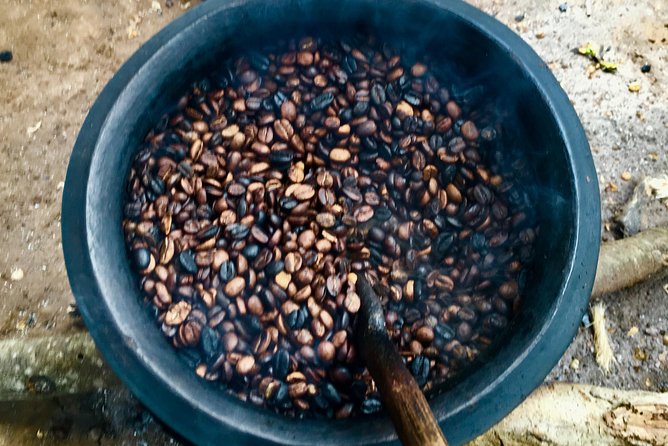
The most satisfying stage comes when you roast and grind the beans for your own cup. By this point, you have seen the beans in several forms, handled the processing, and learned how the outer layers are removed.
Roasting changes the beans in smell, color, and flavor. Grinding then prepares them for brewing. The result is not just a tasting poured for you by someone else. You get to drink coffee connected to the work you have just completed.
A traditional Tanzanian snack accompanies the cup. That small addition helps make the tasting feel like part of a meal and a social visit, rather than a formal cupping session. If you already love coffee, this is likely to be the strongest part of the morning because it links technique with taste.
The experience is not presented as a specialist barista class. You should come expecting an approachable introduction to Tanzanian coffee production, not detailed instruction in espresso extraction, brewing ratios, or professional tasting vocabulary. For most visitors, that is a strength. The focus stays on local methods and the pleasure of making something from a raw crop.
A home-cooked vegetarian lunch to finish the visit
The tour ends with a home-cooked vegetarian lunch prepared by the farm’s chef. Fresh ingredients are used, and lunch is included in the $55 price.
This matters when you compare the cost with a simple coffee plantation visit. You are paying for a half-day activity, a meal, local cultural interpretation, and the chance to take part in several stages of production. The value is strongest if you would otherwise pay separately for lunch and an afternoon activity.
The meal also gives the experience a natural finish. After planting, picking, processing, roasting, and tasting, you sit down to eat food prepared in the same welcoming setting. It turns the farm visit into a fuller cultural exchange.
The lunch is vegetarian, so you should be comfortable with that arrangement. The information provided does not specify a menu or list options for dietary restrictions. If you have particular food needs, ask Kingstone Asilia before the tour rather than assuming alternatives are available.
Kikuletwa Hotsprings and Themi Falls Leisure Park
The experience also includes stops at Kikuletwa Hotsprings and Themi Falls Leisure Park. These add variety to a morning otherwise centered on coffee and food.
The available information gives no detailed schedule for these stops, so you should not assume how long you will spend at each place or exactly where they fit into the four-hour plan. Their inclusion does mean the outing is not limited to the farm itself.
Kikuletwa Hotsprings may appeal if you want a natural stop alongside the agricultural visit. Themi Falls Leisure Park adds another local leisure setting. Since the tour begins and ends at the Kingstone Asilia meeting point, confirm the day’s order and transport arrangements if these stops are especially important to you.
The coffee activities remain the clearest focus. Think of the hotsprings and falls as added stops, not as the main reason to book. If you want a full sightseeing day built around several major attractions, this half-day experience may feel too short. If you want coffee plus a few local places, the mix is useful.
What the $55 price really covers
At $55 per person, the tour sits in a sensible range for a four-hour activity that includes lunch and all fees and taxes. The price is easier to justify if you value participation and cultural context, not just transport to a scenic site.
You get the farm visit, coffee history, traditional processing, medicinal plant stories, the opportunity for seasonal planting and picking, your own roasted and ground coffee, a snack, and a vegetarian lunch. That is a lot of content for one morning.
Private transportation is not included. Hotel pickup can be arranged for an additional $15, so the actual cost rises if you choose that convenience. The meeting point is near public transportation, which may help keep your total cost down, though the information does not specify routes or fares.
Children under five do not pay for the activity. That makes the outing more practical for families, though younger children may not take part fully in the pounding, pulping, or roasting stages. The group limit of 50 also means the feel can vary according to the number booked that day.
Who will enjoy this Arusha coffee tour most
I would choose this tour if you want to understand a place through food and daily work. It suits coffee drinkers, curious cooks, families with older children, and anyone looking for a cultural activity beyond safari viewing.
It is also a good choice if your Arusha schedule has a free morning and you want something that combines learning, participation, and lunch. The four-hour length leaves room for other plans later in the day, though the exact timing of the additional stops should be confirmed.
You may want a different activity if your main interest is a formal coffee tasting, a small private group, or a detailed technical course. The group can reach 50 people, and seasonal conditions affect some of the farm work.
The tour also depends on good weather. If poor weather forces a cancellation, you will be offered another date or a full refund. That policy protects you, but it also means you should keep some flexibility in your Arusha schedule.
Booking, timing, and cancellation advice
The start time is 10:00 a.m., and the activity ends back at the meeting point after about four hours. Confirmation is provided at booking, and the experience uses a mobile ticket.
You can cancel for a full refund up to 24 hours before the start time. Changes or cancellations made less than 24 hours before the start are not accepted for a refund, and the cut-off follows local time.
The tour is often booked about three weeks ahead, so I would reserve it before arriving if the date matters to you. That is especially sensible during a tightly planned safari itinerary, when moving one activity can affect several others.
Should you book Kingstone Asilia’s coffee tour?
Book it if you want a practical, good-natured introduction to Tanzanian coffee, with local stories and a proper meal included. The strongest parts are the farm-to-cup sequence, the traditional pulping and pounding, the chance to make your own coffee, and the cultural setting around lunch.
Think carefully about transport, group size, and seasonal limits. The $55 price does not include hotel pickup, harvesting and planting depend on the time of year, and a group of up to 50 may not feel intimate.
For coffee lovers, food-focused visitors, and anyone who wants to see more of Arusha than the usual city stops, this is a strong half-day choice. If you want a technical coffee course or a private excursion, choose something smaller and more specialized.
FAQ
Where does the coffee tour start?
The tour starts at Kingstone Asilia Coffee Tours, Restaurant, and Bar on BushMoivaro Road in Arusha, Tanzania.
What time does the activity begin?
The scheduled start time is 10:00 a.m.
How long does the experience last?
The tour lasts approximately four hours.
Is hotel pickup included?
Hotel pickup is not included in the $55 tour price. Pickup from a hotel in Arusha can be arranged for an additional $15.
What is included in the tour price?
All fees and taxes are included, along with lunch.
What type of lunch is served?
The tour ends with a home-cooked vegetarian lunch prepared by the farm’s chef using fresh ingredients.
Can children join the coffee tour?
Yes. Children under five years old can join free of charge.
Will I get to plant and harvest coffee?
Planting a small coffee plant and picking ripe coffee cherries depend on the season. The tour explains and demonstrates the coffee process even when seasonal conditions limit those activities.
Does the tour include Kikuletwa Hotsprings and Themi Falls Leisure Park?
Yes, the experience includes stops at Kikuletwa Hotsprings and Themi Falls Leisure Park. The supplied details do not specify the time spent at each stop.
Can I cancel for a full refund?
Yes. You can cancel at least 24 hours before the local start time for a full refund. Cancellations or changes made less than 24 hours before the start are not accepted for a refund.
Just listed in Arusha
- Waterfall & Coffee Walking Tour★ 5.0 · 6 reviews
- Materuni (Coffee Tour) and Chemka (Kikuletwa Tour)★ 5.0 · 8 reviews
- Private Tour to Marangu Waterfalls, Chagga Caves, Coffee tour & Hot Springs★ 5.0 · 7 reviews
- Private Tour to Materuni waterfalls, coffee tour & Kikuletwa hot- springs★ 5.0 · 14 reviews
- Coffee walk with stay in the village★ 5.0 · 5 reviews
- Materuni Waterfall Hike & Coffee Tour★ 5.0 · 4 reviews
- Waterfalls, Coffee, Hotsprings, Food Cuisine, & Serval Wildlife★ 5.0 · 6 reviews
- Coffee walk day trip★ 5.0 · 10 reviews
Lunch Experiences, compared.

Materuni Waterfall, Coffee Tour and Picnic Hot Lunch
Read our review →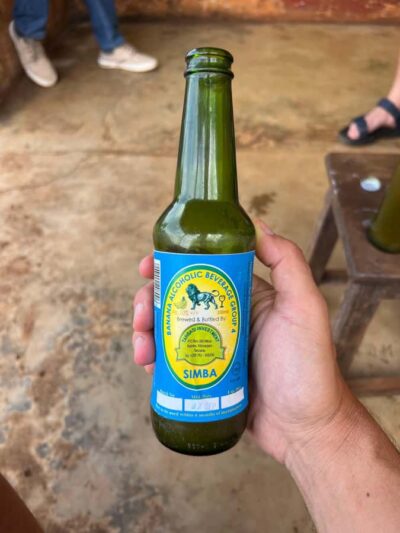
Kilimanjaro: Village Walk, Coffee Tour, Waterfall, and Lunch
Read our review →
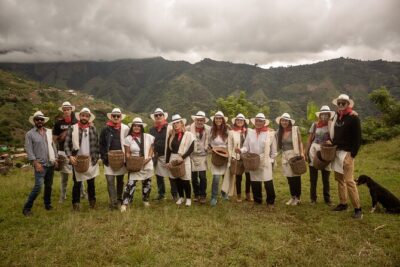
Best Coffee Tour from Medellin with Lunch and Transportation
Read our review →
Waterfall, coffee tour & hot springs – lunch and drinks included
Read our review →
Hoi An Buffaloes Riding/Coracle Boat Tour/Coffee Class with Lunch
Read our review →
Trastevere Breakfast to Lunch Food Tour: Coffee, Maritozzi & Wine
Read our review →
Guided Coffee Tour with Lunch, and Pickup & Drop-Off
Read our review →Lists this coffee tour turns up in