
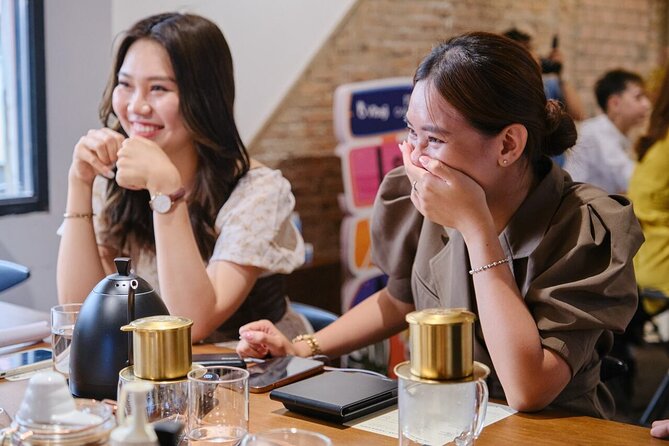
REVIEW · HO CHI MINH CITY
Vietnamese Coffee & Culture Exploration in Hồ Chí Minh City
Vietnamese coffee is more than strong coffee poured over ice. This hands-on Lacàph experience shows you how beans are roasted, how a phin works, and how different blends change the cup. You also get a short cultural trip through Hanoi, Đà Lạt, and Chợ Lớn without leaving District 1.
I like the friendly teaching style, especially the praise for guides such as Sui, Abby, Joey, and Vi. I also like the compact morning schedule, the two brewed Lacàph blends, the small-batch roasting, and the snacks, including cocoa cashews. The main caution is simple: do not expect to make every famous Vietnamese coffee style. One attendee specifically hoped to prepare egg coffee but did not.
Key points at a glance

- Small-batch Phin Blend roasting: Hear the beans crackle, smell them change, and see a short roast up close.
- Two Lacàph coffee blends: Compare different beans and brewing results instead of drinking only one standard cup.
- Coffee with local context: Short films connect coffee to Hanoi, Đà Lạt, and Chợ Lớn in southern Hồ Chí Minh City.
- Guides who teach, not just serve: Sui, Abby, Joey, and Vi are singled out for clear explanations and warm conversation.
- A useful 10:00 am start: The 2.5-hour session leaves most of your day open for markets, museums, or a food tour.
- A polished café setting: The upstairs Lacàph space offers a comfortable place to learn, though it feels more like a modern class than a street-side coffee hunt.
Why Vietnamese coffee deserves a morning of its own
Vietnam is closely linked with robusta coffee, a bean known for its firm body and strong flavor. That alone does not explain the country’s coffee culture. The way coffee is roasted, filtered, sweetened, chilled, and paired with food matters just as much.
This session gives you a useful starting point. You do not simply receive a cup and hear a quick explanation. You handle the subject through smell, sound, taste, and sight. The opening sensory activity sets up the lesson by asking you to pay attention to coffee as a full experience, not only as a caffeine delivery system.
That approach is valuable if you normally order cà phê sữa đá and move on. You begin to notice why one cup tastes heavier, why condensed milk works so well with a bold brew, and how the brewing method changes the result.
The setting is Lacàph Coffee Experiences Space, upstairs at 220 Nguyễn Công Trứ in District 1. It is a café-based experience, not a farm visit or a walking tour. That makes it easy to fit into a city itinerary, especially if you want a comfortable introduction before exploring more cafés on your own.
More Vietnamese Coffee Experiences in Ho Chi Minh City
- Egg coffee & Course on 4 traditional types of Viet coffee
★ 4.9 · 487 reviews - Fun & Easy Vietnamese Coffee Workshop in Hồ Chí Minh City
★ 5.0 · 293 reviews - Vietnam Coffee Journey – Make extraordinary tasty coffee yourself
★ 5.0 · 30 reviews
The 10:00 am start at Lacàph Coffee Experiences Space
You meet at 10:00 am at the café’s upstairs experience space. The activity ends at the same place, so you do not need to follow a guide across several neighborhoods or arrange a ride back after the lesson.
The meeting point is near public transportation, and the location in District 1 makes it practical for a morning plan. Still, allow enough time to find 220 Nguyễn Công Trứ and reach the upstairs room. Your booking confirmation arrives at the time of booking, and the mobile ticket is useful when you are moving around the city with your phone rather than carrying printed papers.
The group can include up to 18 people. That is small enough for a class atmosphere, though it is not a private lesson. If you want long one-on-one instruction at every brewing station, you should keep that limit in mind.
The room itself is described as chic and upmarket. That is a plus if heat, traffic, and sidewalk stools are not your idea of a relaxing first coffee stop. The tradeoff is that you are learning about everyday coffee culture in a polished café rather than sitting in a tiny local shop watching the street go by.
A sensory opening before the first cup
The experience begins with a multi-sensory experiment. This is not filler. Coffee can smell floral, nutty, smoky, sweet, or earthy before it tastes anything like those descriptions. Starting with the senses gives you a better vocabulary for the cups that follow.
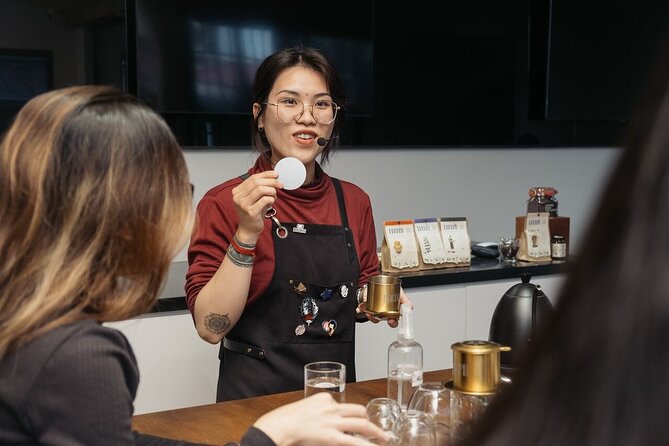
You are encouraged to listen, smell, look, and taste. The lesson then moves into the origins and types of Vietnamese coffee. Short personal stories from the Coffee Guides help keep the subject grounded in people and places rather than turning it into a lecture about beans.
This part works best for curious beginners. You do not need to know the difference between robusta and arabica before arriving. If you already work with coffee or have taken several tasting classes, the basic introduction may feel familiar, but the Vietnamese focus still gives the session a clear purpose.
The guides are one of the strongest parts of the experience. Sui is praised for being a good teacher and passionate about her work. Abby leads explanations of Vietnamese coffee origins and styles, while Joey and Vi are also noted for clear, friendly instruction. The exact guide depends on the date, but the teaching style is a major part of what you are paying for.
Brewing two blends and learning the phin
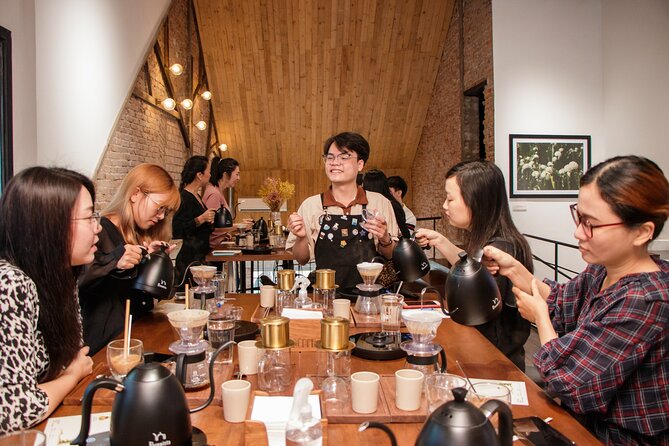
The central activity is brewing two Lacàph blends. You get to compare the coffees rather than accepting a single house flavor as the definition of Vietnamese coffee.
The brewing process includes the Vietnamese phin, the small metal filter associated with slow drip coffee. It is a simple tool, but it changes the rhythm of the drink. Coffee takes time to pass through the filter, and that concentrated brew is often matched with condensed milk or ice.
You also learn about pour-over coffee. Seeing more than one brewing method helps you understand the difference between equipment and ingredients. A bold phin brew can feel dense and intense, while a pour-over may make other aromas easier to notice.
The class also includes salted coffee and Vietnamese condensed milk iced coffee among the styles discussed or prepared. These are useful examples because they show how local coffee is shaped by balance. Salt can soften bitterness and bring out sweetness. Condensed milk adds both sugar and texture. Ice changes strength and temperature as it melts.
The exact sequence may vary with the guide and class, so you should not treat every famous drink as guaranteed. One attendee specifically wanted to make egg coffee but did not get to do so. If egg coffee is your main goal, ask before booking or choose a class that clearly promises it.
Still in Ho Chi Minh City, but a different cup:
- Decadent Vietnamese “Egg Coffee” Workshop in Hồ Chí Minh City
★ 5.0 · 150 reviews - Ho Chi Minh City: Fun and Easy Coffee Workshop for Beginners
★ 4.9 · 121 reviews - Techniques & Secrets Behind the Famed Vietnamese Egg Coffee
★ 5.0 · 99 reviews - 1 hour Egg Coffee Cooking Class with Snack and Local Instructor
★ 5.0 · 72 reviews
Hearing the beans crackle during the roast
One of the most memorable portions is the small-batch roasting of the Lacàph Phin Blend. You hear the beans crackle, watch the process, and smell the aroma develop.
That sound gives you a practical sense of how much work comes before brewing. It also helps explain why freshly roasted coffee can smell so different from the finished drink. You are not watching a full commercial production line. It is a short demonstration, but it puts the roast into the lesson instead of treating coffee as something that appears finished in a packet.
The roast is especially useful if you plan to visit the Central Highlands later. The experience does not take you to a plantation, and it does not replace a farm visit. What it does is give you a basic understanding of what happens before the beans reach a café in Hồ Chí Minh City.
Short films that connect cities and coffee
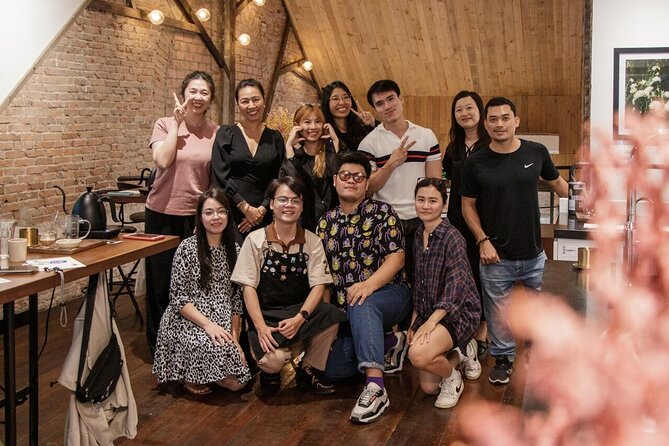
The class uses an in-house mini-documentary series to move beyond the cup. The films travel from Hanoi to Đà Lạt and then to Chợ Lớn in Sài Gòn.
These places show that Vietnamese coffee culture is not one fixed style. Hanoi is associated with its own café traditions, Đà Lạt is tied to coffee-growing country, and Chợ Lớn brings in the energy of southern Hồ Chí Minh City and its Chinese-Vietnamese heritage. You get a sense of regional difference without spending hours on a bus.
The films also break up the practical work. A two-hour-plus class needs changes of pace, and the short videos offer a visual pause between brewing, tasting, and discussion. The benefit is context. The limitation is that a film cannot replace meeting coffee producers or walking through a market.
I would treat this as an introduction to the subject, not a complete lesson in Vietnam’s past. The experience gives you enough background to make later café visits more interesting, which is a reasonable goal for a short city activity.
Sweet snacks and the question of value
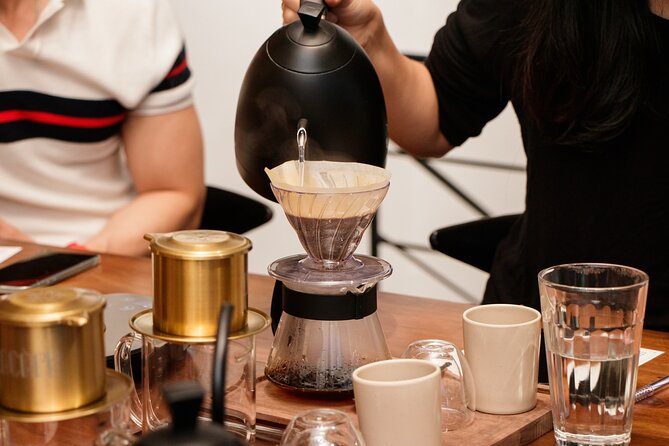
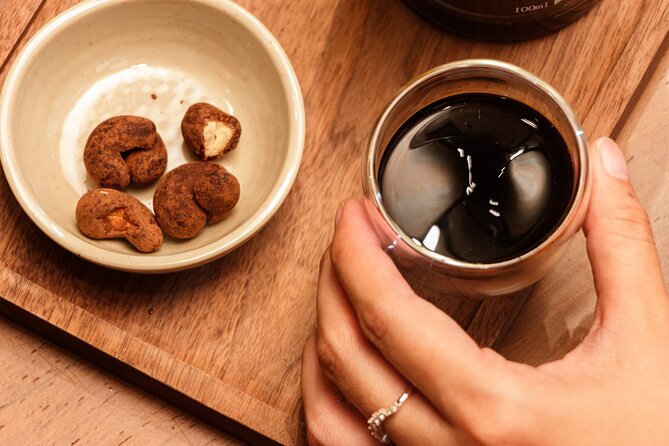
Coffee arrives with light snacks designed to match the flavors. Cocoa cashews receive particular praise, and the sweet bites help soften the intensity of the drinks.
At $29.68 per person, this is not the cheapest way to drink coffee in Hồ Chí Minh City. You can buy a strong iced coffee for a small fraction of the price. The value comes from the teaching, the tastings, the roast demonstration, the films, and the chance to compare methods in one organized sitting.
I think the price is fair for visitors who want structure and explanation. It is also useful for couples or families with different levels of coffee interest, since a guide can connect the drink to geography and culture instead of focusing only on tasting notes.
The value is weaker if you already know Vietnamese coffee well, own a phin, and mainly want a large number of drinks. You are paying for a guided class, not an unlimited café crawl. The snacks are a pleasant extra, but they are not meant to serve as breakfast.
Why the timing works well in Hồ Chí Minh City
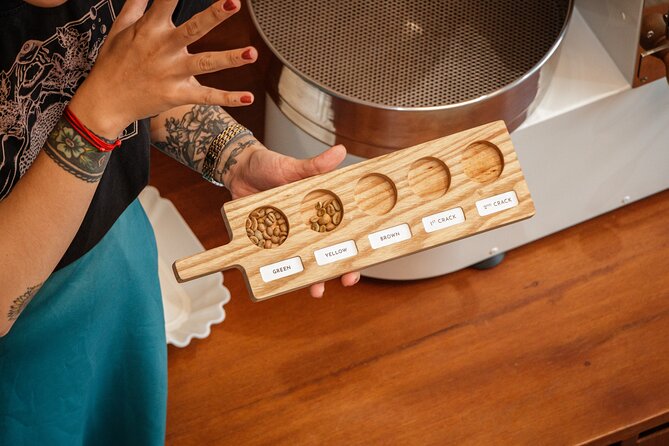
The stated duration is about two hours and 30 minutes, with a 10:00 am start. That makes this a practical first activity rather than a full-day commitment.
After you finish, you can continue around District 1, visit a museum, find lunch, or arrange another tour. The return to the original meeting point also makes planning simple. You do not need to guess where the activity will end.
There is one practical tip I would take seriously: arrive without your usual morning caffeine. The class includes several tastings, and the combined effect can be strong. If you are sensitive to coffee, eat something beforehand and pace yourself. The snacks help, but they are light.
Because the group can reach 18 people, arrive ready to listen and take turns. The format is social and guided. It is not designed for quietly reading a book while someone prepares a drink.
Who will get the most from this class
I would choose this for a coffee lover who wants more than a café recommendation. You get brewing practice, tasting, a roast demonstration, and a clear look at how coffee fits into Vietnamese daily life.
It also suits a first-time visitor who wants a gentle cultural activity. You can learn the basics before ordering coffee across the city, and you leave with enough terms to recognize phin coffee, salted coffee, pour-over, and condensed milk iced coffee.
The class may work well for families with older children or college-aged adults, provided everyone enjoys coffee and can take part in a two-hour lesson. A couple can also use it as an easy morning activity with food and conversation built in.
I would skip it if you want a street-food tour, a coffee plantation visit, or a full lesson on egg coffee. I would also think twice if caffeine affects you badly. You can ask about the exact drinks being served, but the advertised focus is on two Lacàph blends and several brewing styles, not every signature coffee in Vietnam.
Booking and cancellation details
This activity is often booked about 19 days ahead, so reserve early if your schedule is fixed. Confirmation is provided at booking, and the mobile ticket is convenient.
You can cancel for a full refund up to 24 hours before the start time. Changes or cancellations made less than 24 hours ahead are not accepted for a refund. The cut-off uses local time in Hồ Chí Minh City.
Should you book the Lacàph coffee experience?
Book it if you want a short, polished, hands-on introduction to Vietnamese coffee and plan to keep exploring the city afterward. The strongest reasons are the warm teaching, the two-blend comparison, the phin and pour-over practice, and the small roasting demonstration.
Be realistic about the format. This is not a farm outing, a street café safari, or a guaranteed egg coffee workshop. It is a comfortable 2.5-hour class in District 1 that gives you useful context and several tastes for $29.68. For most coffee fans, that is a solid morning buy, especially when Sui, Abby, Joey, or Vi leads the session.
FAQ
Where does the Vietnamese coffee experience begin?
It begins at Lacàph Coffee Experiences Space, upstairs at 220 Nguyễn Công Trứ, Phường Nguyễn Thái Bình, District 1, Hồ Chí Minh City.
What time does the activity start?
The start time is 10:00 am.
How long does the experience last?
The experience lasts approximately two hours and 30 minutes.
Where does the activity end?
It ends back at the Lacàph Coffee Experiences Space meeting point.
How many people can join the activity?
The maximum group size is 18 people.
What coffee activities are included?
You learn about Vietnamese coffee, brew two Lacàph blends, watch a small batch of the Lacàph Phin Blend being roasted, and learn about phin and pour-over methods. Salted coffee and condensed milk iced coffee are also among the styles covered.
Are snacks included?
Yes. Light snacks are included, with cocoa cashews specifically noted as one of the treats served.
Is egg coffee guaranteed?
No. Egg coffee is not listed as a guaranteed part of the activity. One attendee specifically noted that making egg coffee did not happen during the class.
Can I cancel for a full refund?
Yes. You can cancel at least 24 hours before the local start time for a full refund. Cancellations or changes made less than 24 hours before the experience are not refunded or accepted.
Just listed in Ho Chi Minh City
- HCM: Egg Coffee Class with local Instructor & Snack★ 4.7 · 8 reviews
- Mastering Egg Coffee-Course on 4 traditional types of Viet coffee★ 5.0 · 16 reviews
- Ho Chi Minh Best Walking Tour: Food, Coffee & History★ 5.0 · 19 reviews
- Ho Chi Minh Street Food Tour and Vietnamese Coffee★ 5.0 · 28 reviews
- Vietnam Coffee Journey – Make extraordinary tasty coffee yourself★ 5.0 · 30 reviews
- Coffee Workshop in Ho Chi Minh City: Discover the art of coffee★ 5.0 · 35 reviews
- Vietnam Flavour: Market-to-Table & The Art of Egg Coffee★ 5.0 · 53 reviews
- Saigon Unseen: Culture, Coffee, Hidden Spots Motorbike Adventure★ 5.0 · 60 reviews
Vietnamese Coffee Experiences, compared.

Salt Coffee Workshop Awake Your Senses With 6 Brews
Read our review →
Egg coffee & Course on 4 traditional types of Viet coffee
Read our review →
Fun & Easy Vietnamese Coffee Workshop in Hồ Chí Minh City
Read our review →
Hanoi Cooking Class: Pho/Bun Cha/Banh Xeo…+Free Egg/Salt Coffee
Read our review →
Vietnamese Coffee Workshop with 6 Brews and 8 Recipes
Read our review →
Hanoi Coffee Workshop: Master 6 Signature Vietnamese Coffee
Read our review →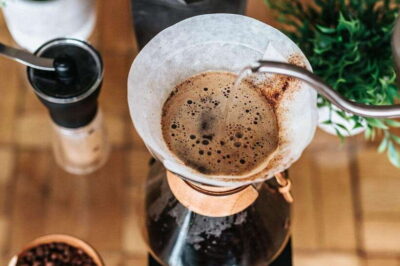
Hands-on Vietnamese Coffee Making Class with Long
Read our review →
Rose Kitchen: Pho/Bun Cha/Nem+ Free Egg/ Salt Coffee
Read our review →Lists this coffee tour turns up in