REVIEW · ARUSHA
6 Days Serengeti Safari(hiking waterfalls &coffee tour)
Tarangire’s elephant herds, two days around the Serengeti, and an early descent into Ngorongoro Crater give this trip a strong wildlife focus. You’ll also finish with a hike to an 80-meter waterfall near Moshi, so the week is not only about sitting in a vehicle.
I like the small group format, with a pop-up-roof jeep limited to six clients in the main description, and I like the practical value: park fees, camping equipment, meals, bottled water mentioned in feedback, and a cook are included. The main thing to check is group size, since the additional information allows up to seven people and some departures may combine groups.
The schedule is busy, with long drives and basic camping. If you want private rooms, slow mornings, or a guaranteed private vehicle, this is not the right fit. If you want a reasonably priced safari that covers Tanzania’s northern circuit in six days, it offers a lot for $1,250 per person.
Key points before you book
- Two Serengeti days give you a better wildlife window than a quick single-day pass through the park.
- Tarangire is the elephant specialist, with baobabs, seasonal marshes and herds that can number in the hundreds.
- Ngorongoro Crater brings animals into one compact viewing area, though the early start and crater descent make for a demanding day.
- Camping keeps the price down, while a dedicated chef handles the included safari meals.
- Materuni Waterfalls adds a walking and cultural day after the game drives, with Chagga village life and a coffee tour.
- Guide quality matters greatly, and names praised on past departures include David, Godfrey, Calvin, Lewis, Simon and Hachiem, though your assigned guide can vary.
What this six-day route is really like
This is a northern Tanzania circuit rather than a single-park safari. You move from Tarangire to the Serengeti, spend time at Ngorongoro, visit Lake Manyara, then finish near Moshi at Materuni Village.
The route covers a lot of ground. The listed driving times are often around six hours, and game drives can extend across most of the day. I would choose this plan for variety and wildlife coverage, not for a restful holiday.
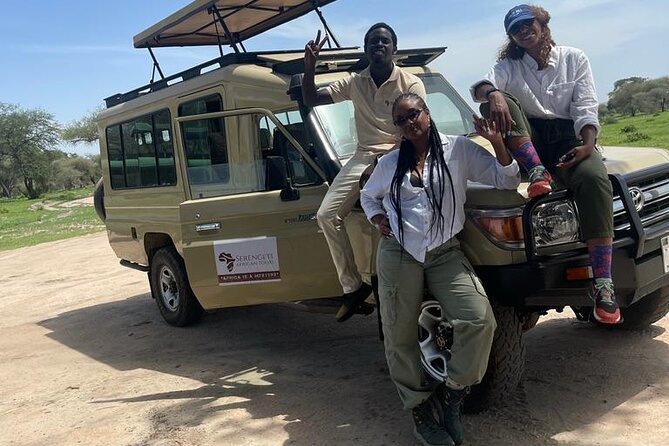
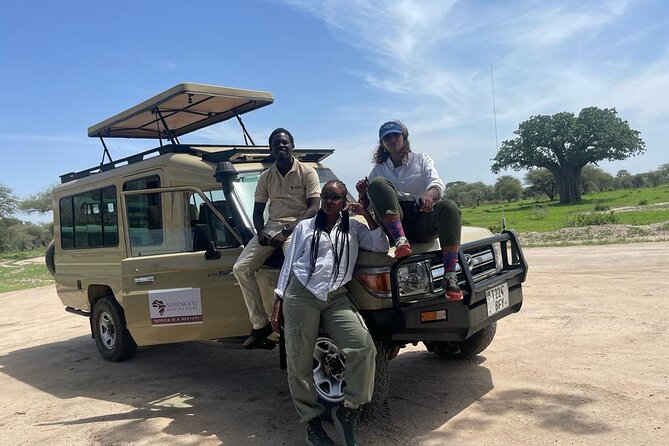
The safari vehicle has a pop-up roof, which is important. You can stand or sit higher for clearer views and better photographs, rather than peering through side windows. The group is intended to be small, but ask for the exact number in your departure. The description says a maximum of six clients, while the booking information says seven travelers, and low-season departures may join separate bookings together.
A guide-driver leads the safari and a chef prepares the food. That setup is useful on a camping trip because you do not need to arrange meals at each campsite. It also means the quality of your experience depends heavily on the guide’s driving, animal knowledge, timing and communication.
Several guides have received especially warm praise on previous departures. David was singled out for animal knowledge and good spirit, while Godfrey, Lewis, Calvin, Simon and Hachiem were also named positively. Mandarin was praised for a smooth safari, and cooks such as Matthew and Mattieu were credited with making the meals a strong part of the trip. These are useful names to know, but they are not a promise that one particular person will lead your departure.
More Coffee and Waterfall Trips in Arusha
- Materuni Waterfalls, coffee tour & Kikuletwa Hot Springs
★ 5.0 · 643 reviews - Materuni waterfalls coffee tour & Chemka hot springs Day trip
★ 5.0 · 131 reviews - Maasai village visit, Materuni waterfalls & coffee experience
★ 4.5 · 95 reviews
Day 1: Tarangire’s elephants and baobabs
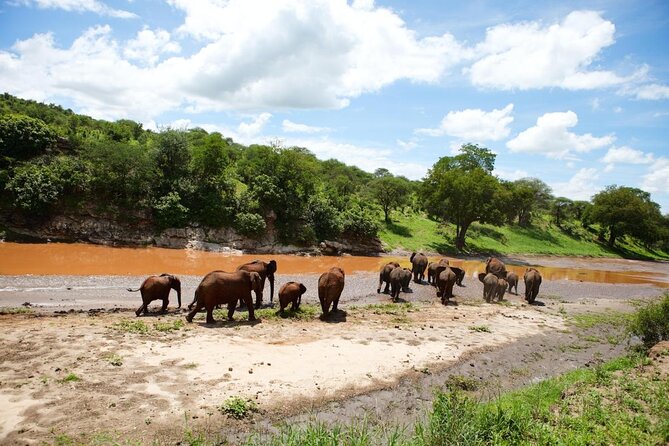
Your safari begins with a morning drive to Tarangire National Park. The park covers about 2,600 square kilometers, roughly the size of Luxembourg, and its scenery changes between open savannah, seasonal swamps and stands of giant baobab trees.
Tarangire is best known for elephants. Herds can reach around 300 animals, making this one of the strongest stops on the route if elephants are high on your list. You may also see giraffes, buffaloes, hartebeest, eland, fringe-eared oryx and the long-necked gerenuk. More than 550 bird species are recorded here, so keep your eyes open even when the larger animals are quiet.
The day includes an extensive game drive before you reach a campsite for the night. The listed drive time is about six hours, though the actual day can feel longer once you add park roads, stops and animal sightings.
I like starting here because Tarangire gives you an immediate safari setting without using your first day only for transport. The drawback is that you may arrive tired at camp, and camping means you should be comfortable with basic facilities rather than expecting a lodge room.
Day 2: The long road toward the Serengeti
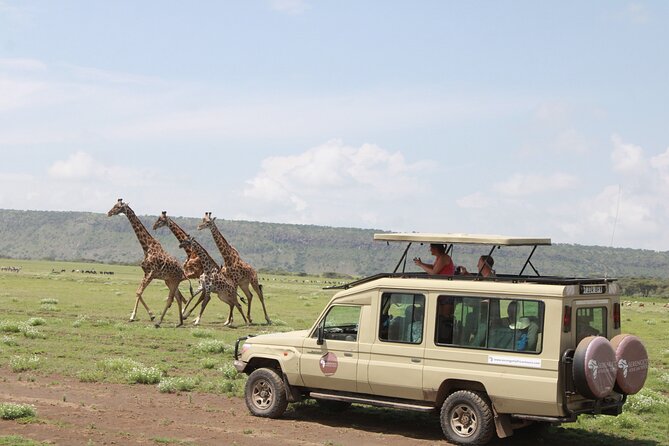
After breakfast, you drive from Mto wa Mbu toward the Serengeti. The stated journey takes about six hours, including stops, and passes through the Ngorongoro area.
There is a short stop at the Ngorongoro gate and viewpoint for a look across the crater. This is not the full crater visit yet. It is a scenic pause on the way to the Serengeti, and it helps you understand the scale of the area before continuing west.
An optional Maasai village visit may also be offered. It is not included in the $1,250 price, and the stated visit lasts about 20 to 45 minutes. You can learn about Maasai culture and village life, but you should decide in advance if this is something you want to add. Since it costs extra and not every person chooses it, ask your operator for the current price and exactly what the visit includes.
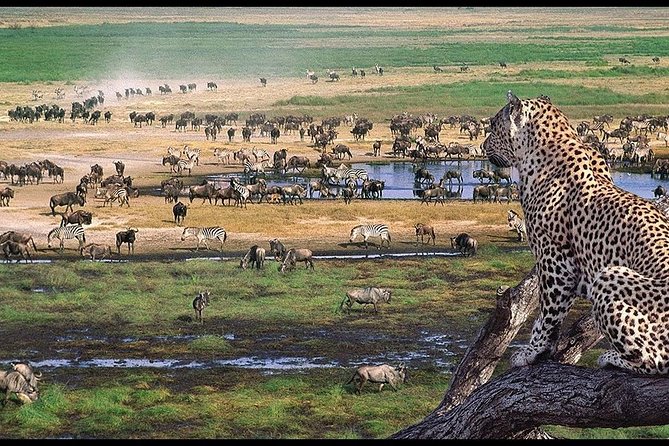
The route then continues toward the Serengeti. The word Serengeti means endless plains, and the park is famous for the annual movement of more than a million wildebeest along with roughly 250,000 zebras. The migration changes location through the year, so nobody can promise a particular sighting. The trip can still produce excellent wildlife viewing outside migration periods.
This is one of the route’s less glamorous days. You spend substantial time driving, but the transit is necessary to reach the Serengeti from the eastern parks. If you dislike long road days, that is the main point to consider before booking.
Days 2 and 3: More time in the Serengeti
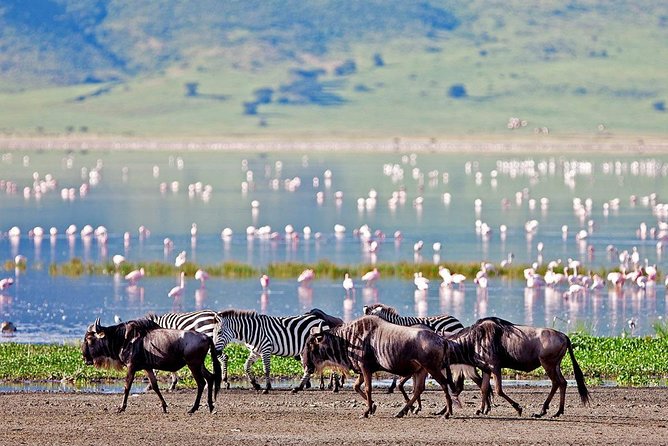
The plan gives you two days around the Serengeti, which I consider one of its best choices. A single day can feel rushed, especially after the drive from Mto wa Mbu. Two days give your guide more room to search different areas and give you a better chance of seeing predators, plains animals and birds.
On Day 3, you leave camp after an early breakfast for a morning game drive around Seronera. The schedule takes you into the park until afternoon, when you return to camp for lunch and packing. You then continue with a game drive while exiting the Serengeti toward Simba Campsite near the Ngorongoro rim.
The listed drive from the Serengeti toward the campsite is about two hours, though animal stops can stretch that time. Even the camp areas may have wildlife nearby, so do not assume the day ends as soon as the jeep is parked. Follow camp safety instructions and listen to your guide.
The Serengeti is a place where timing matters. Early starts are useful because animals can be active before the heat of the day. They also mean you will need to accept early breakfasts and a full schedule. You can expect dust, uneven roads and long stretches in the vehicle, but the pop-up roof gives you a much better view than a closed minibus.
More Coffee and Waterfall Trips in Tanzania
- Materuni Waterfalls & Coffee Tour from Moshi
★ 5.0 · 92 reviews - Arusha: Materuni Waterfalls, Coffee, and Hotsprings Tour
★ 4.8 · 78 reviews - Materuni Waterfalls, Visiting Chagga Village, CoffeeTour Kikuletwa Hotsprings
★ 5.0 · 63 reviews - Materuni waterfalls,coffee tour & Kikuletwa(Chemka)Hot Springs
★ 5.0 · 49 reviews
Day 4: The Ngorongoro Crater descent
Day 4 starts early, with a planned crater descent at about 6:15 a.m. This is the day to pack patience, warm layers and a camera with plenty of battery.
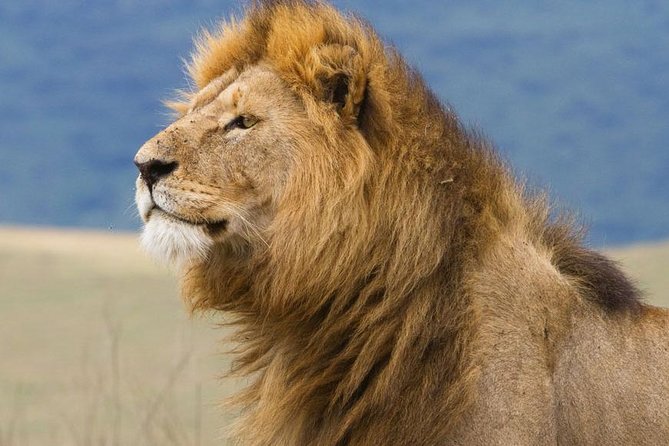
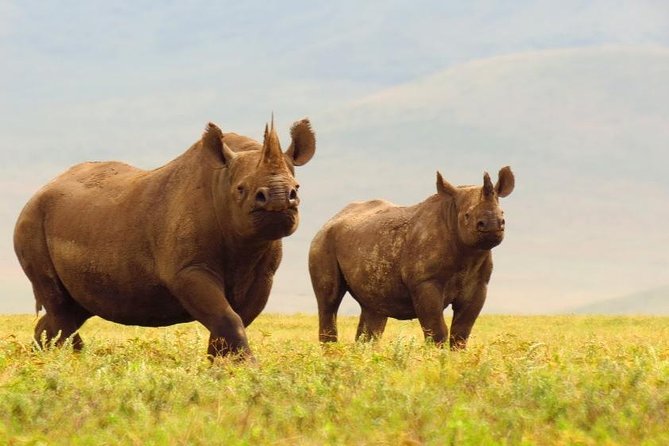
Ngorongoro Crater is a volcanic caldera with a broad floor where many animals are easier to locate than in the open Serengeti. The concentrated setting is the main reason this stop works so well on a short safari. You may see buffaloes, wildebeest, zebras, hippos, lions and many birds, while the guide searches for the much harder-to-find black rhino.
After the morning drive, you stop for lunch and continue exploring before ascending to the rim. You then pack for the drive toward Fig Lodge and Campsite near Lake Manyara National Park.
The crater is the route’s most efficient wildlife stop, but it can also be busy and tightly scheduled. You do not get unlimited time on the floor, and the early start may be tiring after several days of camping. Still, if you want a good chance to see many kinds of animals in one day, this is a powerful part of the trip.
Day 5: Lake Manyara’s birds, hippos and tree-climbing lions
After breakfast, you enter Lake Manyara National Park. The park is associated with large numbers of flamingoes, although bird numbers and water conditions can change. The day is also known for the possibility of seeing tree-climbing lions.
That possibility needs realistic expectations. Tree-climbing lions are rarely seen, so treat them as a bonus rather than a promise. Your guide may instead focus on the park’s broader selection of animals and birds, including buffaloes, wildebeest, warthogs, vultures, eagles and monkeys.
The route includes the hippo pool, where you can look at hippos from a close but controlled viewpoint, as well as a hot spring. These stops break up the game drive and give you a different view of the park beyond the open plains.
Lake Manyara is a good final safari park because it changes the scenery after the Serengeti and crater. It also keeps the wildlife focus going before the final day shifts to walking and village culture. Lunch is included, but dinner is not listed for this day, so confirm the evening plan if you need a clear meal schedule.
Day 6: Materuni Waterfalls and a Chagga village
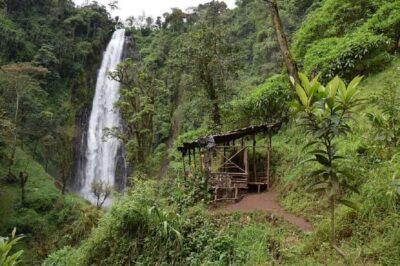
The final day moves away from safari roads and into the foothills near Moshi. Materuni is a Chagga village about 15 kilometers from Moshi and the last village before Kilimanjaro National Park.
You walk for roughly 40 minutes to reach Materuni Waterfalls. The waterfall is more than 80 meters high, and the route gives your guide a chance to explain Chagga culture, village life, plants and wildlife. On a clear day, you might also see Kilimanjaro’s summit.
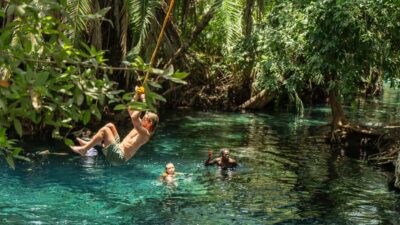
This is an active half-day rather than a hard mountain hike. You should still wear shoes suitable for an uneven walking trail, and bring something dry if you plan to swim at the falls. The supplied plan describes a refreshing dip, so pack swimwear and a towel where you can reach them.
The experience also includes a coffee tour. The supplied details do not spell out every step of the coffee activity, so ask what the current visit includes and how much time is allowed for it. The combination of waterfall, village, Chagga culture and coffee makes this a useful counterpoint to five days of wildlife viewing.
One practical point: the tour is described as starting at midnight, but the daily program says you are picked up in the morning for Materuni. Confirm the actual pickup time with the operator before the final day.
Camping, food and comfort
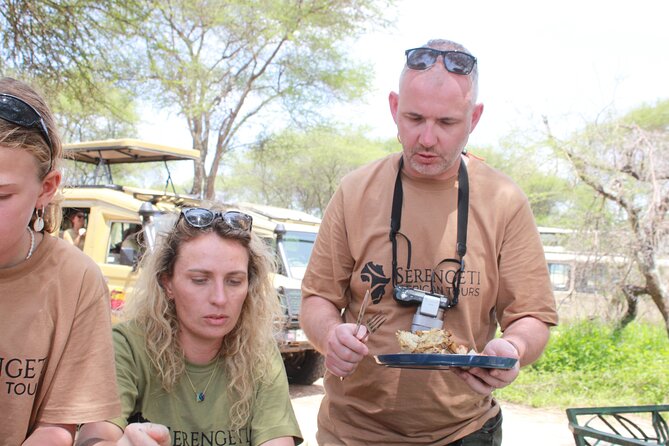
Camping is included, along with a tent, sleeping bag and sleeping mattress. You should not read this as a lodge safari. Campsite conditions can be simple, and the route includes several nights in tents.
That said, the food setup is a real advantage. A chef travels with the group and prepares breakfast, lunch and dinner on the safari days listed. Several guides and cooks received strong praise for the meals, with Matthew and Mattieu mentioned by name. Other feedback described the food as good but not always exceptional, so I would set expectations at practical safari cooking rather than restaurant dining.
Accommodation feedback has generally been positive, with some people finding the camps clean and comfortable. A few comments also noted that one vehicle had mechanical trouble before it was sorted out. That is worth remembering on any road safari: ask how the operator handles vehicle problems and what backup arrangements exist.
Bottled water was provided throughout at least one departure. Since this can vary, confirm the water arrangement and bring a reusable bottle if you have one.
Is $1,250 good value?
At $1,250 per person, the price is attractive for a six-day northern Tanzania route that includes Tarangire, two Serengeti days, Ngorongoro, Lake Manyara and Materuni.
The value comes from what is bundled: park fees, a safari jeep, camping gear, safari meals, a guide-driver, a chef, and the final Materuni activity with its included waterfall admission. You are paying for access to several major parks without needing to arrange each transfer separately.
The price does not include visas, flights or tips. The optional Maasai village visit also costs extra. Pickup is offered, but the meeting information is unclear, so confirm whether your airport or hotel pickup is included in your specific booking.
The best comparison is not simply price per day. Ask how many people will share the vehicle, whether the vehicle is dedicated to your booking, which campsites are used, and whether the Materuni coffee visit is fully included. One past comment raised concern that a booking described as private was not always fully private, so get this point in writing.
Who should book this trip?
I would choose this tour if you want a high-value wildlife route and do not mind early starts, long drives and camping. It suits first-time safari visitors, solo people who want a group setting, couples and families who want a broad northern Tanzania sample.
It is also a good match for anyone who wants more than game drives. Materuni gives you a walking day and contact with Chagga village life, while the optional Maasai visit offers another cultural stop.
I would look elsewhere if you need a private vehicle, fixed room standards, short driving days or a slow pace. Ask specifically about the final group size, guide assignment, vehicle condition, dinner on Day 5 and the exact airport pickup arrangement.
Final verdict: a strong safari, with details to confirm
This is an ambitious route with excellent wildlife coverage for the money. The two Serengeti days, elephant-rich Tarangire and concentrated animal viewing in Ngorongoro give you three very different safari experiences, while Lake Manyara and Materuni prevent the trip from feeling like the same game drive repeated five times.
The main caution is clarity. The material describes the trip as both five and six days, gives different maximum group sizes, and lists an unusual midnight start time despite a morning Materuni pickup. None of these issues automatically ruins the trip, but you should confirm them before paying.
Book it if you value a full schedule, a small shared jeep, camping and a capable guide-chef team over polished accommodation. If you do, ask for the exact group size and vehicle arrangement, then pack for dust, cool early mornings, walking and a possible swim.
FAQ
How long is the experience?
The experience lasts approximately six days. The first five days focus on safari parks, and Day 6 covers Materuni Waterfalls and a coffee tour.
Which national parks are included?
The route includes Tarangire National Park, Serengeti National Park, the Ngorongoro Conservation Area and Lake Manyara National Park. The final day visits Materuni Village and Waterfalls.
How many people can join the safari?
The main description says the custom safari jeep carries a maximum of six clients. The additional information gives a maximum of seven travelers, so confirm the exact group size before booking.
Is camping equipment provided?
Yes. A tent, sleeping bag and sleeping mattress are included.
Are meals included?
Yes. Breakfast, lunch and dinner are included during the safari according to the stated meal plan. The listed inclusions specify five breakfasts, six lunches and four dinners, so confirm the exact meal arrangement for each day.
Is the Maasai village visit included?
No. The Maasai village visit is optional and is not included in the price.
What is not included in the $1,250 price?
Visas, flights and tips are not included. The optional Maasai village visit is also outside the stated price.
Can I cancel for a full refund?
You can receive a full refund if you cancel at least 24 hours before the experience start time. Cancellations or changes made within 24 hours are not refunded or accepted.
More Safari Days in Arusha
- Cappadocia Off-Road Jeep Safari Experience with Free Coffee
★ 4.9 · 19 reviews
More Walks and Hikes in Arusha
- Off the Map Chiang Mai Jungle Coffee Trek Roast and Brew
★ 5.0 · 107 reviews - Trekking History and Indigenous Heritage in Minca + Cacao & Coffee + Waterfall
★ 4.9 · 63 reviews - Chiang Mai Coffee Full Day Tour: Trek, Brew & Roast Journey.
★ 5.0 · 38 reviews - Mount Batur Sunrise Trekking (Private, Breakfast and Visiting coffee plantation)
★ 5.0 · 27 reviews
Just listed in Arusha
- Materuni Waterfalls & Coffee making Cultural Tour | BURIGI CHATO SAFARIS LTD★ 5.0 · 15 reviews
- Materuni Waterfall Coffee Tour and Chemka Hot Springs Experience★ 5.0 · 15 reviews
- Arusha: Materuni Waterfalls, Hot Springs and/or Coffee Tour★ 4.7 · 21 reviews
- Waterfall, coffee tour & hot springs – lunch and drinks included★ 5.0 · 22 reviews
- Private Meru Coffee Tour in Nkoaranga★ 5.0 · 23 reviews
- Kilimanjaro: Maasai Village Visit, Waterfalls, & Coffee Tour★ 4.9 · 27 reviews
- Organic Coffee Tour and Local Food Experience in Arusha★ 5.0 · 29 reviews
- Hidden Arusha Waterfall, Coffee & Village Tour (All-Inclusive)★ 5.0 · 42 reviews
Coffee and Waterfall Trips, compared.
Materuni Waterfalls, coffee tour & Kikuletwa Hot Springs
Read our review →
Materuni waterfalls coffee tour & Chemka hot springs Day trip
Read our review →
Materuni Waterfall, Coffee Tour and Picnic Hot Lunch
Read our review →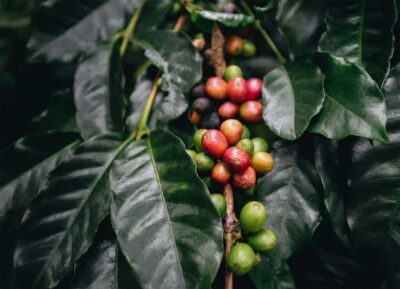
Santa Marta: Minca Coffee, Cocoa, & Waterfall Full-Day Trip
Read our review →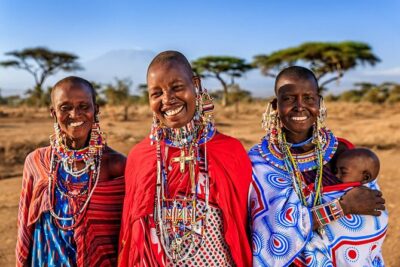
Maasai village visit, Materuni waterfalls & coffee experience
Read our review →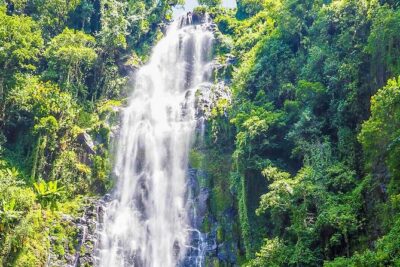
Arusha or Moshi : Hot Spring, Waterfall & Coffee Farm Tour
Read our review →