
REVIEW · CUNDINAMARCA
Bogota: Coffee Tour, Filtration and Espresso Experience
What grabs me here is the chance to compare the same idea of coffee in two very different forms. You move from clean, delicate filter coffee made with methods such as Chemex and V60 to a short, forceful espresso with crema and body.
I like the hands-on focus, and I like that the session includes an aroma test and several coffee styles. Jorge has been especially warm and clear when leading this experience, explaining coffee production as well as what appears in the cup. The small private format also gives you more room to ask questions.
The main caution is value. At $32 per person for 45 minutes, this is not a cheap coffee tasting. One four-person booking took about 30 minutes and included four pour-over samples, with limited explanation, so your expectations should match the guide and the depth of instruction you want.
Key points at a glance
- Two preparation worlds: Compare filter coffee, including Chemex and V60, with espresso extraction.
- Aroma and flavor work: Use sensory testing to identify fruity, floral, earthy, and spicy notes.
- Near Chorro de Quevedo: Find Jaguar Coffee House in the blue house with the Jaguar logo.
- Short private session: Plan on 45 minutes with a Spanish or English-speaking barista.
- Strongest praise: The warmth of Jorge and the explanation of coffee production receive the clearest approval.
- Know the limit: Food, extra drinks, and tips cost extra, and the experience is not designed for caffeine-sensitive visitors.
Jaguar Coffee House near Chorro de Quevedo
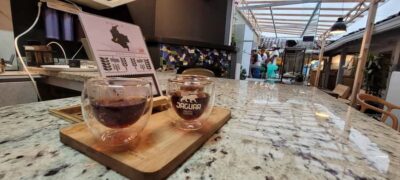
The meeting point is close to Chorro de Quevedo Plaza, one of the most useful spots for finding your way around Bogotá’s historic La Candelaria area. Look for the blue house marked with the Jaguar logo. That detail matters because the plaza has many cafés and small businesses, and a clear landmark saves you from wandering around looking for an unmarked door.
The setting itself is part of the appeal. The coffee house is described as a large, attractive place where you can stay for a regular cup even if you decide not to book the workshop. That makes the location handy for a coffee stop before or after exploring the surrounding streets.
This is not a farm visit or a full coffee plantation tour. You will not be traveling out into the countryside to see coffee plants or processing equipment. Instead, the workshop brings the important final stages of coffee preparation into the café: the way water meets ground coffee, how extraction changes taste, and how espresso creates a different texture.
That narrower focus can be a strength. If you already know the basics of coffee production, you will spend your time tasting and comparing rather than sitting through a long general introduction. If you want a full story from plant to export, this session may feel too short.
More Coffee Tours in Colombia:
- Medellin: Coffee Tour with Transport, Snacks and Tastings
★ 4.7 · 1,357 reviews - Medellín Coffee Farm Tour with Trolley and Cable Car Ride
★ 4.9 · 277 reviews - Coffee Tour at the Finca del Café
★ 5.0 · 213 reviews
The first tasting: filter coffee through Chemex and V60
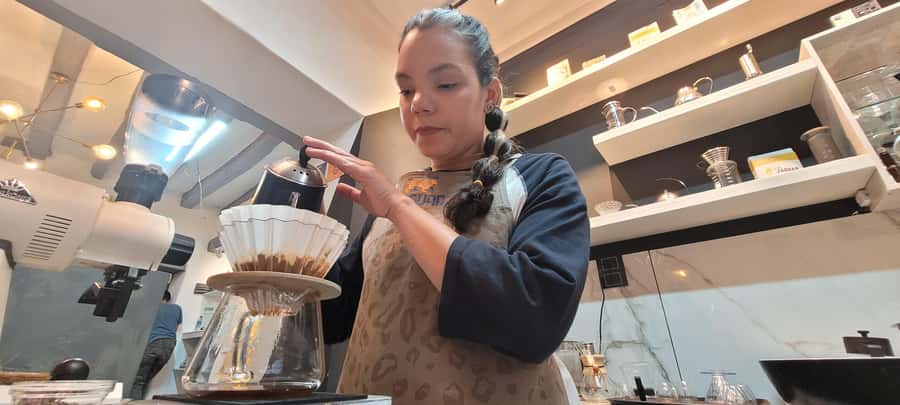
The filtration portion is the gentler half of the session. You are introduced to methods such as Chemex and V60, both of which use water passing through ground coffee and a filter. The point is not simply to drink several cups. It is to notice how the preparation brings forward lighter aromas and finer flavor notes.
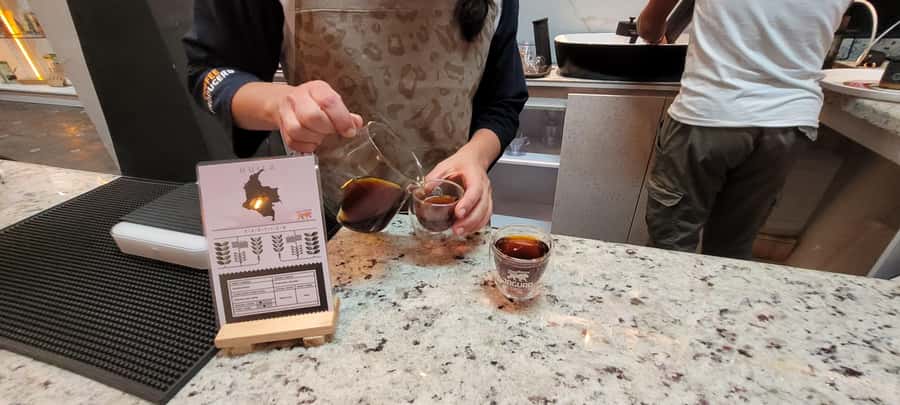
The experience centers on exotic-origin coffees with different profiles. You might find fruity or floral notes in one cup, then earthy or spicy qualities in another. The value here is comparison. A single coffee can seem mysterious when you drink it alone, but several samples side by side give your palate something to measure.
Chemex and V60 are not identical methods. Their shape, filter, and pouring technique affect the flow of water and the final cup. The supplied materials say you will learn the techniques, though the exact amount of hands-on practice is not spelled out. I would ask at the start if you will pour the coffee yourself or mainly watch the barista.
That question matters because the session is only 45 minutes. A short tasting can be enjoyable and useful, but there is not much time for a long lesson on grinding, water temperature, pouring speed, and extraction. If you want a detailed home-brewing class, you may need to keep asking questions and make good use of the barista’s time.
One account of the experience involved four pour-over coffees for a group of four and lasted about 30 minutes. The participants felt the explanation was limited and did not consider the cost worthwhile. I would treat that as a warning to clarify the format before you arrive, especially if instruction matters more to you than sampling.
Espresso brings body and texture
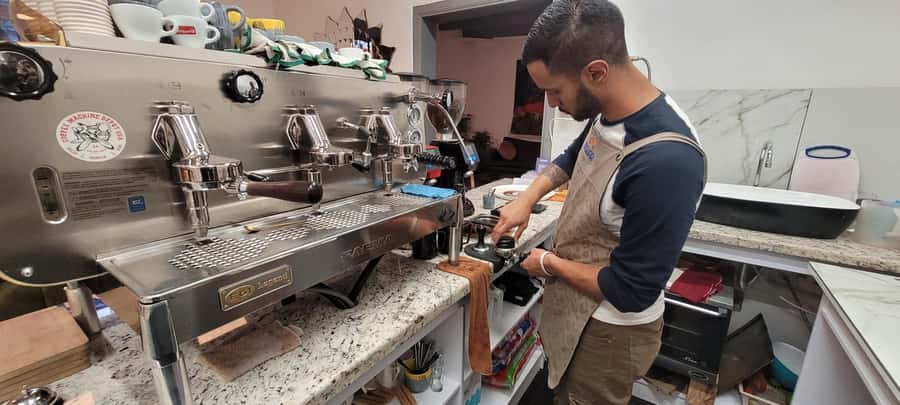
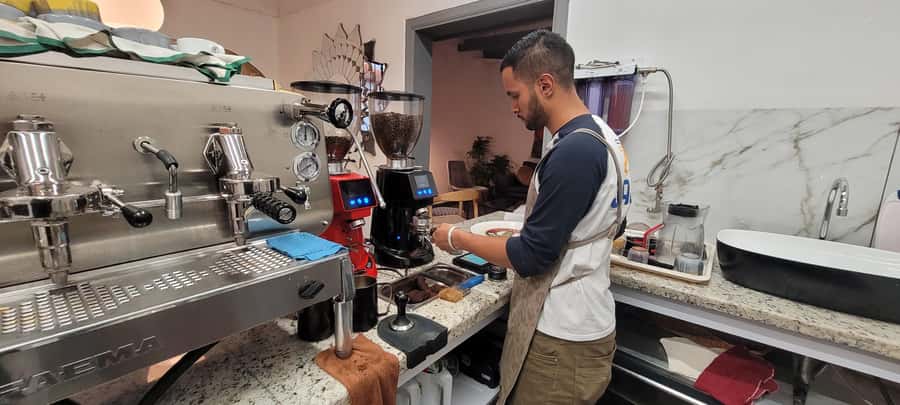
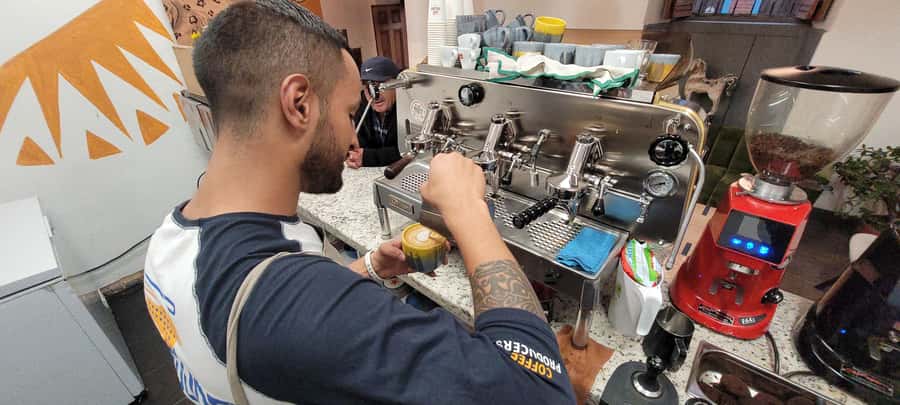
The second half changes the mood. Instead of the lighter, clearer character of filter coffee, espresso gives you concentration, body, aroma, and a silky crema. You use an espresso machine, and the barista explains how extraction affects balance.
The wording of the experience promises instruction in making a balanced espresso. That may include the relationship between the coffee, the machine, and the extraction time, though the exact technical sequence is not specified. You should expect an introduction to espresso preparation rather than professional barista certification.
This section is useful because it shows how preparation changes the same broad subject. Filter coffee lets you notice delicate notes more easily. Espresso compresses the experience into a smaller serving, with a heavier mouthfeel and more pronounced intensity.
If you are new to espresso, ask the barista to explain what to look for in the crema and aroma. The practical question is not simply whether you like a strong coffee. It is whether the extraction tastes balanced, harsh, thin, sweet, or full. Even a short lesson can give you better language for ordering coffee later in Colombia.
The equipment is included, as are the resources used during both parts of the session. Food and an additional drink are not included. You should not assume that the tasting comes with a pastry, a full café beverage, or a separate cup to take away.
The aroma test adds a playful sensory layer
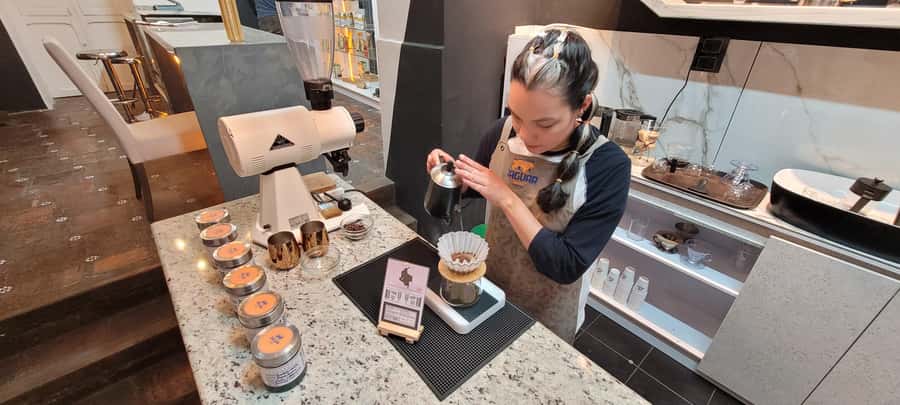
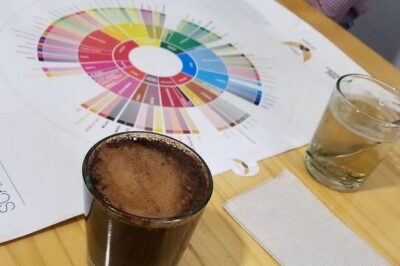
The most unusual detail is the olfactory test. You are given different scents to identify or compare, using smell before taste to build a clearer sense of coffee’s character. This helps explain why coffee can suggest flowers, fruit, spices, or earth even though those flavors are not added to the drink.
I like this part because it gives beginners a way into coffee tasting. You do not need a trained palate to notice that two smells are different. Once you connect an aroma to a sip, the tasting becomes less about finding the right answer and more about paying attention.
The aroma exercise also keeps the session from becoming a simple series of small cups. It gives you something active to do and helps explain how professional tasting works. Still, you should keep the scale in mind. This is a compact café workshop, not a formal sensory qualification course.
The coffees are described as exotic, but the activity does not provide a fixed list of origins or varieties. That means you should not book it expecting a particular region, farm, or rare bean. The exact coffees may vary, and you should ask what is being served on your date if origin is important to you.
Still in Colombia, but a different cup:
- Medellin: Coffee Tour and Wellness Spa
★ 4.8 · 209 reviews - Salento: Private Cocora Valley, Salento & Coffee Farm Tour
★ 4.9 · 202 reviews - Medellin: Coffee Tour with Hotel Transfers and Meals
★ 4.9 · 186 reviews - From Bogotá: Coffee Farm and Tequendama Falls Tour
★ 4.5 · 130 reviews
A private session with a barista
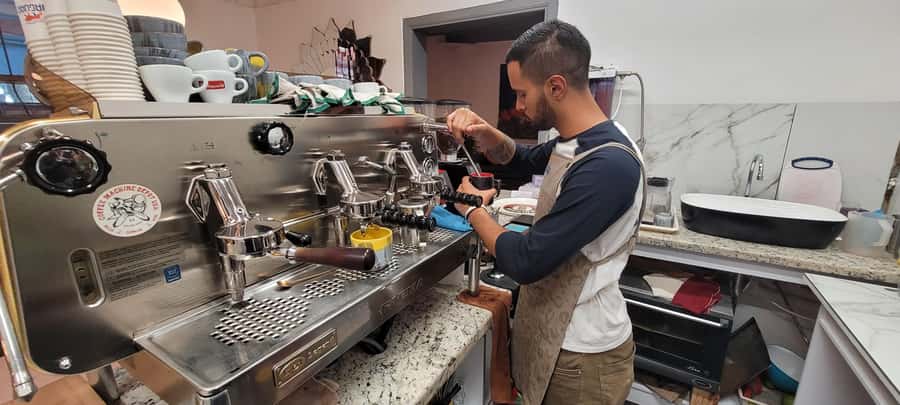
The booking is for a private group, and instruction is available in Spanish or English. That setup should suit couples, families with older children, or a small group of friends who want to ask questions without sharing the table with strangers.
The minimum age is 10. Children younger than that are not suitable for the experience, and the caffeine issue is more important than the age rule. People who are sensitive to caffeine should not attend. With filter samples and espresso in one short sitting, this is not a wise choice if even a modest amount of coffee causes discomfort.
A barista named Jorge has received especially warm praise for explaining coffee production and being friendly. Since the information does not promise that Jorge leads every departure, you should not assume he will be your guide. Still, the mention gives you a useful standard: a good session should explain more than the names of the brewing methods. It should connect production, aroma, extraction, and taste.
The guide’s communication will shape the value of the workshop. If you want a lesson, say so early. Ask where the coffee comes from, what flavors the barista notices, why one method suits a particular bean, and what changes between filter and espresso. A curious group is likely to get more from 45 minutes than a group that simply waits for samples.
Is $32 a fair price for 45 minutes?
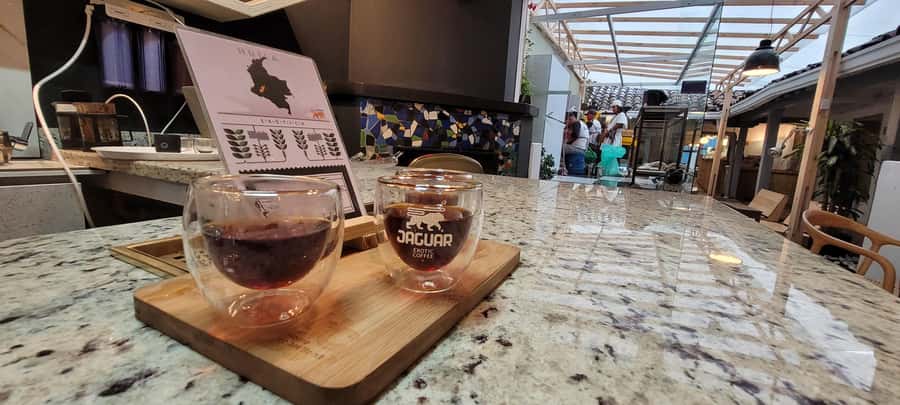
The listed cost is $32 per person. At that price, you are paying for the private format, the barista’s time, the equipment, the tasting materials, and two preparation styles. The price can make sense if you want a focused introduction and value personal attention.
It is harder to justify if you mainly want to drink coffee. The café is available for a normal visit, and you can choose a regular cup without paying for the workshop. One four-person booking worked out to $100 in total, or $25 per person, and still felt expensive to that group because the tasting was short and the explanation limited.
That difference shows why your reason for booking matters. A coffee enthusiast may appreciate the chance to compare extraction methods. A casual drinker may prefer to spend the money on several café visits around Bogotá. I would book this for the learning and comparison, not for the amount of coffee served.
There is also no food or additional drink in the price. Tips are not included either. If you want a snack afterward, plan to buy it separately. The activity is best viewed as a compact workshop, not a meal or a long café experience.
The overall score is 3.6 from six ratings, which suggests a mixed picture rather than a sure bet. The strongest responses describe the experience as exciting, educational, and full of interesting smells and flavors. The weaker response points to the short duration and lack of explanation. Both views fit the format, so I would check your priorities before paying.
Who will enjoy this coffee workshop?
I would recommend it most to:
- Coffee drinkers who want to compare filter and espresso methods.
- Beginners who enjoy tasting activities but do not need a full professional course.
- Couples or small private groups comfortable with a short, concentrated session.
- Visitors already near Chorro de Quevedo who want a structured café activity.
- People interested in aromas, flavor descriptions, and the basic path from coffee production to cup.
I would be cautious if you want a coffee farm visit, a long technical class, or a large quantity of coffee. The workshop stays at Jaguar Coffee House and lasts less than an hour. Its strength is focus, not scale.
The accessibility limits are broad. The activity is not suitable for people with mobility impairments, wheelchair users, visually impaired people, hearing-impaired people, or people with motion sickness. Electric wheelchairs are also not allowed. Since these restrictions are explicit, contact the provider before booking if you have any access concern.
You should bring a passport or ID card, comfortable clothes, a camera, and a hair tie. Pets, smoking, vaping, alcohol, drugs, chewing gum, and strong fragrances are not allowed. The fragrance rule makes sense for a tasting based partly on smell, since perfume can interfere with the aroma test.
Booking, cancellation, and timing
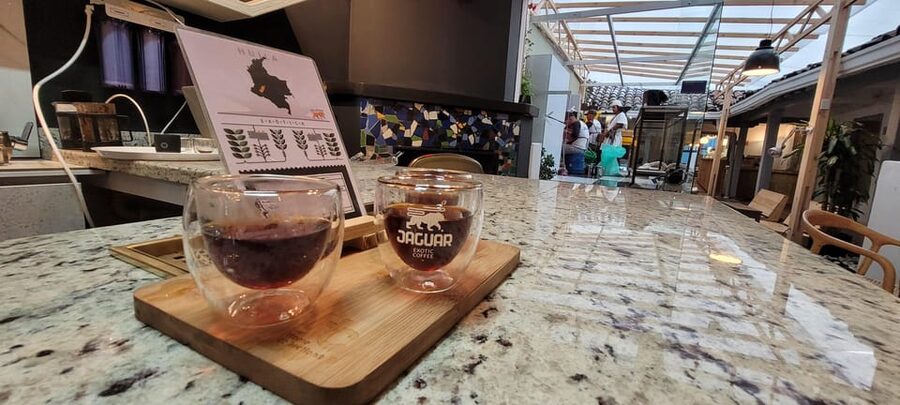
The session lasts 45 minutes, with starting times shown when you check availability. The private format makes it easier to plan around sightseeing in La Candelaria, but you should allow enough time to locate the blue Jaguar house near the plaza.
You can cancel up to 24 hours in advance for a full refund. A reserve-now, pay-later option is also available, which helps if your Bogotá schedule is still changing. These terms are useful, but they do not change the main decision: confirm that you want a tasting lesson before committing to the price.
Should you book the Jaguar Coffee House experience?
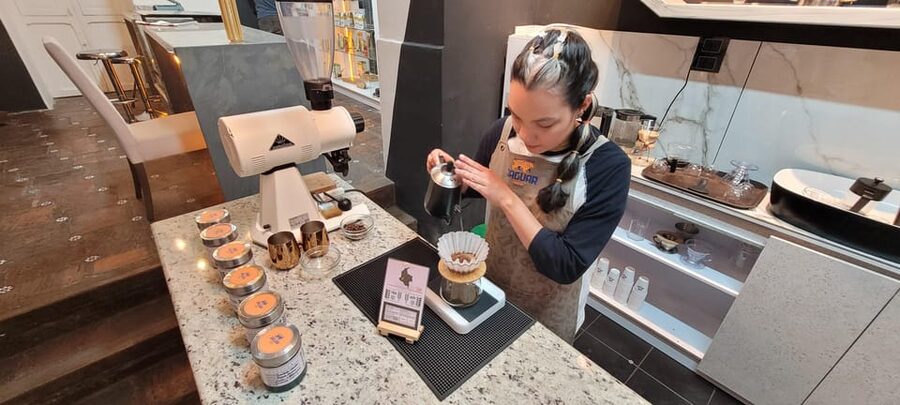
Book it if you want a short, private coffee comparison with filter methods, espresso, aroma work, and a barista who can explain the basics in Spanish or English. The strongest part is the chance to connect smell, flavor, and extraction in one sitting, especially if Jorge leads the session and gives the kind of production explanation praised by earlier participants.
Skip it if you only want a good cup of coffee, need a full coffee farm story, or expect a long hands-on class. At $32 per person, the value depends on the quality of the explanation as much as the coffee itself. Ask what will be tasted, how much hands-on preparation is included, and who will lead your session. If the answers fit your interests, this can be a useful stop near Chorro de Quevedo. If not, enjoy the blue Jaguar house as a café and spend the rest of your coffee budget elsewhere.
FAQ
Where does the coffee experience take place?
It takes place at Jaguar Coffee House, near Chorro de Quevedo Plaza in Cundinamarca, Bogotá. Look for the blue house with the Jaguar logo.
How long does the activity last?
The experience lasts 45 minutes. Available starting times depend on the date you select.
How much does the experience cost?
The listed price is $32 per person.
What coffee methods are included?
The activity includes a filtration experience using methods such as Chemex and V60, plus an espresso experience using an espresso machine.
Is food included?
No. Food, tips, and additional drinks are not included in the price.
Is the experience available in English?
Yes. The activity is offered in Spanish and English.
Is this a private group activity?
Yes. The experience is arranged as a private group.
What should I bring?
Bring a passport or ID card, a camera, comfortable clothes, and a hair tie.
Who should not book this experience?
It is not suitable for children under 10, caffeine-sensitive people, wheelchair users, people with mobility impairments, visually impaired people, hearing-impaired people, or people with motion sickness. Pets, smoking, vaping, alcohol, drugs, chewing gum, electric wheelchairs, and strong fragrances are not allowed.
Just listed in Colombia
- Cartagena Coffee Masterclass: Artisanal Roasting and Brewing★ 5.0 · 3 reviews
- Bogotá: Experience of a coffee competition★ 5.0 · 2 reviews
- Bogota: Roasting Experience Tour with Exotic Coffee★ 4.6 · 2 reviews
- Bogota: Coffee Tasting, Roasting, Filtration & Espresso Tour★ 5.0 · 4 reviews
- Bogota: Coffee Tasting Experience Tour with Exotic Varieties★ 4.1 · 13 reviews
- Medellin: Coffee Farm and Barista Workshop Experience★ 4.4 · 9 reviews
- From Medellin: Day Trip to a Jardin Coffee Plantation★ 4.5 · 16 reviews
- Coffee Farm Tour at Finca El Ocaso from Salento★ 4.5 · 19 reviews
Bogota Coffee Tours, compared.
Coffee tasting experience at Divino Café Especial
Read our review →
Coffee Tasting Experience Tour with Exotic Varieties
Read our review →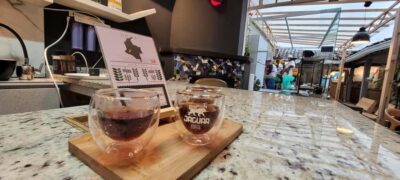
Coffee Tasting, Roasting, Filtration & Espresso Tour
Read our review →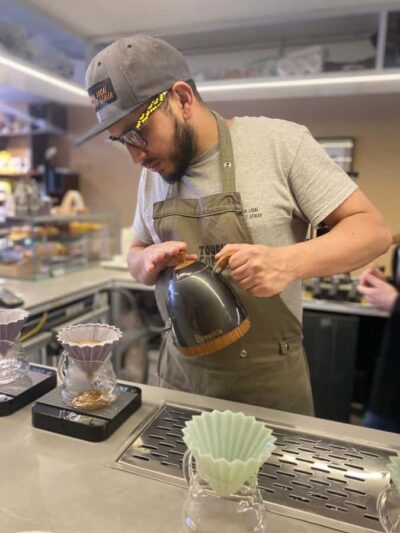
Lists this coffee tour turns up in